
| Jazz |
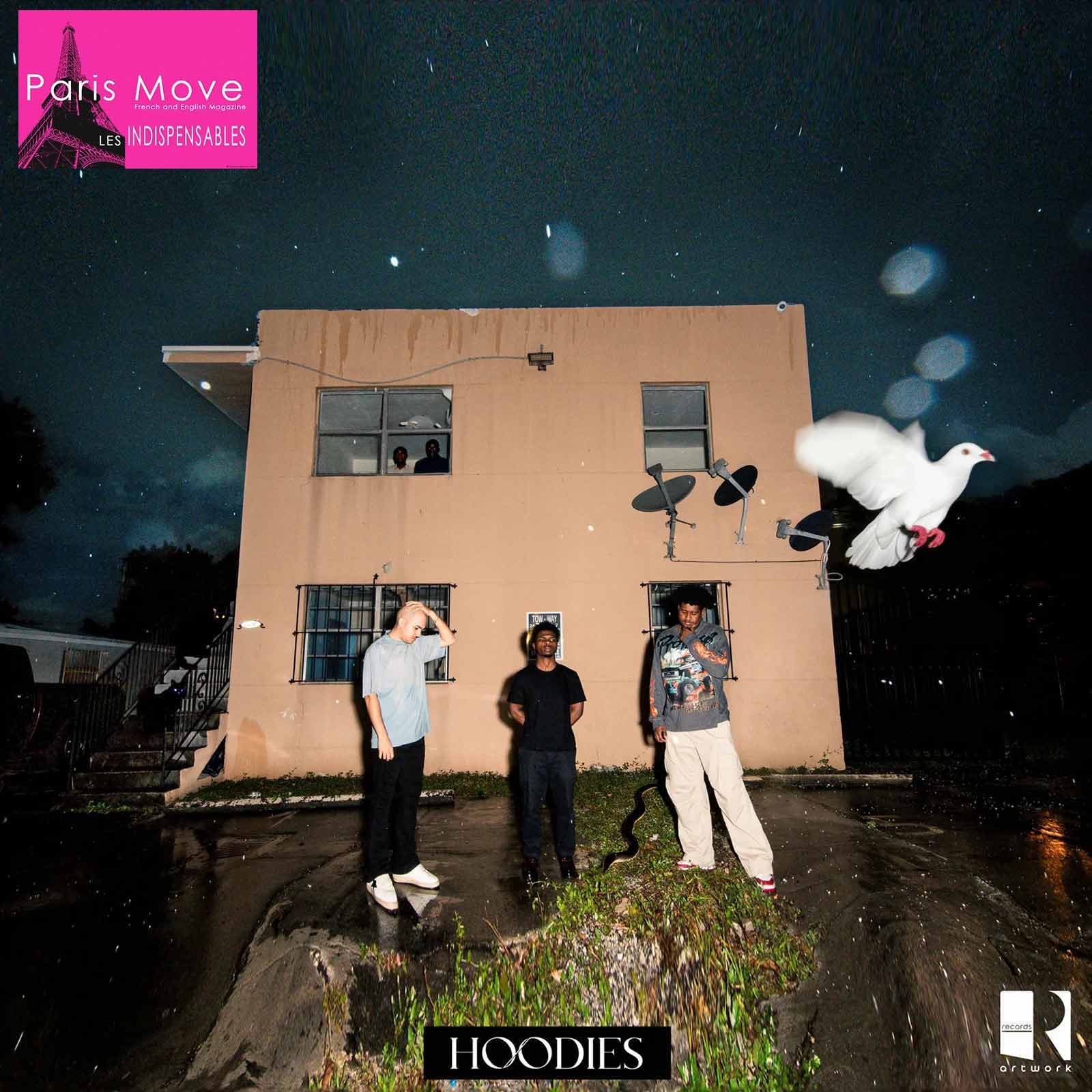
Summary: New Jazz Underground blends jazz tradition, internet era culture and Miami influenced rhythms into a bold, addictive modern trio album with Hoodies.
New Jazz Underground’s Hoodies Captures the Sound of a Digital Generation Reinventing Jazz
The Texas spring has unfolded under the long shadow of El Niño, much like the rest of the United States, bringing relentless waves of storms and rain across the region. On certain evenings, the sky over Austin turns almost metallic, the streets shining beneath layers of water while distant thunder rolls endlessly somewhere beyond the highway. It is weather that encourages retreat indoors, away from festival stages and crowded patios, toward quieter rituals. Records sound different in moments like these. The rain slows everything down, sharpens attention and allows music to settle more deeply into the room.
For newly planted gardens and thirsty landscapes, the weather has been a blessing. For outdoor concerts, perhaps a little less so. Still, there is something strangely fitting about discovering new records during seasons like this, when the atmosphere itself seems to demand introspection.
Whenever I encounter an artist or a group I do not know, I make a point of avoiding biographies, interviews or promotional material. I prefer to let the music arrive unfiltered, allowing the mind to wander freely before context imposes itself. In the case of New Jazz Underground, what immediately emerged was the sound of an intensely urban jazz language, one deeply aware of tradition yet never imprisoned by it. By the end of the album, what lingers most is not simply technical brilliance, but the unmistakable feeling of a true collective identity.
New Jazz Underground operates as a trio, and in that sense honors one of jazz’s most enduring formats. Yet within that traditional framework, the group constantly bends expectations. The drums act as the disruptive force, restless and postmodern, at times almost industrial in texture and intent. Around them, the saxophone and bass move with lyrical precision, building melodic lines that feel poetic, cinematic and deeply human. There is an emotional openness to the music that makes resistance almost impossible.
Nothing interrupts the listening experience because the acoustic trio format leaves no room for illusion. A group stripped of harmonic instruments survives only through absolute mastery, and these musicians possess it in abundance. The jazz trio, particularly the trio without piano or guitar, has long occupied a sacred place within the history of the genre. It has traditionally served as a proving ground for adventurous musicians willing to abandon familiar structures in search of new terrain.
At times, the album feels like a conversation unfolding between three sharply distinct personalities moving toward the same emotional destination. One track may lean into smoky nocturnal lyricism before suddenly giving way to fractured rhythmic patterns that resemble the pulse of contemporary electronic music. Elsewhere, the saxophone stretches into long melodic phrases that evoke classic spiritual jazz, only for the drums to interrupt with textures that feel indebted as much to experimental hip hop production as to traditional swing. That constant push and pull between elegance and disruption gives the record much of its electricity.
For many listeners today, New Jazz Underground is likely best known through YouTube, where the trio began posting performances during the pandemic. Yet reducing the group to an online phenomenon would miss the deeper story. The origins of the ensemble predate its digital visibility. What began as a necessity, musicians performing outdoors after clubs and concert halls had shut down, gradually evolved into the very foundation of the band’s identity. Through repeated rehearsals, shared compositions and an almost instinctive musical trust, the informal collective transformed itself into a genuine artistic unit. Online audiences followed quickly, and before long the trio’s presence had grown exponentially.
The tension between jazz tradition and internet era aesthetics is precisely what makes the group fascinating. So much contemporary jazz today attempts either to preserve the past with almost museum like reverence or to modernize itself through superficial gestures. New Jazz Underground avoids both traps. Their music never feels nostalgic, yet it never abandons the discipline, complexity and conversational spirit that define the genre. Instead, they absorb the fragmented cultural reality of their generation and translate it into jazz language naturally. The influence of remix culture can be heard in the abrupt rhythmic transitions and layered references. The pacing of social media and streaming culture subtly shapes the music’s sense of momentum. Even the group’s visual presentation reflects an understanding that modern jazz musicians now exist within a landscape where image, fashion and digital identity are inseparable from artistic expression.
What makes the group remarkable is the rare balance between individuality and cohesion. Each musician preserves a distinct personality while simultaneously contributing to a larger emotional architecture. That tension between independence and unity gives the music much of its radiance.
The album title, Hoodies, carries multiple layers of meaning. At its most immediate level, it references the garment itself, an unmistakable symbol of contemporary American youth culture. More broadly, it evokes the aesthetics and sensibilities that defined the United States throughout the 2010s and 2020s. These musicians are unmistakably products of their era, shaped by trap music, remix culture, internet life and the rise of hypebeast fashion. Yet rather than rejecting jazz tradition, they reinterpret it. The group has spoken about viewing modern streetwear as a form of personal identity within a musical culture historically associated with tailored suits and formal presentation.
There is also a more intimate meaning embedded in the word “hoodie.” The term carries echoes of “hood,” the neighborhood, but also of “brotherhood,” collective survival and shared experience. Having grown up in Miami and formed during the uncertainty of the pandemic years, the musicians repeatedly found themselves navigating circumstances that offered little encouragement for success. Their music, by their own admission, became possible because they remained together and supported one another.
That Miami influence quietly permeates the album in ways that are not always immediately obvious. It exists less as a direct stylistic quotation than as an atmosphere. The elasticity of the rhythms, the subtle Afro Caribbean undercurrents and the instinctive sense of movement embedded in the trio’s interplay all feel connected to the city’s cultural geography. Miami has always existed at the intersection of American, Caribbean and Latin influences, and that openness to hybridity seems deeply embedded within the group’s musical DNA. Even during the album’s most abstract moments, there remains an underlying warmth and fluidity that prevents the music from becoming emotionally distant.
What ultimately makes Hoodies so compelling is the consistency of its melodic writing. Beneath the contemporary references and modern aesthetics lies an astonishingly sophisticated compositional voice. I am generally skeptical of trends and cultural branding, and at first glance a group so closely associated with internet culture and modern fashion codes would not normally be expected to win me over. Yet the sheer quality of the musicianship changes everything. The depth of the writing, the emotional intelligence of the arrangements and the organic chemistry between the players make New Jazz Underground immediately addictive.
More broadly, the album feels representative of a larger shift taking place within American jazz itself. A younger generation of musicians no longer sees any contradiction between reverence for tradition and immersion in digital culture. For them, jazz history is not a monument standing at a distance. It is raw material, alive and adaptable, capable of absorbing hip hop, internet aesthetics, streetwear culture and the fractured emotional realities of modern American life without losing its soul. If Hoodies suggests anything about the future of jazz, it is that the genre’s vitality may now depend less on preservation than on fearless reinvention.
Thierry De Clemensat
Member at Jazz Journalists Association
USA correspondent for Paris-Move and ABS magazine
Editor in chief – Bayou Blue Radio, Bayou Blue News
PARIS-MOVE, May 16th, 2026
Follow PARIS-MOVE on X

::::::::::::::::::::::::
Musicians:
Sebastian Rios, bass
Abdia Armenteros, soprano, & tenor saxophone, vocals
T.J. Reddick, drums
Elew, piano (4)
Track Listing :
Oney Ones One
Pseudo Litin Vibe
Sidertracked
Ghosts
Hold My Halo
Los Salines (prelude)
Luci and I
How Do You Do
HoodieJig
Atonement
I Had to let UU Go
Sad Boy Interlude