
| Jazz |
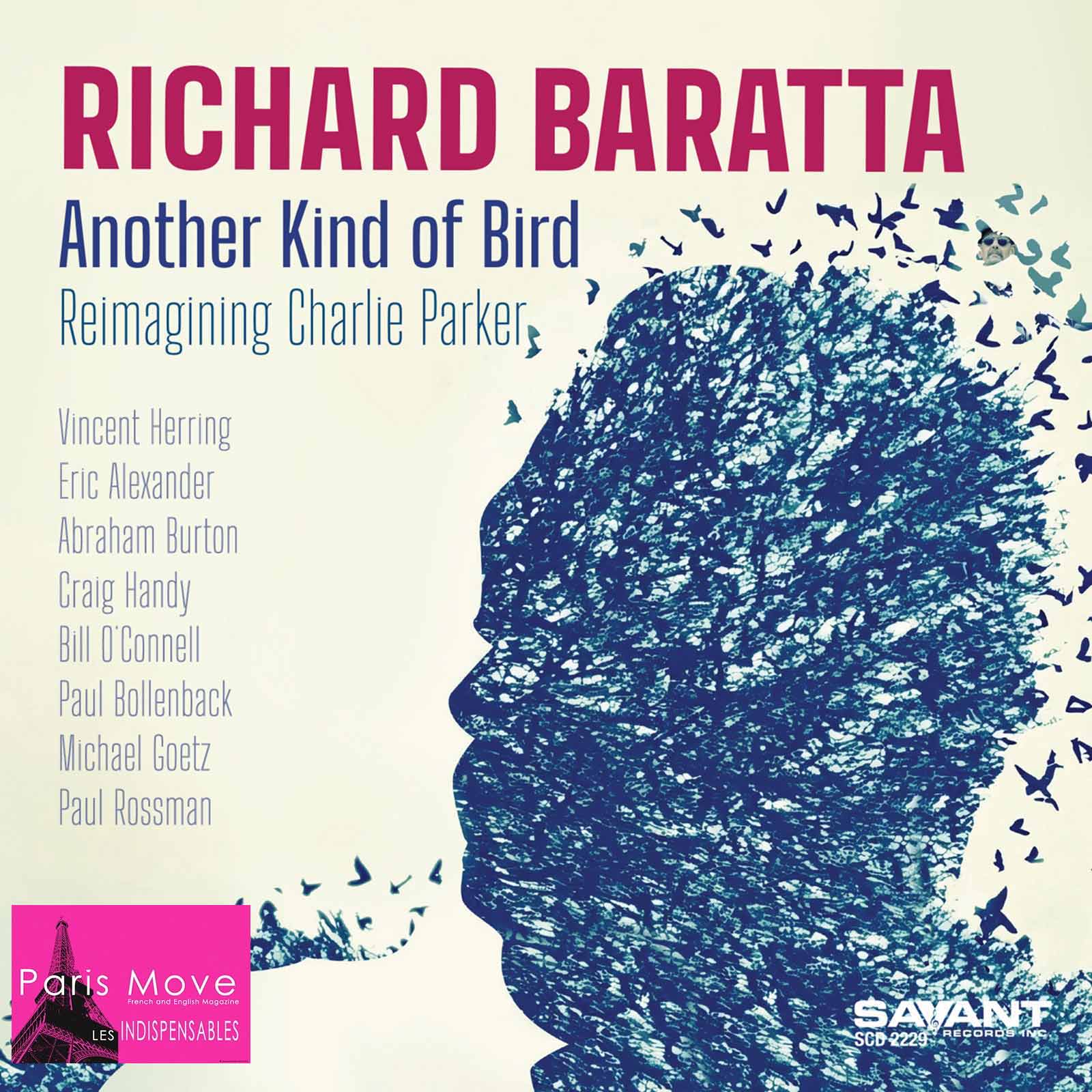
Summary: Richard Baratta’s Another Kind of Bird boldly reimagines the music of Charlie Parker through dynamic contemporary arrangements, cinematic pacing, and fearless modern jazz energy, creating one of the most compelling reinterpretations of Bird’s legacy in recent years.
Richard Baratta Reimagines Charlie Parker With Fearless Precision on Another Kind of Bird
A gray morning settles slowly over Austin. The air already feels heavy despite the early hour, and the silence inside the studio is interrupted only by the low electrical hum of the mixing console coming to life. Outside, the city has not fully awakened yet, but inside the office another kind of movement begins entirely. The album sleeve of Another Kind of Bird rests beside a stack of records that carry decades of jazz history. The first notes arrive cautiously through the speakers, then suddenly expand into something much larger. Within seconds, it becomes obvious that this is not another nostalgic exercise built around the mythology of Charlie Parker. This is something far more ambitious. Something alive.
With a title like Another Kind of Bird, coming from almost anyone else, the project might have sounded overly confident, perhaps even dangerously ambitious. But Richard Baratta’s career speaks with enough authority to silence any doubt almost immediately. Over the years, he has collaborated with an extraordinary constellation of jazz musicians including Eric Alexander, Vincent Herring, Walter Blanding, Craig Handy, Marcus Printup, Gerald Cannon, Emmett Cohen, Dave Stryker and John Patitucci among many others. This is not a musician approaching Parker’s legacy as an outsider looking in. Baratta has spent decades living inside the architecture of jazz itself.
From the opening moments of “Dionna Lee,” one senses immediately that the preparation behind this album must have evolved over many years. There is too much detail here, too much structural intelligence, for this music to have emerged impulsively. Revisiting Charlie Parker’s repertoire is among the most difficult challenges in jazz. Bird’s music is not simply iconic. It is foundational. His phrasing, harmonic daring, rhythmic elasticity and melodic invention permanently altered the language of modern jazz. That creates an almost impossible dilemma for contemporary musicians. Stay too faithful, and the performance risks becoming imitation. Push too far away from the source material, and the spirit disappears entirely. Most tribute projects eventually fall into one of those traps.
What makes Another Kind of Bird so fascinating is Baratta’s refusal to choose between preservation and reinvention. He somehow manages to protect the emotional DNA of Parker’s music while pulling these compositions directly into the modern era with astonishing clarity. Rather than sounding archival, the album feels urgent, contemporary and intensely physical.
Long before becoming a respected Hollywood producer, Richard Baratta was already deeply immersed in music. More than four decades ago, he was performing professionally with big bands and ensembles throughout New York. His later transition into cinema eventually led to an impressive career producing major films such as The Wolf of Wall Street, The Irishman, Joker and several entries in the Spider-Man universe. Yet music clearly never stopped occupying the center of his creative identity. In 2020, Baratta returned prominently to jazz with Music in Film: The Reel Deal, transforming legendary cinematic themes into dynamic jazz arrangements.
That cinematic background becomes one of the hidden engines driving Another Kind of Bird. Listening to the album often feels less like hearing a collection of standards and more like watching scenes unfold with deliberate narrative pacing. Baratta arranges music the way an experienced filmmaker constructs dramatic tension. Certain tracks open slowly, almost like establishing shots before suddenly widening into expansive brass movements. Rhythmic transitions arrive with the force of scene cuts. Solos emerge not merely as technical showcases but as emotional turning points inside a larger story.
“Little Suede Shoes” captures this beautifully. Under Baratta’s direction, the piece develops an almost visual momentum, moving with the confidence of a city sequence in motion, full of energy and sophisticated movement. “Ah-Leu-Cha” becomes deeply groove-oriented, driven by a pulse that feels modern without ever sounding forced. The arrangement reshapes the composition’s rhythmic identity while preserving its unmistakable Parker spirit. Then comes “Embraceable You,” perhaps one of the album’s most striking moments, where Baratta introduces a lyrical sensitivity that transforms the piece into something almost cinematic in its emotional scope. The melody unfolds patiently, allowing silence and space to carry as much emotional weight as the notes themselves.
One of the album’s boldest creative decisions was Baratta’s expansion of his usual sextet through the addition of a larger saxophone section on several tracks. That choice dramatically alters the emotional gravity of the music. The horns do not simply add volume or density. They create movement, tension and atmosphere. On certain passages, the brass surges forward with extraordinary force, evoking the intensity of classic big band recordings while remaining firmly anchored in contemporary jazz vocabulary. Elsewhere, the layered saxophone textures introduce warmth and emotional depth that give familiar Parker compositions an entirely different psychological dimension.
Baratta has explained that no figure in jazz history had a greater impact than Charlie Parker, and that expanding the horn arrangements felt like the only appropriate response to the scale of Parker’s influence. The decision proves remarkably effective. The ensemble sound feels simultaneously massive and agile, capable of explosive rhythmic passages while maintaining intricate harmonic precision.
And perhaps that urgency is what ultimately defines this album. Another Kind of Bird never feels academic. It never sounds like musicians carefully preserving sacred material behind glass. There is necessity in these performances. A creative compulsion. The sense that Baratta needed to revisit this music because the original compositions still contain emotional and cultural possibilities that have not yet been fully explored.
That is what separates this album from so many contemporary reinterpretation projects. Many artists either build cautiously around jazz masterpieces or modernize them superficially through production tricks and stylistic updates. Very few possess the confidence required to fully enter the structure of these compositions and reconstruct them from the inside out. Baratta does exactly that, applying an almost surgical level of precision to every arrangement while still preserving spontaneity and emotional immediacy.
His artistic independence has long been one of his defining qualities. Baratta frequently describes the music industry as brutal, and credits the stability of his film production career with allowing him to pursue music entirely according to his own instincts. That freedom resonates throughout this record. Nothing here feels calculated to follow trends or satisfy expectations. The album moves with the confidence of an artist creating without compromise.
More broadly, Another Kind of Bird arrives at a fascinating moment for contemporary jazz itself. Modern jazz increasingly lives between preservation and transformation. Younger musicians constantly revisit the canon, yet truly meaningful reinterpretations remain rare because they require not only technical mastery but also courage. The courage to disturb familiar works without destroying them. The courage to challenge listeners’ emotional attachment to iconic recordings. Richard Baratta succeeds because he understands that jazz history was never meant to remain static. Parker himself revolutionized the music by refusing convention. In many ways, this album honors Bird most authentically by embracing that same restless spirit of reinvention.
If you love the music of Charlie Parker, Another Kind of Bird already feels destined to become an essential reference point before its official release even arrives. Not because it imitates Bird perfectly, but because it dares to ask what his music might sound like if it were still evolving today.
Thierry De Clemensat
Member at Jazz Journalists Association
USA correspondent for Paris-Move and ABS magazine
Editor in chief – Bayou Blue Radio, Bayou Blue News
PARIS-MOVE, May 15th, 2026
Follow PARIS-MOVE on X

::::::::::::::::::::::::
Musicians :
Richard Baratta: drums
Vincent Herring: alto saxophone
Bill O’Connell: piano, keyboard, arranger
Paul Bollenback: guitar
Michael Goetz: upright bass
Paul Rossman: congas, percussion
With guest artists:
Eric Alexander, Abraham Burton: alto saxophone
Craig Handy: flute, soprano & tenor saxophone
Track Listing :
- Donna Lee
- Anthropology
- Little Suede Shoes
- Ah-Leu-Cha
- Embraceable You
- Now’s the Time
- Moose the mooche
- Yardbird Suite
- Segment
- Au Privave