| Jazz |
Summary: Danish composer and saxophonist Maria Dybbroe delivers a haunting and cinematic jazz experience with Øyeblikk, blending improvisation, classical textures and emotional storytelling into one of the most compelling Scandinavian releases of the year.
Maria Dybbroe’s Øyeblikk Transforms Scandinavian Jazz Into Pure Emotional Atmosphere
A pale northern light hangs over the room as Øyeblikk begins to unfold. Outside, the world moves with its usual noise and urgency, but inside these compositions time appears suspended, almost slowed to the rhythm of breathing itself. The first sounds arrive cautiously: a distant swell of strings, a fragile burst of saxophone, percussion that feels less played than whispered into existence. There is no dramatic entrance, no attempt to overwhelm the listener. Instead, the music opens like weather moving across an empty Scandinavian coastline, patient, cold and strangely luminous. Within minutes, it becomes clear that this is not merely an album to hear, but an atmosphere to inhabit.
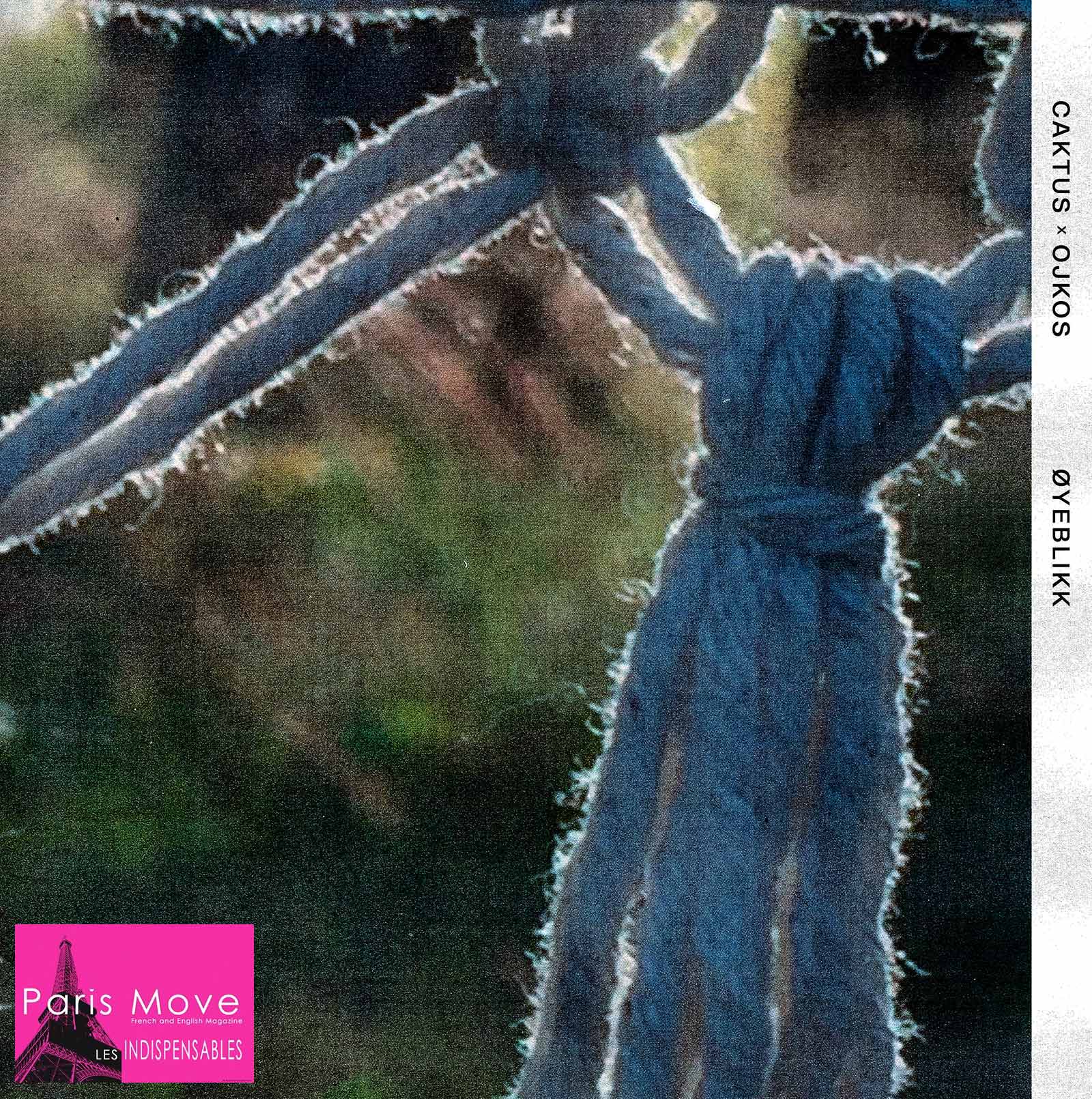
We are standing here on the borderlands between jazz and improvised music in its most fully realized form. One of the enduring traits of European jazz is precisely this willingness to wander beyond structure, beyond convention, toward territories that are uncertain, abstract and often deeply rewarding. Again and again, artists from across the continent have embraced this path, and the results can be astonishing. Such is the case with Danish composer and saxophonist Maria Dybbroe, who delivers with CAKTUS X OJKOS an album that feels both inspired and inspiring, a work that gradually reveals itself like a shifting landscape at dusk.
Listening to it brought to mind a line often attributed to Mark Twain: “We often feel sad in the presence of music without words, and even more so in the presence of music without music.” Here, music is unquestionably present, yet at times it seems to dissolve before our ears, stepping aside to make room for something more elusive. Not silence exactly, but sonic imagery, fragments of atmosphere, emotional shadows that open the door to a kind of poetry. The album unfolds as a richly textured sound world where intimate details coexist with broader dynamic movements, allowing both newly composed material and reimagined pieces from the ensemble’s repertoire to acquire remarkable depth and complexity.
Rather than adhering to the traditional grammar of the big band format, the music pursues something far more fluid and contemporary. The record moves gracefully between fragile, tactile moments and passages of expansive force, always privileging timbre, spatial tension and collective interaction over technical display. Across the course of the hour-long Øyeblikk, the listener is carried through a succession of evolving musical environments in which small constellations emerge, shimmer briefly and disappear again into the ensemble. The effect is cinematic at times, almost architectural at others, guiding the audience through constantly shifting moods and atmospheres.
Several moments stand out with particular force. In one passage, trembling strings seem to hover beneath the ensemble like fog moving across frozen ground, while muted brass tones rise slowly in the distance, carrying an almost funereal beauty. Elsewhere, breathy saxophone lines fracture into raw, intimate textures, as though the instrument itself were struggling to speak through memory and emotion. There are moments where silence becomes as important as sound, where the faint resonance of percussion or the scrape of bow against string creates a tension more powerful than volume ever could. These are not compositions designed around hooks or crescendos. They are emotional environments, alive with detail and movement.
At first glance, one might occasionally mistake certain passages for the introduction to a contemporary classical work. But perhaps that reaction says more about our inherited categories than about the music itself. The 21st century increasingly dissolves stylistic borders, reshaping genres into hybrid forms that belong fully to neither jazz nor classical music, but to something new altogether. It is as though modern artists are still wrestling with the immense cultural weight of the 20th century, attempting to move beyond it while carrying fragments of its language with them. Maria Dybbroe’s work exists squarely within that tension, and it is precisely there that much of its beauty resides.
There is little doubt that Maria Dybbroe is a major artist, though until now I had not yet encountered her work. She belongs to that lineage of European musicians, many associated in spirit with the aesthetic world surrounding ACT Music, whose grounding in classical traditions subtly permeates their compositions without ever overwhelming them. The beauty of this album does not announce itself immediately. It emerges slowly, almost cautiously, rewarding patient listening. Its richness becomes clearer when one considers the broader scope of Dybbroe’s artistic collaborations. Dancers, poets and multidisciplinary performers orbit around her creative practice, and that openness to other artistic languages is deeply embedded in the DNA of this record.
Dybbroe’s saxophone playing itself deserves particular attention. Rather than dominating the ensemble in the traditional jazz sense, her instrument often moves through the compositions like a human voice caught between confession and abstraction. At times warm and fragile, at others piercing and restless, her phrasing carries a profound emotional intelligence. She understands when to step forward and when to disappear into the collective sound, allowing the ensemble itself to breathe as a single living organism.
Nothing here feels accidental. Øyeblikk carries the weight of careful reflection and deliberate construction. Formed in Aarhus in 2017, Caktus has established itself as one of the most singular young ensembles on the Scandinavian jazz scene. Through an unusual instrumentation blending strings, winds and rhythm section, the group has developed a musical language that evolves organically between composition and improvisation. Their earlier releases, Under Solen and Flimrende, earned widespread critical praise, including nominations for the Danish Music Awards Jazz and the Steppeulven Prize. With Øyeblikk, the ensemble expands its sonic ambitions without sacrificing its identity, maintaining a delicate balance between structure and freedom, intimacy and scale.
There is also something deeply theatrical about the experience. At moments, the album resembles an imaginary opera without voices, a form of emotional dramaturgy unfolding entirely through texture, movement and tension. One enters this music less through melody alone than through sensation, through atmosphere, through instinctive emotional response. These shifting forms of dramatization become pathways into the album itself.
The comparison that continually returns to mind is Maria Schneider. Not because Dybbroe imitates her, but because both artists share a rare ability to transform ensemble writing into emotional storytelling. Like Schneider, Dybbroe treats orchestration not simply as arrangement, but as architecture, shaping tension, silence and release with almost cinematic precision. Both composers understand how large ensembles can breathe, fracture and swell like living emotional landscapes rather than rigid musical structures.
And ultimately, perhaps that is the most fitting way to approach Maria Dybbroe’s work: not analytically at first, but emotionally, allowing its strange and beautiful logic to reveal itself in time. If Maria Schneider has a spiritual sister somewhere in Europe, it may very well be Maria Dybbroe.
Thierry De Clemensat
Member at Jazz Journalists Association
USA correspondent for Paris-Move and ABS magazine
Editor in chief – Bayou Blue Radio, Bayou Blue News
PARIS-MOVE, May 10th, 2026
Follow PARIS-MOVE on X

::::::::::::::::::::::::
Musicians :
Maria Dybbroe – composition, clarinet & alto saxophone
Camilla Hole – soprano saxophone
Sigrid Aftret – tenor saxophone & flute
Tina Lægreid Olsen – clarinets & baritone sax
Tancred Heyerdahl Husø – trumpet
Sounds Øvreås Røed – trumpet
Magnus Murphy Joelson – trombone
Johannes Fosse Solvang – trombone
Jørgen Bjelkerud – trombone
Arne Martin Nybo – guitar
Thorbjørn Kaas – cello
Petter Asbjørnsen – double bass
Aleksander Hoholm – double bass
Knut Kvifte Nesheim – drums
Track Listing :
Stærk strøm
Trollhättan
Det nye år
Kalvøya
Min have
Fornebu
All compositions by Maria Dybbroe
Arrangement of Stærk Strøm made in collaboration with Peter Jensen
Recorded by Louise Lavoll
Mix by Arvid Ingvarsson
Mastering by Jørgen Træen
Coverart by Erlend Eggestad
Released on Sonic Transmission Records