
| Jazz |
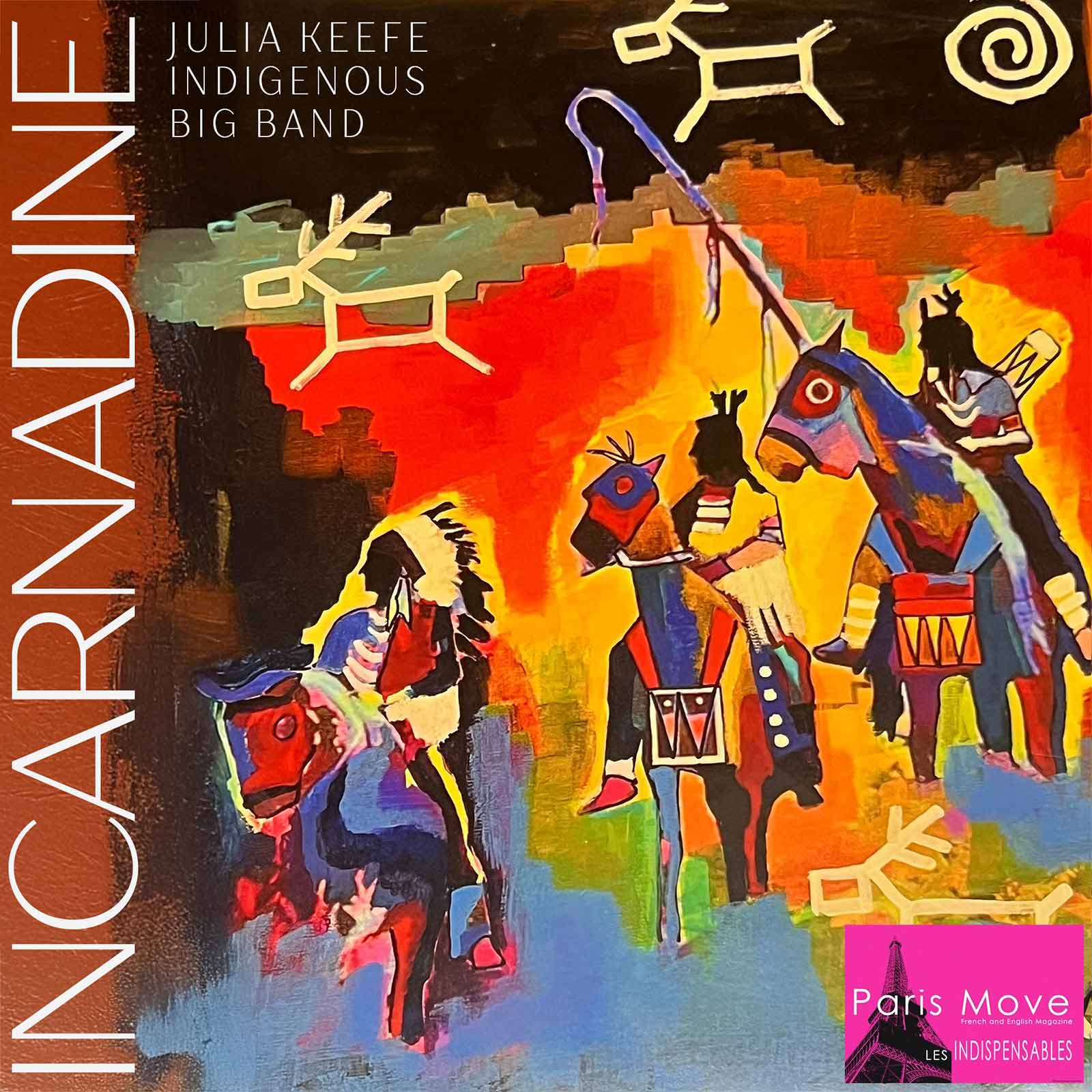
Summary : Julia Keefe’s Incarnadine is a powerful and deeply human jazz album that blends Indigenous history, emotional storytelling, and masterful big band composition into one of the year’s most important contemporary jazz recordings.
Incarnadine Redraws the Boundaries of Jazz History Through Indigenous Voices
A bright morning settles over Texas, the kind where the yellow roses seem to multiply by the hour beneath the fierce southern sun. The windows are already warm before noon, and somewhere outside a lawn sprinkler clicks rhythmically against the dry Austin heat. Inside the office, the room still carries the quiet heaviness of an early workday. A notebook lies open beside the mixing console, coffee cools untouched, and then someone presses “Play.” What arrives first is the unmistakable force of a big band, but not one shaped by convention. The brass does not overwhelm. The rhythm section does not rush to impress. Instead, the music unfolds with patience, confidence, and emotional clarity.
This is Incarnadine, the debut album by the ensemble led by acclaimed vocalist Julia Keefe of the Nez Perce Nation, and from its opening moments it becomes clear that this is not simply another contemporary jazz orchestra recording. The melodies breathe differently. The arrangements reject the polished predictability that often defines modern big band recordings. There is sophistication here, certainly, but also memory, ceremony, grief, resilience, and a profound sense of cultural continuity flowing beneath every phrase.
The project immediately stands apart because it is one of the only jazz big bands in the world composed entirely of First Nations and Indigenous musicians. Across sixteen performers, Incarnadine becomes something larger than an album release. It feels like a reclamation of space within jazz history itself, an affirmation that Indigenous musicians were never absent from the story of jazz, only too often excluded from the way that story has been told.
After touring extensively through major performing arts centers and jazz clubs across the United States, the ensemble finally captures its vision in recorded form. Yet to reduce the album to its cultural symbolism alone would be a mistake. What makes Incarnadine so remarkable is the intelligence of its musical construction. The record moves fluidly between light and shadow, between intimacy and grandeur. Certain passages carry the elegance and structural ambition of chamber music, while others reach back toward earlier traditions of American jazz with striking emotional force.
At several moments, the album recalls the political and artistic courage of landmark jazz recordings that transformed the cultural conversation around the music itself. One thinks occasionally of Charles Mingus confronting racial violence through composition, or Max Roach insisting that jazz could carry protest, mourning, and historical testimony without sacrificing beauty. Incarnadine belongs to that lineage of albums that refuse separation between artistic excellence and historical consciousness.
It becomes difficult not to be moved by a work assembled with such care and emotional intelligence.
“Sonnet,” the album’s second track, establishes the philosophical center of the project almost immediately. The piece does not simply present melody. It interrogates. It searches. Inspired by the poetry of Pablo Neruda, the composition unfolds with remarkable restraint, Julia Keefe’s leadership evident not through domination but through emotional precision. Her presence throughout the album is deeply compelling because she understands exactly when to step forward and when to allow the ensemble space to breathe. She guides the orchestra less like a traditional bandleader demanding attention and more like a storyteller carefully shaping collective memory.
Speaking about the title of the album, Keefe explained that although the Shakespearean word “incarnadine,” drawn from Macbeth, might not immediately evoke Indigenous jazz, the term means “to make red.” Her interpretation gives the project its emotional core. The album acknowledges histories marked by violence and trauma while celebrating the endurance, spirituality, and artistic brilliance of Indigenous communities that survived through language, prayer, song, and culture. Keefe has described the work as an attempt to expand listeners’ understanding of jazz itself, insisting that Indigenous jazz musicians belong fully within the canon of the music. “Some people say, ‘decolonize your mind,’” she remarked. “I say, ‘incarnadine your mind.’”
That idea lingers long after the final notes fade.
The release of Incarnadine also arrives during a broader resurgence of Indigenous voices across contemporary jazz. In recent years, a growing number of Indigenous composers, improvisers, and bandleaders have begun reclaiming space within North American experimental and jazz traditions, reshaping conversations around heritage, improvisation, and historical memory. What makes this movement particularly exciting is that it does not seek permission from established institutions. Instead, it expands the very language of jazz itself, drawing from oral traditions, tribal histories, ceremonial music, and contemporary political realities without abandoning the improvisational spirit at the heart of the genre.
That broader cultural moment gives Incarnadine even greater resonance.
At a time when parts of the world increasingly drift toward historical revisionism, reshaping uncomfortable truths into simplified narratives, albums like this serve as reminders that art remains one of the most powerful tools for historical honesty. Music cannot repair history, but it can refuse erasure. It can preserve memory. Listening to Incarnadine often feels like encountering a form of wisdom urgently needed in contemporary public life.
And yet, for all its intellectual and historical weight, the album never abandons musical pleasure. The performances throughout are extraordinary. The ensemble revisits works associated with influential twentieth-century Indigenous jazz artists such as Mildred Bailey of the Coeur d’Alene people and the legendary saxophonist Jim Pepper of Kaw and Muscogee heritage, while also presenting striking original compositions from members of the ensemble itself.
Mali Obomsawin’s “Wawasint8da” becomes one of the album’s most haunting achievements. A low brass passage rises slowly beneath shimmering percussion before woodwinds enter almost like distant voices carried through fog. The piece transforms a Catholic hymn translated into the Abenaki language by an early French Jesuit missionary into something deeply meditative and emotionally unsettling. Delbert Anderson’s “DDAT Suite” unfolds with cinematic ambition, at times propelled by restless percussion that evokes the rhythm of a moving train, before suddenly opening into spacious melodic passages filled with longing and reflection. The suite honors ancestral lands, commemorates Navajo code talkers, and recounts the experience of an overnight train journey from Gallup, New Mexico, to Los Angeles.
Throughout the album, the arrangements display remarkable discipline. No instrument feels ornamental. Every entrance matters. Trumpets flare briefly before retreating into silence. Saxophones drift through passages like fragments of remembered conversation. The rhythm section remains grounded and patient, allowing tension to build naturally rather than forcing dramatic climaxes.
What ultimately makes Incarnadine extraordinary is the way it resists simplification. It is neither a museum piece nor a political slogan. It exists instead as living music, ambitious, vulnerable, technically masterful, and emotionally resonant. The album embodies the words once spoken by the late Jim Pepper, who observed that Native music could never be generalized because of its immense diversity.
That diversity pulses through every moment of this record.
Incarnadine is not merely an important Indigenous jazz album. It belongs to that rare category of recordings capable of altering the broader understanding of what jazz history has been, and what its future may become. Albums like this do not simply accompany history. They enter it.
Thierry De Clemensat
Member at Jazz Journalists Association
USA correspondent for Paris-Move and ABS magazine
Editor in chief – Bayou Blue Radio, Bayou Blue News
PARIS-MOVE, May 14th, 2026
Follow PARIS-MOVE on X

::::::::::::::::::::::::
Musicians :
Rhythm Section:
Marc Cary, Chappaquiddick Wampanoag, Piano
Mali Obomsawin, Abenaki of Odanak First Nation, Bass and Vocals (track 3 only)
Edward Littlefield, Lingít, Drums
Magdalena Abrego, Guitar (track 3 only)
Trumpets:
Kalí Rodriguez, Taíno, Trumpet
Giovanni Martinez, Yaqui, Trumpet (tracks 4, 5, 6)
Delbert Anderson, Diné, Trumpet
Chuck Copenace, Ojibwe, Trumpet (tracks 1, 2, 3, 7, 8)
Trombones:
Quinn Carson, Apache Tribe of Oklahoma and Kiowa Tribe, Trombone
Christopher Gonzales, Mestizo, Trombone
Wade Demmert, Lingít and Oglala Lakota, Bass Trombone
Woodwinds:
Rogan Tinsley, Kanaka Moali, Alto Saxophone and Vocals (track 7 only)
Asa Peters, Mashpee Wampanoag, Alto Saxophone and Vocals (track 5 only)
Adam Lamoureux, Muskegon (Swampy Cree), Tenor Saxophone
Michael Gutierrez, Comanche and Cheyenne-Arapaho, Tenor Saxophone
Orion White, Nez Perce and Ottawa Tribe of Oklahoma, Baritone Saxophone
Track Listing :
Water
Sonnet
Wawasint8da
DDAT Suite. MVT. 1 “Narbona”
DDATt Suite. MVT. 2 “Attention”
DDATt Suite. MVT. 3 “Iron Horse Gallup”
KU’U PUA IPaoakalani
Rocking Chair
Director:
Julia Keefe, Nez Perce, Vocals (tracks 1, 2, 8) and Background Vocals (track 3 only)
Produced by Julia Keefe & Quinn Carson
Recording Engineering by Brain Saia
Additional Tracking by Quinn Carson
Mix Engineering by Ken Rich
Mastering Engineering by Dave Darlington
Incarnadine was recorded through the support of The Prior Performing Arts Center at the College of the Holy Cross.