| Jazz |
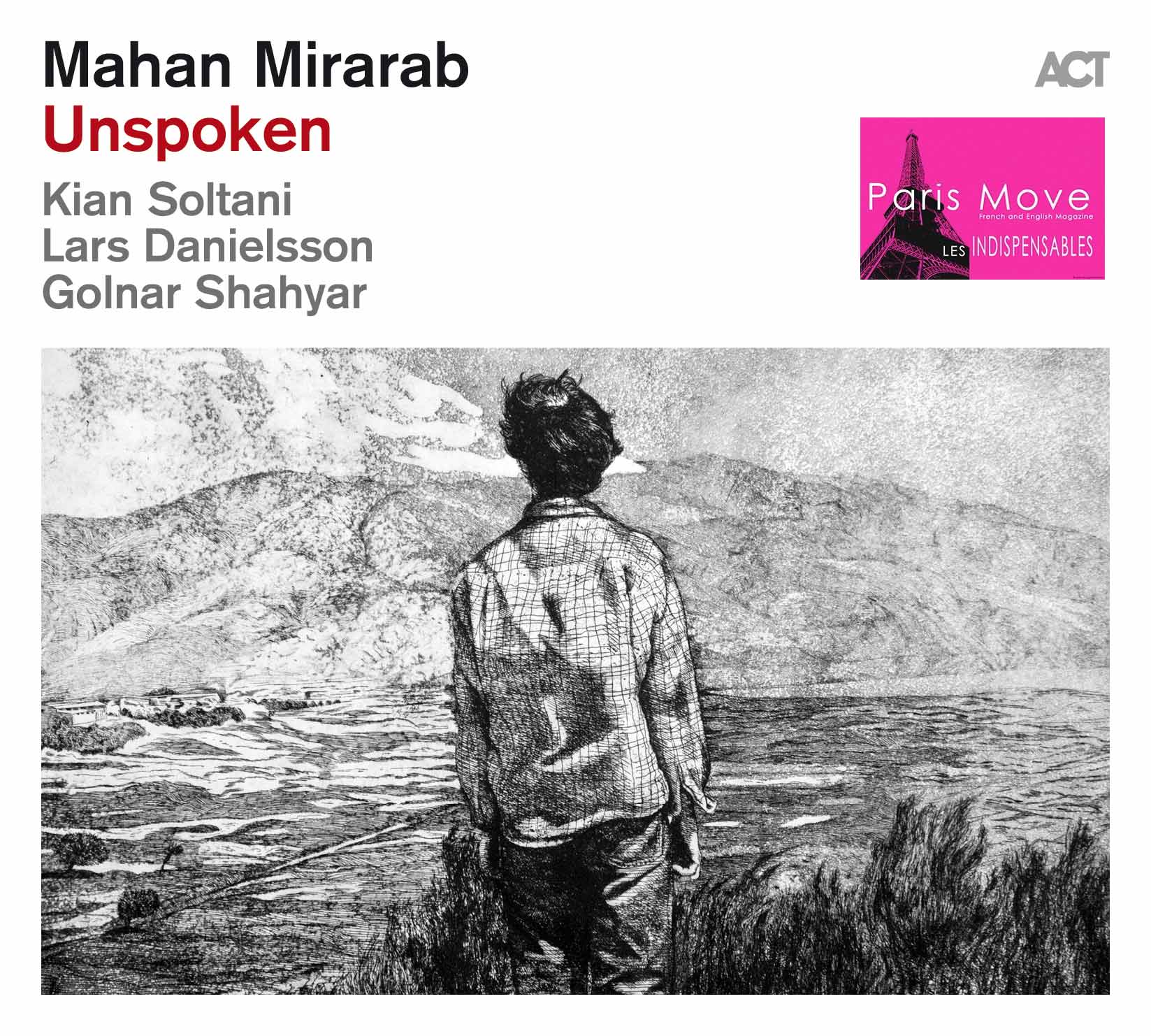
Summary : Iranian guitarist Mahan Mirarab delivers a deeply poetic and intimate debut with Unspoken, blending jazz, exile and cultural memory alongside Swedish bassist Lars Danielsson in one of the year’s most emotionally resonant releases.
After the Storm, the Sound of Iran: Mahan Mirarab’s “Unspoken” Arrives With Quiet Power
The ACT Records debut from Iranian guitarist Mahan Mirarab transforms memory, exile and longing into a luminous meditation on beauty, silence and survival.
The storm finally loosened its grip on Austin sometime before dawn. Only a few hours earlier, relentless flashes of lightning had fractured the Texas sky without interruption, illuminating the night in violent bursts of white. The suffocating heat that had settled over the city for days suddenly collapsed beneath cooler air and rain-soaked silence. By morning, the atmosphere lingering outside the studio windows seemed to continue inside the music now playing through the monitors: Unspoken, the debut ACT Records release from Iranian guitarist and composer Mahan Mirarab.
There are albums that arrive loudly, determined to impose themselves immediately upon the listener. Unspoken moves differently. It unfolds slowly, almost cautiously, as though each note were searching for the precise emotional space it should occupy. Joined by the remarkable Swedish bassist and cellist Lars Danielsson, Mirarab creates a work of immense restraint and fragile elegance, one that feels less like a conventional jazz recording and more like a deeply personal conversation carried quietly across borders.
The album often resembles a series of postcards sent from a country increasingly isolated from the outside world, while one of its artists continues trying to remind listeners that beauty still survives there.
Born in Tehran, Mirarab began studying piano and guitar during childhood. At fourteen, he joined a Pink Floyd cover band as a bassist, an experience that introduced him to Tehran’s underground music scene and, through it, to Western jazz and progressive rock. Resources were scarce. Music circulated secretly, copied onto black market cassette tapes exchanged discreetly between friends and musicians.
It was through those recordings that Mirarab discovered artists such as Bud Powell, Chick Corea and George Benson. He listened obsessively, memorizing solos note by note until he could sing them from memory, eventually transcribing them for guitar himself. Even listening carried risk. Mirarab has recalled that simply possessing cassette tapes could be considered a criminal offense, and that one acquaintance was reportedly imprisoned because of a copied jazz recording.
Yet curiosity proved stronger than fear.
One of the ensembles in which Mirarab performed was dedicated to the music of Weather Report, playing primarily at events organized by foreign embassies. In a remarkable twist of fate, admiration for Joe Zawinul would eventually help shape Mirarab’s future. The Austrian ambassador in Tehran, himself deeply passionate about Zawinul’s music, helped Mirarab leave Iran and pursue the broader musical world he had long imagined beyond its borders.
In 2009, Mirarab arrived in Vienna, where he still lives today.
The lives of many artists are shaped by departure. Behind countless musical journeys lies some form of geopolitical fracture, exile or displacement. Arriving in a foreign country, learning its rhythms, understanding its codes and slowly rebuilding oneself inside another culture inevitably leaves traces inside the music.
There is a particular solitude that often follows artists who leave their homeland. Not only geographic distance, but the gradual realization that memory itself begins to change shape over time. Unspoken carries traces of that emotional dislocation throughout its quieter passages. One senses not nostalgia in the sentimental sense, but rather the attempt to preserve fragments of identity before they disappear entirely.
For listeners willing to truly hear it, this album escapes the simplistic categories often imposed upon Middle Eastern music in Western cultural discourse. This is not an exoticized interpretation designed to satisfy clichés. The structures move differently here. The emotional architecture feels expansive, almost geographical in scale, perhaps reflecting the vastness of Iran itself. At moments, certain harmonic colors subtly evoke Andalusian traditions, drifting through the compositions like distant memories without ever overwhelming their identity.
Above all, what emerges is the portrait of a profoundly inspired guitarist.
Mirarab rarely overwhelms the listener with virtuosity. Instead, he favors patience and emotional clarity, allowing melodies to breathe naturally inside spacious arrangements where every silence feels intentional. Even silence itself becomes part of the composition, carrying as much emotional weight as the notes. His guitar tone remains warm and intimate throughout the album, avoiding unnecessary demonstration in favor of nuance, texture and atmosphere.
Danielsson’s contribution proves equally essential. His bass and cello lines move through the record almost like shadows, adding depth and emotional gravity without ever disturbing the fragile balance of the music. At times, his presence gently bridges certain Eastern tonalities with a more European jazz sensibility, allowing the album to remain accessible while fully preserving its identity.
Over the years, ACT Music has established itself as one of Europe’s essential homes for contemporary jazz, consistently championing artists capable of blending technical sophistication with emotional depth. There is something particularly fitting, then, about Mirarab finding his artistic home there.
The story behind the album’s creation reveals much about its emotional honesty. When producer and label director Andreas Brandis first encountered Mirarab’s work, the guitarist reportedly sent him an enormous quantity of recordings and documents to explore. Yet among all that material, one modest solo sketch immediately stood apart. ACT director and producer Andreas Brandis and A&R Michael Gottfried quickly encouraged him to pursue that quieter and more intimate direction.
For Mirarab, the experience became liberating. Rather than constantly proving technical ability or stylistic versatility, he was encouraged simply to exist fully as himself. Conversations between the musician and Brandis continued over time, including meetings in Paris and long discussions over the phone, slowly forming the conceptual backbone that would eventually become Unspoken.
The result is deeply moving precisely because it refuses excess.
There is poetry everywhere in this album, but never in a forced or theatrical manner. It emerges naturally through restraint, atmosphere and emotional precision. The pacing feels meditative without becoming static. The music leaves room for reflection, allowing listeners to inhabit its spaces rather than merely observe them from a distance.
More than anything, Unspoken quietly reminds us that behind the language of war, sanctions and geopolitical tension, there are ordinary people trying to live, create and preserve dignity. There are musicians trying to protect beauty from vanishing entirely. Iranian artists remain far too absent from the broader international jazz conversation, which makes the arrival of this album feel even more significant at this particular moment in history.
Some records demand immediate attention through spectacle or volume. Others remain with you long after the final note disappears.
Unspoken belongs firmly to the latter.
Thierry De Clemensat
Member at Jazz Journalists Association
USA correspondent for Paris-Move and ABS magazine
Editor in chief – Bayou Blue Radio, Bayou Blue News
PARIS-MOVE, May 11th, 2026
Follow PARIS-MOVE on X

::::::::::::::::::::::::
Musicians :
Mahan Mirarab, compositons & guitares
Lars Danielsson, double bass
Kian Soltani, violoncelle
Golnar Shahyar, vocals
Track Listing :
First Idea
Unspoken
A Way to Mourn
Hawari Funk
Choopan 42
Banoo
Lars in Isfahan
Sparkling Dark Gaze
Weissensee
Pıçıldaşın, Ləpələr
Jina
In a Silent Way