| Jazz |
Summary: Ize Trio blends jazz, maqam traditions and chamber music on Global Prayer, a deeply spiritual and intellectually rich album that could become one of 2026’s defining jazz releases.
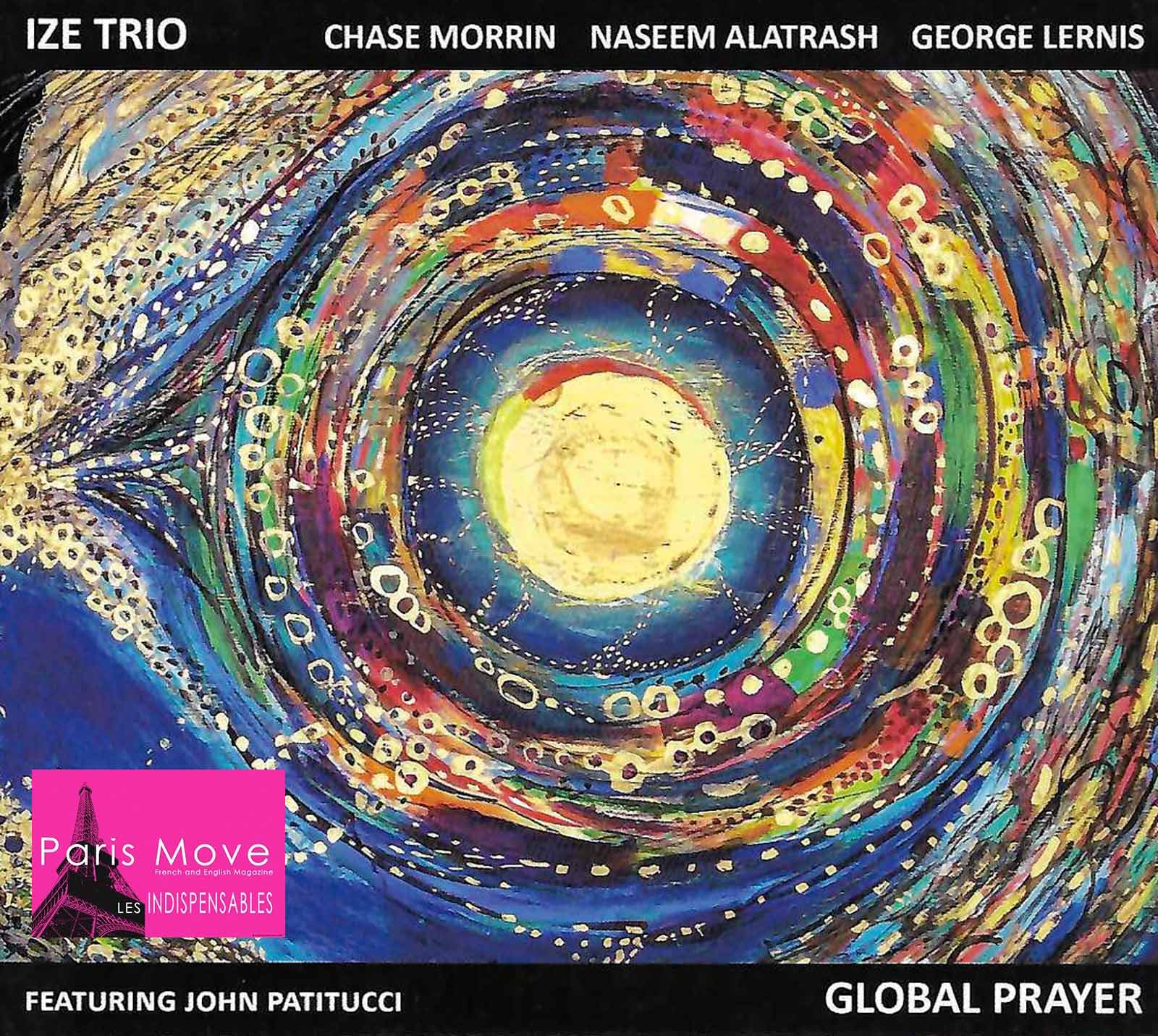
Ize Trio’s Global Prayer Is One of 2026’s Most Daring and Beautiful Jazz Albums
Early in the morning, I press play. The music of Ize Trio pours into my headphones, themselves connected to a digital Soundcraft mixing console, and the sound arrives with startling clarity. Within seconds, it becomes obvious that this trio speaks in a language that feels fiercely contemporary and completely self assured. Their music is intricate yet deeply rewarding to hear, built on rhythmic tension that seems to define the very purpose of each instrument. On the opening track, “Flying,” rhythm initially dominates the landscape, each player challenging the others in a thrilling exchange before melody gradually rises above the turbulence and claims the final word.
Then comes another surprise. Instead of the familiar pulse of a double bass, a cello anchors the ensemble, immediately signaling that Global Prayer is not simply another jazz record arriving in an overcrowded field. During several passages, the instrument does far more than provide harmonic support. Naseem Alatrash draws long, almost vocal lines from the cello, allowing its warm and grainy resonance to hover between lament and meditation. At times, the instrument sounds ancient and deeply rooted in Middle Eastern traditions. Moments later, it pivots toward something closer to chamber music or avant garde jazz, giving the album an emotional elasticity that constantly keeps the listener off balance.
This is music of unusual intellectual ambition, an album that asks something of its listeners and rewards those willing to meet it halfway. It is the kind of record that reveals itself slowly, particularly to audiences whose musical curiosity stretches beyond conventional borders, much like the trio itself.
The group brings together three musicians shaped by strikingly different cultural backgrounds, weaving together jazz traditions, Western classical music and the maqam tradition, the rich microtonal musical language heard across Greece, Turkey, Cyprus, Palestine and throughout much of the Arab world. Pianist Chase Morrin, originally from San Diego, joins forces with Cypriot percussionist George Lernis and Alatrash. The three first crossed paths while studying at the Berklee Global Jazz Institute, the graduate program established by pianist and educator Danilo Pérez.
By the time the second track, “From The Stars,” unfolds, echoes of multiple musical cultures begin to emerge more clearly. Yet the trio never presents these influences in obvious or decorative ways. Instead, they appear like carefully placed strokes of color on a painting, subtle touches that create texture, depth and emotional resonance without overwhelming the broader composition. The result feels organic rather than demonstrative.
One particular rhythmic sequence midway through the album becomes impossible to forget. Lernis locks into an intricate percussive cycle that feels simultaneously Mediterranean and modern jazz inspired, while Morrin answers with fragmented piano motifs that seem to deliberately avoid predictable resolution. Just as the tension reaches its peak, the cello enters almost cautiously, carrying a fragile melodic phrase that suddenly reorganizes the entire composition emotionally. It is one of those rare moments where technical brilliance gives way to something profoundly human.
The ensemble is further strengthened by an impressive group of guest musicians who expand the already vast emotional and geographic reach of the album. Among them is bassist John Patitucci, a Grammy Award winner and longtime mentor to the group whose résumé famously includes the legendary Wayne Shorter Quartet alongside Pérez. The album also features saxophonist Lihi Haruvi, laouto player Vasilis Kostas, violinist Layth Sidiq, who serves as artistic director of the New York Arabic Orchestra, and bouzouki player and computer scientist Yaniv Yacoby, who had previously collaborated with Morrin on the 2016 duo recording The Corn Knight.
Jazz critics spend much of their lives moving from one musical universe to another, constantly attempting to measure albums that may have absolutely nothing in common stylistically, yet still achieve greatness for entirely different reasons. In the end, what matters most is rarely the genre or the conceptual framework. The true center of gravity lies in the strength of the compositions and the intelligence of the arrangements. Global Prayer succeeds because nothing here feels accidental. Every transition, every rhythmic detour and every moment of silence appears carefully considered by musicians who understand exactly what they want this music to communicate.
Stylistically, the album occasionally evokes the spiritual openness of Wayne Shorter, the cross cultural fluidity of Avishai Cohen and even the rhythmic complexity of Tigran Hamasyan. Yet Ize Trio never sounds derivative. Their achievement lies precisely in the way they absorb these influences without becoming trapped by them. The trio’s musical identity remains remarkably singular.
Where the expansive suites that shaped the trio’s first album focused heavily on social and global crises confronting both the musicians and the wider world, Morrin describes Global Prayer as a work that turns inward. Much of the music is dedicated to mentors or shaped by spiritual reflection, asking listeners to consider how human beings continue to exist and search for meaning within an increasingly chaotic world.
That thematic thread can be felt throughout the album. Yet it never becomes heavy handed or self important. Instead, it acts as a quiet invitation to reflect. At a moment when marketing language so often replaces thoughtful artistic discourse, that kind of sincerity feels increasingly rare and deeply valuable.
There is something genuinely astonishing about Ize Trio. The group manages to sound sophisticated without becoming cold, cerebral without sacrificing emotion. Global Prayer is challenging at times, but always alive, always searching. It is the kind of album that stays with you long after the final notes disappear.
By the end of the record, one thing feels undeniable: this may well become one of the defining jazz albums of 2026.
Thierry De Clemensat
Member at Jazz Journalists Association
USA correspondent for Paris-Move and ABS magazine
Editor in chief – Bayou Blue Radio, Bayou Blue News
PARIS-MOVE, May 21st, 2026
Follow PARIS-MOVE on X

::::::::::::::::::::::::
Musicians
Chase Morrin, piano
Naseem Alatrash, Cello
George Lernis, percussions
Guests :
John Patittucci, bass (2)
Lihi Haruvi, soprano sax (2)
Valisis Kotas, lauto (4)
Layth Sidiq, violin (4)
Track Listing :
Flying
From The Stars
Splashes Of The Future
Snaefellsjokull
Global Prayer
The New Order
Jam For The End Of The World
TaQsim
Epilogue