
| Jazz |
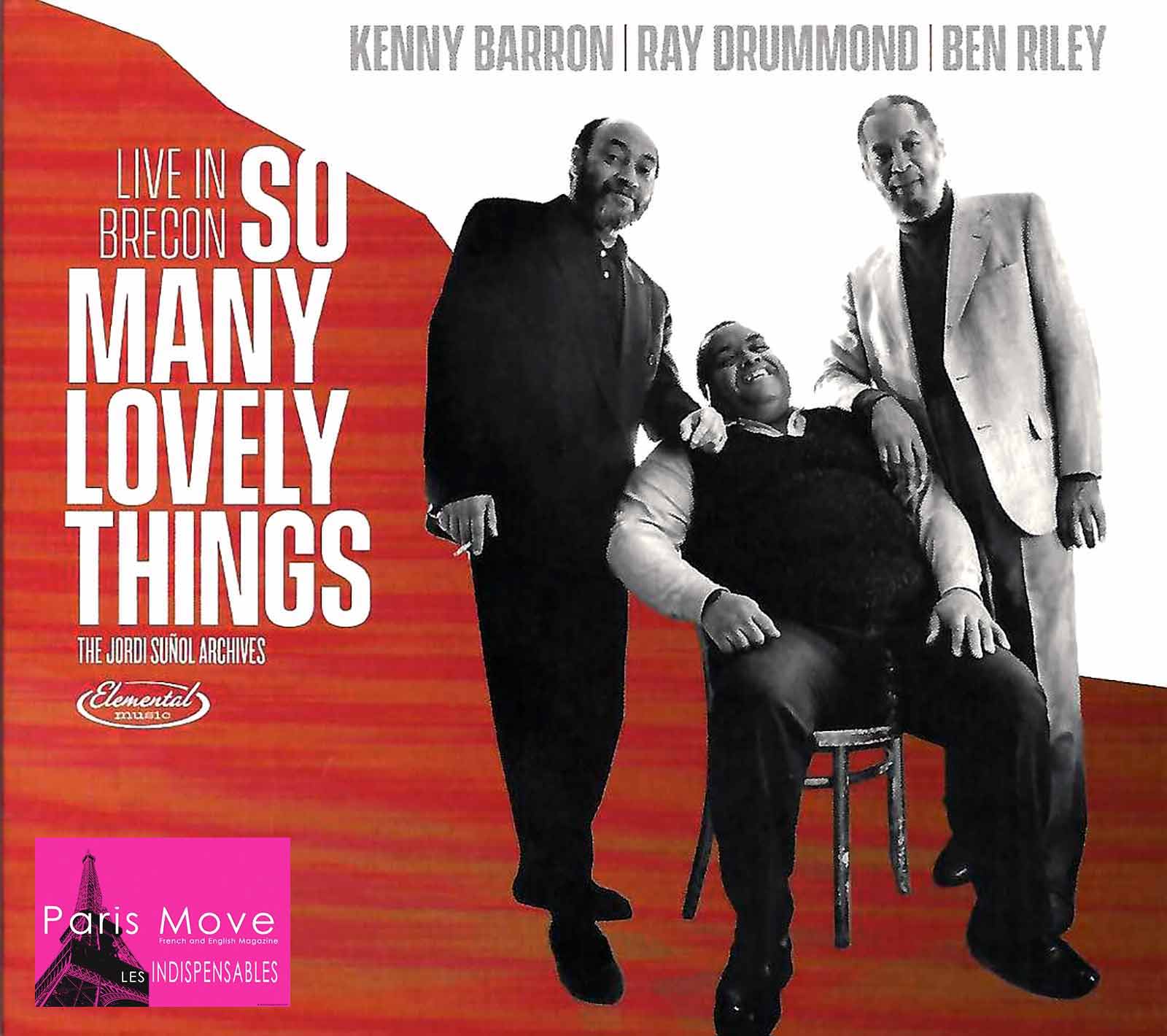
Summary: A stunning unreleased 1995 live recording reunites Kenny Barron, Ray Drummond, and Ben Riley in a deeply lyrical and masterfully swinging performance that captures the timeless elegance of classic jazz trio artistry.
Kenny Barron’s Lost 1995 Trio Concert Finally Emerges as a Jazz Masterpiece
Outside, the wind refuses to settle, rattling windows and bending the trees just enough to announce the inevitable arrival of rain. The sky over the city hangs low and bruised, swollen with the promise of summer thunderstorms. Even the pavement seems alive with anticipation, carrying that dense mineral scent that rises just before the first drops fall. By the time I arrive at the office, jacket still damp from the humid air, the world already feels suspended between exhaustion and release. The fluorescent lights hum softly overhead. Downtown traffic crawls beneath the windows in muted gray lines. Somewhere in the distance, thunder rolls like an opening drum fill.
It feels like the right moment to finally press play on the album that has been staring at me for weeks.
Sometimes a single name is enough. The mere mention of Kenny Barron still carries a kind of quiet authority among jazz listeners, the assurance that whatever follows will be rooted in elegance, intelligence, and a profound respect for the tradition without ever sounding trapped by it. Barron belongs to that increasingly rare category of musicians capable of making virtuosity feel human. His playing never demands attention through force. It draws listeners inward instead, patiently, almost conversationally.
Within moments, the trio takes possession of the room. Notes drift above my desk like fragments of half-remembered conversations. The music does not simply play in the background. It alters the atmosphere itself. Three musicians, each carrying decades of history in their hands, create a groove so fluid and organic that the modern world outside the window slowly dissolves. Emails continue arriving. Phones continue ringing. The storm edges closer. Yet mentally, emotionally, we are no longer here.
We are suddenly somewhere else entirely.
The recording, a previously unreleased concert from 1995 rescued from the archives of Spanish promoter Jordi Suñol, feels less like an archival curiosity than a portal into another era of jazz performance, a time when acoustic trios still commanded stages with the same dramatic force as rock bands. The chemistry captured here between Barron, bassist Ray Drummond, and drummer Ben Riley borders on telepathic.
Riley, of course, remains inseparable from the legacy of Thelonious Monk, having served as the drummer in Monk’s groups from 1962 through 1968, helping define one of the most distinctive rhythmic languages in modern jazz. Barron and Riley first played together in 1976 during a week-long engagement at the legendary Village Vanguard alongside Ron Carter. That shared history is audible in every exchange throughout this concert. Nothing feels rehearsed in the rigid sense of the word. The trio moves with the instinctive trust of musicians who have spent years listening as deeply as they play.
And what immediately becomes clear is how naturally this trio belongs in the lineage of the great piano trios that shaped modern jazz history. There are moments here that evoke the lyrical sophistication of Bill Evans’ legendary work with Scott LaFaro and Paul Motian, particularly in the trio’s sensitivity to space and melodic conversation. Elsewhere, one hears flashes of the muscular swing and blues-inflected warmth associated with Oscar Peterson’s classic groups. Yet Barron’s trio never sounds derivative. What makes this recording extraordinary is precisely the balance it achieves between refinement and looseness, between intellectual rigor and emotional spontaneity.
Ray Drummond once described Barron as one of the truly indispensable pianists of jazz, praising not only his harmonic sophistication but his ability to make any piano sound unmistakably like Kenny Barron. Listening now, that observation feels impossible to dispute. Barron’s phrasing possesses an almost architectural grace. He constructs improvisations patiently, allowing melodies to unfold naturally before subtly reshaping them into something richer and more emotionally layered. There is tremendous technical command underneath everything, yet the listener never feels burdened by virtuosity. The music breathes too freely for that.
At this level, these are no longer merely accomplished musicians performing standards and compositions for an appreciative crowd. These are artists whose collective experience forms a kind of living archive of jazz itself. Every phrase carries accumulated history. Every rhythmic shift feels informed by decades spent inside the language of swing, bebop, post-bop, and beyond. This is precisely why recordings like this become essential documents. They preserve not only performances, but entire philosophies of listening and interaction.
Barron later reflected warmly on the trio, describing it as one of the most harmonious working bands of his career, both musically and personally. There were no ego battles, no tensions lingering beneath the surface. Only trust, generosity, and mutual admiration. He often spoke about Drummond’s extraordinary steadiness and Ben Riley’s incomparable sense of groove. Together, Riley and Drummond create a rhythmic foundation so supple and responsive that Barron seems free to float endlessly above it.
That freedom becomes especially breathtaking during “Up Jumped Spring.”
Here, the trio reaches a level of intimacy and communication that borders on the transcendent. Barron introduces the melody with remarkable restraint, resisting any temptation toward grandiosity. His touch remains delicate, almost weightless, allowing the composition’s emotional core to emerge naturally. Riley’s brushwork is masterful throughout, subtle yet deeply propulsive, shaping the pulse without ever overwhelming it. Meanwhile, Drummond’s bass lines move with quiet authority, anchoring the performance while simultaneously conversing with Barron’s improvisations in real time. There are moments during the extended passages where the musicians seem to anticipate one another’s ideas before they are fully formed. The effect is less like listening to a performance than witnessing a conversation among old friends who no longer require complete sentences to understand each other.
Which inevitably raises the question: how could a recording of this magnitude remain hidden for nearly thirty years?
Sadly, jazz history is filled with masterpieces abandoned in private collections, tangled in licensing disputes, or simply forgotten as trends shifted elsewhere. This concert survived largely because of Jordi Suñol, who originally organized Barron’s appearance at the festival where the performance was recorded. Captured by festival director Jed Williams, the tapes remained in private hands until 2024, when Jordi Soley of Elemental Music, a longtime friend of Suñol, finally helped bring the recording into circulation. Permissions were secured directly through Barron and his management team, who remained closely involved throughout the restoration and release process.
The concert now spans two CDs and is also available on vinyl. Vinyl may offer warmth and nostalgia, but truthfully, the extraordinary clarity of this recording deserves the precision of the CD format. The listener can hear every subtle detail: the resonance lingering behind Barron’s chords, the elasticity of Riley’s cymbal work, the woody depth of Drummond’s bass tone. Few live jazz recordings manage to sound this intimate while preserving the energy of a public performance.
Barron once explained to DownBeat magazine that improvisation, at its best, is an act of aiming beyond certainty. You pursue ideas without fully knowing where they may lead because that uncertainty is precisely where discovery begins.
Listening to this concert, however, another question quietly emerges: where does it lead the listener?
Perhaps toward memory. Perhaps toward longing. Or perhaps simply away from the endless acceleration of contemporary life. As the storm finally breaks outside my office window, rain streaking the glass in silver lines while thunder rolls above the city, the trio continues playing with astonishing calm and elegance, as though existing in a parallel dimension untouched by urgency or noise.
And by the time the final notes arrive, the weather outside has fully transformed. The streets below shimmer beneath the rain. The city feels washed clean for a brief moment. Meanwhile, the album ends with the strange emotional effect that only the greatest jazz recordings seem capable of producing: the feeling that you have inhabited another world for an hour and that returning to reality comes almost as a disappointment.
For listeners with even the slightest romantic instinct, these two discs offer far more than archival value. They offer escape, reflection, and the rare privilege of hearing master musicians trust one another completely in real time.
Like the storm that opened the evening, the music arrives slowly, gathers emotional weight almost imperceptibly, and finally leaves behind a charged silence that lingers long after everything else has passed.
Thierry De Clemensat
Member at Jazz Journalists Association
USA correspondent for Paris-Move and ABS magazine
Editor in chief – Bayou Blue Radio, Bayou Blue News
PARIS-MOVE, May 18th, 2026
Follow PARIS-MOVE on X

::::::::::::::::::::::::
To buy this album (June 12, 2026)
Limited Edition 2-LP Set produced by “Jazz Detective” Zev Feldman, with liner notes by acclaimed jazz journalist/ historian Ted Panken.
Musicians :
Kenny Barron, piano
Ray Drummond, Bass
Ben Riley, drums
CD1 :
Oh Look Up Me Now
Up Jumped Spring
Shuffle Boil
Time Was
Silent Rain
Ask Me Now
CD 2 :
Nikara’s Song
The Surrey With The Fringe On Top
The Very Thought Of You
Canadian Sunset