
| Jazz |
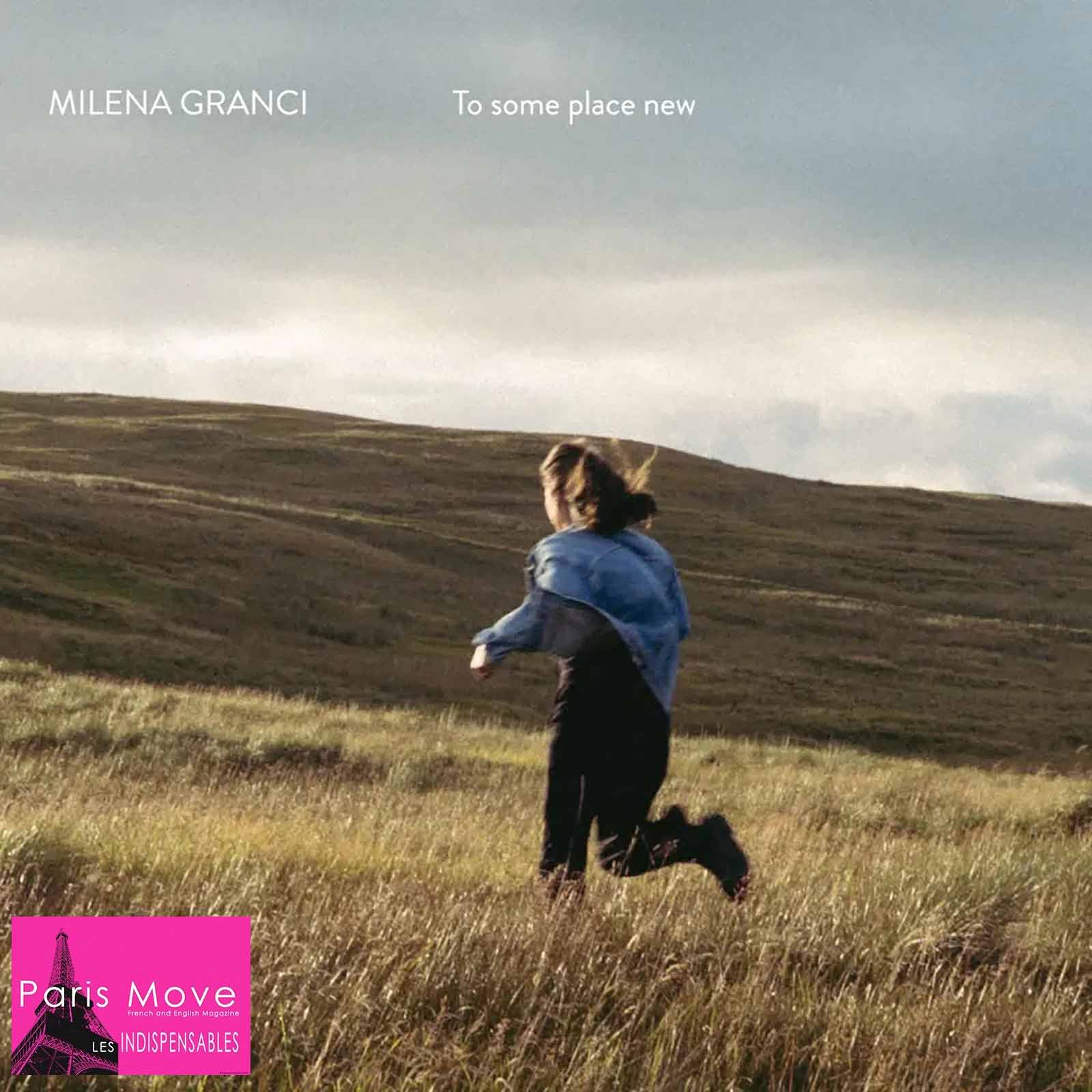
Summary: On her debut album To Some Place, composer and pianist Milena Graci blends contemporary jazz, chamber music and European lyricism into a deeply cinematic and emotionally rich musical journey.
Milena Graci’s To Some Place Turns Contemporary European Jazz Into Cinematic Storytelling
In the current climate, one sometimes wonders whether the mail is crossing the Atlantic by cargo ship rather than by air, given the extraordinary delays between Europe and the United States. Receiving CDs from France has become almost an impossible exercise in patience. Britain, for reasons difficult to explain, seems to fare slightly better. Which is precisely why discovering the work of this young composer and pianist, Milena Graci, feels like receiving a rare and precious parcel from another world.
With To Some Place, Milena Graci offers an album that arrives like a handwritten postcard from Europe, intimate yet expansive, elegant yet emotionally immediate. Airy and cinematic, the record carries a distinctly continental sensibility, one that recalls the romance of old European art films and late-night cafés where music once drifted through cigarette smoke and rain-soaked streets. The accordion appears not as a nostalgic gimmick, but as a subtle Parisian accent, the ghost of another era whispering into a modern jazz language that seems equally capable of seducing audiences in London, Rome or New York.
What makes Graci’s writing especially compelling is the way she balances complexity with lyricism. Her compositions never collapse under the weight of their own sophistication. Instead, they breathe. The voice, used almost as an additional instrument rather than a traditional lead presence, deepens the emotional architecture of the music and expands the narrative dimension of the album itself. Around her, the rhythm section moves with remarkable subtlety, favoring texture and atmosphere over virtuoso display. The percussion often feels almost conversational, while the piano lines drift between chamber music delicacy and understated jazz phrasing. Even in the album’s quieter passages, there is an underlying sense of movement, as if the compositions were constantly searching for new emotional terrain.
The first European composer to truly explore this kind of cinematic jazz storytelling was arguably Michel Legrand. But jazz has traveled a long road since then, and Milena Graci’s work belongs unmistakably to a different generation. Her compositions possess a far stronger sense of structural identity, a genuine authorial voice that moves far beyond the jazz-pop hybrids that flourished during the 1960s and 1970s. Classical music, folk traditions and contemporary chamber influences are all present in her work, yet nothing feels borrowed or decorative. Everything has been absorbed into a coherent personal language.
In many ways, Graci also belongs to a broader movement reshaping contemporary European jazz, one that values atmosphere, narrative and emotional transparency as much as technical sophistication. There are moments throughout To Some Place that evoke the spacious lyricism associated with artists on labels such as ECM, while other passages recall the adventurous chamber-jazz sensibilities emerging from scenes in Scandinavia, Italy and France. Yet unlike many young composers influenced by those traditions, Graci never disappears into aesthetic imitation. Her music remains deeply personal, anchored by a melodic sensibility that gives even the album’s most complex passages an unusual emotional clarity.
Perhaps most striking is her commitment to acoustic textures. In an era where many young artists lean heavily on production and electronics, Graci chooses restraint, and that decision gives the album an immediate sense of timelessness. There is nothing fashionable about To Some Place. It exists outside trends.
What fascinated me most throughout repeated listens was Graci’s command of musical dramaturgy. The album begins accessibly, almost invitingly, with “Floating,” drawing listeners into a sonic landscape that feels open and welcoming. But gradually, almost imperceptibly, the music evolves toward increasingly sophisticated forms of contemporary jazz. The writing becomes deeper, more layered, more harmonically adventurous, yet it never loses its grace. That balance is extraordinarily difficult to achieve, especially on a debut recording.
Very few young artists manage to impose such a fully formed artistic identity on their first album. Milena Graci accomplishes it with remarkable elegance, without excess and without pretension. There is sincerity in this music, and sincerity remains one of the rarest qualities in contemporary composition.
“I wanted the music to feel as close as possible to a continuous composition, with very little repetition,” Graci explains. “When ideas return, they reappear transformed, like a story unfolding.”
That sense of organic evolution is undoubtedly strengthened by the cohesion of the ensemble itself. This is clearly not a group assembled for the studio over a weekend. The musicians move together with the instinctive trust of collaborators who have already spent years developing a shared musical vocabulary. In England, Graci has already appeared at several of the city’s most respected jazz venues, including Alexanderplatz Jazz Club and Casa del Jazz, experiences that seem to have sharpened both her compositional confidence and her sense of scale.
Graci also openly acknowledges the influence of Maria Schneider, whose work, she says, “opened my ears to a completely different way of developing music.” At first glance, the comparison may seem surprising. The two artists inhabit very different sonic worlds. Yet the connection becomes clearer when listening closely to the architecture of Graci’s compositions: the careful placement of instruments, the fluid expansion of motifs, the patience with which themes unfold and transform.
What becomes most fascinating after several listens is that the album offers two entirely different experiences depending on the listener. It can be enjoyed instinctively, emotionally, almost cinematically by a casual audience. But it also rewards the attentive jazz listener interested in compositional detail, harmonic movement and structural nuance.
By the time the album reaches its closing piece, “Lament,” one realizes that the journey has quietly come full circle. The emotional depth has intensified, the voice occupies an even larger emotional space, and the narrative thread introduced at the beginning of the record suddenly reveals its full weight. It is at that moment that one understands Milena Graci is not simply a promising jazz musician. She is a composer with the rare ability to create worlds.
One can easily imagine her writing for film, contemporary dance or chamber ensembles with equal authority. Each composition feels like the beginning of a story, and together those stories form a deeply human musical novel.
As Paolo Conte once observed, jazz is a fascination born in childhood, “a music of the spirit.” Few young composers today come closer to embodying that idea than Milena Graci.
Thierry De Clemensat
Member at Jazz Journalists Association
USA correspondent for Paris-Move and ABS magazine
Editor in chief – Bayou Blue Radio, Bayou Blue News
PARIS-MOVE, May 8th, 2026
Follow PARIS-MOVE on X

::::::::::::::::::::::::
To buy the album
4 panel digipack, contains beautiful pictures by Camille Lemoine, and amazing design by Giulia Cavillini, with credits and liner notes by Milena Granci.
Musicians :
Milena Granci: piano, compositions
Aitzi Cofre Real: vocals
James Pettinger: accordion
Harry Toulson: alto sax
Ali Watson: double bass
Ollie Peszynski: drums
Track Listing :
1. Floating
2. When You Feel Like It
3. Maria’s Song
4. Different Road
5. To Some Place New
6. A Journey Home
7. Remembering John
8. Lament
Choir track 1: Everyone
Backing vocals track 4: Aitzi and Milena
Photography: Camille Lemoine
Graphic Designer: Giulia Cavallini
Recorded at Porcupine Studios by Nick Taylor
Mixed and Mastered by Alex Killpartrick