| Jazz |
Summary: A restored 1967 live recording captures Terry Callier at 22, blending folk, blues, and jazz into a raw, intimate performance, revealing the early emergence of his singular, genre-defying voice.
In a Noisy Chicago Club, a Singular Voice Emerges: Terry Callier’s 1967 Recording Reclaims Its Moment
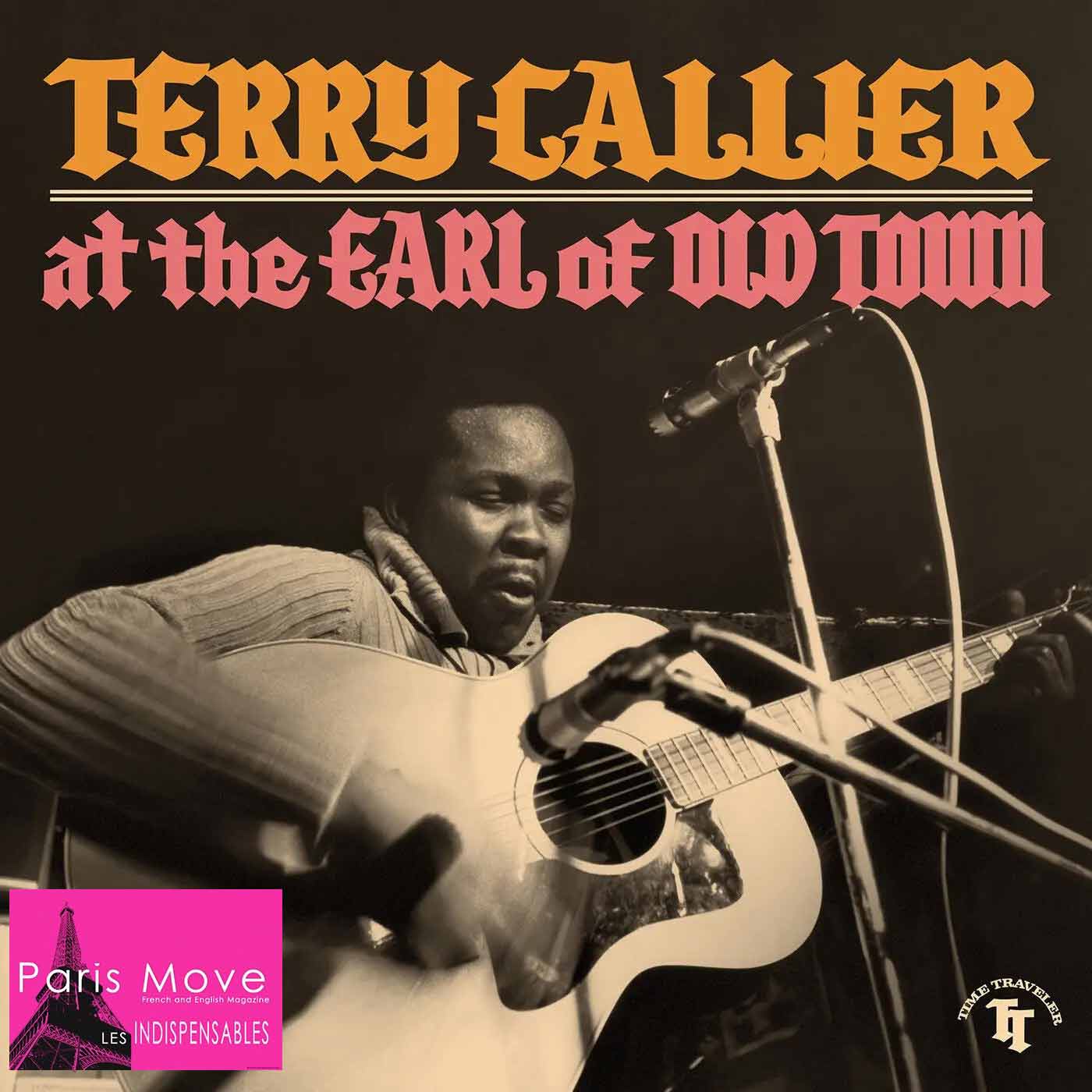
The room hums before the music even begins, low conversations, the clink of glasses, the soft restlessness of a crowd not yet aware it is about to witness something enduring. It is 1967, inside Earl of Old Town, a modest but vital outpost of Chicago’s folk revival. Onstage, a 22-year-old with an acoustic guitar leans into the microphone. His voice, when it arrives, is quiet but arresting, deep, meditative, and already marked by an emotional authority that feels far older than the man himself.
That voice belongs to Terry Callier, an artist who would spend much of his life eluding easy classification. His music, at once rooted and exploratory, moves fluidly across folk, blues and jazz, dissolving the boundaries that critics so often rely upon. In retrospect, perhaps the most precise description of Callier came from Ben Sisario, writing in The New York Times:
“Terry Callier, a Chicago-born singer and songwriter who in the 1970s developed an incantatory style blending soul, folk and jazz around his meditative baritone voice’ before being rediscovered decades later when his work found new devotees in Britain, died Saturday in Chicago. He was 67.”
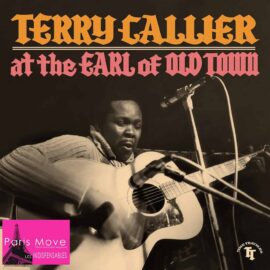
What Sisario captures in retrospect, this newly released archival recording reveals in formation. Issued on both CD and a carefully pressed 180-gram double LP for Record Store Day, the album documents that 1967 solo performance in its entirety, an intimate, unvarnished encounter between artist and audience. The tapes were recorded by Joe Segal, the influential club owner and founder of the Jazz Showcase, whose instinct for preservation would prove invaluable decades later.
A Sound Shaped by Its Imperfections
The recording bears the marks of its time. There is no studio polish here, no attempt to smooth the edges or isolate the performer from his environment. Instead, the listener is placed squarely בתוך the room: voices drift in and out of focus, glasses clatter, and the music unfolds amid a living, breathing social space.
Paradoxically, it is precisely these imperfections that give the recording its force. While the CD offers greater clarity, the vinyl edition, with its softer contours and warmer tonal palette, arguably provides the more truthful listening experience. The slight loss of definition becomes a gain in atmosphere, restoring something of the tactile immediacy that digital precision can flatten.
This is not simply a matter of format preference; it is a reminder that music, especially in this tradition, was never meant to exist in isolation. It lived among people, in rooms like this one, shaped as much by context as by composition.
Before the Categories Hardened
A year before releasing his debut album, Callier was already reshaping the language of folk music. Where many of his contemporaries leaned toward narrative clarity and structural simplicity, Callier introduced elasticity, phrases that stretched and bent, rhythms that suggested rather than declared, a vocal delivery that felt closer to invocation than performance.
Raised in Chicago’s Cabrini-Green housing projects, he grew up in proximity to future R&B figures such as Jerry Butler and Curtis Mayfield. Yet his artistic trajectory diverged early. Rather than pursuing the more commercial pathways available to him, he carried his guitar into the folk clubs of Old Town, where the countercultural currents of the 1960s encouraged experimentation and hybridity.
It is here, in this recording, that his genre-resistant voice begins to take shape. Folk becomes something more porous, more exploratory, open to the improvisational spirit of jazz and the emotional weight of the blues. The result is not fusion in any calculated sense, but something more organic: a musical language that feels discovered rather than constructed.
An Archive Reopened, A Legacy Reframed
For decades, this performance remained unheard, one of many treasures preserved in Joe Segal’s extensive archives. In 2025, those archives were opened by his son, Wayne Segal, to producer Zev Feldman, setting in motion a series of releases that have begun to reshape our understanding of mid-century American music.
The restoration, handled with care by Joe Lizzy and mastered by Matthew Lutthans, avoids the temptation to overcorrect. Instead, it preserves the recording’s original character while enhancing its listenability. The accompanying booklet, written by Mark Ruffin of Sirius XM’s “Real Jazz,” provides essential historical framing, while Sunny Callier, the artist’s daughter, serves as executive producer.
If 2026 has seen a surge in archival releases, it may reflect more than industry trends. In a cultural moment often defined by fragmentation and acceleration, such recordings offer a different kind of continuity, evidence of a time when artistic experimentation unfolded within a shared, physical space, and when the future, however uncertain, still carried the promise of coherence.
Listening Across Time
As the first disc draws to a close with “Deep Elem Blues,” there is a palpable reluctance to let the music end. The audience remains present throughout, talking, reacting, inhabiting the space in ways that might once have been considered intrusive but now feel indispensable.
One can imagine them clearly: students, intellectuals, young people suspended between debate and action, their conversations reflecting the broader cultural turbulence of the era. It is a portrait not only of an artist, but of a moment, alive with ideas, contradictions, and possibility.
Ruffin notes that Callier, at the time of this recording, was still several years away from signing with Chicago’s Chess Records and embarking on a recording career that would span 15 albums before his death in 2012. Yet even here, his artistic direction is unmistakable. His style, uncompromising, difficult to categorize, emerges not as a later development, but as an essential aspect of his earliest work.
Where Folk Meets the Blues, and Something Else Entirely
The second disc deepens the portrait. Beginning with “900 Miles,” Callier leans more fully into a folk idiom, his guitar work more pronounced, his phrasing more rooted in tradition. Yet his voice resists containment, carrying the gravitas of a blues singer, someone who seems to draw on a reservoir of lived experience beyond his years.
The blues surfaces explicitly in his interpretation of “St. Mark’s Blues” by Billy Hancock and in the traditional “Deep Elem Blues.” His rendition of “The Seventh Son,” written by Willie Dixon, is unexpectedly buoyant, revealing a capacity for joy that complements the introspective weight of his other performances.
“Joe was the first to say, ‘What you’re doing is folk-jazz,’” Callier recalled in 1997, referring to Segal. “And I thought, ‘Yeah, that’s exactly it. It’s never played the same way twice.’”
A Voice That Lingers
In the end, labels feel beside the point. What remains is the emotional clarity of the music—the sense of encountering an artist in the process of becoming, already in possession of a voice that would resonate far beyond its immediate context.
As the final notes fade, the room does not fall silent so much as return to itself. Conversations resume, glasses clink, the ordinary world reasserts its presence. And yet something has shifted. The performance lingers, suspended in memory, refusing to fully recede.
Nearly six decades later, it still does.
Thierry De Clemensat
Member at Jazz Journalists Association
USA correspondent for Paris-Move and ABS magazine
Editor in chief – Bayou Blue Radio, Bayou Blue News
PARIS-MOVE, April 17th 2026
Follow PARIS-MOVE on X

::::::::::::::::::::::::
Gilbert Guyonnet’s perspective:
Here is a striking 1967 concert recording by a then-young artist far too often overlooked, a singer, songwriter and guitarist with a dusky baritone that at times calls to mind Gil Scott-Heron. His musical sensibility draws fluidly from the blues and jazz traditions, echoing the spirit of Billie Holiday and John Coltrane, while also absorbing the Chicago soul sound that was surging through the Windy City in the latter half of the 1960s.
At the time of this performance, recorded at the Earl of Old Town, a storied hub of Chicago’s folk culture until its closure in 1984, Terry Callier had released just one remarkable album: The New Folk Sound of Terry Callier (Prestige 7383). Contrary to what is often repeated online, the record did not appear in 1968 but in 1966, though it had been recorded two years earlier, in the summer of 1964. For reasons that remain unclear, the album was issued without Callier’s knowledge; it was his brother who eventually stumbled upon a copy in a local bookstore.
Ambition, it seems, was never the driving force in Callier’s life. In 1983, at his daughter’s urging, he stepped away from the music world altogether, retraining as a computer programmer. He would not return to music until roughly a decade later.
This concert rewards repeated listening, its power renewed each time, a testament to both the careful restoration work and to the enduring, quietly defiant timelessness of the music itself.
Gilbert Guyonnet
Just a Little Blues – Radio Clapas (Montpellier-France)
::::::::::::::::::::::::
Terry Callier on New York Times