| Jazz |
Summary: The Brazilian Project by Gabriel Espinosa is a richly layered jazz album that blends subtle Brazilian influences with global styles, offering elegant compositions, intricate arrangements, and a vibrant, cross-cultural sound.
Beyond the Title: Gabriel Espinosa’s The Brazilian Project Reimagines Jazz as a Borderless Language
Don’t let the title fool you, the Brazilian Project isn’t really a Brazilian album, at least not in any obvious way. Sure, the arrangements borrow bits and pieces from Brazilian music, but this isn’t some straightforward tribute. Even knowing the composer hails from Mexico doesn’t help much with pinning down the style. At its heart, this whole thing is jazz, big ensemble jazz, crafted by someone whose life has revolved around discipline, study, and a curiosity that seems to run wide and deep.
Gabriel Espinosa started his musical path back in 1976. Later, he went to Berklee in the early ’80s, then moved on to the University of North Texas, where he snagged a master’s in jazz studies in ’95. What you hear in this album is the work of an artist surrounded by all sorts of musical traditions. That richness shows up in the way these pieces are built and the detail in the arrangements. It doesn’t feel like Espinosa is chasing after a particular style. This sounds more like the result of years, really, a lifetime, devoted to music, a devotion sparked way back in the ’60s when Antônio Carlos Jobim, João Gilberto, and Sérgio Mendes were shaking up the jazz world.
Growing up in Mexico, Espinosa was surrounded by boleros and The Beatles, both everywhere, both shaping the soundscape. He stumbled onto bossa nova, and it hit him like a revelation: melodic elegance and rhythmic finesse, all rolled into one. That style became part of him, sticking with him through Berklee, North Texas, and eventually Iowa. On this eighth solo album, Espinosa does something different, he puts down his bass and lets his composing do the talking. It’s a gutsy move, and, for the most part, it pays off.
What you get is less a performer’s showcase and more a storyteller’s canvas. Espinosa weaves these intricate musical scenes, blending influences from every corner of his life. It’s personal and broad at the same time, almost like childhood memories refracted through adult perspective. “Euro12” jumps between jazz, classical touches, and rhythms that feel global, never staying in one place for long.
The Brazilian Project pulls you in with one of its best features, it flies by. That’s not a downside, honestly. The pace speaks to the album’s narrative unity. Every track feels like a chapter in a bigger story, each with its own character, its own emotional arc. The album was recorded in Rio de Janeiro, with help from the Tallinn Studio Orchestra, and the sound is warm, elegant, and rhythmically alive. Listen closely and you’ll catch the subtle details, a brass line answering a piano phrase, rhythms shifting just under the melody.
There are spots, though, where the arrangements get a bit crowded, almost too ambitious. Sometimes you wish for a little more space, just enough for the ideas to settle and breathe. But these moments also highlight the scope of Espinosa’s vision. He’d rather push too far than play it safe.
Overall, it’s a joyful marker in Espinosa’s long career, a cross-cultural project that pays respect to traditions without letting them box him in. It’s contemporary, but you can tell it’s got its own voice. And by the way, Espinosa debuted a new project at the Jazz Education Network Conference in New Orleans in January 2020, Bossas & Boleros, and brought it back in summer 2023. The lineup of guest artists is impressive: Kim Nazarian, Fred Hersch, Misha Tsiganov, Mauricio Zottarelli, Anat Cohen, The New York Voices, Aviana Gedler, Gerardo Flores, and others. Their involvement shows just how respected Espinosa is, and how vast his vision really goes.
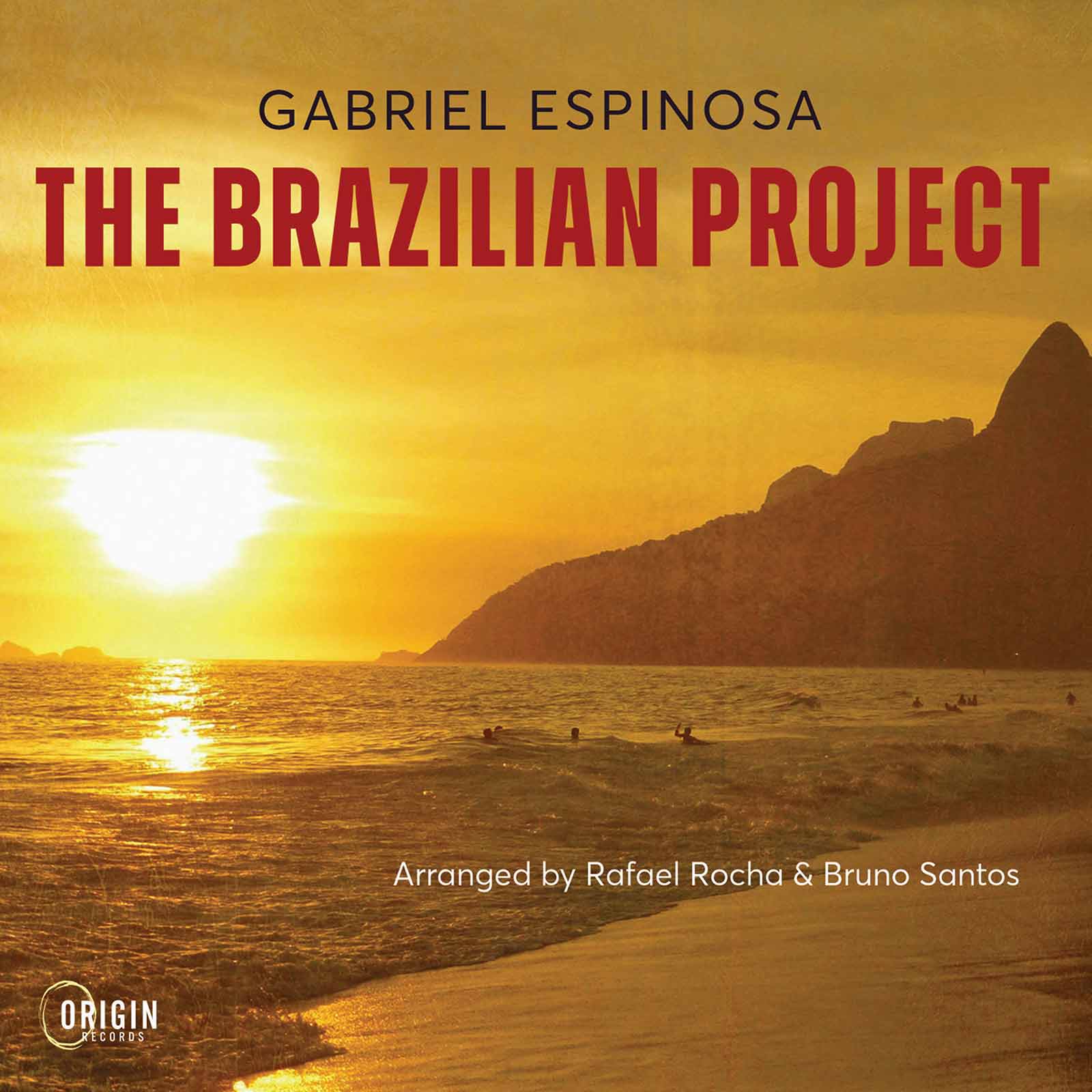
In the end, The Brazilian Project does the opposite of what its cover and title might hint at. This album thrives on surprise; every track brings something different. The brass sections are handled beautifully, sometimes stealing the spotlight and giving the music vivid Latin energy. And overall, the music just doesn’t fit neatly into any box; styles drift in and out, making the whole thing feel like one big, open landscape.
Best advice? Go in with an open mind. Let the album reveal itself. What you’ll find is a collection that’s bright yet nuanced, intellectually engaging but also really direct emotionally. It doesn’t hang around because of flashy moments; it sticks with you thanks to the persistence of its ideas. It’s like sunlight stretching across the sky at the end of the day: slow, steady, full of hidden details that show themselves every time you come back for another listen.
Thierry De Clemensat
Member at Jazz Journalists Association
USA correspondent for Paris-Move and ABS magazine
Editor in chief – Bayou Blue Radio, Bayou Blue News
PARIS-MOVE, April 28th 2026
Follow PARIS-MOVE on X

::::::::::::::::::::::::
Musicians :
Roger Rocha – alto sax, soprano sax (6,10), flute (1,3,7)
Josue Lopez – tenor sax, flute (4,5,8,10)
Daniel Freire – baritone sax
Bruno Santos – flugelhorn
Rafael Rocha – trombones
Joabe Reis – trombone (2,3,9)
Giovani Malini – acoustic guitar (9)
Andre Lopez – piano (1,2,7)
Felipe Silveira – piano (3,4,6)
Eduardo Farias – piano (5,8-10)
Hugo Maciel – electric bass
Renato Rocha – drums
Rafael Barata – drums (6)
Mafran Maracana – percussion (1,2)
(6) TALLINN STUDIO ORCHESTRA Conducted by Maestro Kleber Augustinho da Silva
Track Listing:
1 Gabriela 5:13
2 Caramelo 5:41
3 Fe 4:52
4 Mi Jarana 4:30
5 Euro 12 5:02
6 Paz 5:20
7 Encuentro Maya 4:47
8 Nuevos Horizontes 5:02
9 Klavier Latino 5:38
10 Morning Breeze 4:09
All music composed by Gabriel Espinosa
(Gabriel Espinosa Music, BMI)
Arranged by:
(1-4,6,7) Rafael Rocha
(5,8-10) Bruno Santos
Production Info:
Produced by Gabriel Espinosa
Recorded by Roger Rocha at RB Recording Studio, Rio de Janeiro, Brazil (Vitoria, ES)
(6) Strings recorded by Kira Malevskaia at ERR Studio, Tallinn, Estonia
Recorded 2022 to 2025
Mixed & mastered by Dave Darlington at Bass Hit Recording New York, NY
Cover design & layout by John Bishop