| Jazz |
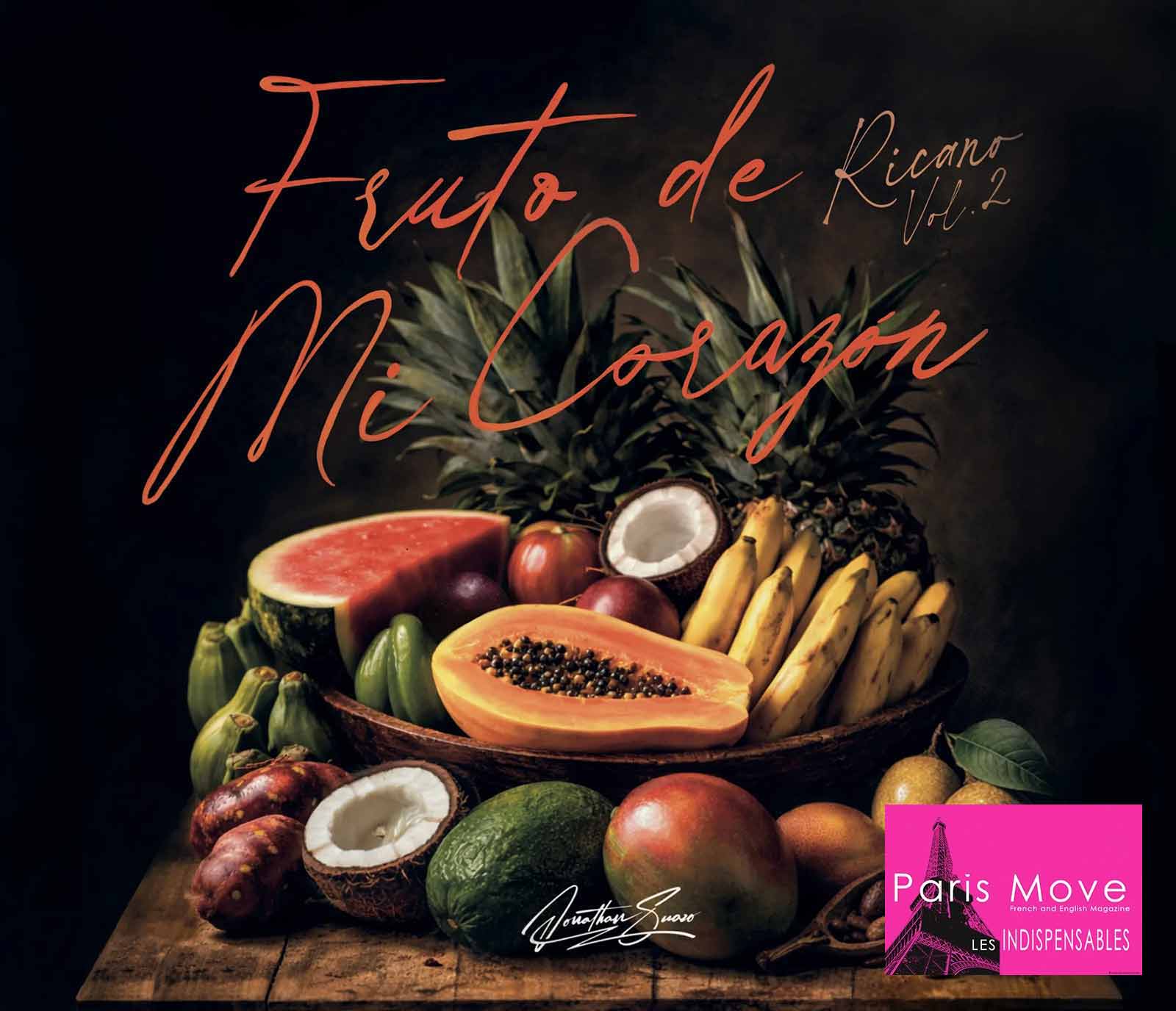
Summary : Jonathan Suazo’s Ricano Vol. 2 – Fruto De Mi Corazon is a deeply expressive jazz album blending Cuban influences, sophisticated composition, and emotional storytelling into one of the year’s most compelling intercultural jazz recordings.
Ricano Vol. 2 – Fruto De Mi Corazon Turns Personal Transformation Into Expansive Modern Jazz
The sun rises slowly over Austin. By seven in the morning, the heat already feels almost unbearable for a European still trying to adapt to Texas weather. In the garden, the first yellow roses of the season have appeared, fragile and luminous against the dry air. Barely settled into the office chair, coffee still untouched, I press play on Ricano Vol. 2 – Fruto De Mi Corazon, and the album seems to extend the atmosphere of that very morning. Warm, reflective, intimate, but already alive with movement.
With this remarkable recording, Jonathan Suazo confirms himself as a composer who deserves to be taken very seriously. What he offers here is far more than an elegant fusion project or another sophisticated Latin jazz record. This is music built from identity, memory, family, faith, and cultural duality, all carried through writing that feels both deeply intellectual and emotionally direct.
The project itself began in 2017, when Suazo coined the term “Ricano,” blending “Puertorriqueño” and “Dominicano” into a single word that could define not only a musical language, but an identity. On Fruto De Mi Corazon, that identity reaches a new level of maturity. Cuban influences move naturally through the compositions, but they are never reduced to stylistic decoration. Instead, Suazo integrates them into a broader and highly sophisticated jazz vocabulary, one capable of balancing rhythmic complexity with lyrical clarity.
The arrangements throughout the album are strikingly strong. Every section feels carefully sculpted, yet nothing sounds rigid or academic. There is movement everywhere, a sense of musicians listening intensely to one another while allowing the compositions to breathe. It is impossible to ignore the quality of the recording itself, released through the label founded by Miguel Zenón, whom I had the chance to meet in Austin a few months ago. Zenón has quietly built something rare with Miel Music: a label whose cultural identity is unmistakable, and whose artistic standards remain exceptionally high.
What makes many Cuban and Caribbean jazz musicians so compelling is the depth of their training. Classical music education often forms the foundation of their musical language, particularly in its most demanding harmonic and structural traditions. The rhythmic approach may differ from more Western forms of jazz, but the level of sophistication is every bit as rigorous. Miel Music has become a home for artists capable of navigating these parallel worlds with extraordinary precision, musicians who can move effortlessly between formal complexity and visceral groove.
Jonathan Suazo belongs fully within that lineage, though his voice is distinctly his own. His style differs greatly from Zenón’s. At first glance, it even appears less complex. Yet that impression quickly dissolves with repeated listening. Ricano Vol. 2 – Fruto De Mi Corazon reflects everything that has shaped Suazo over the last several years: a faith tested and renewed, a marriage officially celebrated, and the imminent arrival of fatherhood. Recorded in mid-October 2025 at Wellspring Audio under the engineering direction of Joshua Lu, the album captures an artist standing in the middle of profound personal transformation. During the sessions, Suazo’s wife, Fabiola Méndez, was only weeks away from giving birth to their daughter Cecilia, and that emotional tension quietly inhabits the entire record.
Several tracks stand out immediately, not through excess or spectacle, but through the emotional precision of the writing. Certain passages open with near cinematic calm before suddenly unfolding into dense rhythmic conversations between horns and percussion. Elsewhere, Suazo allows melodies to linger longer than expected, creating moments of vulnerability that feel almost suspended in time. The album’s strongest pieces never rush toward virtuosity for its own sake. Instead, they reveal themselves gradually, rewarding listeners willing to surrender to the music’s layered architecture.
What makes this intercultural jazz so effective is the level of discipline required to make it feel effortless. Suazo’s writing sounds natural and inviting from the very first listen, accessible enough to reach a broad audience while hiding layers of remarkable structural intelligence underneath. As the album unfolds, memories emerge of groups such as Spyro Gyra or Yellowjackets, not because the music imitates them, but because it produces that same rare sensation jazz lovers experience when discovering an album they instantly know will remain with them for years.
There is no dishonesty in this music. No excess of studio effects, no artificial attempt to manufacture emotion. What remains is the essence of great jazz: strong compositions, fearless musicianship, and performers whose presence immediately inspires the desire to see them live.
The soaring lines of the saxophone collide with rhythms of astonishing precision. Musical phrases merge genres so seamlessly that the listener can easily become overwhelmed. One listen is never enough. The album almost demands repetition, each return revealing hidden harmonic details, rhythmic displacements, and subtle emotional cues that may have escaped the first encounter.
This is rich music in the truest sense of the word, rich in harmony, rhythm, emotional depth, and cultural memory, the kind of richness that defined so much of the greatest jazz produced during the twentieth century. Listening to Suazo here, one can easily imagine him in another era standing alongside Joe Zawinul. The comparison would not feel exaggerated or misplaced.
There are albums that entertain, albums that impress technically, and albums that disappear after a season. Ricano Vol. 2 – Fruto De Mi Corazon belongs to another category entirely. It is the work of an artist building a personal language while remaining deeply connected to tradition, community, and emotional truth.
More broadly, the album also says something important about the current state of Latin jazz in America. For years, the genre has too often been reduced to rhythm alone by audiences eager for energy but unwilling to engage with its intellectual depth. Artists such as Jonathan Suazo, alongside figures like Miguel Zenón, are helping restore a more complete understanding of this music, one where cultural heritage, compositional ambition, and emotional storytelling coexist at the highest artistic level. In many ways, albums like this suggest that some of the most adventurous and meaningful jazz being created today is emerging precisely from these intercultural spaces, where identities are layered rather than fixed.
Without question, this is a major jazz album.
Thierry De Clemensat
Member at Jazz Journalists Association
USA correspondent for Paris-Move and ABS magazine
Editor in chief – Bayou Blue Radio, Bayou Blue News
PARIS-MOVE, May 13th, 2026
Follow PARIS-MOVE on X

::::::::::::::::::::::::
Musicians :
Jonathan Suazo – All compositions and arrangements
Zaccai Curtis (YAMAHA ARTIST) – Piano (1,2,3,4,5,6,7) – Keyboards (10)
Francisco Alcalá – Drums (1,2,3,4,5,6,7,11,12)
Ian Ashby – Upright bass (1,2,3,4,5,6,7,8,10,11,12)
Benito Gonzalez – Piano (8,9)
Lee Fish – Drums (8,9)
Edmar Colón – Piano (11,12)
Jeremy Bosch – Voice / Lyrics (12)
Kike Serrano – Percussion (1,2,6,7,8,9,11,12)
Paoli Mejías – Percussion (3)
Otoniel Nicolás – Percussion (4,9,10,12)
Fabiola Méndez – Voice (1,9) – Electric Cuatro (1,11)
Tanicha Lopez – Voice (1,9,12)
Track Listing :
Mi Musica Bella
Calle Hija Del Caribe
Llamado
Si No Fuera Por Tu Amor
Llueve To Los Dias
Interludio
Candela
Rona Blues
Redencion
Cecilia
La Magia (Instrumental)
La Magia (Version Lirica)
Produced by Jonathan Suazo
Joshua ‘Lu – Recording Engineer
Zirui (Ray) Wu – Recording Assistant
Emanuel Navarro – Recording Engineer
Juan Maldonado – Reco
William Russell – Recording Engineer
Danino Pichardo – Mixing Engineer
Michele Papa – Mastering Engineer
Recorded September 26 – October 6th 2025 at Wellsrpring Sound (Acton MA)
Photography – Cesar Ziegler
Graphic Design Alberto Cardona