| Jazz |
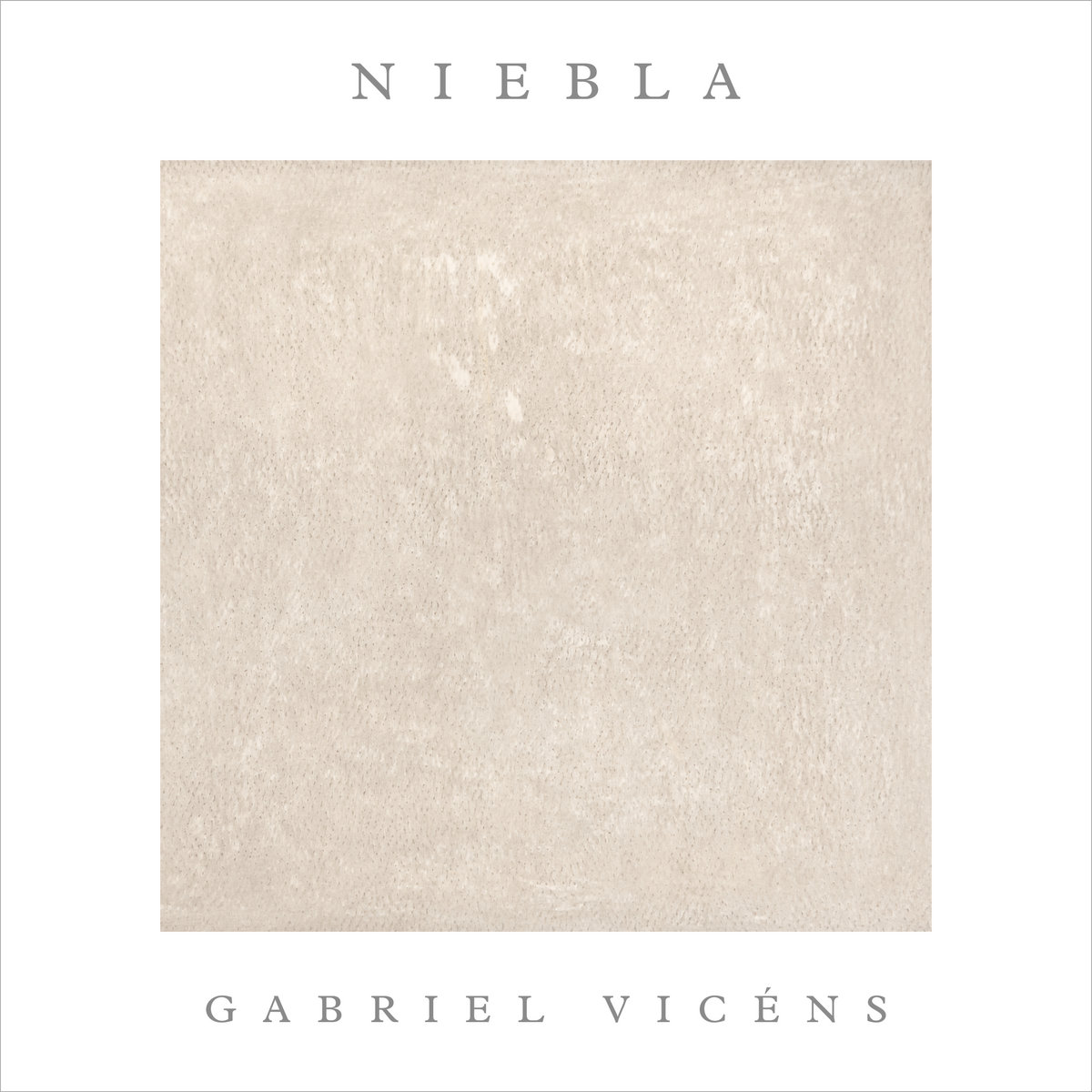
Niebla, the fifth studio album from New York City-based, Puerto Rican-born guitarist, composer, and visual artist Gabriel Vicéns, is less an album in the conventional sense than a musical tableau into which one gradually enters. True to its title (Spanish word for “fog”), Niebla offers itself with a feeling of discovery, where light and darkness coexist and where the musical hues of the exposed painting are slowly but surely discovered.
From the start, this album lets you slip into the fog and discover surprises following one another, shade after shade, track after track. The album is no longer a painting that has already been seen, but a work of art that invites you to take surprising and unusual paths to fully appreciate it. Niebla is a work that challenges habits, shatters boundaries and fuses the mystical rhythms of Afro-Puerto Rican folklore with the harmonic richness of modern jazz and the fearless spirit of avant-garde artistic experimentation.
Through original compositions, Vicéns presents himself in a surprising and very convincing manner as one of the most gifted and inventive musicians of contemporary jazz guitar.
Anchored in the rhythms of bomba and plena, the album brings you a fireworks display of sound and colour, taking insane and liberating risks with both complex harmonies and provocative silences, while maintaining a deep respect for traditional jazz. The result of V’s hyper-creative spirit is a jazzy universe both anchored in respect for tradition and totally liberated, overflowing with unrestrained enjoyment.
What Gabriel explains to us very precisely: “This album carries a lot of energy, with sections that drive forward with incredible rhythm, but it also holds many spaces for introspection, in its moments of silence, slowness, quietude, and repetition. For the past decade, I’ve been deeply interested in the concept of temporality. By weaving these elements together, I aim to create a sense of stillness that confronts the listener with the passage of time, evoking contemplation and inviting them to engage with the music on a deeper level. This, I believe, also offers a much-needed space in a world that is increasingly fast-paced and perpetually seeking instant gratification.”
The lineup Vicéns has assembled is exceptional: Cuban saxophonist Roman Filiú, bassist Rick Rosato, drummer E.J. Strickland, and percussionist Victor Pablo, with Brazilian pianist Vitor Gonçalves.
The interaction between the musicians is the golden key to the album, the blood that flows in the veins of all the tracks. On Niebla, the title song and the second of this opus, Vicéns’ guitar and Filiú’s alto saxophone seem to want to dominate the field, but the other musicians intervene with realism and talent to bring the whole band back on a path tinged with the colours of the rainbow. A track which is a gem, a masterpiece of composition and interpretation. Just like Niebla‘s other tracks.
One of the surprises of this album is also the choice of an instrument chosen by Vicéns on three of the tracks, a classical guitar handcrafted in 1987 by the brilliant Puerto Rican luthier Fidencio Díaz. Thus, Vicéns honours and pays homage to a master luthier but also to a deeply rooted island craft tradition. Vicéns’ playing with this guitar allows the guitarist to offer calmer, softer, more emotional moments, with remarkable sensitivity, as in the opening of “El Fin de la Noche” and the finale of “…y la Lluvia”. Moments of tenderness in pastel colours which alternate with the more intense colours of the other tracks.
The influence of visual arts and painting is particularly strong on “900-50-80”, inspired by a colourful abstract work by the painter Olga Albizu, who achieves something close to chromesthesia: colour translated into sound. It is one of the most striking moments of the album and which confirms that music and painting are two facets of the same art.
Another anthology piece and a central pillar of this album is “Ramaje”. For almost 15 minutes, the musicians provoke each other, seek each other out, move away to get closer, tear away this fog which envelops the album to bring in the light, let the colours flood this quarter of an hour of freedom and invites you to press the “replay” button as you want so much to have your ears full, your heart full, your eyes full. A title which, like a pictorial masterpiece, cannot be appreciated after just one listening. Vicéns offers something so worthy and remarkable that this album becomes essential.
Throughout, silence is deployed with the same intentionality as sound. As Bill Milkowski writes in the liner notes, Niebla is a boundary-defying sonic journey where silence holds as much agency as a ripping guitar solo or an intricate line of unisons executed with unerring skill.
Niebla is not simply a jazz record, it is a monument, a unique piece, a work of art, and like any work of art it is demanding, does not allow itself to be tamed in a few minutes, requiring attentive listening to dissipate the fog. One of the most striking jazz pieces of this first half of 2026.
Frankie Pfeiffer
Editor in chief – PARIS-MOVE
PARIS-MOVE, May 1st, 2026
Follow PARIS-MOVE on X
::::::::::::::::::::::::
Track listing:
El Fin de la Noche… 02:03
Niebla 08:03
Vejigante 08:36
900-50-80 11:18
….tu anhelo… 02:10
Ramaje 14:58
Guaiza 08:57
Stray Dogs 07:28
….y la Lluvia 02:18
Musicians:
Gabriel Vicéns – guitar
Roman Filiú – alto saxophone
Vitor Gonçalves – piano
Rick Rosato – bass
E.J. Strickland – drums
Victor Pablo – percussion
Album info:
Recorded by Chris Allen at Sear Sound, New York, May 2025
Assistant Engineer: Maximilian Troppe
Editing Engineer: Danilo Pichardo at Addictive Audio Studio, NYC
Mixed and mastered by David Darlington at Bass Hit Recording, NYC
Cover artwork: Niebla by Gabriel Vicéns
Photography and videography: Adrien H. Tillmann
Album design: Shanshan Duan
Liner notes: Bill Milkowski
Produced by Gabriel Vicéns
All compositions by Gabriel Vicéns
Vicens Music (ASCAP)