| Jazz |
Summary: A powerful live jazz improvisation built on ecological themes, blending atmosphere, spontaneity, and reflection into a striking and thought-provoking musical experience.
Live Jazz Improvisation Album Review: A Powerful Meditation on Ecology and Sound
There are recordings that document a performance, and others that attempt to capture a moment of collective consciousness in motion. This album belongs unmistakably to the latter: an invitation into a live session of improvisation, shaped in real time by three formidable musicians, and structured around four thematic pillars:
- Trusted Earthen Resources Relished Asphyxiating
- Treasured Ecology Ravaged Ransomed Alone
- Alive Renewable Reliable Extraordinary Taxed
- Abundant Resilient Radiant Ecosystem Trying
Keeping these four axes in mind proves essential while listening; they form the conceptual backbone of improvisations that unsettle as much as they provoke reflection. At times, unsettling, at others quietly interrogative, the music resists easy categorization. To label it as explicitly political would perhaps be reductive. It is less a manifesto than a series of propositions, an attempt to awaken awareness in a world saturated with uncertainty, where distinguishing truth from falsehood has become an increasingly elusive task.
The listening experience unfolds almost cinematically. Silence gives way to mystery; an atmosphere thick with ambiguity emerges. One hears the dry whisper of wood against string, the textured friction of drum skins, the faint resonance of vibrating air. Then, suddenly, a voice appears, its tone imbued with a kind of mystical clarity. It does not simply enter; it asserts itself, soon followed by another cry, more visceral, almost primal. These moments feel less like performance than invocation: a call, perhaps, for a global environmental consciousness that is not only sustainable, but grounded in responsibility and action.
Gradually, scattered sounds begin to cohere into fragile musical forms, melodic fragments, harmonic suspensions, before dissolving once again into a dense, percussive current. The cycle repeats, organic and unpredictable. Such a project demands not only technical mastery but a rare capacity for listening, restraint, and trust. The result is striking in both its ambition and execution.
The album’s thematic resonance is sharpened by its broader context. At a time when ecological discourse, particularly in parts of Europe, is, by some, increasingly perceived as entangled with fiscal policy and regulatory expansion, the risk of alienating even sympathetic audiences becomes palpable. Meanwhile, powerful lobbying forces continue to shape narratives and priorities, often blurring the line between genuine environmental concern and institutional interest. Against this backdrop, the music does not argue; it suggests, questions, and, at times, quietly unsettles.
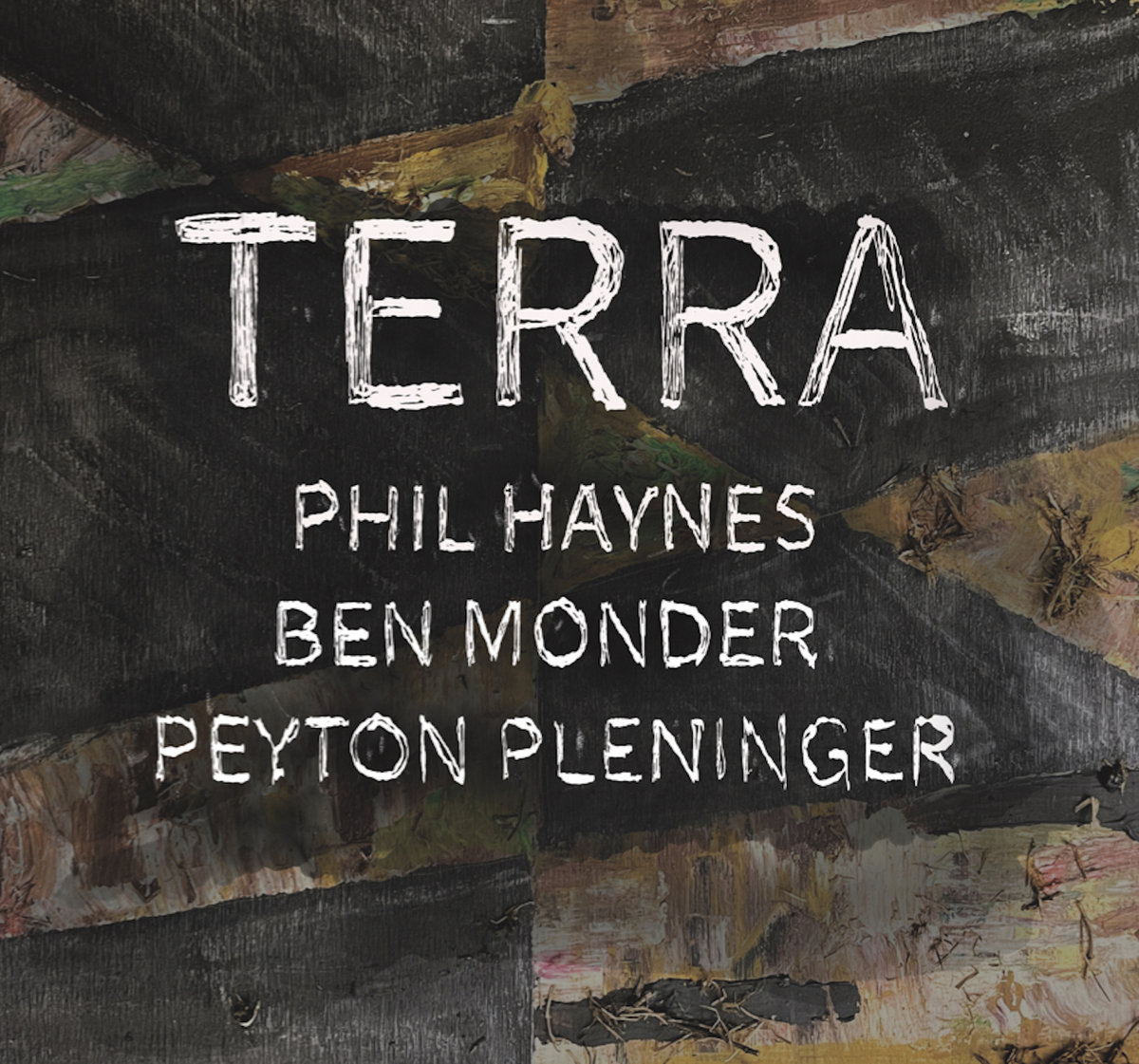
Context, here, is everything. This recording captures a fully improvised, collective performance, presented live and in its entirety during the ensemble’s very first meeting, at a jazz recital led by Phil Haynes at Bucknell University. The setting matters: a space traditionally devoted to inquiry and intellectual risk becomes the ideal environment for such an experiment. There is something almost celestial in the experience, as though one were lying back to contemplate the night sky, searching for patterns, drawing connections, accepting the unknown. The audience, in this sense, is not passive, but implicated, invited to engage, interpret, and perhaps carry the experience beyond the moment itself.
Drummer Phil Haynes, long established as a singular voice whose work often blurs the line between drummer and percussionist, operates here with remarkable sensitivity. Rather than asserting dominance, he shapes the space, punctuating, coloring, and subtly guiding the unfolding dialogue. Guitarist Ben Monder, heard here with unusual openness and fluidity, contributes a steady stream of ideas that are both imaginative and measured, often bridging the abstract and the melodic with quiet authority. And yet, at the center of the trio’s dynamic stands saxophonist Peyton Pleninger, whose improvisational language provides much of the project’s raw material. His lines do not dictate, but they initiate, offering direction, texture, and momentum, around which the collective sound takes form.
And then there is the notion of matter, that elemental substance which sustains all forms of life, whether animal, vegetal, or otherwise. Here, that matter becomes sonic. It is grain, density, vibration: the woody breath of the saxophone, the metallic shimmer of cymbals, the electric resonance of guitar strings. It unfolds like a text that can be read, and like a conversation that can be followed, intimate, immediate, alive.
Yet there is an inherent paradox. Music of this nature, spontaneous, fragile, deeply contingent on presence, inevitably loses some of its intensity when fixed in recorded form. This is, above all, music meant to be lived in the moment, to be felt as much as heard. The album, then, does not attempt to replicate the experience; it preserves its trace. What remains is not the event itself, but its imprint: the echo of an ephemeral encounter, captured just long enough to remind us that such moments, however fleeting, can still resonate long after the final note has faded.
Thierry De Clemensat
Member at Jazz Journalists Association
USA correspondent for Paris-Move and ABS magazine
Editor in chief – Bayou Blue Radio, Bayou Blue News
PARIS-MOVE, April 21st 2026
Follow PARIS-MOVE on X

::::::::::::::::::::::::
Musicians:
Peyton Pleninger, tenor saxophone & bells
Ben Monder, guitar & electronics
Phil Haynes, drum set & percussion
Tracklisting:
Moonrise / Aurora / Starlit / Meteor [19:17]
Vision Quest / Three Visitors [17:43]
Skylark [9:53], Carmichael & Mercer
Borealis / Showers / Dreams / Dawn [15:14]
Saturday, March 1, 2025
Natalie Davis-Rooke Recital Hall
Bucknell University
Lewisburg, PA
Jon Rosenberg, engineer
Corner Store Jazz (CSJ-0153)
Phil Haynes, producer