| Jazz |
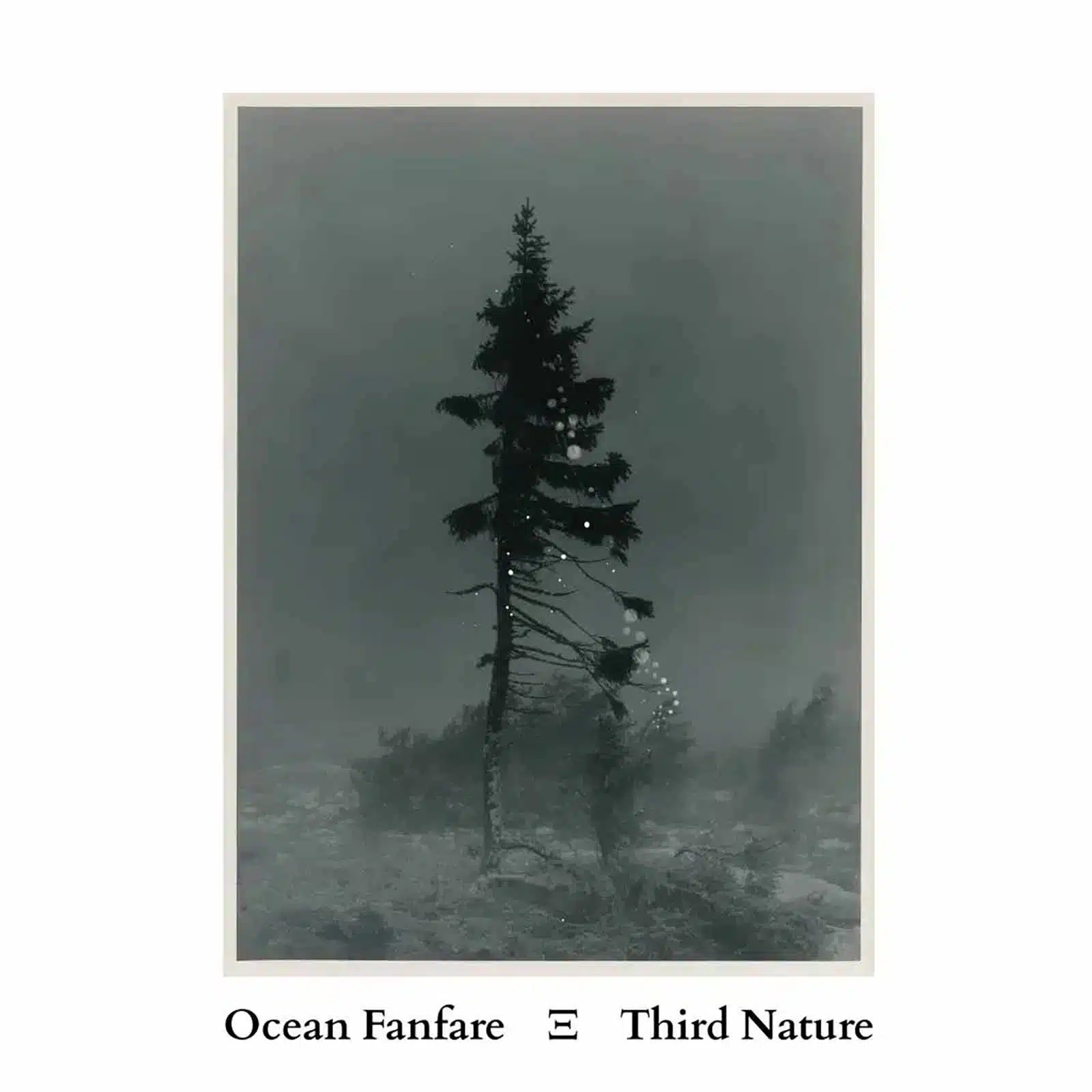
Summary: Ocean Fanfare’s Third Nature blends free improvisation, European folk influences and ecological themes into a bold contemporary jazz album exploring climate anxiety, collective expression and sonic experimentation.
Ocean Fanfare’s Third Nature Turns Ecological Anxiety Into Daring Contemporary Jazz
From the fertile edge of Europe’s contemporary jazz scene comes one of the quiet revelations of this June season, arriving just as summer heat begins to settle across the continent. The quartet Ocean Fanfare returns with Third Nature, an album that immediately establishes its ambitions through rigorous composition, layered improvisation and a restless sense of inquiry.
Led by trumpeter Tomasz Dąbrowski and saxophonist Sven Dam Meinild, the group pushes deeper into an open structural language where improvisation acts less as embellishment than as architecture itself. Time becomes unstable here. Rhythms overlap, melodies fracture and reassemble, and linear progression gives way to something more fluid, almost ecological in its movement.
Like much of the most adventurous European jazz, Third Nature draws equally from folk traditions and contemporary classical music, though it never feels burdened by either lineage. Instead, the album behaves like a living environment. Clarinets, trumpet calls and fractured rhythmic pulses emerge the way sounds reveal themselves in a dense forest once the listener stops trying to identify each element individually and simply absorbs the totality of the atmosphere. What first appears dissonant gradually reveals itself as communication. Separate voices seem to argue, overlap, interrupt and ultimately coexist.
That tension is central to the album’s emotional force. This is not a record designed for casual listening, nor does it make concessions to accessibility. Yet its carefully sustained dramaturgy, almost theatrical in its intensity, may strongly resonate with listeners drawn to the more cerebral branches of contemporary jazz. Ocean Fanfare understands that abstraction, when pursued with conviction, can become its own form of storytelling.
Several moments across the album offer particularly striking entry points into its sonic universe. One extended passage built around low clarinet murmurs and slowly expanding brass harmonics unfolds with the patience of modern chamber music, before dissolving into a turbulent collective improvisation that feels almost seismic in its emotional release. Elsewhere, the quartet constructs dense rhythmic clusters that seem to hover without resolution, allowing silence and fragmentation to become compositional tools in themselves. There are also quieter episodes where the ensemble briefly retreats into sparse melodic figures, offering fleeting moments of calm before the music once again splinters into abstraction. These contrasts give Third Nature much of its dramatic power. The album constantly negotiates between order and collapse, intimacy and distance.
The roots of the ensemble stretch back to 2012, when acclaimed drummer Tyshawn Sorey collaborated with the group on its debut album, Imagine Sound, Imagine Silence, released in 2014. Since then, the quartet has steadily shaped a singular collective identity through what has become known as its “Nature Trilogy.” First Nature: Ecological Relations in 2019 emphasized acoustic interaction and spatial resonance, while Second Nature: Capitalist Transformation in 2022 introduced algorithmic processes and electronic augmentation into the compositional framework. On that second chapter especially, electronic textures did not merely decorate the acoustic ensemble. They destabilized it. Digital manipulation, layered processing and subtle synthetic interference expanded the music’s sense of uncertainty, as though human improvisation itself were being absorbed into larger technological systems. Third Nature retains traces of those experiments, but redirects them toward something more organic and psychological, placing greater emphasis on collective instinct and spontaneous interaction.
European jazz has long displayed a stronger inclination toward ecological and political reflection than toward revisiting the historical wounds tied to jazz’s American origins. In Eastern Europe especially, artistic discourse often gravitates toward climate anxiety, environmental collapse and the instability of modern systems. Ocean Fanfare embraces those concerns openly. Even the trilogy’s titles reflect a sustained meditation on transformation, fragility and survival.
The album artwork reinforces that vision. Featuring Nicolai Howalt’s photograph Old Tjikko, an image of one of the world’s oldest living trees, the cover quietly frames the music as an exploration of duration and impermanence. The record invites listeners to think about simultaneity, erosion and collective memory. There is a persistent sensation throughout the album that something is ending or perhaps warning us of its own disappearance.
That atmosphere connects Third Nature to a broader movement within contemporary European art, where ecological unease increasingly shapes both aesthetics and narrative structures. Across film, installation art and experimental music, many artists now approach climate anxiety not through direct activism alone, but through fragmented forms, unstable temporalities and immersive sensory experiences. Ocean Fanfare’s music belongs firmly within that cultural landscape. Rather than illustrating environmental catastrophe literally, the quartet evokes the emotional disorientation that accompanies it. The instability of the compositions mirrors a world perceived as increasingly unpredictable and difficult to stabilize.
At times, the trumpet seems less to sing than to mourn. Its piercing cries cut through the ensemble like distant alarms echoing across an empty landscape. Yet those moments never descend into theatrical excess. Instead, they deepen the album’s poetic gravity. Beneath its conceptual framework and intellectual rigor lies an unmistakably human anxiety.
In spirit, Ocean Fanfare also shares affinities with several other boundary-pushing ensembles operating at the edges of contemporary jazz. Like Fire! Orchestra, the quartet embraces large-scale tension, collective improvisation and emotional volatility as compositional forces. There are also parallels with The Necks, particularly in the way repetition and gradual transformation become vehicles for altered states of listening. Yet Ocean Fanfare remains distinct in its combination of Nordic austerity, Eastern European tension and ecological conceptualism. Its music feels less ritualistic than existential, less hypnotic than investigative.
And that may ultimately be the key to understanding Third Nature. Whether one fully embraces its thematic concerns is almost beside the point. The music functions less as ideological argument than as a series of sonic snapshots, fragments of perception captured in motion. The improvisations feel immediate, almost documentary in nature, preserving fleeting emotional states before they dissolve.
In that sense, the work of ethnomusicologist Paul Berliner becomes an illuminating reference point. His landmark study Thinking in Jazz, though primarily focused on American jazz traditions, explores improvisation as an autonomous language with its own cognitive structures and internal logic. Reading Berliner helps clarify the foundations of music like this, where improvisation is not decorative but philosophical. Sometimes the path toward understanding experimental art begins not with listening alone, but with learning how its creators think.
Once that perspective settles in, the familiar debate over whether something “is” or “is not” jazz begins to feel strangely irrelevant. Ocean Fanfare seems fully aware of this tension. Even the ensemble’s name quietly resists categorization. By choosing the word “Fanfare,” the group nudges listeners beyond genre itself and toward something broader, more elemental. After all, perhaps that is what art at its most ambitious ultimately asks us to do: stop searching for labels and start paying attention to the ideas, anxieties and fragile human truths carried inside the sound.
Thierry De Clemensat
Member at Jazz Journalists Association
USA correspondent for Paris-Move and ABS magazine
Editor in chief – Bayou Blue Radio, Bayou Blue News
PARIS-MOVE, May 19th, 2026
Follow PARIS-MOVE on X

::::::::::::::::::::::::
Musicians :
Sven Dam Meinild | Alto Saxophone, Electronics
Tomasz Dąbrowski | Trumpet
Richard Andersson | Bass
Peter Bruun | Drums
Track Listing :
Kritisk Stadie
Circular One
Paper Mountains
Long Time
Circular Two
Natskygge Ordnen
Quantum
Recorded August 2024 in Tambourine studios, Malmö,
Mix: Sven Meinild
Master: John Fomsgaard
Cover photo: Old Tjikko #1, Nicolai Howalt/ Courtesy Martin Asbæk Gallery
Graphic design: Sven Meinild