| Jazz |
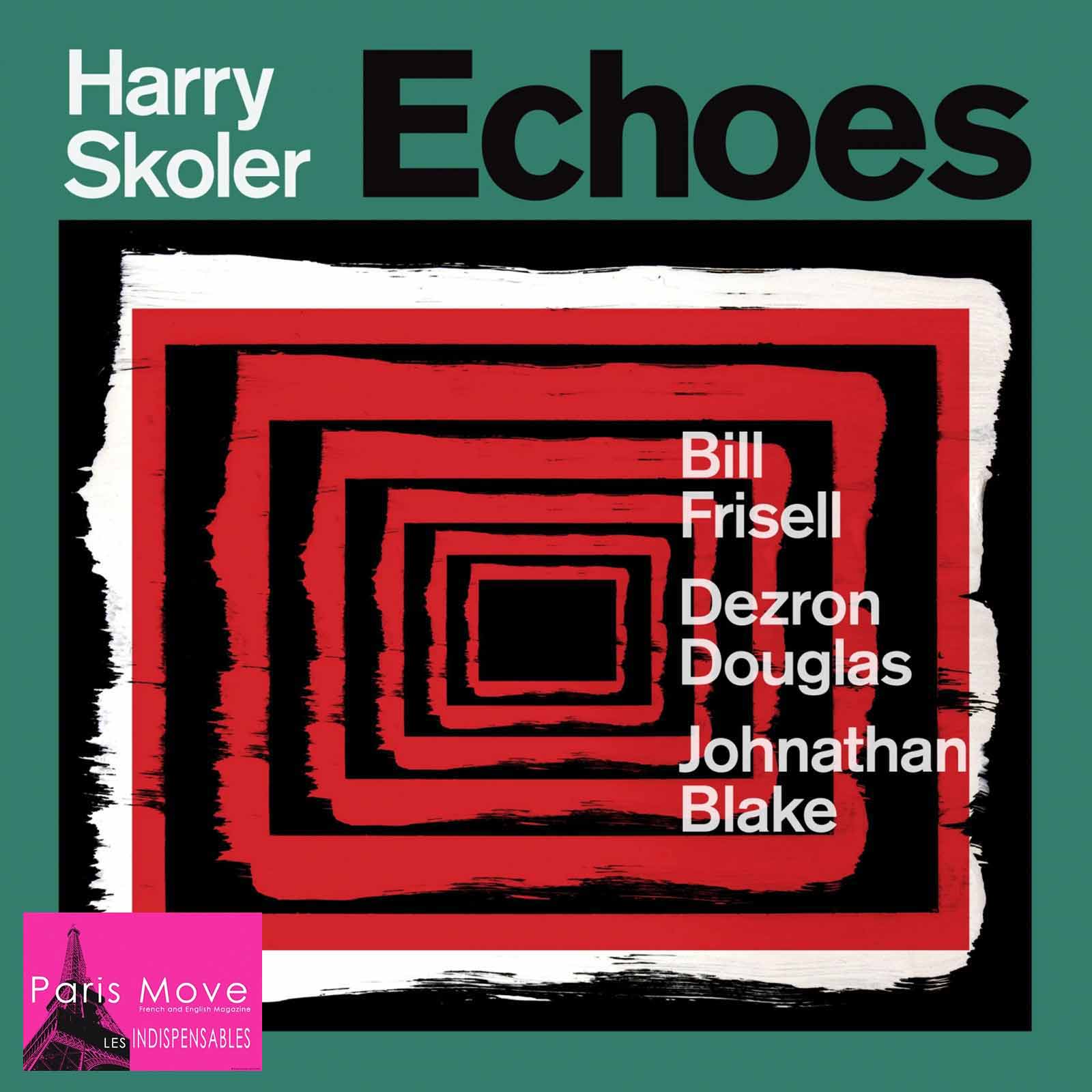
Summary: Harry Skoler’s Echoes is a deeply personal jazz album blending memory, tribute, and resilience into elegant, emotionally rich compositions.
Harry Skoler’s Echoes: A Moving Jazz Comeback Shaped by Memory and Survival
Often hailed as a major clarinetist, Harry Skoler reveals himself, more strikingl, as a composer-arranger of rare authority, an artist whose imagination shapes the music as decisively as his tone. There is a patrician softness in the way he attacks a note, a refined touch that belies the sophisticated architecture beneath. From the outset, Echoes positions Skoler not merely as an interpreter, but as a musical architect, one whose writing rewards sustained attention, its elegance masking a quiet structural daring.
The album’s central idea, its organizing metaphor, is both simple and deeply resonant: echoes as memory, echoes as lineage, echoes as lived experience refracted through sound. Each of the nine compositions bears the name of a musician who left a lasting imprint on Skoler’s artistic consciousness. These are not straightforward tributes but impressionistic portraits, tonal recollections shaped by time and emotion. The figures invoked, Bill Evans, James Williams, Rahsaan Roland Kirk, Marian McPartland, Teddy Wilson, Benny Goodman, Jimmy Giuffre, Lionel Hampton and Miles Davis, map a personal history, tracing encounters that occurred between Skoler’s adolescence and early adulthood. The result is a suite of pieces that function less as homage than as acts of recollection, where harmony, phrasing and texture become vessels for memory.
Musically, Echoes thrives on detail. The arrangements favor a chamber-like intimacy while drawing on the breadth of a mini big band palette. On the piece inspired by Bill Evans, for instance, Skoler leans into harmonic translucence: suspended voicings, delicate rhythmic elasticity, and a piano-led interplay that evokes introspection without imitation. By contrast, the nod to Rahsaan Roland Kirk introduces a more fragmented, almost kaleidoscopic structure, shifting motifs, sudden dynamic contrasts, and a sense of restless invention. Elsewhere, the Benny Goodman-inspired track carries a buoyant swing, its clarinet lines agile yet controlled, while subtle orchestral colors prevent it from slipping into pastiche. Throughout the album, Skoler demonstrates a keen sense of pacing, allowing themes to breathe, develop and return, echoes, in the truest sense, transformed by context.
There is, inevitably, a dreamlike quality to such an undertaking. To compose in dialogue with one’s influences is to engage in a kind of waking reverie, where imagination and memory intertwine. Yet what emerges most vividly is a restrained lyricism, a quiet romanticism that never tips into sentimentality. Skoler’s musical voice is defined by duality: a reflective calm that can, without warning, give way to flashes of intensity, moments where the music seems to bare its teeth before retreating once more into poise.
To understand the emotional weight of Echoes, however, one must look beyond the notes. The album is rooted in a traumatic episode that profoundly altered the course of Skoler’s life. During a catastrophic medical incident, he regained consciousness in the middle of surgery, fully aware yet completely paralyzed, unable to move or communicate, intubated and incapable of breathing on his own. The experience, which lasted only minutes in real time, unfolded as an eternity in perception. Trapped in silence and immobility, he later described it as a descent into a waking nightmare, sustained only by the thought of surviving to see the next day.
Though his life was ultimately saved, the psychological aftermath was severe. Music, once central to his identity, became unbearable. He withdrew from it entirely, unable to play, listen, or even contemplate it without distress. The rupture extended far beyond the professional, reshaping his relationship to himself and to the world around him.
The turning point came gradually. After stepping back from academic responsibilities when the eminent tenor saxophonist Walter Smith III assumed leadership of his department in 2019, Skoler began to work through the trauma with therapeutic guidance. One idea, deceptively simple, proved transformative: the need to hold both positive and negative experiences simultaneously, rather than allowing one to eclipse the other. Then, late that summer, came a moment of sudden clarity. The desire to create returned not tentatively, but with urgency. He would record again, but differently.
In this light, Echoes can be understood as a work of reconstruction as much as creation. It departs from the four albums Skoler released between 1995 and 2009, not only in conception but in emotional scope. Like many works born of crisis, it carries a heightened sense of purpose, a willingness to confront complexity rather than resolve it neatly. The echoes here are not only musical; they are psychological, temporal, existential.
If the spirit of Benny Goodman hovers at the edges of the album, it does so less as a model than as a point of departure. Skoler’s clarinet playing acknowledges tradition while resisting confinement within it. More broadly, the album stands as a meditation on influence itself, on how artists absorb, transform and ultimately rearticulate what they inherit.
The achievement of Echoes lies in its balance: between past and present, structure and spontaneity, fragility and force. It is a record of uncommon sincerity, shaped by experience yet never defined solely by it. In a contemporary jazz landscape often marked by technical brilliance, Skoler offers something rarer: emotional clarity without simplification.
Verdict: Echoes is not merely a successful return, it is a quietly remarkable statement, one that situates Harry Skoler among the most thoughtful composer-arrangers working in jazz today, and suggests that his most compelling work may still lie ahead.
Thierry De Clemensat
Member at Jazz Journalists Association
USA correspondent for Paris-Move and ABS magazine
Editor in chief – Bayou Blue Radio, Bayou Blue News
PARIS-MOVE, April 21st 2026
Follow PARIS-MOVE on X

::::::::::::::::::::::::
Musicians :
Harry Skoler – Clarinet
Bill Frisell – Guitar
Dezron Douglas – Bass
Johnathan Blake – Drums
Track Listing :
1 Evocation 1:06
2 Study in Orange (for Bill Evans) 4:55
3 JW, Michelangelo & the 40 Cent Burger (for James Williams) 7:01
4 Everythings Cool, Everythings Cool! (for Rahsaan Roland Kirk) 3:37
5 Marian (for Marian McPartland) 5:32
6 Reminiscence 0:56
7 Thank You (for Teddy Wilson) 9:44
8 Waiting Patiently (for Benny Goodman) 6:51
9 Counterpart 1:15
10 Sea of Feeling (for Jimmy Giuffre) 5:28
11 POW! (for Lionel Hampton) 3:49
12 Overtone 1:13
13 Never Played in Syracuse! (for Miles Davis) 3:33
14 Allusion 1:12
All compositions by Harry Skoler, except #1, #0, and #14, composed by Walter Smith III
Produced by Walter Smith III