| Jazz |
Summary: Summer Times by Franck Amsallem returns in a remastered version, revealing a timeless jazz trio recording with enduring emotional depth.
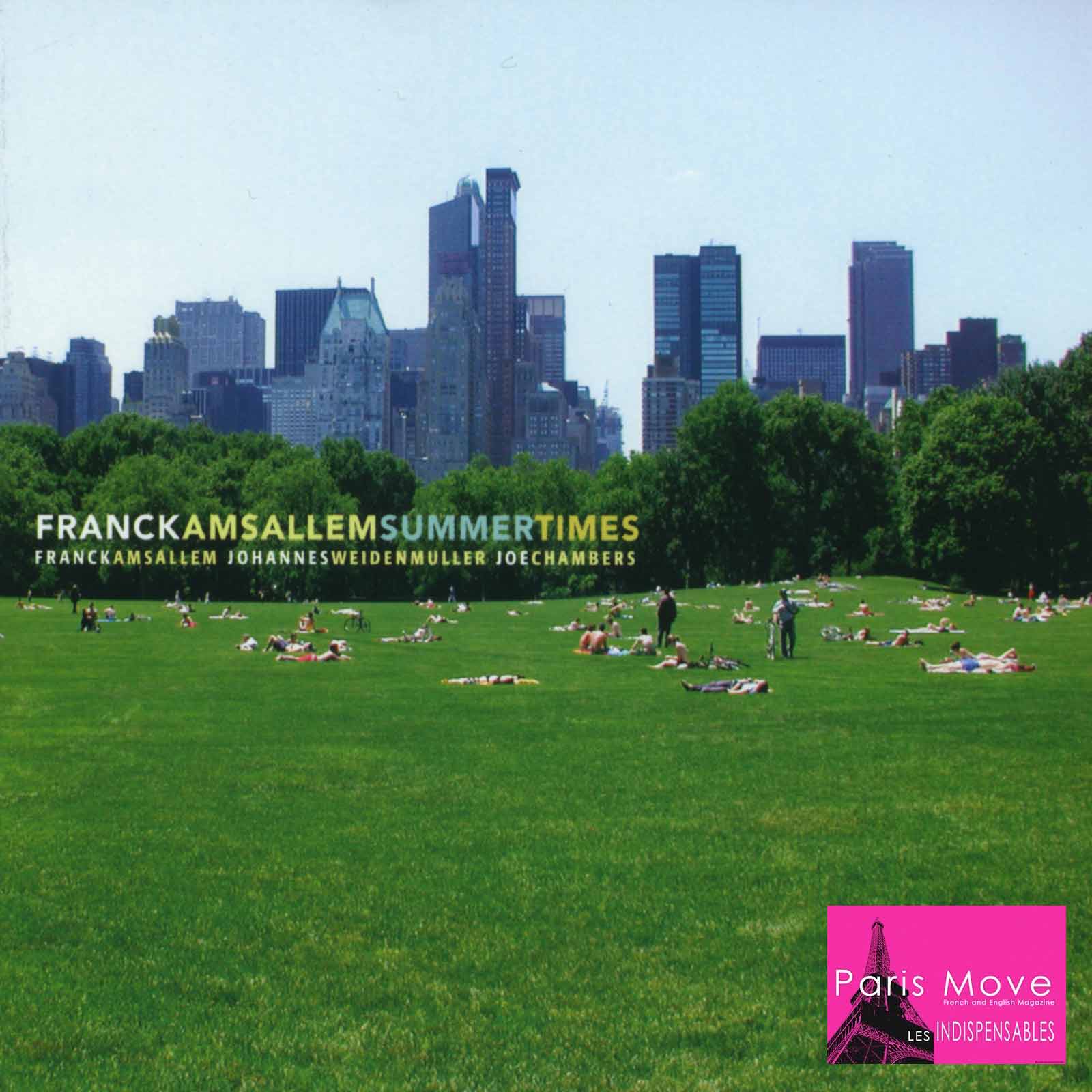
The Remastered Return of Franck Amsallem’s Summer Times – A Timeless Jazz Trio Masterpiece
There is something quietly radical about revisiting a jazz record that, originally, was not trying to draw attention. In an era defined by constant renewal, the remastered reissue of Franck Amsallem’s Summer Times does not feel like a nostalgic gesture, but rather a reminder: some music does not age because it was never tied to its time.
Released more than two decades ago, the album returns with renewed clarity, its essence intact. If anything has changed, it is that time has refined its contours. Amsallem is joined by Johannes Weidenmüller and Joe Chambers, two musicians whose reputations precede them, but whose playing here stands out less for display than for discipline. Together, they strip jazz down to its most essential form: no excess, no ornamentation, just three masters engaged in a deliberate conversation.
At the heart of the album is Amsallem’s defining strength: his ability to deconstruct melody without ever losing its emotional thread. Standards like “You’re My Everything” are not merely performed, but subtly reinvented; their harmonic structures are stretched and rebalanced to reveal something both familiar and newly intimate. On “Young and Foolish,” the trio slows time almost to a standstill, letting silence and resonance carry as much weight as the notes themselves. It is here, in the bare landscape of the ballad, that Amsallem’s artistic maturity becomes undeniable.
The album’s quiet success on Apple Music, where several tracks have amassed millions of plays, suggests a broader resonance. Yet these numbers, though noteworthy, seem almost secondary. What matters more is how Summer Times fits within a lineage. This is not European jazz looking outward, but an interpretation of American musical tradition from within, drawing deeply on the language of standards, swing, and post-bop without ever lapsing into imitation.
As JazzTimes once observed, Amsallem’s style navigates “from jazz to Tin Pan Alley,” a phrase that captures his paradoxical sensibility: relaxed yet exploratory, understated yet structurally complex. His playing is marked by a form of perpetual inquiry, each phrase suggesting not resolution, but continuity. And while this intellectual restlessness can sometimes create emotional distance, it ultimately strengthens the coherence of the album, an aesthetic based on reflection rather than immediacy.
Amsallem himself remains remarkably understated, given the scope of his achievement. He belongs to a lineage of European musicians who have internalized jazz so deeply that questions of origin become secondary. What sets him apart is not just virtuosity, but perspective: the sense that every arrangement emerges from a long process of assimilation, transformation, and restraint.
Listening today, it is striking how present his later artistic identity already is. The touch, phrasing, and architectural sense of form are all there from the first measures. If his playing has evolved over the years, it has been through refinement rather than reinvention.
And yet, Summer Times is not without limits. Its commitment to introspection can occasionally verge on austerity, leaving listeners seeking immediacy or contrast wanting. But this restraint is also its fundamental logic: a refusal to indulge in excess, a faith in the sufficiency of nuance.
In a cultural moment often defined by noise and acceleration, the album offers something that borders on resistance. It invites repetition, rewards patience, and lingers in the mind long after listening. One comes to feel that its current digital life tells only part of the story; a carefully crafted vinyl or CD reissue would not only satisfy collectors but restore the physical dimension this music seems to call for.
Today, Franck Amsallem occupies a space that defies easy categorization. One can roughly place him between figures like Michel Petrucciani and Bob James, not as a midpoint but as a point of tension between lyricism and structure, immediacy and reflection.
In other words: he is no longer simply a participant in the tradition, but one of its discreet landmarks.
Thierry De Clemensat
Member at Jazz Journalists Association
USA correspondent for Paris-Move and ABS magazine
Editor in chief – Bayou Blue Radio, Bayou Blue News
PARIS-MOVE, March 23rd 2026
Follow PARIS-MOVE on X

::::::::::::::::::::::::
2026 Remastered version (April 1, 2026)
Musicians :
Franck Amsallem / piano
Johannes Weidenmüller / bass
Joe Chambers / drums
Track Listing:
I Got Rhythm
Summertime
Young and Foolish
Standard Form
Laila
The Man I Love
Bud Will Be Back Shortly
You’re My Everything