

Bennie Wallace’s interview
by Frankie Pfeiffer
Editor in chief – PARIS-MOVE
November 18th, 2026
Photo: copyright Carol Friedman
::::::::::::::::::
Frankie Pfeiffer: Bennie, you are a saxophonist and a composer. Do you only play tenor saxophone?
Bennie Wallace: Yes, Frankie. I only play tenor saxophone. I was trained as a classical clarinetist. But I haven’t played that for years.
Frankie Pfeiffer: Can you tell us about your biography? Because, I understand that as a teen, you started by playing the clarinet, is that right?
Bennie Wallace: That’s right. I played it all the way through college. When I first moved to New York, I would get some work on it. But at one point I found that it made it difficult to get the sound that I want on the tenor saxophone.
Frankie Pfeiffer: A few years later you played with pianist Barry Harris and the drummers Buddy Rich, Dannie Richmond. What memories do you keep of these
encounters, and what did it bring you, musically and humanly to play with them?
Bennie Wallace: I only played a couple of gigs with Barry. And they were a lot of fun. My great memory is playing with Dannie Richmond. We played numerous tours and made several recordings together. I think he’s one of the most underappreciated drummers in the business. I miss him terribly.
Frankie Pfeiffer: Your debut recording was with tenor saxophonist and clarinettist Flip Phillips and tenor saxophonist Scott Hamilton in 1977, is that right? What did you feel after making that first recording? And how do you judge it today, with hindsight and your experience?
Bennie Wallace: That whole recording session was probably no more than an hour and a half. It was thrown together in quite a hurry. Not much to remember musically. But it was the first time I met Scott Hamilton. A beautiful cat and a wonderful saxophonist. Similarly, I remember Flip Phillips for his beautiful sound.
Frankie Pfeiffer: Do you still have that record? Do you listen to it?
Bennie Wallace: I may have a copy around here somewhere. But I haven’t heard it in years.
Frankie Pfeiffer: Who are your major saxophone influences?
Bennie Wallace: My influences are, by intent, too numerous to mention. The saxophonist who made me want to really be a musician was Sonny Rollins. My teacher gave me one of his records when he gave me the first saxophone. Of course I loved Coltrane. I also listened to Lockjaw Davis, Red Prysock, all the tenor players in Count Basie’s band. Those wonderful solos that Bud Johnson played on the Basie at Birdland record. These days when I listen to saxophone players, it’s mostly Coleman Hawkins, Lester Young, and Ben Webster. But I listen to more piano players and singers these days.
Frankie Pfeiffer: From 1978 to 1984 you recorded 7 albums with Enja Records, a German jazz record label based in Munich which was founded by jazz enthusiasts
Matthias Winckelmann and Horst Weber in 1971, and in 1985 your Twilight Time’s album is recorded with the Blue Note label. Did you decide to change labels, and if so,
why? Or was it Blue Note who contacted you to join them?
Bennie Wallace: Recording for Blue Note gave me the opportunity to have a much wider audience for my music. My manager at the time set that up.
Frankie Pfeiffer: Your discography to date shows that French Postcard is your twenty-first album as leader, as there are a few more as sideman! For the record lover that I am, have you kept them all?
Bennie Wallace: I’ve kept most of them.
Frankie Pfeiffer: If you had to give your opinion, a judgment, on your 21 albums, what would be your 3 favourites? And why?
Bennie Wallace: In general, I find it difficult to listen to my own records. I’m proud of the record I made of Thelonious Monk’s music. I loved recording twice with Tommy Flanagan.
Frankie Pfeiffer: On French Postcard, the inaugural release of BackCountry Jazz Records, we have a mix of standards and original compositions. Why did you choose to
include standards and not release an album with only compositions?
Bennie Wallace: I love those old songs. I also like recording my own music. But the tunes that we chose were from among things we often play together in concerts.
Frankie Pfeiffer: In what state of mind did you compose your various originals for this album? How do you compose? With which instruments do you write your
compositions? Only with the tenor saxophone?
Bennie Wallace: Handcuffs was written for Tommy Flanagan. Srubie, for my wife, Jeanette. Melodies come to me mostly on the saxophone. And I’ll often work at the piano with the harmonies.
Frankie Pfeiffer: You decide to record the tracks live on an analog tape, then mastered all-analog by Kevin Gray, and pressed on high-quality vinyl for BackCountry
Jazz Records. Why that analog technological choice? Is it your way of taking revenge on digital and digital?
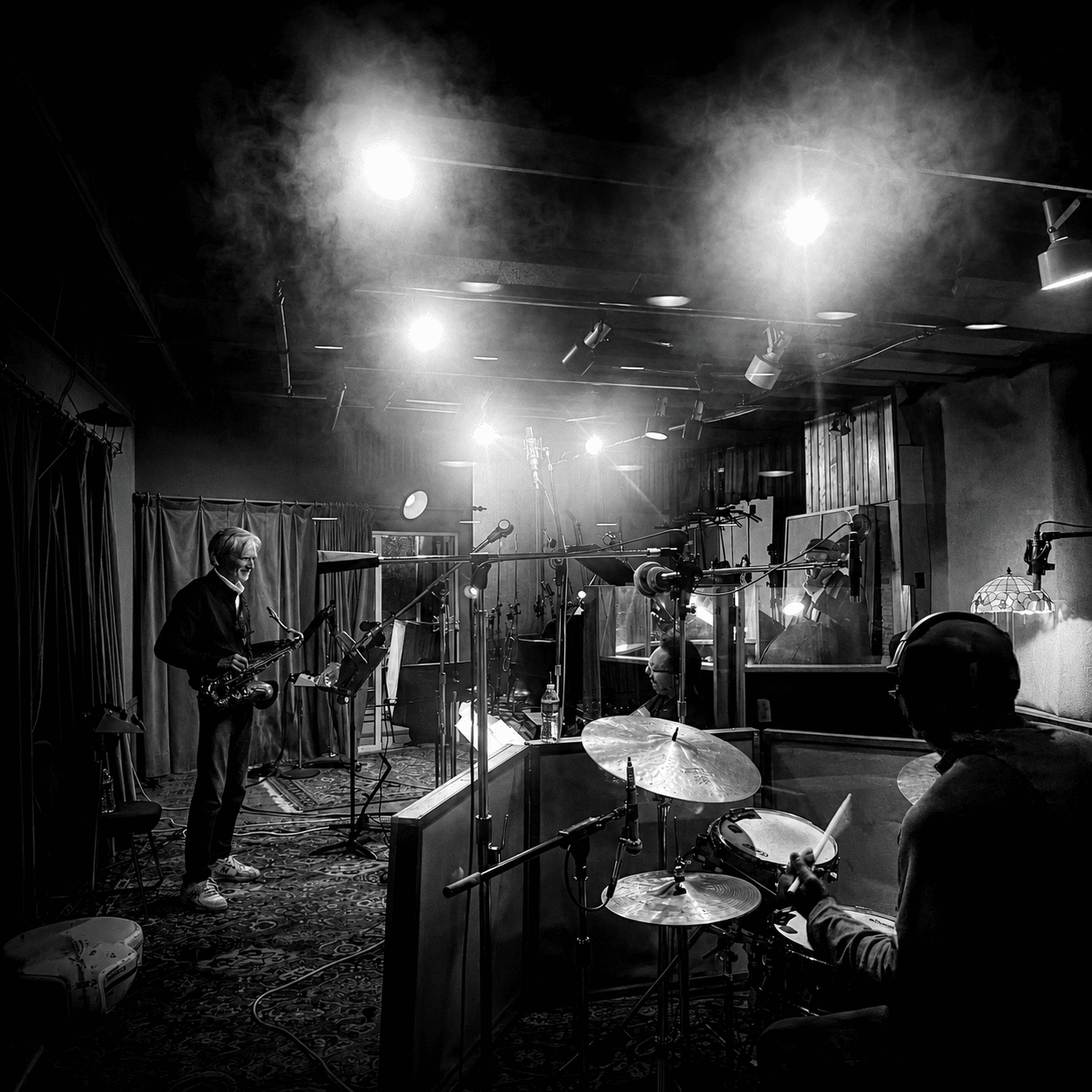
Bennie Wallace: Has nothing to do with revenge. When you have the right engineer and the right musicians it’s the way to get the absolute best sound quality. That traditional live-to-two-track sound is very important to the records we’re going to make on the label.
Frankie Pfeiffer: In our review on Paris-Move I wrote that “A French Postcard captures something that has become increasingly rare in modern music: authenticity”.
Don’t you think that’s what listeners in today’s times need as well? Authenticity?
Bennie Wallace: I certainly appreciate your compliment. To me, every authentic artist is trying to express a personal statement that comes from the heart. And trying to find the highest within yourself, hopefully you can inspire the listener. If you’re lucky, every once in a while, you can hit the mark.
Frankie Pfeiffer: What instructions did you give to the other musicians when you recorded this album? How much freedom to play and improvise do you give/offer them?
Bennie Wallace: No instructions except basic details of the arrangements. I like to play with musicians whom I can trust to make inspiring choices. These are some of my favorite associates.
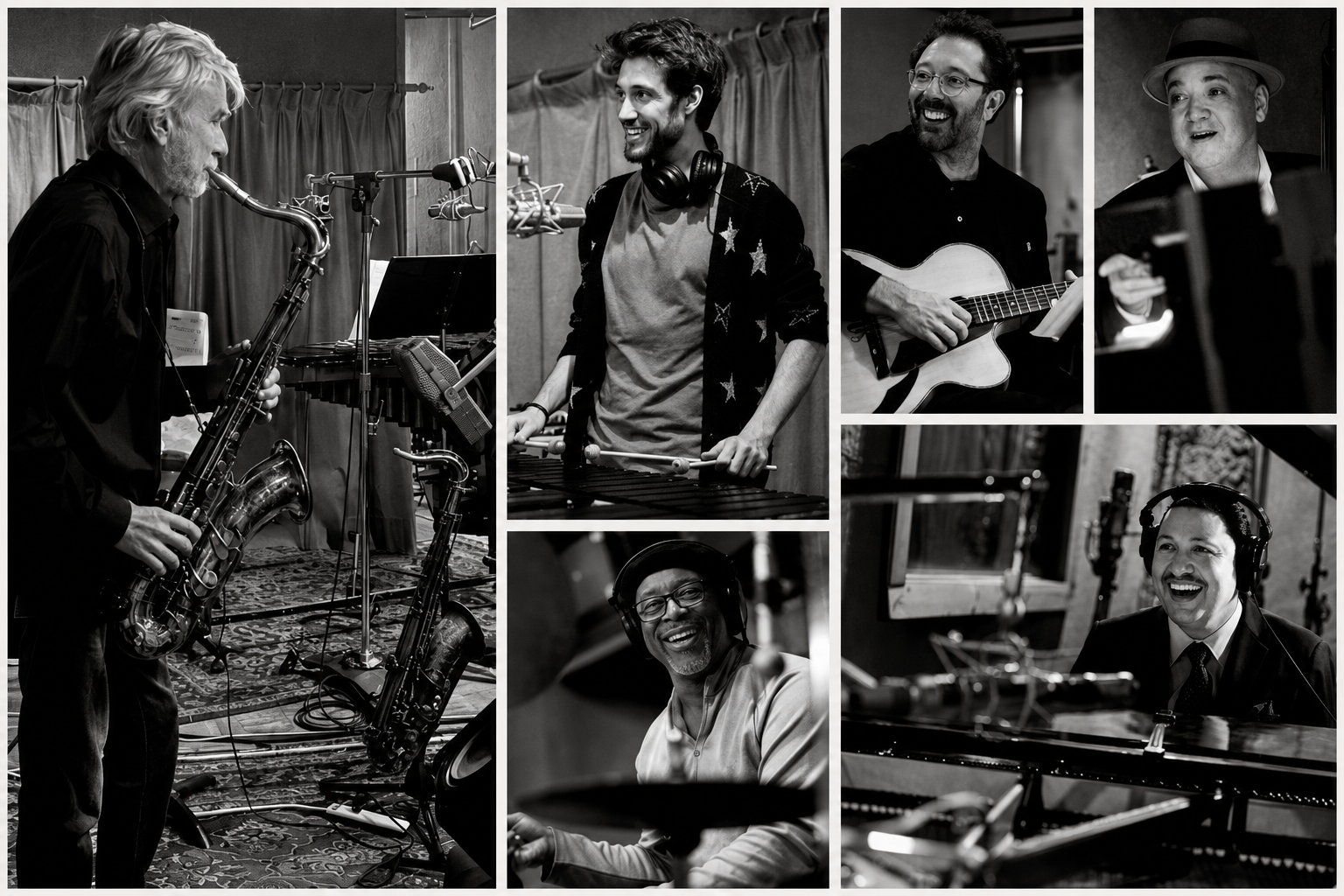
Frankie Pfeiffer: BackCountry Jazz Records is a new label and its first record is yours. And it’s a vinyl! I saw that the Executive Director of that label is Jeanette Wallace.
Are you responsible for anything in the creation of this new label? And what is your role?
Bennie Wallace: We have a great team. Art direction by Carol Friedman. Recordings engineered by James Farber. Jeanette and Jialu Suen make everything happen. Joe Harley and I are producing the records and choosing future artists. We have one more recording with this band which we will release next year. After that, I hope to make a record with Godwin Louis.
Frankie Pfeiffer: I also saw that in the Advisory Board there are famous names, like Jeff Goldblum, guitarist Bill Bonnell, Thelonious Monk Jr., Ken Kitchings, and a few
more. What was the main motivation which prompted them to accept a role in a new label?
Bennie Wallace: You’ll have to ask them why they help us out. By the way, Bill Bonnell is a wonderful graphic designer who donates his work and gives our organization its look.
Frankie Pfeiffer: Is this label’s strategy to only offer vinyl releases? And necessarily recorded in analog?
Bennie Wallace: That was the intent, but we are beginning to make CDs also. The analog aspect is essential. Otherwise we could just record concerts.
Frankie Pfeiffer: How do you see your music evolving, Bennie?
Bennie Wallace: I feel like I’m learning about music every day. What interests me is communicating the spirit of the music to the listener. I look to the masters from the past to guide me in what I hope is a personal statement.
Frankie Pfeiffer: How do you imagine your next album (for BackCountry Jazz Records, I presume)? With the same musicians? Will it be in the same spirit as this first
album, a mix of standards and compositions? Or only Bennie’s compositions?
Bennie Wallace: Again, the next release is already recorded. It’s basically the same band with a guest spot by Tyreek McDole.
Frankie Pfeiffer: Congratulations, in any case, for this first vinyl with BackCountry Jazz Records! It gets the highest mark on Paris-Move, ‘A must have’! “One of the most striking and luminous jazz records of this year 2026, a work which deserves attention and repeated listening.”
Bennie Wallace: Thanks so much for your kind words, Frankie. You have asked some really good questions and I hope I did justice to them. All my best, Bennie.
:::::::::::::::
Read our French Postcard review on PARIS-MOVE – Excerpts:
“French Postcard is not background music. It deserves careful listening. Put the LP on the turntable. Lower the stylus. Sit comfortably. Listen to the music and the space between the notes. Listen to the way the musicians react to one another. Listen to the warmth of the analog tape. Listen to the best that jazz has to offer!
French Postcard is a triumph, musically, artistically, and sonically.
An absolute must-have for anyone who loves great jazz, great musicians, and great sound. One of the most striking and luminous jazz records of this year 2026, a work which deserves attention and repeated listening.”
Review by Frankie Pfeiffer
Editor in chief – PARIS-MOVE
PARIS-MOVE, June 22nd, 2026