| Musique contemporaine |
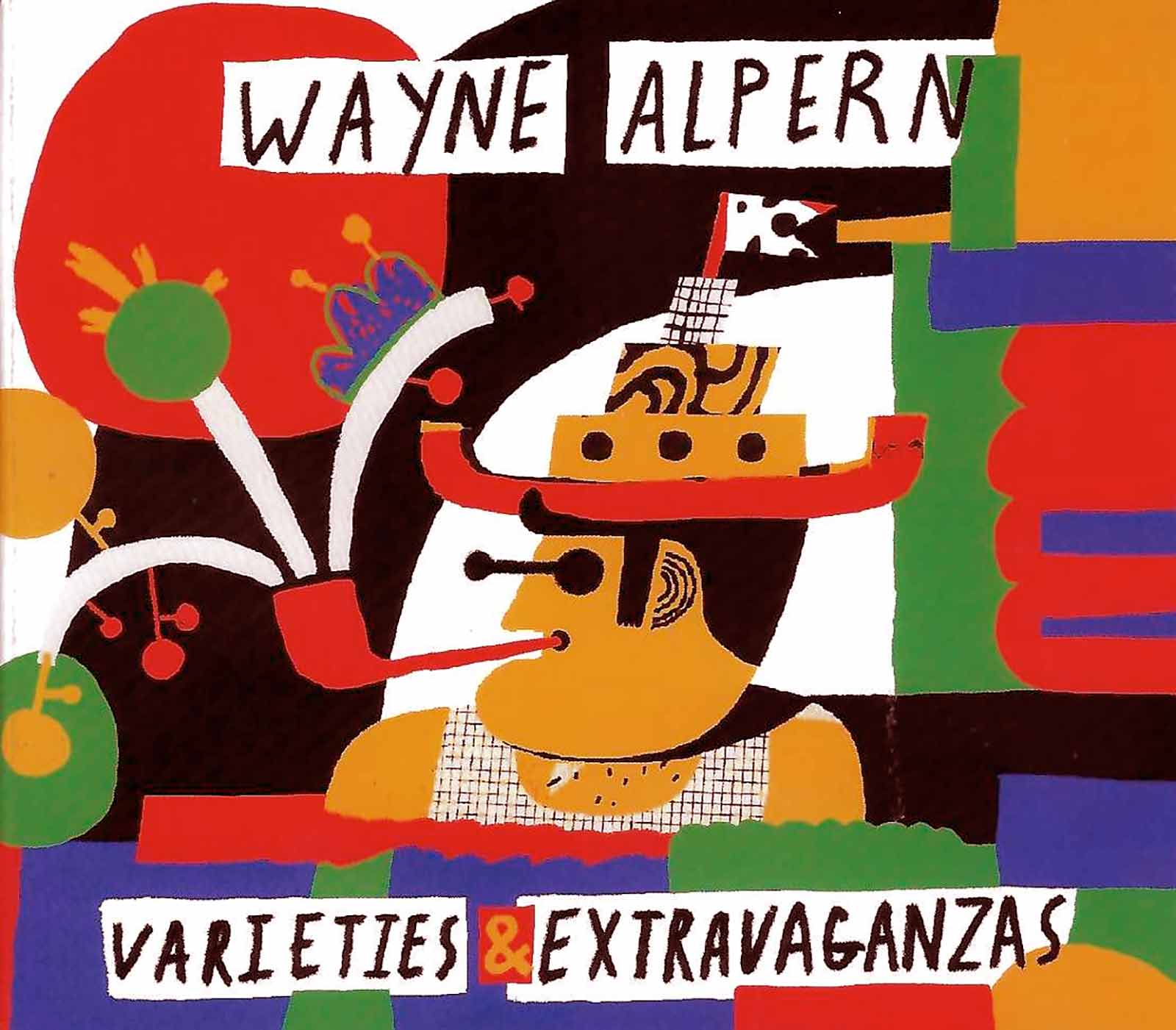
Summary: Wayne Alpern’s Varieties & Extravaganzas: A Bold, Genre-Blurring Musical Tapestry
Wayne Alpern’s Varieties & Extravaganzas: A Bold, Genre-Blurring Musical Tapestry
As is so often the case with Wayne Alpern, the listener is invited to move fluidly across musical worlds, from classical to jazz and beyond. That restlessness feels almost inevitable for a composer raised on the sounds of Motown who first found his footing in rock, yet was deeply shaped by formal classical training that has continued to inform his work at every stage. The result, in Varieties & Extravaganzas, is something like a musical patchwork, an album that resists easy categorization while embracing contrast as a guiding principle.
The recording itself was made at Skillman Studio in New York, a modern space owned by the remarkable Wei Wang, former Juilliard student. Wang also produced the album, working alongside his protégé Scott Chiu on the technical side. The project benefits from the seasoned touch of Grammy Award winner Dave Darlington, who handled mixing and mastering with clarity and balance.
At its core, Varieties & Extravaganzas gathers a wide range of original compositions, brought to life by the Times Square Brass Quintet, an ensemble made up of recent graduates from the Juilliard School. The group performs under the direction of Robby Garrison, co-principal trumpeter of the Sarasota Orchestra, alongside David Puchkoff, a trumpeter with the New York City Ballet Orchestra, and Addison Maye Saxon, a trombonist associated with Symphony in C and the ensemble The Westerlies. They are joined by rising talents James Picarello and Adolfo Monterroso on tuba, musicians who are already earning recognition in contemporary music circles.
What stands out most immediately is the surprising presence of swing within compositions that otherwise lean heavily toward classical structure. That tension creates a subtle disorientation, pulling the listener into a space that feels slightly off center, even uncanny at times. Alpern does not seem interested in committing fully to a single stylistic direction. Instead, he treats instrumentation as a palette, blending timbres and tonal colors to paint a series of musical tableaux. There are twelve in total, each distinct, each exploring its own internal logic.
And yet, after several listens, the balance tilts noticeably toward classical music rather than jazz. That impression may stem in part from the performers themselves, whose phrasing and interpretive instincts reflect their training and cultural grounding. The album may ultimately resonate more deeply with listeners attuned to contemporary classical traditions than with those seeking a more conventional jazz experience. The boundary between those genres has always been porous, but the methods of composition and interpretation still differ, particularly between European and American traditions.
For the listener, the journey can feel at times disorienting. The opening Allegretto introduces swing elements that seem to gesture toward jazz, while the second track leans more clearly in that direction, only for the rest of the album to branch out into a wide array of styles. This sense of dispersion may well be intentional, part of the project’s conceptual framework. Still, it can leave even a careful listener searching for a unifying thread.
After spending time with the album, it becomes difficult to render a simple verdict. There is no shortage of strong compositions or accomplished performances. Perhaps it is best understood as a kind of musical curiosity, one that is consistently engaging even when it defies expectation. One could imagine it sitting comfortably in the catalog of a label like Harmonia Mundi, given its classical leanings and refined execution.
If the album occasionally feels elusive, that does not diminish Alpern’s stature. On the contrary, it underscores his individuality. He is not easily grouped with the jazz composers more commonly discussed in similar contexts. With each new release, he appears less like a genre figure and more like a singular voice, a composer whose ambitions and sensibilities evoke, in some respects, the spirit of Mussorgsky.
Thierry De Clemensat
Member at Jazz Journalists Association
USA correspondent for Paris-Move and ABS magazine
Editor in chief – Bayou Blue Radio, Bayou Blue News
PARIS-MOVE, May 6th, 2026
Follow PARIS-MOVE on X

::::::::::::::::::::::::
Musicians :
Robby Garrison, trumpet
David Puchkoff, Trumpet
James Picvarello, Horn
Addison Maye – Saxon, trombone
Adolfo Monterro, tuba
Track Listing :
Allegretto
I Don’t Want To Set The World On Fire
Chorale
Gavotte
Have You Met Miss Jones?
Motet
Nutcracker
Parade
Sinfonia
Lady Is A Tramp
Reinvention
Serenade