
| Jazz |
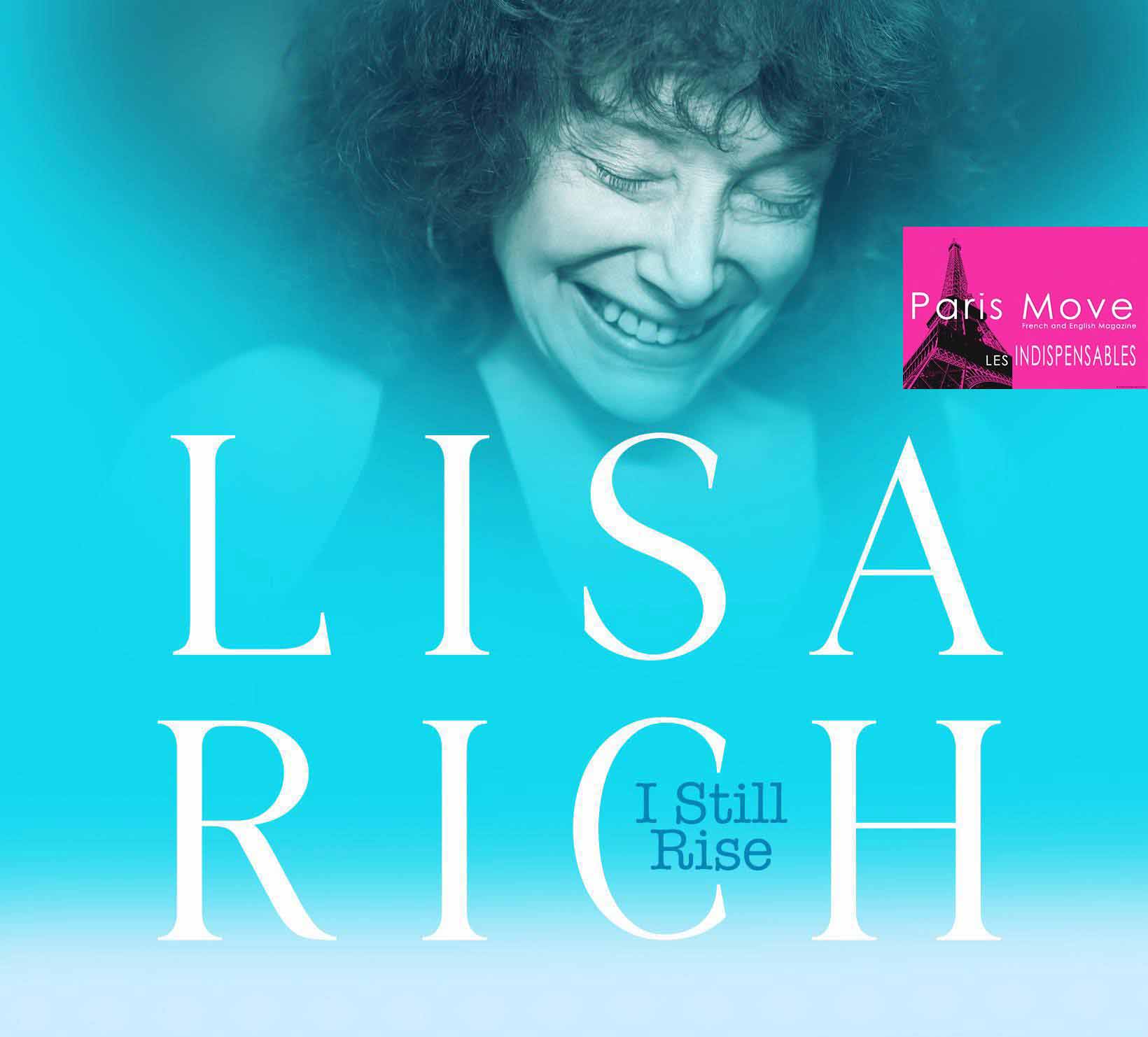
Summary: A subtle, deeply expressive jazz album, I Still Rise by Lisa Rich transforms familiar standards into intimate, elegant storytelling.
Lisa Rich’s I Still Rise: Quiet Mastery and the Art of Interpretation
Early morning, still half in shadow, in the warm air of Austin at the start of May. The season here hesitates, wavering between heat and rain, as if the sky itself were undecided. A low hum of distant traffic drifts through the window, somewhere far off a hint of thunder threatens, and a cup of Lavazza coffee steams quietly on the desk. I find myself thinking back on a string of emails with Lisa Rich, smiling at the announcement of her new album.
Rich is one of those increasingly rare artists driven not by the urge to write songs, but by the deeper, more elusive craft of interpretation. She does not chase vocal theatrics or grand gestures. Instead, she leans into storytelling, letting each lyric unfold with clarity and emotional precision. Over the years, and across a career built with patience rather than spectacle, she has sharpened this gift to a fine edge, drawing listeners in not through force, but through sincerity.
Backed by a group of exceptional musicians, with Marc Copland leading on piano, she revisits compositions by Bill Evans, Dave Brubeck and others, making them unmistakably her own. Nowhere is this more evident than in her take on Take Five. Countless artists, especially vocalists, have approached this piece, often with uneven results. But what Rich brings is something else entirely.
Her version is unhurried, almost conversational in its phrasing. She softens the rhythmic edges of the original 5/4 pulse, allowing the melody to breathe in unexpected ways, stretching certain lines, pulling others back, as if testing the elasticity of the composition itself. There is a lightness in her delivery, a sense of play that never tips into excess. It bends the structure without breaking it, revealing new contours while honoring the original spirit. One suspects Brubeck himself might have appreciated the balance she strikes, the way her vocal lines ultimately serve the composition rather than overshadow it.
Jazz runs deep in Rich’s veins, and that sensibility extends beyond the studio. Her upcoming album release performance promises to reflect the same understated elegance. Those in attendance are likely to experience something intimate and finely tuned. Rich brings not only a voice of remarkable control, but also a disarming sense of humor, shaping concerts that feel less like performances and more like shared moments.
Her album I Still Rise stands as a testament to that approach. At first glance, it may appear rooted in a traditional jazz vocabulary. Listen more closely, though, and something shifts. Elegance replaces the familiar vocal flourishes. Restraint becomes expressive. There is no artifice here. Rich offers herself as she is, and that honesty sets her apart.
Loyal to her longtime collaborators, she works with musicians who think and breathe as one unit. There is a shared pursuit of precision, a collective identity refined over years. A Lisa Rich album is never rushed. It is built patiently, detail by detail, arrangement by arrangement. Everything supports the voice, yet the music itself is never secondary. It moves, it speaks, it opens space. The instrumental passages, including several finely shaped solos, provide moments of quiet exhilaration.
Most of the songs on the album are familiar, at least in origin. But Rich transforms them so thoroughly that their roots sometimes fade from view. What remains is their poetic essence, their narrative power. The first listen invites surprise. The second draws you deeper into the architecture of the sound. By the third, the album begins to reveal its inner logic, its delicate construction, its quiet ambition.
For Rich, the process unfolds on two levels. She is both interpreter and instrumentalist, using her voice not simply to deliver lyrics but to function as an instrument in its own right. That dual role places her work in conversation with more complex, exploratory jazz projects, the kind that reward repeated listening. It takes resolve to carry a vision from beginning to end with such consistency, and Rich does so with quiet confidence.
Even the album’s title suggests a touch of wit, as if to underline her determination to keep pushing forward, to lift her art ever higher. The image that comes to mind is that of a jeweler spending a year shaping a necklace, refining each stone until it approaches perfection. That same patience, that same devotion to craft, seems to lie at the heart of Lisa Rich’s work.
In a musical landscape often driven by speed and spectacle, her artistry moves in the opposite direction. It asks for time, attention, and trust. And in return, it offers something increasingly rare: music that does not demand to be heard, but quietly insists on being felt.
Thierry De Clemensat
Member at Jazz Journalists Association
USA correspondent for Paris-Move and ABS magazine
Editor in chief – Bayou Blue Radio, Bayou Blue News
PARIS-MOVE, May 5th, 2026
Follow PARIS-MOVE on X

::::::::::::::::::::::::
Musicians :
Lisa Rich, vocals
Marc Copland, piano
Drew Gress, bass
Dave Ballou, trumpet
Track Listing :
No Moon At All
The Two Lonely People
Beginner / How Are You Gonna Sing About Freedom?
Estate
Take Five
Quiet Now
Ancient Footprints
Like Someone In Love
Never Let Me Go
It’s Over Now (Well, You Needn’t)

Produced by Bob Dawson and Lisa Rich
Recorded by Bob Dawson, BIAS Recording Studios, Virginia, May 7–8, 2025
Mastered by Mike Monseur
Arrangements by Lisa Rich and Marc Copland
Cover and Photography by Christopher Drukker
Painting by Ina Helrich
With Gratitude: With deepest love and gratitude to my husband, Robert, who is a part of every song I sing.
Endless gratitude to Jay Clayton — dear friend, sister, mentor — whose inspiration and spirit are woven through this music and everything that led to it.
Special thanks to: With love and thanks to Marc Copland, Drew Gress, Dave Ballou, Bob Dawson, Stephen Nachmanovitch, Larry Livingston, Chris Drukker, Ashley Maher and Cathy Segal-Garcia.