| Jazz |
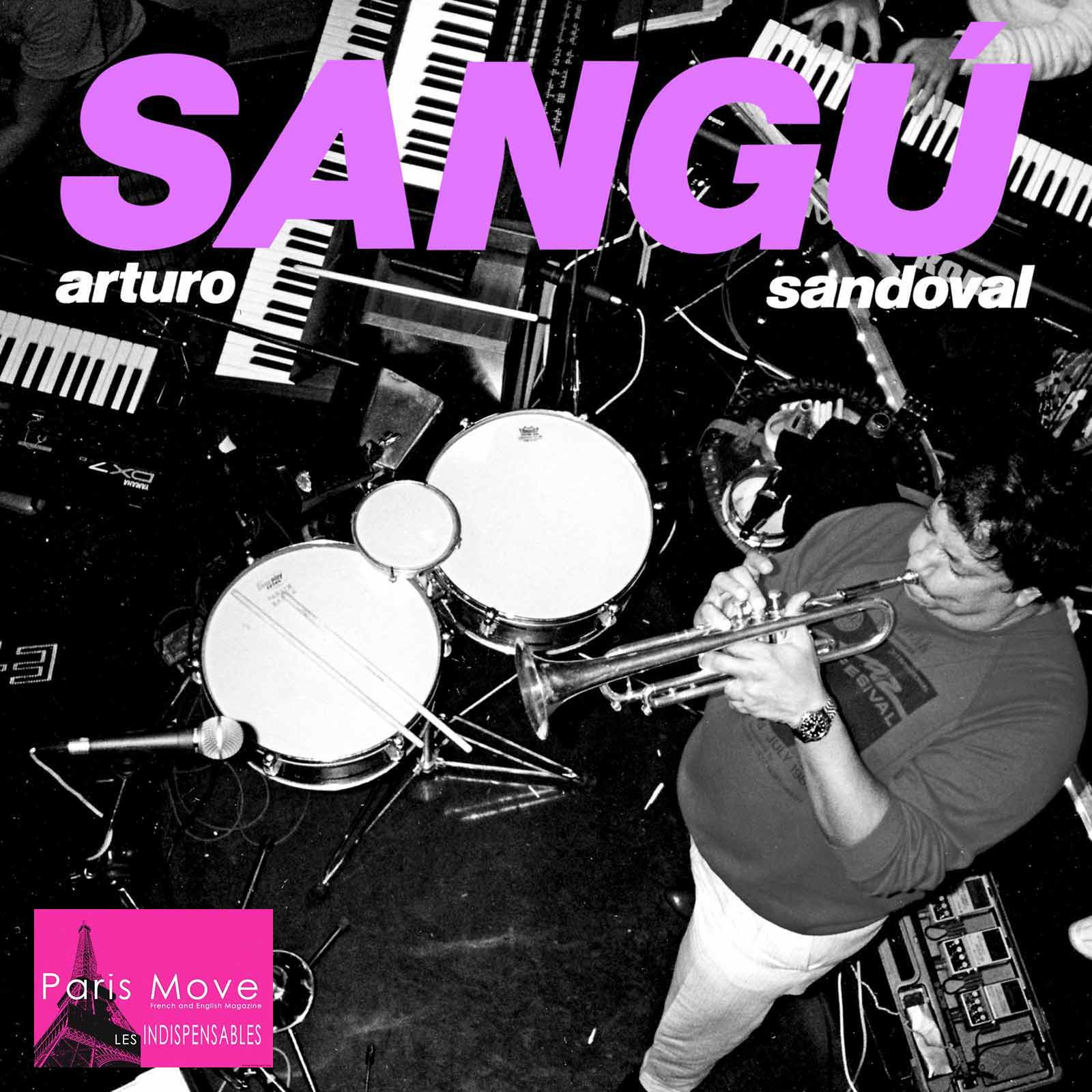
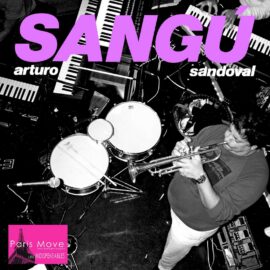
Summary: A vibrant, deeply personal album where Arturo Sandoval blends Afro-Cuban roots, bebop fire, and modern textures into a bold, family-driven artistic renewal.
Arturo Sandoval’s SANGÚ: A Family-Forged Jazz Rebirth
With the sheer volume of jazz albums arriving week after week, falling a little behind is almost inevitable. But SANGÚ, the new release from trumpeter and composer Arturo Sandoval, quickly distinguishes itself from the crowd. This is not simply another technically accomplished record. It is a deeply personal work, shaped by family ties and driven by a clear sense of artistic renewal.
At its core, SANGÚ is a family story, one that quietly reshapes how we hear an artist long thought fully understood. The album emerges from an unusually intimate creative process, conceived and built at home, grounded in trust, playfulness and a deep, almost instinctive musical bond. Sandoval worked closely with his son, Arturo “Tury” Sandoval III, and his daughter in law and manager, Melody Lisman. Together, they created a space where generations meet not only through affection but through a genuine artistic dialogue. Their shared ambition is evident throughout. They set out to create a record capable of pushing Sandoval’s sound forward while honoring the elemental forces that shaped him: Afro Cuban polyrhythms rooted in layered percussion cycles, the spiritual memory of Yoruba traditions, the elasticity of Cuban phrasing, the harmonic urgency of bebop, along with strands of funk and folklore, all carried by a spirit of risk that feels both deliberate and alive.
What follows is a record that once again confirms Sandoval’s extraordinary command as both composer and trumpeter, while also revealing a willingness to go further than before. From the opening track, the effect is immediate and almost disorienting. The breath catches. A shifting harmonic bed, moving between modal tension and release, supports a trumpet line that alternates between piercing clarity and rapid, cascading runs. Electronics are handled with precision and restraint, expanding the sonic palette without overwhelming the organic core. The rhythmic foundation often pivots on syncopated Afro Cuban patterns, while bass lines stretch across bar lines, creating a sense of forward momentum that never quite settles.
The balance that once defined Sandoval as a jazz Latin composer tilt here toward a deeper jazz sensibility, without abandoning its roots. At moments, his playing evokes the intensity and drive associated with Miles Davis in his bebop years, particularly in the sharp articulation and compressed phrasing of certain solos, though it never slips into imitation. The album unfolds like a kind of controlled delirium, drawing the listener into a space that invites both movement and close attention.
There are flashes of familiarity, but they function more as points of resonance than direct comparisons. The brass arrangements occasionally carry the punch and layered sophistication reminiscent of Earth Wind and Fire, especially in the tight voicings and call and response figures between horns. Elsewhere, the album’s cohesion and tonal clarity recall Santana at his most focused, where groove and melodic line remain inseparable. Yet Sandoval’s voice remains unmistakable. These echoes never overshadow the central identity of the work.
There is a sense of rediscovery here. Even for listeners who have followed his career closely, SANGÚ reveals new contours. Sandoval has always carried within him a drive to renew and challenge himself. Here, surrounded by family, that impulse finds fertile ground, resulting in something that feels very much like an artistic rebirth. The album stands at an unusual crossroads, deeply ancestral and firmly modern at the same time.
The DNA of SANGÚ also reconnects with the revolutionary spirit that once defined Irakere, the pioneering group Sandoval co-founded in Cuba alongside Chucho Valdés and Paquito D’Rivera. That legacy is present, but not as nostalgia. The fusion here is just as fearless, yet it resists becoming a reconstruction of past triumphs. Instead, the album distills decades of experience into a more refined, more open and more intimate expression. It is leaner in some ways, but also freer, allowing space for subtle interactions between instruments and a more conversational approach to arrangement.
Repeated listening only sharpens the album’s appeal. It is undeniably addictive. One track in particular, “Azulito,” stands out for its seamless blend of bebop and soul. Built on a brisk tempo and a walking bass line that anchors the piece, the track layers a syncopated piano figure against bright horn accents. Sandoval’s solo moves between tightly coiled phrases and sudden bursts of melodic expansion, creating a sense of tension that resolves in brief, lyrical passages. It feels like a quiet nod to jazz history, perhaps even a subtle salute to Miles Davis, while maintaining its own distinct identity.
Then there are the voices. Even without understanding Spanish, one becomes acutely aware of the language’s musicality as it exists within Cuban music. The phrasing often emphasizes open vowels and rhythmic stress patterns that align closely with the underlying percussion, giving the impression that the voice itself functions as an additional instrument. This creates a fluid relationship between language and rhythm, where meaning is carried as much by sound as by words. A similar effect can sometimes be heard in certain Argentine singers, where pronunciation and phrasing reshape the emotional texture of the performance.
Ultimately, SANGÚ is more than a collection of tracks. It is an invitation to travel, to share, and to listen closely. It rewards attention without demanding it, offering layers that reveal themselves gradually. From the first listen, there is a sense of lift, a quiet but persistent joy that settles in. And by the time the album reaches its final moments, what lingers is not just admiration for its craft, but the feeling of having witnessed an artist open a new chapter, one rooted in heritage yet fully alive to the present.
Thierry De Clemensat
Member at Jazz Journalists Association
USA correspondent for Paris-Move and ABS magazine
Editor in chief – Bayou Blue Radio, Bayou Blue News
PARIS-MOVE, May 3rd, 2026
Follow PARIS-MOVE on X

::::::::::::::::::::::::
Musicians:
William Brahm – Guitar
Daniel Feldman – Drums
Maximilian Gerl – Bass
Lisandro Pidre – Piano / Keys
Samuel Torres – Percussion
Michael Tucker – Tenor
Paul Nowell – Trombone
Bob Sheppard – Alto and Baritone Saxophones / Flute
Arturo Sandoval – Trumpets and Vocals
Track Listing :
Scat
Sangú
La Ventura
Days In The Sun
Azulito
Babalu Aye
With The People
Panza
New Paradise
Rolling Hills
Red Trumpet
El Rio Suena
Executive Producers:
Arturo “Tury” Sandoval III
Melody Lisman
Daisuke Oda
Darren Romanelli
Concept & Creative Direction:
Arturo “Tury” Sandoval lll
Melody Lisman
Produced by:
Arturo Sandoval
Arturo “Tury” Sandoval III
Mark Ramos Nishita
Melody Lisman
Recording Engineers: Pete Min – Lucy’s Meat Market
Patricio Rosario – Sandoval Studios
Miles Senzaki – Pre-production
Mixed by: Peter Mokran
Mastered by: Bernie Grundman
Horns written by: Arturo Sandoval
Additional horn arrangements by: Todd Simon