| Jazz |
Summary: A refined, deeply personal jazz album where Steve Wilson transforms lasting musical memories into elegant, contemporary reinterpretations.
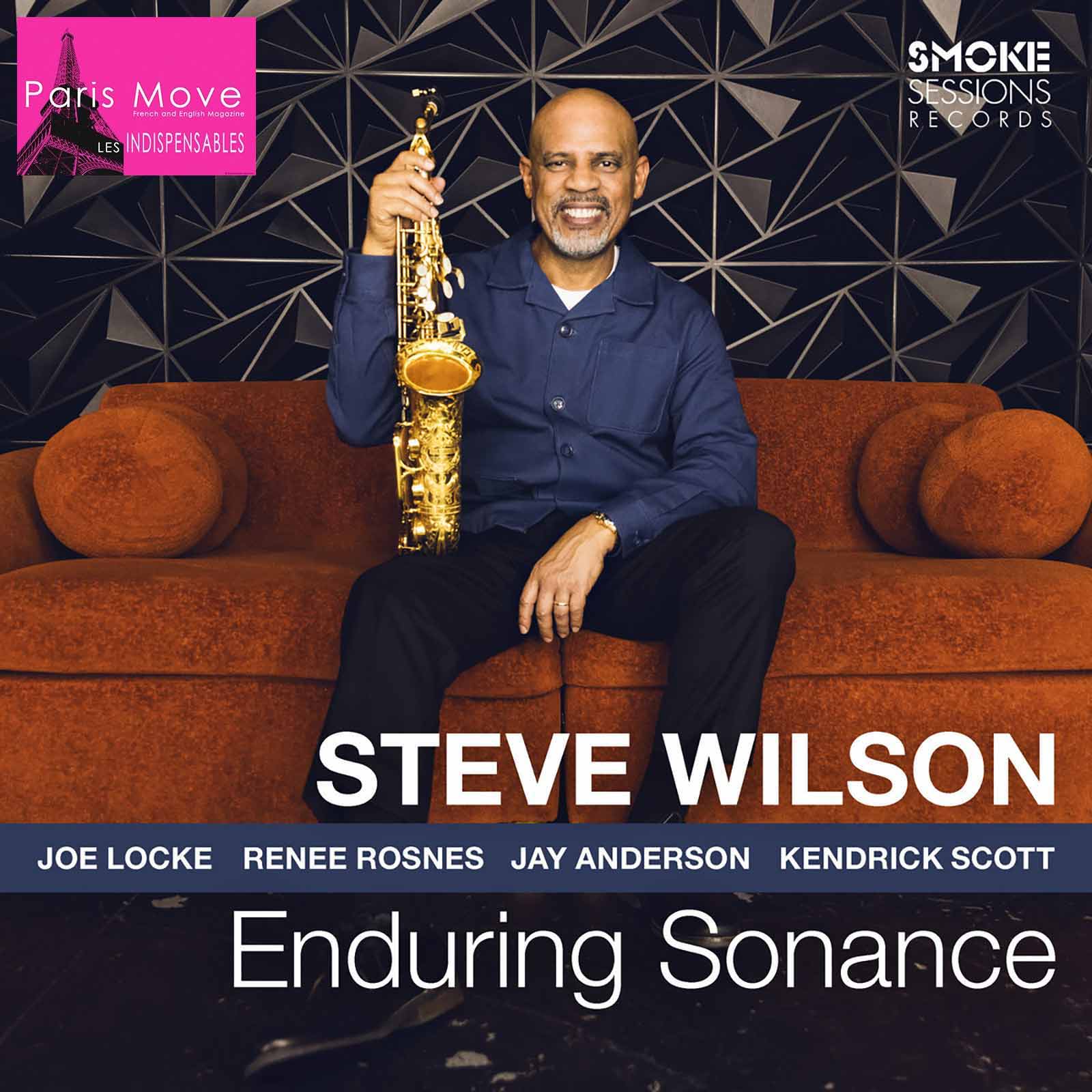
Steve Wilson’s Enduring Sonance Turns Memory Into Modern Jazz
From its opening moments, Enduring Sonance feels less like a conventional jazz album than a meditation on memory, how certain melodies take root, linger, and quietly shape a musician’s inner world over decades. With this release, Smoke Sessions Records delivers not just another high-caliber session, but a project that interrogates the very idea of musical permanence.
At the center stands saxophonist and flutist Steve Wilson, joined by an exceptional ensemble: pianist Renee Rosnes, vibraphonist Joe Locke, bassist Jay Anderson, and drummer Kendrick Scott. Each is a formidable bandleader in their own right, which makes the cohesion of this recording all the more striking. What could have become a contest of voices instead unfolds as a finely tuned conversation, disciplined, attentive, and at times quietly daring.
The premise is elegantly simple: to revisit songs that have left a lasting imprint on Wilson’s musical consciousness. “Some of these melodies have been with me for more than fifty years,” he notes. “I wanted to create something listeners could connect with, regardless of genre.” That universality is indeed present, but it is filtered through a deeply personal lens, giving the album both accessibility and emotional specificity.
Musically, Enduring Sonance thrives on detail. Rosnes’ harmonic sensibility brings a luminous clarity to the arrangements, while Locke’s vibraphone adds a shimmering, almost cinematic dimension. Anderson’s bass work, subtle yet structurally essential, anchors the ensemble with a fluid sense of motion, and Scott’s drumming balances restraint with propulsion. Wilson himself moves effortlessly between warmth and precision, his phrasing marked by a kind of lyrical patience that allows each note to fully resonate.
And yet, for all its beauty, the album occasionally risks leaning too comfortably into refinement. There are moments where one longs for a sharper rupture, an unexpected turn, a more radical deconstruction that might push the material further beyond its origins. The reinterpretations are consistently elegant, but rarely abrasive; they favor continuity over disruption. Whether this is a limitation or a deliberate aesthetic choice will depend on the listener’s appetite for risk.
Still, what the album may sacrifice in volatility, it more than compensates for in cohesion and depth. This is not reinvention for its own sake, but a careful, considered act of renewal. In that sense, it aligns with a broader movement in contemporary jazz, one that values reinterpretation as a means of sustaining the tradition rather than breaking from it entirely.
The repertoire underscores this philosophy. Wilson draws from a wide and telling range of sources: contemporary jazz composers such as Billy Childs and George Cables, alongside figures from soul, pop, and film like Gino Vannelli and Michel Legrand. The inclusion of artists such as Quincy Jones and Milton Nascimento further expands the album’s scope, blurring stylistic boundaries and reinforcing the idea that great music resists categorization.
Wilson’s approach also reflects a quiet independence. “I love the Great American Songbook,” he acknowledges, “but I’m drawn to pieces that haven’t been overplayed, songs I’ve always wanted to record.” That instinct proves crucial here, lending the album a sense of discovery even when the source material is familiar.
The connection between Wilson and Anderson, honed over years in the Maria Schneider Orchestra, emerges as one of the project’s defining strengths. “Jay is the secret ingredient,” Wilson says, and it is easy to hear why: his contrapuntal lines animate the music from within, creating a sense of forward motion that is felt as much as it is heard.
If there is a defining achievement in Enduring Sonance, it lies in its ability to make time itself audible, to transform decades of listening into a present-tense experience. The album does not seek to overwhelm or to astonish; instead, it invites immersion, rewarding repeated listens with ever-deeper layers of detail.
In the end, its resonance is not immediate but enduring, true to its title. And while it may not be the most radical jazz statement of 2026, it is unquestionably one of the most thoughtful and finely realized. The kind of record that doesn’t demand attention, but quietly earns it, and keeps it.
Thierry De Clemensat
Member at Jazz Journalists Association
USA correspondent for Paris-Move and ABS magazine
Editor in chief – Bayou Blue Radio, Bayou Blue News
PARIS-MOVE, April 20th 2026
Follow PARIS-MOVE on X

::::::::::::::::::::::::
Musicians :
Steve Wilson, saxophone
Rennee Rosnes, piano
Joe Locke, vibraphone
Jay Anderson, bass
Kendrick Scott, drums
Track Listing :
Quiet Girl
Helen’s Song
Pieces of Dreams
How Long?
A Volta
The Eyes of Love
The Surest Things Can Change
Francisco