| Jazz Fusion |
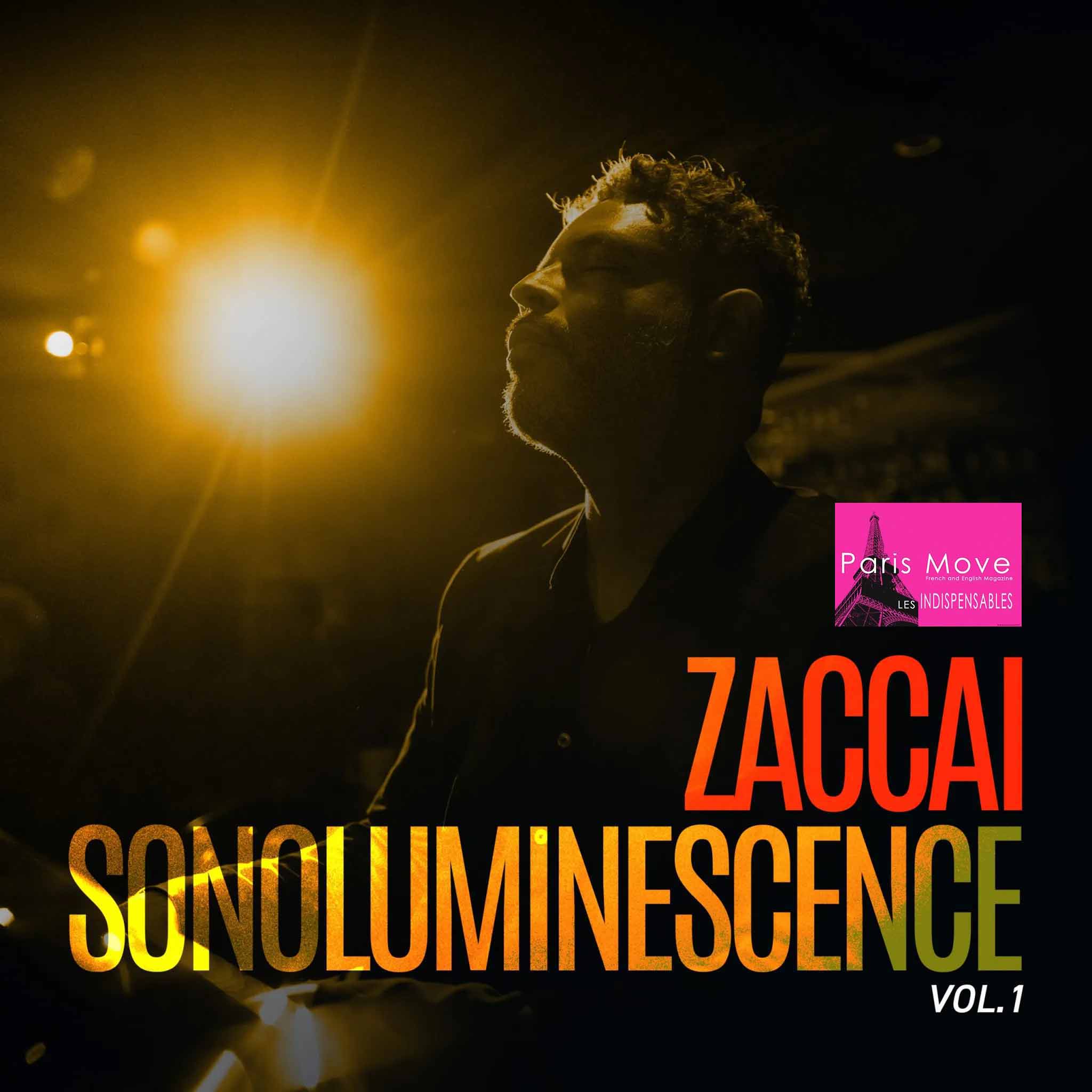
Summary: Pianist and composer Zaccai Curtis delivers his most personal album to date, blending Afro Latin rhythms, jazz fusion, and expansive improvisation into a modern, emotionally powerful sound that points toward an exciting future on stage.
Zaccai Curtis Reinvents Afro Latin Jazz with a Bold Contemporary Fusion Vision
Few jazz musicians have evolved as convincingly over the past two years as pianist and composer Zaccai Curtis. His latest recording represents far more than another chapter in an already impressive career. It feels like the moment when years of experience, collaboration, and artistic curiosity finally converge into a fully realized musical vision.
The last time I wrote about Curtis was in 2024 for the online magazine Paris Move, on the occasion of the release of Cubop Lives! That album drew from a remarkably broad musical vocabulary, weaving together the influences of Ahmad Jamal, Herbie Hancock, Lonnie Liston Smith, Idris Muhammad, Santana, War, Mandrill, and Roy Ayers into a vibrant Afro Caribbean jazz tapestry.
Its defining characteristic was its unwavering commitment to groove. Deep pocket rhythms, Afro Caribbean pulse, expansive improvisation, and a genuine sense of musical storytelling shaped the entire recording. Curtis has long favored extended compositions that allow each soloist the time and freedom to fully develop an idea rather than compressing it into conventional jazz forms. The album’s eight tracks reflected that philosophy, with several stretching well beyond the seven-minute mark.
One of the most fascinating aspects of Curtis’s writing lay in the subtle sophistication of his rhythmic architecture. Traditional Afro Caribbean concepts such as the cascara and montuno were not merely quoted or imitated. Instead, they were reassigned in unexpected ways, often transferred to the bass line, allowing the piano to concentrate on harmony and melodic development while giving the drummer greater freedom to orbit the groove. The result was music whose rhythmic complexity remained almost invisible beneath a sound that felt effortless, organic, and deeply rooted.
Much has changed since then.
The evolution of Zaccai Curtis has been remarkable. While his music has never abandoned its Afro Latin foundation, his latest work moves confidently toward a contemporary vision of jazz fusion that recalls the creative resurgence of the genre during the late 1980s and early 1990s without becoming a nostalgic exercise. That transformation is hardly surprising. Since 2025, Curtis has performed alongside an extraordinary roster of musicians including Christian Scott, Donald Harrison, Cindy Blackman Santana, Eddie Palmieri, Lakecia Benjamin, Brian Lynch, the Mambo Legends, Avery Sharpe, and many others. Sharing the stage with artists of that stature inevitably sharpens one’s artistic instincts. Every collaboration leaves traces, not in imitation but in perspective, enriching a composer’s understanding of color, rhythm, harmony, and musical intention.
Graig Handy’s tenor saxophone on Last Call deserves special mention. His performance evokes the electric vitality that characterized Miles Davis’s final touring years without ever slipping into imitation. The energy is unmistakable, yet the voice remains entirely his own, adding another compelling dimension to an album already rich in character.
What makes this recording exceptional is that Curtis never sounds like someone borrowing from his contemporaries. On the contrary, this is arguably his most personal statement to date. There is a sense of complete artistic confidence throughout, as though years of performing, composing, and listening have finally coalesced into a unified musical language. The performances are generous, emotionally direct, and filled with moments that linger long after the final notes have faded.
If one composition deserves particular attention, it is Message. The piece functions almost as the album’s artistic manifesto. It reveals the underlying logic behind Curtis’s arrangements and illustrates a lesson shared by the greatest composers. Sophistication is never about accumulating effects or displaying complexity for its own sake. It is about knowing precisely how much to add and, perhaps more importantly, how much to leave untouched. Curtis succeeds in reimagining familiar musical languages while preserving their original emotional identity, allowing every influence to retain its historical context even as it is transformed into something unmistakably contemporary.
That level of artistic maturity cannot be rushed. It is earned through years of performance, listening, experimentation, and refinement. Curtis has reached a point where he can move effortlessly between multiple musical worlds, making each one feel authentic. Although the album consists entirely of original compositions, several pieces possess the melodic immediacy, structural confidence, and emotional resonance of future jazz standards. They are memorable from the very first listen without sacrificing their harmonic sophistication. The writing is brilliant without becoming self-conscious, harmonically intricate yet inviting, intellectually ambitious while remaining emotionally accessible. It is music that embraces complexity without ever sacrificing pleasure.
Equally impressive is Curtis’s refusal to indulge in nostalgia. Although echoes of jazz fusion, soul jazz, and Afro Latin traditions resonate throughout the record, the music never feels retrospective. Instead, it speaks firmly in the present tense. Several compositions once again extend well beyond seven minutes, not as demonstrations of virtuosity but because Curtis understands that meaningful improvisation requires space. Those extended forms allow every musician to construct a genuine musical narrative, creating performances that unfold naturally and acquire an almost cinematic sense of pacing and a rare poetic dimension.
As an instrumentalist, Curtis is equally compelling. Throughout the album he performs on acoustic piano, Fender Rhodes, Yamaha keyboards, and contributes vocals. On several tracks he simultaneously plays piano and Rhodes, creating a fascinating dialogue between the two instruments. His right hand on the piano often mirrors or complements the tenor saxophone’s melodic voice, while his left hand on the Rhodes provides warmth, depth, and harmonic texture. The combination produces a distinctive sonic signature that immediately sets the album apart from many contemporary jazz releases.
This is modern jazz at its finest. It is intellectually engaging without ever becoming pretentious, rhythmically adventurous while remaining deeply accessible, and filled with luminous melodies that radiate warmth, optimism, and emotional generosity. Above all, it is the work of a musician who has reached a rare level of artistic clarity. If these studio performances are any indication, audiences should expect something truly extraordinary when these compositions reach the concert stage.
Thierry De Clemensat
Member at Jazz Journalists Association
USA correspondent for Paris-Move and ABS magazine
Editor in chief – Bayou Blue Radio, Bayou Blue News

PARIS-MOVE, July 19th, 2026
Follow PARIS-MOVE on X
::::::::::::::::::::::::
Musicians :
Zaccai Curtis – Piano, Rhodes, Yamaha Keyboards, Vocals
Craig Handy – Tenor Sax & Flute
Joe Dyson – Drums
Brevan Hampden – Congas & Percussion
Luques Curtis – Bass (tracks 1, 2, 3, 7)
Mike Boone – Bass (tracks 4, 5, 6, 8)
Aurelien Budynek – Guitars (track 4)
Julie Acosta – Vocals (track 8)
Track Listing :
Joust (8:08)
Last Call (9:03)
A Patient Resolve (5:46)
Message (10:48)
I Want to Feel the Way You Move (9:32)
Mayci’s Dream (6:27)
Wellspring (7:20)
Sonoluminescence (7:58)