| Jazz |
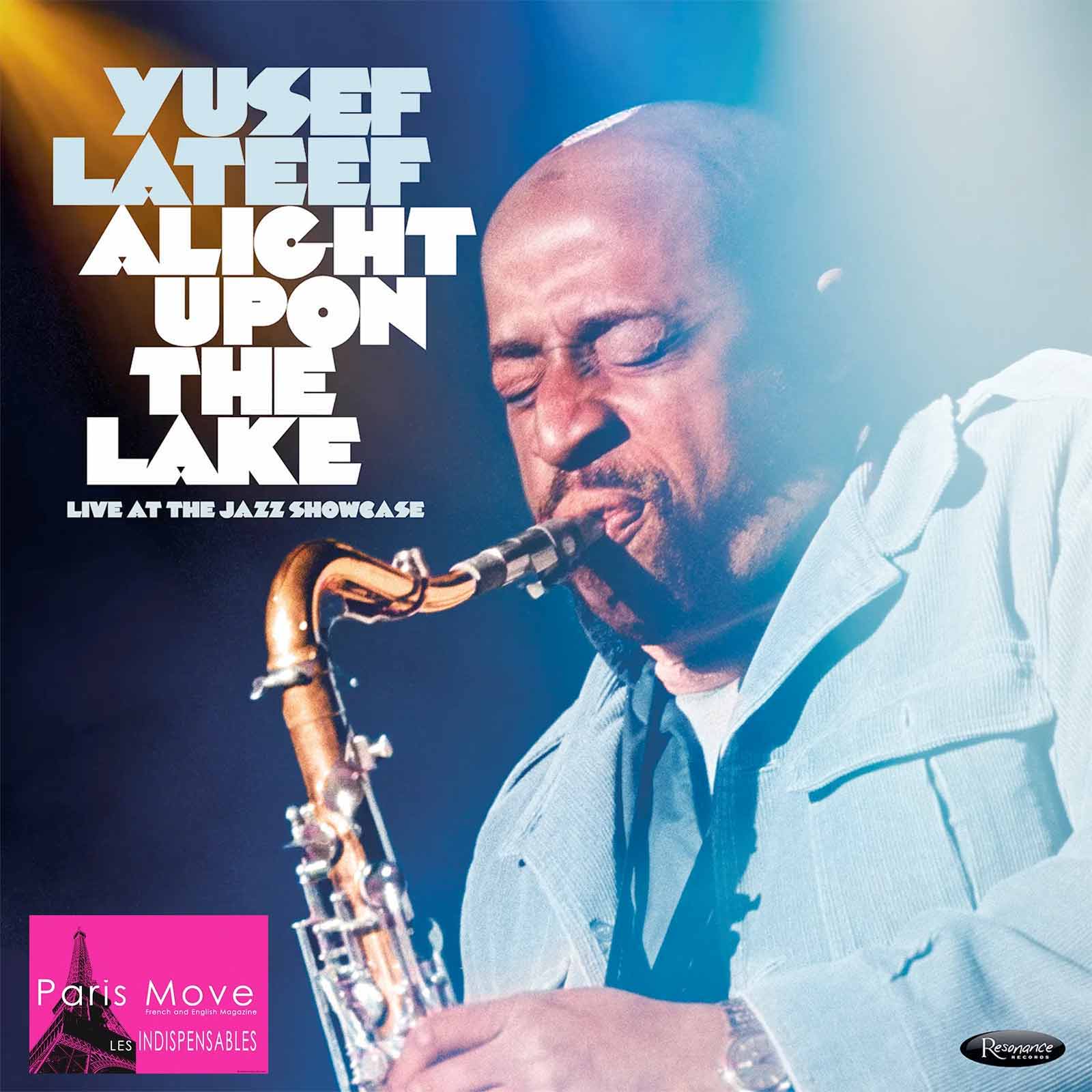
Summary: A newly unearthed 1975 live recording captures Yusef Lateef at his creative peak, blending jazz with global influences in a powerful release from Resonance Records.
Yusef Lateef at His Peak: A Stunning 1975 Live Recording Unearthed by Resonance Records
A reed cry rises into the air, piercing, searching, almost ancient, before settling into a groove that feels both rooted and unbound. This, then, is the fourth and final album released this month by Resonance Records, and if it has been reserved for last, it is because it may well be the most compelling of the series.
The late saxophonist and flutist Yusef Lateef, who died in 2013, remains one of the most quietly influential architects of what would later be called world jazz. Long before the term gained currency, Lateef was incorporating non-Western instruments, oboe, shenai, bamboo flute, and modal systems drawn from Middle Eastern, Asian, and African traditions into his work. The result was not fusion in the commercial sense, but a deeply personal, exploratory language he described as “autophysiopsychic music,” rooted in the totality of human experience.
This previously unreleased live recording captures Lateef at the height of his powers in mid-1975. Leading a superb quartet featuring pianist Kenny Barron, bassist Bob Cunningham, and drummer Albert ‘Tootie’ Heath, he takes the stage at Jazz Showcase, the storied Chicago venue founded by Joe Segal. From the opening passages, the group moves with fluid authority, Barron’s harmonies shimmering beneath Lateef’s searching lines, Cunningham anchoring the ensemble with quiet elasticity, and Heath providing propulsion that is at once subtle and insistent.
The sound quality is striking. The three-CD edition maintains remarkable sonic consistency from beginning to end. Despite its analog origins, there is no perceptible loss of fidelity; the recording retains warmth, clarity, and presence, placing the listener squarely inside the room. One hears not just the notes, but the air around them, the breath in the horn, the resonance of wood and string.
“Yusef Lateef was, and remains, a legend, a towering figure in the legacy of this music,” said producer Zev Feldman. “He was an extraordinary artist. I’ve always been deeply struck by the way he navigated between established conventions and experimentation, moving effortlessly across so many styles.” Feldman also recalls Lateef as a man of relentless curiosity: “He had an unending thirst for knowledge. Everything he did reflected that pursuit.”
That sense of boundless exploration was not unique to Lateef, but emblematic of a broader cultural moment. The 1970s fostered an atmosphere in which artistic identities became fluid and expansive. Figures such as Andy Warhol moved freely between disciplines, collapsing distinctions between high art, popular culture, and celebrity. In jazz, a similar openness prevailed. Lateef, alongside contemporaries like Ahmad Jamal, Mal Waldron, and Joe Henderson, embraced a creative horizon in which stylistic boundaries felt increasingly irrelevant.
Feldman’s connection to Lateef dates back to his early years as a college radio music director. “He would send me promotional copies of his albums, and we had wonderful conversations,” he recalls. “Any project involving his work feels deeply personal. I’m thrilled to see his legacy continuing to resonate. We are incredibly fortunate to have these recordings.” Listening now, Feldman adds, is “a pure delight, an understatement.”
What distinguishes this release, however, is not only its historical value but its musical vitality. A standout moment arrives in an extended modal exploration midway through the set, where Lateef shifts from tenor saxophone to flute, transforming the ensemble’s texture almost instantly. The quartet responds in kind, stretching the harmonic framework into something meditative and expansive. Elsewhere, a driving rhythmic passage gives way to a passage of near-silence, demonstrating the group’s remarkable dynamic control.
As with every release from Resonance Records, the accompanying booklet offers a wealth of insight. Saxophonist Bennie Maupin recounts his early encounter with Lateef in Detroit, underscoring the artist’s deep roots and enduring influence.
Yet the most astonishing element remains the concert itself: a sprawling, immersive performance of a kind rarely attempted today. Few contemporary artists would risk such duration or structural openness. But in that earlier era, creative ambition often outweighed practical constraints, allowing musicians to explore ideas in real time, without concession.
What emerges is not merely an archival release, but a vivid reminder of a moment when jazz stretched toward something larger, restless, searching, and unafraid. In revisiting these recordings, one hears not just a master at work, but a philosophy in motion.
It is less a document of the past than a rediscovery of possibility.
Thierry De Clemensat
Member at Jazz Journalists Association
USA correspondent for Paris-Move and ABS magazine
Editor in chief – Bayou Blue Radio, Bayou Blue News
PARIS-MOVE, April 11th 2026
Follow PARIS-MOVE on X

::::::::::::::::::::::::
Musicians :
Yusef Lateef – tenor saxophone, flute, oboe
Kenny Barron – piano
Bob Cunningham – bass
Albert “Tootie” Heath – drums
Track Listing:
DISC ONE (55:26)
1. The Untitled (28:04)
2. Mutually Exclusive (14:20)
3. Eboness (13:02)
DISC TWO (55:28)
1. Inside Atlantis (19:40)
2. I Remember Webster (8:18)
3. Dunia (10:21)
4. Opus 1 & 2 (17:09)
DISC THREE (51:21)
1. Golden Goddess (13:44)
2. Straighten Up & Fly Right (13:37)
3. Yusef’s Mood (24:00)