
| Jazz |
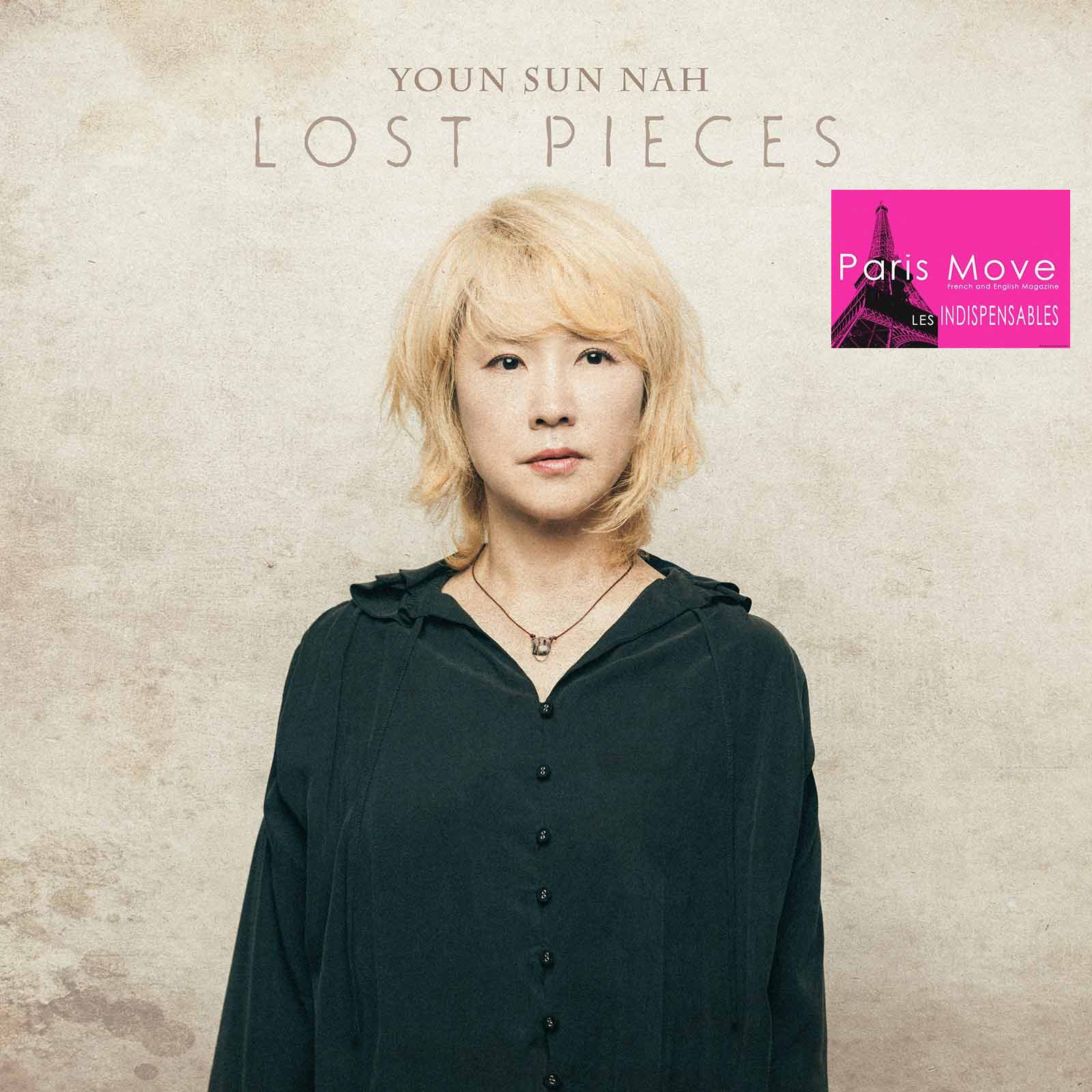
Lost Pieces, the new album by Youn Sun Nah, is not a cache of discarded songs exhumed from studio archives. It is something more deliberate and more daring: a decisive artistic pivot that confirms the transformation she began with Waking World, her 2022 debut for Warner Music Group after a long and fruitful association with ACT Music. If Waking World suggested a loosening of aesthetic boundaries, Lost Pieces completes the turn. It does not merely continue that trajectory; it deepens and clarifies it.
During her years with ACT, Youn Sun Nah established herself as a vocalist of rare control and emotional precision. Those recordings, often built around standards, folk reinterpretations and elegantly structured original material, were marked by crystalline phrasing and an almost chamber-like intimacy. Yet even within those frameworks, there were signs of restlessness: subtle rhythmic displacements, unexpected dynamic suspensions, a tendency to bend melody toward abstraction. What once appeared as glimmers of experimentation have now become the foundation.
Lost Pieces may well stand as the most personal and artistically articulate statement of her career. The album unfolds as a meditation on fragmentation and reconstruction, on how identity is assembled from absence as much as presence. It is introspective without turning nostalgic, rigorous without becoming cold. The architecture of these compositions suggests a search for essential forms, a kind of disciplined minimalism that recalls the structural patience of Steve Reich.
But the minimalism here is not austerity for its own sake. It is tension carefully rationed. In “I Run, I Stay,” a looping rhythmic figure anchors the piece while her voice alternates between stillness and propulsion. A single repeated motif, first whispered, then elongated, creates a dramatic arc that feels almost theatrical. Silence becomes as expressive as sound. The effect is closer to staged monologue than to conventional jazz performance, an unfolding in which repetition accumulates emotional weight.
Elsewhere, the album reveals a broadened harmonic palette. In the midsection of the title track, “Lost Pieces,” a quiet marimba pulse undergirds a slowly ascending vocal line before brass and strings enter in layered counterpoint. What began, by her own account, as a spare homage to Reichian minimalism evolves into the record’s most densely orchestrated statement. The harmonic swell does not overwhelm; it frames the voice like a chamber ensemble expanding in slow motion. The listener hears not grandeur, but convergence, fragments aligning.
There are moments that evoke the expansive tonal landscapes associated with Maria Schneider, particularly in the way wind and brass colors are allowed to breathe within open harmonic space. Yet Youn Sun Nah’s sensibility remains distinct. Where Schneider often builds toward panoramic sweep, Lost Pieces favors compression, emotion contained within carefully measured structures.
The ensemble she has assembled proves essential to this evolution. Their playing is marked by restraint and acute responsiveness: a drummer who privileges texture over pulse, a pianist willing to leave chords unresolved, strings that hover rather than declare. Such choices enable a distinctly contemporary language, one that bridges modern jazz with pop and folk inflections without conceding complexity. The arrangements are sumptuous yet disciplined, a balance that feels inevitable given the caliber of musicians involved.
For listeners whose attachment lies with her pre-2022 repertoire, the album may initially prove disorienting. The melodic directness that once defined her interpretations has yielded to something more elliptical. Yet those who recognized Waking World as the beginning of a liberation will hear in Lost Pieces an artist no longer negotiating permission. The voice, still luminous, still controlled, now operates within structures she seems entirely free to dismantle and rebuild.
At its core, the record is less about genre than about interiority. The composer’s complexity meets the vocalist’s subtlety in songs that invite reflection on love in its layered forms, romantic, fractured, intellectual, as well as on the quiet negotiations of selfhood. There is no indulgent sentimentality here; instead, there is examination.
Within today’s jazz landscape, where hybridization often risks superficial eclecticism, Lost Pieces stands as an argument for synthesis grounded in discipline. It suggests that contemporary jazz need not choose between formal experimentation and emotional accessibility. Youn Sun Nah demonstrates that the two can coexist, provided the architecture is sound.
If this album signals a renaissance, it is not a flamboyant rebirth but a quiet consolidation. The fragments have not simply been recovered; they have been reassembled into a new, more intricate whole.
Thierry De Clemensat
Member at Jazz Journalists Association
USA correspondent for Paris-Move and ABS magazine
Editor in chief – Bayou Blue Radio, Bayou Blue News
PARIS-MOVE, February 20th 2026
Follow PARIS-MOVE on X

::::::::::::::::::::::::
Musicians :
Youn Sun Nah: voix, composition
Matthis Pascaud: guitares électrique, acoustique, lap steel, mandoline
Laurent Vernerey: basses acoustique et électrique
Raphaël Chassin: batterie, percussions
Tony Paeleman: piano, Wurlitzer, orgue Hammond, synthétiseurs
Guillaume Latil: violoncelle
(+ Arabella Bozic, Verena Chen, David Patrois, Alexis Bourguignon, Christophe Panzani, Robinson Khoury)
Track Listing :
Shell Of Me
Where’d You Hide?
Just The Same
Lost Pieces
A Map Of Pain
I Run, I Stay
I Can’t Sleep
Collapse
We Never Were
My Home
WTH Is Love!