| Jazz |
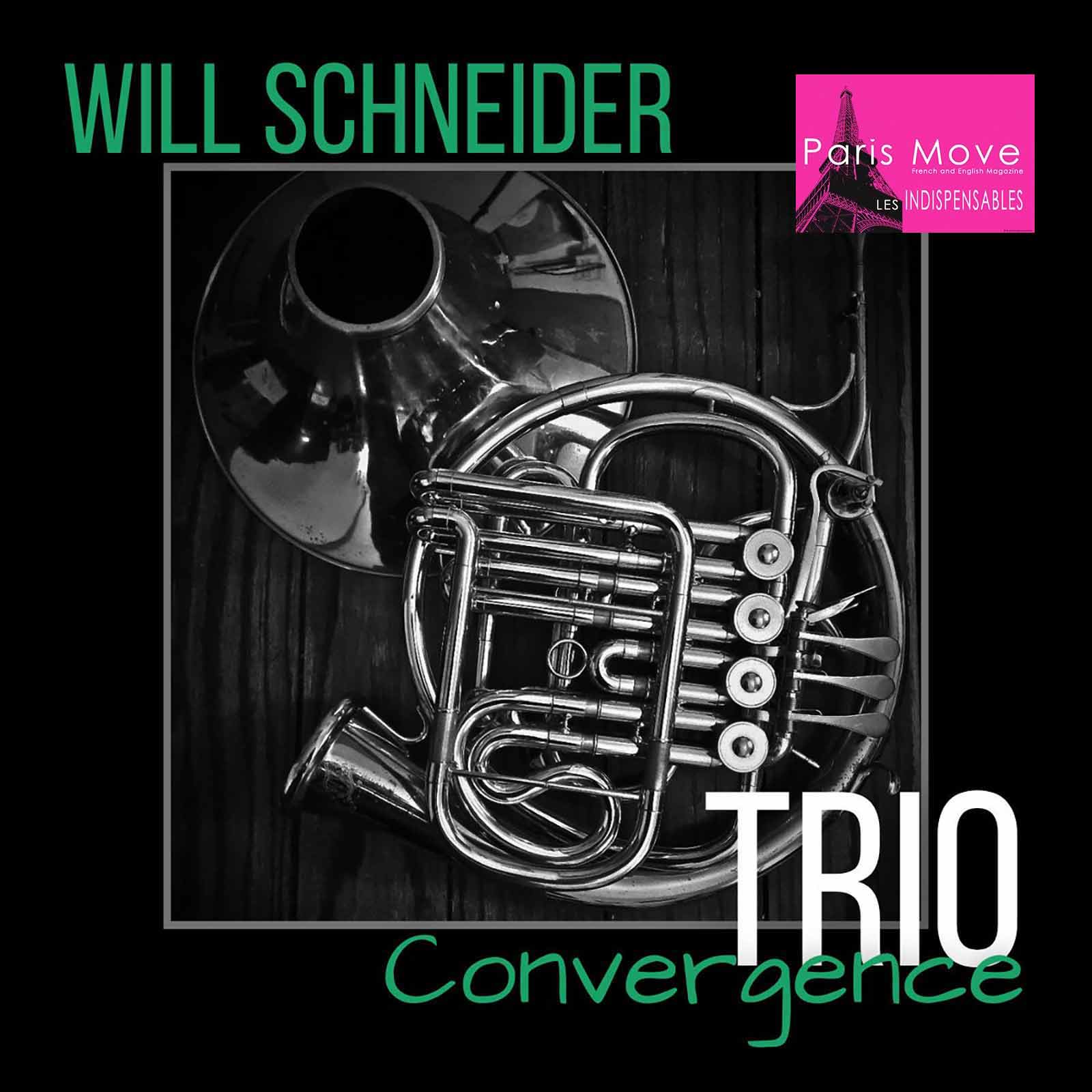
Summary : With Convergence, Will Schneider and his trio deliver an introspective work that transcends conventional jazz. Blending chamber music, contemporary composition and poetic storytelling, the album explores memory, connection and the enduring question of what it means to be human.
Will Schneider Trio, Convergence Review: A Deep Meditation on Humanity Through Jazz and Chamber Music
Will Schneider is not simply a French horn player or a composer. He is a musical storyteller whose latest work revolves around one of humanity’s oldest and most elusive questions: What does it mean to be human?
For thousands of years, people have searched for answers through art, ritual and shared experience. What allows us to feel connected not only to those living beside us today but also to generations whose voices disappeared long before history was ever written? What first inspired us to build, to create, to imagine something larger than ourselves? And what invisible force convinced our ancestors that their stories deserved to outlive them?
Those questions become the emotional and philosophical foundation of Convergence, the second recording by the Will Schneider Trio. Rather than attempting to answer them directly, Schneider invites listeners into an extended meditation where jazz, chamber music, sound art and poetic abstraction gradually merge into something that belongs entirely to itself.
This is not an album that reveals its intentions in the first few minutes. It asks for patience and complete attention. I quickly abandoned my studio monitors in favor of a pair of Sennheiser HD 280 Pro headphones, whose remarkable neutrality proved ideal for such an intimate recording. That decision immediately transformed the listening experience. Suddenly I was no longer observing the trio from a comfortable distance. I found myself sitting inside the music, surrounded by three musicians engaged in an extraordinarily nuanced conversation.
Every note matters here. Every silence carries weight. The dialogue between French horn, double bass and drums unfolds with remarkable restraint, rewarding listeners willing to surrender to its subtle shifts in color, texture and space. This is music that demands immersion rather than passive consumption.
Schneider frames Convergence around an image as old as civilization itself. Before cities, before written language and before organized religion, our ancestors gathered around a fire. That circle became more than a source of warmth. It was where stories were exchanged, grief was shared, traditions were born and communities slowly emerged. Around those flames, humanity learned to remember itself.
Modern life has carried us far from those ancient gatherings, yet Schneider suggests that the original fire has never disappeared. It survives in our collective imagination, in every story we continue to tell, and in the enduring need to connect with one another through creativity. That quiet idea runs through every moment of this album.
Civilization itself is built upon overlapping narratives. History, mythology, philosophy, literature, science and faith often contradict each other, replacing one certainty with another as societies evolve. Truth is rarely fixed. Instead, it expands, adapts and occasionally reinvents itself. Convergence follows that same organic logic. Each composition grows naturally from the previous one, making the album feel less like a collection of individual tracks than a single unfolding work. Listening out of sequence would diminish much of its narrative power.
Schneider’s writing reflects an unusual level of compositional discipline. His pieces often begin with spacious, atmospheric introductions that function almost like literary prologues, preparing the emotional landscape before the central narrative begins. When the French horn finally enters, it rarely behaves like a conventional solo instrument. Instead, it assumes the role of narrator, carrying ideas forward with quiet authority rather than dramatic virtuosity.
Improvisation certainly exists throughout the record, but it never becomes the primary objective. Every phrase appears carefully weighed, every transition intentional. The musicians consistently resist the temptation to showcase individual brilliance, choosing instead to serve the broader emotional architecture of the work.
That artistic choice inevitably places Convergence somewhere beyond traditional jazz. Listeners expecting extended solos, familiar harmonic language or rhythmic exuberance may initially struggle with Schneider’s approach. Yet those expectations quickly become irrelevant. This record belongs far more comfortably alongside contemporary chamber music and modern sound art than within conventional jazz categories. Its refusal to conform is not an act of rebellion but one of artistic honesty, and that integrity becomes one of the album’s greatest strengths.
The French horn itself presents an intriguing challenge. Despite its extraordinary expressive range, it is rarely asked to sustain an entire recording as the principal voice. Its identity remains closely tied to the symphony orchestra, where it traditionally functions as part of a larger ensemble. Schneider overturns that expectation with remarkable confidence. Throughout Convergence, the instrument becomes unexpectedly intimate, revealing colors that many listeners may never have associated with it.
Its conversations with the double bass often become the emotional center of the album. Rather than functioning as accompaniment, the bass answers, challenges and occasionally anticipates the horn, creating an almost conversational intimacy between the two instruments. Beneath them, the drums provide far more than rhythmic support. Their contribution is architectural, shaping the emotional landscape without ever drawing unnecessary attention to themselves. That level of ensemble cohesion feels earned rather than accidental.
Over the years, Schneider has quietly established himself as one of the defining creative voices within Toledo, Ohio’s musical community. Since 2021, he has been a regular presence at the weekly jam sessions held at Golden Road, formerly the Ottawa Tavern, serving as the resident French horn player in an environment where the instrument remains something of a rarity.
His artistic journey has also included performing and recording alongside the late Kimathi Asante, founding member of The Pyramids and one of the pioneering figures of Afrofuturism and free jazz. Outside the jazz world, Schneider has collaborated extensively with regional groups including NuAudio, Arctic Clam, Katie’s Randy Cat and the Klondike Steamboat Band. Those diverse musical experiences are impossible to overlook. They help explain the openness of his compositional language and his refusal to be confined by stylistic boundaries.
There may be instruments more immediately associated with mythology, memory or spiritual reflection than the French horn. Yet Convergence demonstrates just how misleading those assumptions can be. Schneider’s writing is thoughtful, emotionally generous and intellectually ambitious without ever becoming self-important. The trio performs with the remarkable unity of an accomplished chamber ensemble while preserving the responsiveness and spontaneity that define great improvising musicians.
Ultimately, Convergence is less interested in entertaining than in inviting reflection. It asks listeners to slow down, to engage deeply and to rediscover something increasingly rare in contemporary music: the pleasure of sustained attention. In doing so, Will Schneider and his collaborators have created a work of striking originality, one that quietly reminds us that music remains one of humanity’s oldest and most powerful ways of telling stories, preserving memory and recognizing ourselves in one another.
Thierry De Clemensat
Member at Jazz Journalists Association
USA correspondent for Paris-Move and ABS magazine
Editor in chief – Bayou Blue Radio, Bayou Blue News
PARIS-MOVE, July 30th, 2026
Follow PARIS-MOVE on X
::::::::::::::::::::::::
Musicians – WILL SCHNEIDER TRIO:
Will Schneider – Horn, Compositions
Andrew Peck – Bass
Brad Billmaier – Drums
Guests:
A. J. Shank – Tenor Saxophone (Track 6)
Geoffery Schneider – Alto Saxophone (Track 7)
Hayley Currin – Poetry (Deluxe Version)
JaeEun Choi Schermerhorn – Artwork (Deluxe Version)
Track Listing :
Cave Of Dreams
Sea Of Stars
ELDFR Gathering
Convergence
In The Tradition
Astral Voyage (feat. AJ Shark)
Ways Of Knowing (feat. Geoffrey Schneider)
Recorded, mixed and mastered by Eric Sills at Stone Soup Recording Studio in Maumee, OH.