| Jazz |
A West Coast Big Band Stakes Its Claim
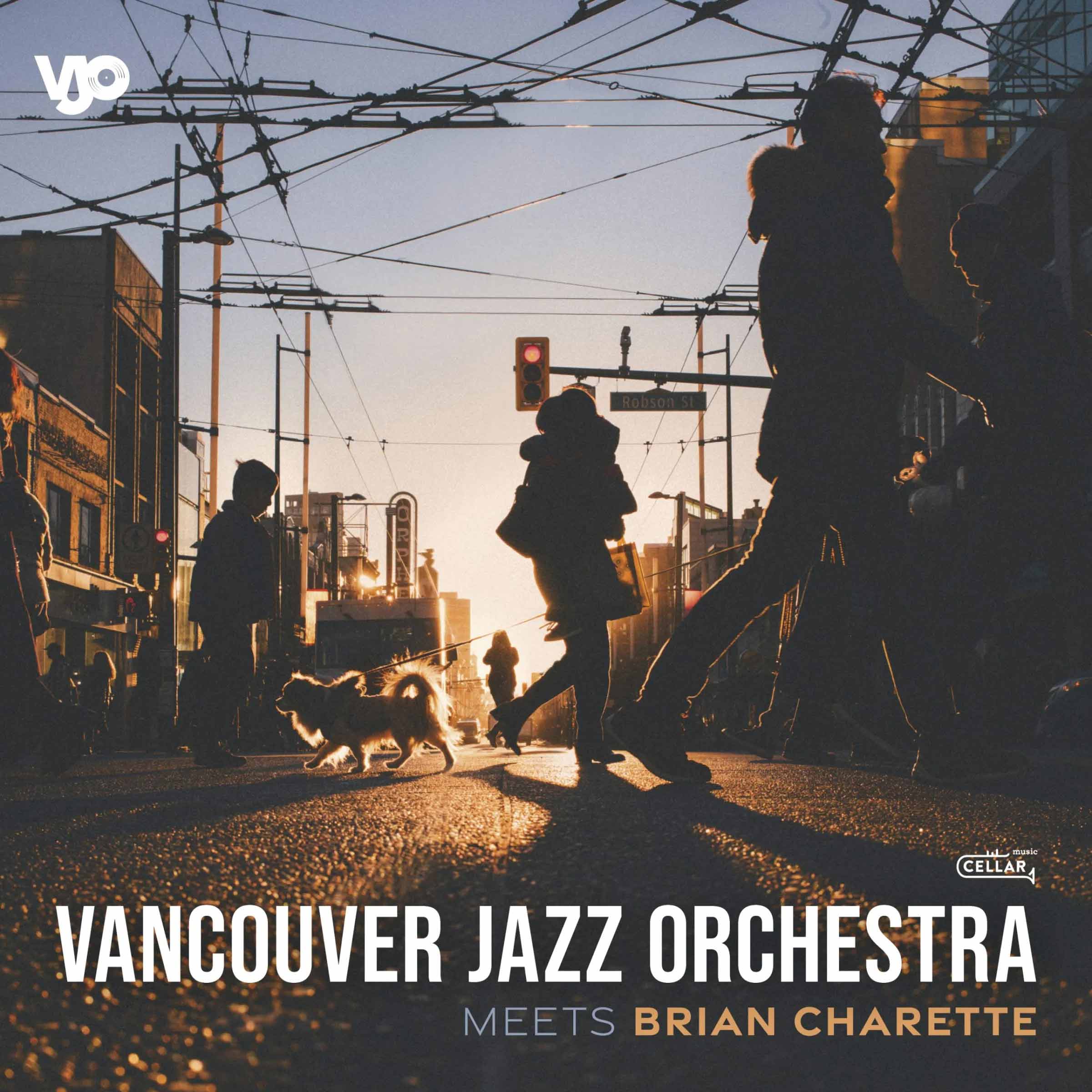
Canada is home to an exceptionally large and vibrant community of jazz musicians, a fact I have the opportunity to highlight regularly each year. This time, however, the spotlight falls on a big band, and more specifically on Vancouver Jazz Orchestra Meets Brian Charette, an album built around a challenge that is as simple as it is telling: every track on the record is either composed or arranged by local artists.
The distinction is audible from the opening bars, especially when measured against the long-established tradition of American big bands. This is not a question of quality. On both sides of the border, whether with the Vancouver Jazz Orchestra or with U.S.-based ensembles such as the Vanguard Jazz Orchestra, the Lincoln Center Jazz Orchestra, or Maria Schneider’s orchestra, listeners are often exceptionally well served. The difference lies elsewhere, in the compositions themselves, which reflect fundamentally different musical sensibilities.
Listen closely and you’ll hear brass passages that soar with both power and lightness. Where many American big bands gravitate toward a muscular, groove-driven funk-jazz language or favor denser, more assertive horn writing, the Vancouver Jazz Orchestra opts for transparency and lift. The melodic lines feel less anchored to rhythmic insistence and more inclined toward lyricism and motion. This is not a matter of restraint so much as culture: Vancouver’s jazz aesthetic, shaped by its Pacific geography, its openness to cross-cultural influences, and a tradition less bound to hard-swing orthodoxy, speaks in a different voice.
Celebrating Vancouver’s rich jazz community while showcasing its deep compositional bench, Vancouver Jazz Orchestra Meets Brian Charette features works entirely composed or arranged by local voices. From seasoned figures such as Fred Stride, Jill Townsend, Brad Turner, and Bill Coon to the forward-looking perspectives of Sharon Minemoto, Daniel Hersog, Steve Kaldestad, Chris Berner, and Danderfer himself, the album offers a panoramic view of a scene that is both mature and restless, grounded yet exploratory.
“Recording an album was the easy part,” says Cory Weeds. “Organizing the music, coordinating musicians, composers, and arrangers for a 17-piece jazz orchestra is no small task, but that’s what James does. His determination never wavered, and this recording is an example of what can happen when you have a dream, the patience to see it through, and the right people around you to help make it real.”
At the center of the project stands Brian Charette, whose unmistakable Hammond organ playing serves as the album’s anchor. Long a fixture of the New York jazz scene, Charette has built a reputation bridging classic soul-jazz traditions with a contemporary harmonic language, collaborating with artists who value both groove and complexity. Here, his organ work does more than solo, it functions as connective tissue, fusing the orchestra’s refined arrangements with a visceral, forward-driving pulse.
The result is a strong and often surprising release. Despite the structural complexity of the selected pieces, the album never sacrifices the pleasure of listening. It carries the listener through shifting musical landscapes at a relentless pace, each chart revealing another facet of Vancouver’s compositional identity. If there is a single critique to be made, it is that the album occasionally leaves little room to breathe. Large-ensemble writing is notoriously difficult to balance, and a bit more space might have allowed certain moments to resonate more fully.
Even so, this recording marks more than a promising debut, it signals the arrival of a serious new voice in North American big band jazz. The newly formed Vancouver Jazz Orchestra operates as a charitable organization dedicated to education, mentorship, and the promotion of jazz, ensuring that the spirit captured on this album will extend well beyond the studio and into future generations.
There is little doubt that future releases from this ensemble will be even more compelling. The potential is unmistakable, the vision already clear. What remains is time, the final collaborator, which will allow this orchestra not merely to mature, but to claim a lasting place on the continent’s jazz map.
Thierry De Clemensat
Member at Jazz Journalists Association
USA correspondent for Paris-Move and ABS magazine
Editor in chief – Bayou Blue Radio, Bayou Blue News
PARIS-MOVE, January 4th 2026
Follow PARIS-MOVE on X

::::::::::::::::::::::::
Musicians:
James DAndefer, art director
Corey Weeds, executive director
saxophonists Cory Weeds, Steve Kaldestad, James Danderfer, and Campbell Ryga, trumpeters Derry Byrne, Julian Borkowski, and Brad Turner, trombonists Andy Hunter, Nedyu Yoannes, and Dennis Esson, and pianist Robi Botos, with recent performances highlighting organist Brian Charette and bassist Jodi Proznick
Track Listing
- Equestrian Interlude
- Don’t Call Before 10
- Lado A Lado
- As Luck Would Have It
- The Sorcerer
- Shimmy!
- Oh Brother
- Colour Contrast
- Honeymoon Phase
- The Same Old You With The Same Old Blues