| Jazz |
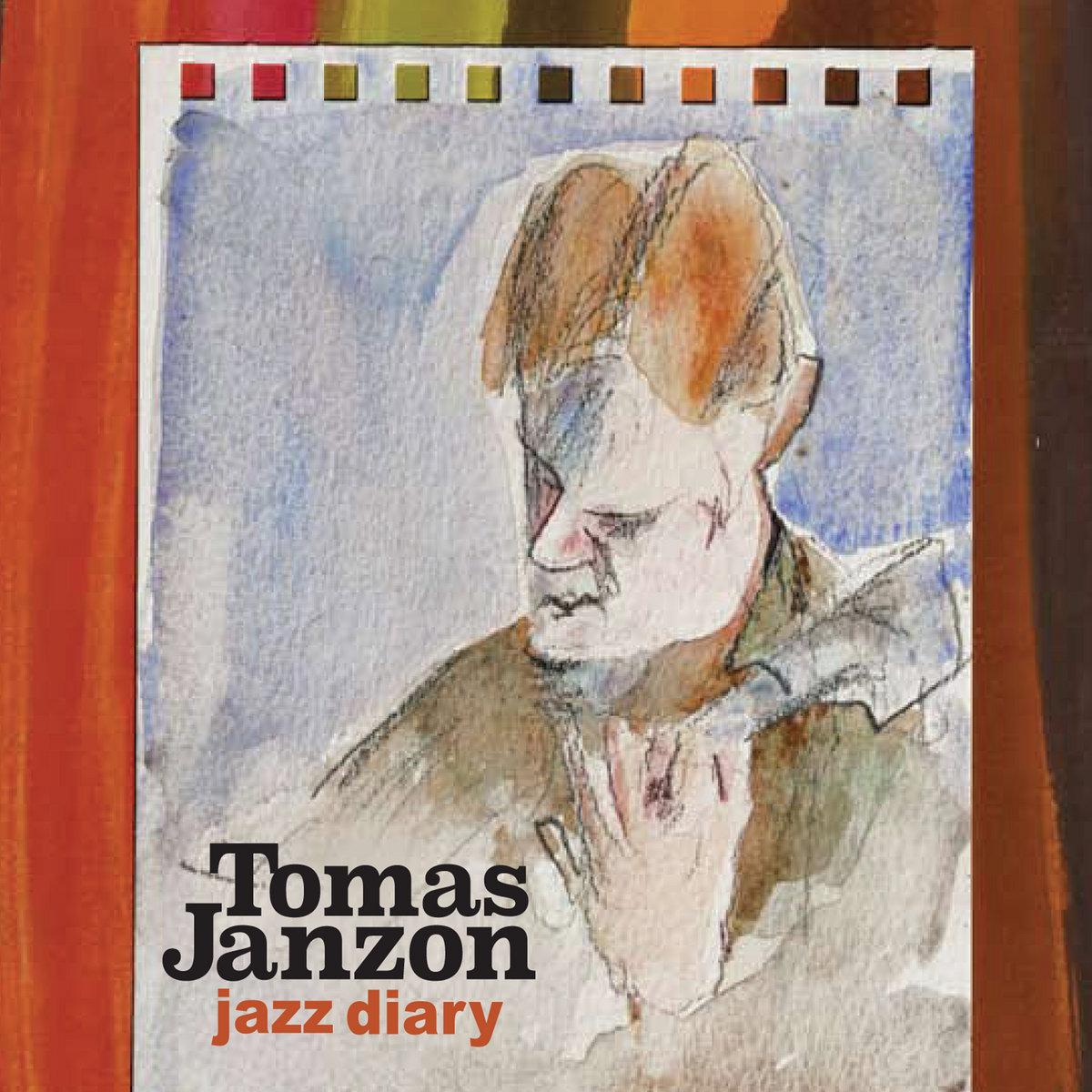
There’s a particular kind of jazz record that only gets made after decades of quiet accumulation, not a concept album so much as a collected one, assembled from fragments a musician couldn’t bring himself to throw away. Jazz Diary, the new trio release from guitarist and composer Tomas Janzon, is exactly that kind of record, and it’s one of the most satisfying things he’s put his name to.
Born in Stockholm, Janzon’s musical education took him across two continents and two very different guitar traditions. He moved to Los Angeles to study with the great Joe Diorio at Musicians Institute/GIT, then went on to earn a master’s degree in Classical Guitar from USC, a pairing of jazz improvisation and classical rigor that still shows up in his touch today. During his years in LA he became a fixture around Leimert Park and the World Stage, sharing bandstands with musicians like Billy Higgins and Sherman Ferguson. Since relocating to New York and settling in Harlem, he’s built a steady presence at rooms like Smalls, Fat Cat, and Bar Next Door.
What makes Jazz Diary different from his earlier records is its origin story. For years, Janzon has carried folded staff paper, always the same four-sided sheets, always filled in with a pencil, and used it to catch musical ideas the moment they arrive, often between three and four in the morning. Most are just a bar or two: a shape, an interval, a rhythmic nudge. Most get discarded. But the ones that keep pulling at him get carried to the guitar, worked, expanded, and eventually turned into tunes. This album collects eleven of them and hearing that process laid bare, from scribble to fully realized trio performance, is part of what makes the record so compelling.
Jazz Diary actually runs two overlapping trio lineups, both anchored by bassist Nedra Wheeler, with Tony Austin on drums for the first six tracks and Chuck McPherson taking over for the back half.
But make no mistake about who this record is really built around: Janzon has said outright that it’s a dedication to Wheeler, and the music bears that out. Their relationship stretches back to Janzon’s very first album, X-Changes, recorded with Sherman Ferguson and Billy Higgins, and she’s remained a constant across his catalogue since, including on 130th & Lenox.
Wheeler isn’t deployed here as a conventional rhythm-section anchor, Janzon gives her real solo space throughout, and her sound is as melodic as it is grounding, which lets the trio breathe in ways a more purely functional bass role wouldn’t allow.
Austin and McPherson bring genuinely different energies to their halves of the record without ever feeling like the album is split in two. Austin’s touch on the first six tracks is smooth and conversational, happy to lean into rubato spaces and let Janzon’s lines stretch. McPherson, arriving for track seven onward, brings a heavier, more assertive pocket. The difference is audible immediately on “Did I Say”, where his groove practically hands Janzon the room to stretch his solo out. It’s a smart piece of sequencing: rather than diluting the record’s identity, the two drummers give its second half a distinct charge.
Janzon’s own playing is the record’s throughline. His tone is famously piano-like, bright, articulate, almost percussive in its clarity, and it’s easy to hear why critics keep reaching for Wes Montgomery as a reference point; you can catch traces of that octave-and-line lineage in his phrasing, along with flashes of Larry Coryell’s fusion-era angularity. But the comparisons only go so far. What’s most distinctive about Janzon is his patience, his willingness to sit inside a phrase, let it resonate, and leave space around it rather than fill every bar.
The album opens with “Spirit Secret,” a melodic, almost waltz-shaded tune whose guitar lines have a lilting quality that plays against Austin’s more grounded pulse, an early sign of the record’s willingness to let tension sit unresolved rather than smoothing it over. Written in February 2025, this was the diary entry that effectively started the whole project. “May Six” follows with similar melodic clarity, before “In One Day” and the standout “Early Sunday” deepen the mood, the latter built around a genuinely memorable hook and a warm, unhurried bass solo from Wheeler that instantly makes the case for her presence at the album’s centre. “All Neighbors,” Janzon’s holiday-adjacent contribution and a preview of the album that predates it as a standalone single, brings a gentler, easy-swinging feel, with Austin working mostly in brushes. “She’s Listening” is the record’s most intimate moment, inspired by Janzon walking into a room to find his wife quietly listening to him practice, it’s tender without tipping into sentimentality.
The second half opens with “Muddy Shoes,” a blues-rooted, chromatically restless tune that might be the album’s most immediately gripping performance. McPherson’s groove gives Janzon license to dig in, and he takes it. “Did I Say” keeps that momentum going with McPherson’s more assertive drumming and a fantastic solo, pushing the trio into sharper, more angular territory. “To Summer” is the album’s one outlier: the only tune not drawn from Janzon’s diary pages, it’s instead built from his memory of a Swedish folk song, and it’s a lovely nod to his Stockholm roots tucked into an otherwise very American-sounding record. The album then folds back on itself with “All Neighbors (alt.),” an alternate reading that’s worth hearing alongside the original for how differently McPherson’s drums reshape the tune’s feel.
The album closes with “Six on Five,” an unreleased live duo recording of Janzon and Wheeler captured live in the early 2000s at the USC Thornton School of Music, decades before the rest of the album existed. Wheeler opens it by striking the bass percussively before the piece settles into its folk-inflected shape, and as a closer it works beautifully: a glimpse of where this musical partnership started, placed at the very end of a record that exists because of how far it’s travelled since.
Jazz Diary is a record about the unglamorous discipline behind musical inspiration (the pencil, the folded paper, the 3 a.m. wakeups – an approach I would gladly recommend to many musicians, as it has proven to be excellent!) and it earns that premise by never sounding effortful. Janzon’s writing is concise and melodically confident, his trio partners (across both configurations) give the material real dimension, and the decision to close on a twenty-five-year-old duo recording with Wheeler turns the whole album into something closer to a love letter than a collection of tunes.
In a musical world more and more overrun by musicians who want to impress with speed and technique, Tomas Janzon offers something increasingly rare: music that invites reflection without sacrificing swing, sophistication without sacrificing warmth, and virtuosity without losing sight of melody. Jazz Diary is a very elegant, intelligent and deeply satisfying contribution to the contemporary jazz guitar repertoire, a quietly compelling album whose understated brilliance lingers long after the final note has faded. A must have!
Frankie Pfeiffer
Editor in chief – PARIS-MOVE
PARIS-MOVE, July 27th, 2026
Follow PARIS-MOVE on X
::::::::::::::::::::::::
Musicians:
Tomas Janzon: guitars
Nedra Wheeler: bass
Tony Austin: drums (tracks 1-6)
Chuck McPherson: drums (tracks 7-10)
Tracklisting:
1.Spirit Secret 03:02
2.May Six 02:51
3.In One Day 02:58
4.Early Sunday 03:42
5.All Neighbors 02:17
6.She’s Listening 03:55
7.Muddy Shoes 04:13
8.Did I Say 05:35
9.To Summer 02:44
10.All Neighbors (alternate version) 04:14
11.Six on Five 05:05
Produced by Tomas Janzon
Recorded, mixed and mastered by
Nolan Shaheed at Nosound
Peter Karl at Acoustic Recording, New York City, (track 5)
All compositions by Tomas Janzon, Changes Music ASCAP/STIM
The cover drawing was made by artist Åsa Blomkvist during a concert at the Stockholm jazz club Fasching.
The CD artwork was beautifully designed by Christopher Drukker, including liner notes by Tomas Janzon.