| Jazz |
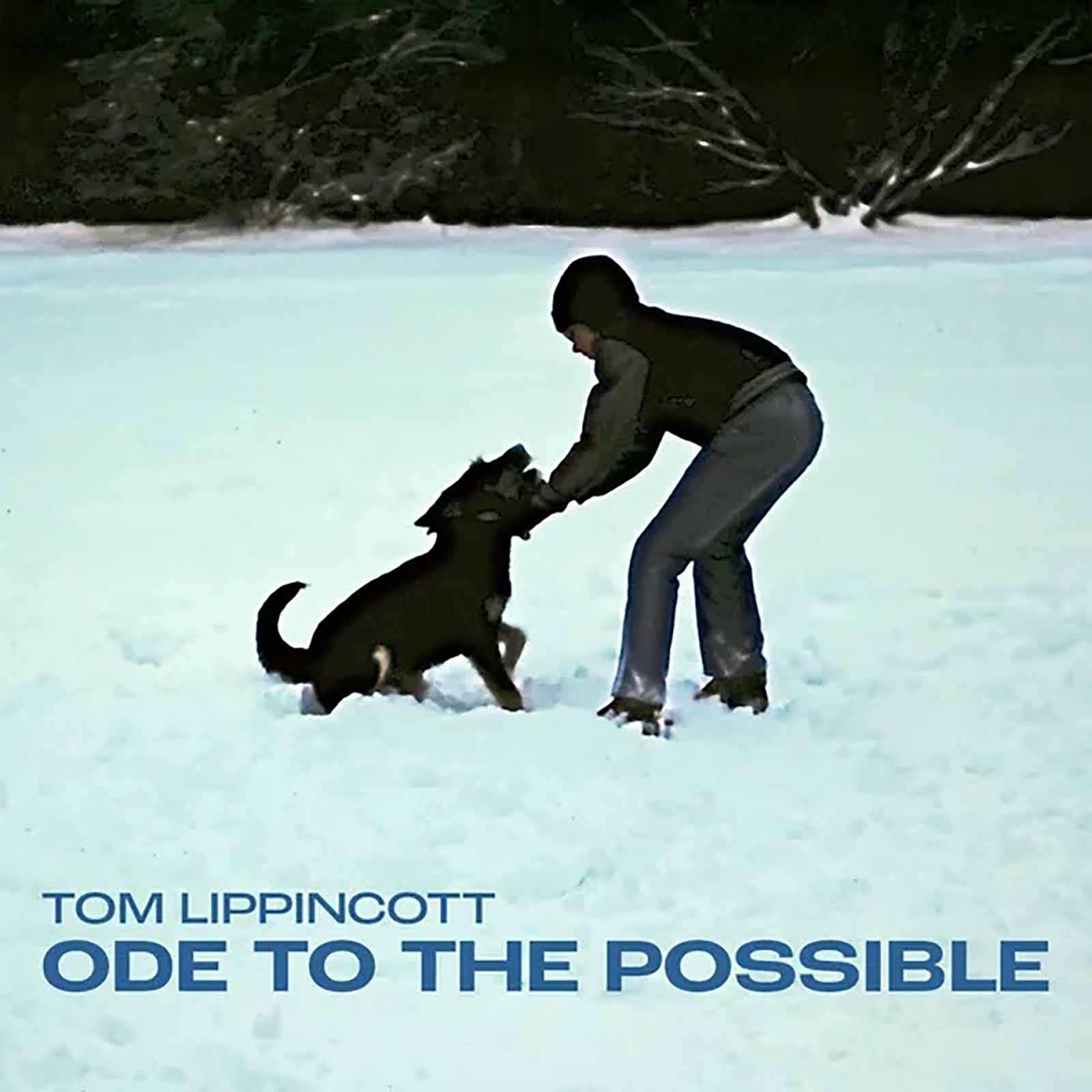
In an era of frictionless streaming and algorithmic smoothness, guitarist Tom Lippincott’s Ode To The Possible arrives as something defiantly unruly, an album that resists passive listening and insists instead on immersion. Scheduled for release in early March, the project does not merely revisit the past; it wrestles with it, metabolizes it, and occasionally risks being consumed by it.
The gravitational pull here is unmistakable. Lippincott draws heavily from the exploratory jazz productions of the early 1980s, that moment when improvisation was expansive, arrangements felt spatial and open-ended, and musicians flirted freely with emerging electronic textures. The result is not simple nostalgia. Rather, it is an act of aesthetic ingestion: the album seems to have absorbed the dominant musical languages of that era, from modal elasticity to fusion-era harmonic layering, and now speaks through them with fluency and ambition.
Yet fluency is not the same as distance. One of the album’s most compelling tensions lies in its relationship to its sources. Is this revival, reinterpretation, or saturation? At times, Lippincott’s thematic development mirrors its inspirations so closely, motifs introduced, stretched, refracted, then reassembled, that the homage edges toward over-identification. The music feels steeped in history, occasionally almost submerged in it.
Ode To The Possible is structured less as a conventional album than as a musical novel. Nineteen relatively brief compositions unfold like chapters: theme, interlude, theme, interlude, until an “Epilogue” closes the arc. The interludes function as ellipses, narrative breaths that allow shifts in tone without demanding conventional continuity. Rather than building toward a single climax, the album advances through fragments, episodes and tonal pivots.
This architecture recalls anthology cinema of the 1970s and 1980s, in which multiple short narratives revolved around a shared thematic axis. Lippincott adopts a similar strategy, moving fluidly between writing styles without apology. The effect is deliberately unstable. On one track, the guitar lines spiral in tight, articulate runs, densely layered over restless rhythm. On another, analog textures bloom briefly in the background, hints of 1970s Mini Moog sonorities that blur the stylistic coordinates. These electronic gestures feel intentionally disorienting, almost mischievous. They add atmosphere, but at times they verge on signaling their own cleverness.
The album’s density is both its signature and its challenge. Lippincott composes unmistakably as a guitarist. The structures favor motion over stillness, articulation over space. There is often little silence between phrases; the harmonic field is continuously activated. For listeners attuned to this instrumental logic, the experience can be exhilarating, a cascade of ideas unfolding with technical assurance. For others, particularly those who crave negative space or rhythmic restraint, the relentlessness may feel overwhelming.
That tension, between abundance and excess, homage and autonomy, defines the album’s identity. When it works best, Ode To The Possible feels like a conversation across decades, a musician engaging directly with the languages that shaped him. When it falters, it is because the dialogue becomes so saturated with reference that the speaker nearly disappears into the chorus.
And yet the ambition itself is difficult to dismiss. Lippincott is not interested in minimal gestures or background atmospherics. He is pursuing scope, a kind of musical maximalism that trusts the listener to follow its turns. The “Epilogue” does not resolve so much as recede, leaving open the question implied in the title: how much of the possible can one artist hold at once?
In the end, the album is less an exercise in nostalgia than a test of artistic appetite. It asks whether the past can be fully digested without being mimicked, whether influence can be expansive rather than enclosing. For guitar devotees and jazz traditionalists alike, there is much to admire in its craft and ambition. For others, its density may prove divisive.
But perhaps that, too, is the point. Jazz has always thrived on plurality, on the friction between clarity and complexity, structure and improvisation. Ode To The Possible embraces that friction unapologetically, staking its claim not on ease, but on exploration.
Thierry De Clemensat
Member at Jazz Journalists Association
USA correspondent for Paris-Move and ABS magazine
Editor in chief – Bayou Blue Radio, Bayou Blue News
PARIS-MOVE, February 20th 2026
Follow PARIS-MOVE on X

::::::::::::::::::::::::
Musicians:
David Fernandez: tenor and soprano sax
Tom Lippincott: 8-string guitar
Marty Quinn: bass
Lucas Apostoleris: drums
Camila Meza: voice
mixed and mastered by Eric England
Track listing :
Preface/Ouverture 25
Bell Tower
Interlude 1
An Inhabitant of Carcosa
Interlude 2
Sister & Brothers
Interlude 3
Stella by Searchlight
Interlude 4
Zakir
Interlude 5
Exit Strategy
Interlude 6
Trail of Tears
Interlude 7
Rationnal Peace
Interlude 8
Lynchian
Epilogue