
| Jazz |
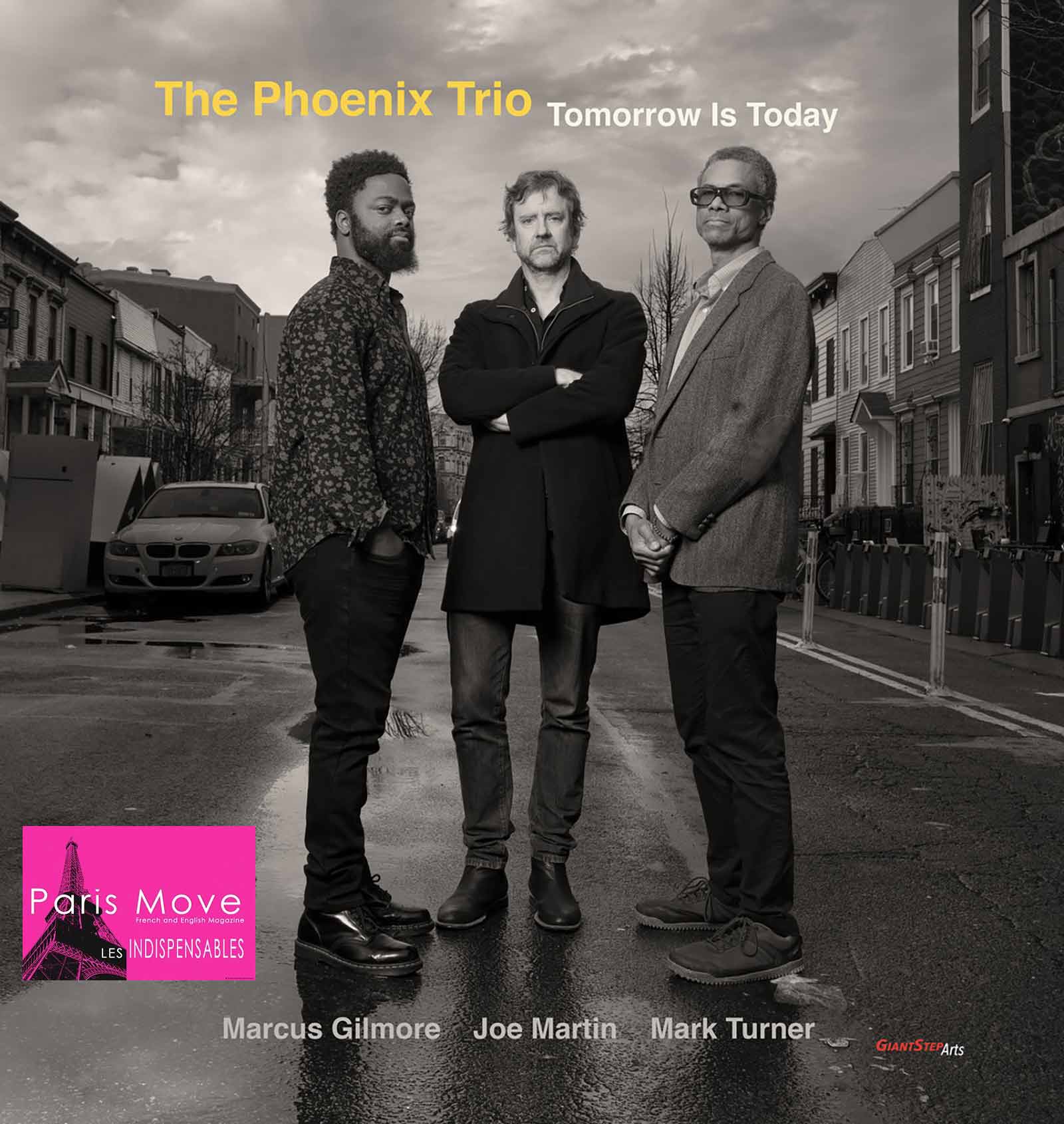
Summary: Phoenix brings together Mark Turner, Joe Martin and Marcus Gilmore in a masterful jazz trio recording that blends sophisticated composition, lyrical improvisation and exceptional ensemble interplay. A powerful statement of contemporary jazz, the album explores renewal, transformation and artistic freedom with remarkable depth and elegance.
Phoenix Rises: Mark Turner and Company Find Renewal in the Art of the Jazz Trio
The storm has drifted away. The rain has stopped. What lingers is that unmistakable scent of freshly soaked grass rising into the air after a summer shower. In the studio monitors, the trio Phoenix begins to speak. A double bass. A tenor saxophone whose sound is instantly recognizable. Mark Turner.
Turner is one of those rare musicians I admire not only for his artistic gifts but also for the intellectual rigor that informs every aspect of his work. Elegance, restraint, depth, curiosity. They are qualities that have defined his career and they are all present from the opening moments of this remarkable recording.
The album begins with “The Fencer,” and within seconds I find myself completely captivated. It is the kind of artistic statement that produces the same feeling I experience when walking through a museum. Sometimes, standing before a painting is not enough. You sit down on a bench and remain there, studying the details, discovering new layers with every passing minute. Phoenix demands that same kind of attention. This is music built from nuance. Everything here is a matter of detail.
Given the company Turner keeps, perhaps that should come as no surprise. Alongside bassist Joe Martin and drummer Marcus Gilmore, he has assembled a trio capable of transforming complexity into something that feels effortless. The result is music that invites listeners to dream while never sacrificing its intellectual substance.
The phoenix, of course, is traditionally depicted surrounded by flames, the mythical bird rising from the ashes of what came before. That cycle of renewal offers a fitting metaphor for jazz itself, a music rooted in generations of tradition yet forever renewed in the present moment.
“The principle of three-in-one is a recurring relationship throughout human culture and the physical world,” Turner has explained, recalling the inspiration behind the group’s name. “You find it in religion, mysticism, the cycle of human life, music, art, science. The 12-bar blues, the 12 tones, primary colors, rhythm, melody and harmony, Buddha, Dharma and Sangha, Father, Son and Holy Spirit, Vishnu, Brahma and Shiva. Three is the magic number, to quote Schoolhouse Rock. The Phoenix represents rebirth, immortality and transformation. In short, the ultimate creative entity.”
From my perspective, the trio is the most demanding format in jazz. At first glance, it seems simple: three musicians, three distinct personalities. Yet achieving equilibrium among those voices requires extraordinary skill. Each player must shape the music through his own sensibility while remaining deeply connected to the collective architecture of the performance.
Beyond technical mastery lies something even more essential: listening.
Great trios thrive on a level of communication that often appears almost supernatural. One musician proposes an idea. Another reshapes it. The third redirects its trajectory entirely. Suddenly, something unexpected emerges. To an audience member, it can feel like magic. In reality, it is the product of years of experience, trust and artistic maturity. Being a good musician is not enough. One must fully inhabit the music.
“I’ve played a lot in saxophone trios and I’ve always been attracted to the format,” Martin has said. “I love the counterpoint that develops between the bass and the tenor saxophone, as well as the possibilities and the space that playing in a trio gives all three of us.”
Martin contributes four compositions to the album, including two pieces dedicated to members of his family. These works frame a composition by Gilmore and another by Turner. Some of the material has appeared in earlier recordings or previous performances by the group, allowing what Martin describes as an opportunity to revisit familiar material and explore new directions.
That spirit of exploration defines the entire project.
If Turner serves as the philosophical center of Phoenix and Martin its structural architect, Gilmore often functions as its catalyst. His drumming is a masterclass in controlled momentum. Rarely content to simply mark time, he creates currents beneath the music that subtly alter its direction. One moment he is whispering through textures and cymbal colors, the next he is introducing rhythmic ideas that challenge and inspire his bandmates. His contribution is not merely supportive. It is transformative. Throughout the album, Gilmore demonstrates why he is widely regarded as one of the most inventive drummers of his generation.
Beyond the breathtaking opening statement of “The Fencer,” several other performances reveal the trio’s remarkable chemistry. Martin’s family-inspired compositions carry an emotional warmth that balances the intellectual rigor often associated with Turner’s writing. Elsewhere, the group’s collective improvisations unfold with the patience of a conversation among old friends, each musician allowing ideas to breathe before steering them toward unexpected destinations. The beauty of Phoenix lies not in grand gestures but in these moments of subtle revelation, when a phrase, a rhythmic shift or a fleeting harmonic suggestion suddenly changes the emotional landscape of the music.
That capacity for transformation is perhaps the album’s defining characteristic. The musicians are never interested in displaying their virtuosity for its own sake. Instead, every technical achievement serves a larger artistic purpose. Complexity becomes a pathway to expression rather than an end in itself.
It is also the kind of music that finds a natural home at Giant Step Arts, an organization whose mission stands in refreshing contrast to the commercial pressures that increasingly shape the music industry. Founder Jimmy Katz describes the initiative succinctly: “Giant Step Arts exists to help musicians realize their artistic dreams. The organization does not sell music, and artists retain all rights to their work. We work tirelessly to raise funds with the goal of helping an ever-growing number of musicians.”
In many ways, this philosophy is woven into the sound of Phoenix. Jazz has always had its heroes. Some pursue broader commercial success. Others choose a more demanding path, one focused almost entirely on artistic exploration. Turner, Martin and Gilmore belong firmly to the latter tradition.
Nothing here feels calculated. Nothing feels compromised.
Composition, improvisation and ensemble interplay are pushed toward their highest possibilities. The musicians are not chasing trends, nor are they interested in easy rewards. Instead, they pursue something rarer: artistic truth. Their performances seek elevation rather than gratification, discovery rather than confirmation.
One could spend hours discussing the individual accomplishments of these three extraordinary musicians. One could analyze Turner’s harmonic language, Martin’s compositional sensibility or Gilmore’s astonishing rhythmic imagination. Yet perhaps the best response is simply to surrender to the experience itself.
Because ultimately, Phoenix is one of those albums that requires very little persuasion. Its case is made almost immediately. Within two minutes, perhaps less, most listeners will understand they are in the presence of something special.
More broadly, Phoenix arrives at a moment when contemporary jazz continues to wrestle with its own identity. The genre has never been more stylistically diverse, drawing influences from electronic music, hip-hop, global traditions and experimental forms. Yet albums like this remind us that innovation does not require abandoning the past. The deepest advances often emerge from a profound understanding of tradition. Turner, Martin and Gilmore are not attempting to reinvent jazz from scratch. They are demonstrating how the language can continue to evolve while remaining connected to its roots.
That may be the album’s greatest achievement. Like the mythical bird from which it takes its name, Phoenix embodies renewal without erasure. It rises from what came before, carrying history forward while creating something entirely its own.
The storm may have passed, but the atmosphere remains charged long after the music ends.
Thierry De Clemensat
Member at Jazz Journalists Association
USA correspondent for Paris-Move and ABS magazine
Editor in chief – Bayou Blue Radio, Bayou Blue News
PARIS-MOVE, June 3rd, 2026
Follow PARIS-MOVE on X
::::::::::::::::::::::::
The Phoenix Trio:
Mark Turner-tenor saxophone
Joe Martin-bass
Marcus Gilmore-drums
Track Listing:
The Fencer
Lioness
1946
Harvest
Tomorrow is Today
Safe
Produced by Mark Turner, Joe Martin, Marcus Gilmore & Jimmy Katz for Giant Step Arts Non-Profit, ©2026
Special thank you to arts visionaries Rie Yamaguchi-Borden & Mitch Borden of Ornithology in Brooklyn, New York, for their incredible generosity.
All Compositions © by Joe Martin, Mark Turner & Marcus Gilmore Recorded by Jimmy Katz & James Kogan Live At Ornithology, Brooklyn New York, March 23rd & 24th 2025 Mixed and Mastered by Jimmy Katz with Dave Darlington
Photography & Design by Jimmy & Dena Katz