
| Jazz |
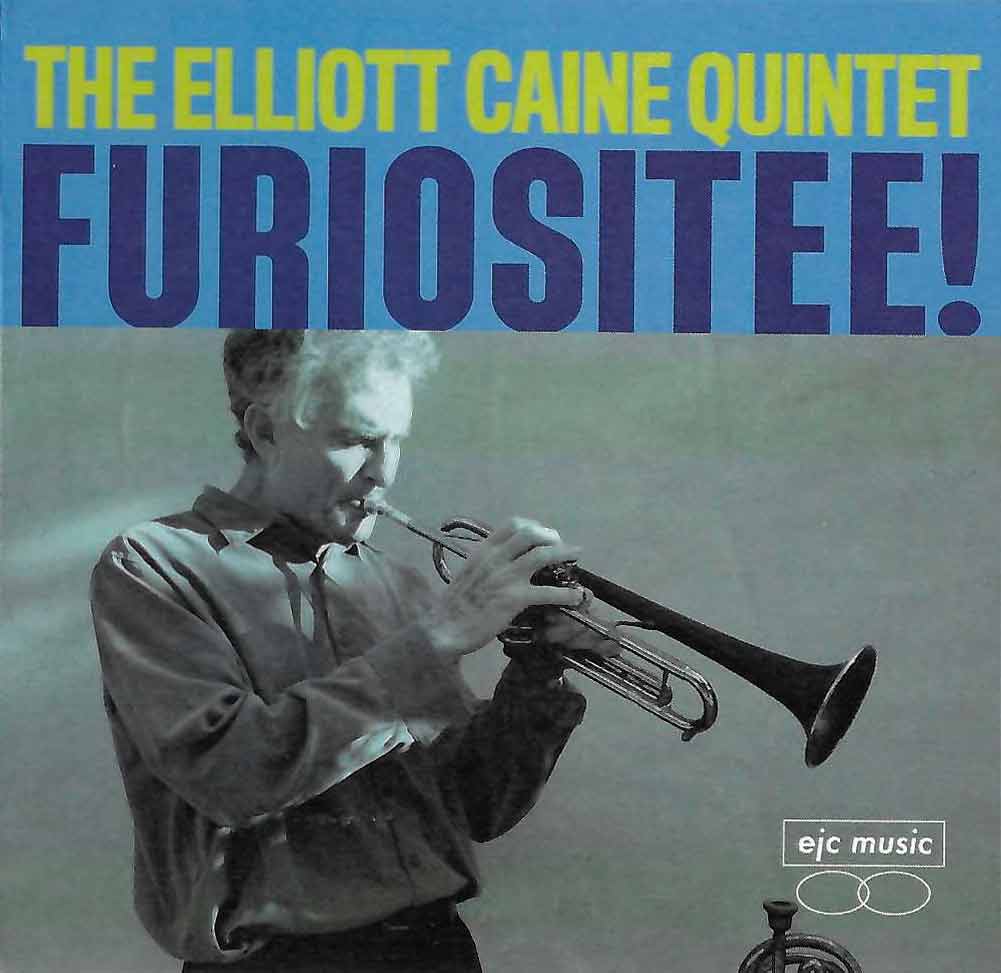
Summary: Elliott Caine’s “Furiositee!” blends bebop, hard bop and Latin jazz with a deep respect for the Blue Note tradition. A well-played, engaging album that favors craftsmanship over innovation.
Elliott Caine Quintet’s “Furiositee!”: A Polished Journey Through Hard Bop and Latin Jazz
A sunny Sunday, an old-school jazz sound in my headphones, and a title, “Furiositee!,” that promises more heat than the album ultimately delivers. Elliott Caine’s new recording moves comfortably between bebop, boogaloo and Latin jazz, with Caine on trumpet and flugelhorn alongside Scott Gilman on saxophone, Michael Boito on piano, Bill Markus on bass and Don Littleton on drums. Percussionist Victor Baez appears on three tracks. The music is immediately inviting, polished and steeped in tradition. But as the album unfolds, a more complicated question emerges: how much can a record say when it knows its musical history this well?
“Furiositee!” belongs to a long American jazz tradition of absorbing Afro-Cuban rhythms without losing sight of the music’s own lineage. That tradition is hardly short of contemporary practitioners. Pianist and composer Donald Vega’s “Play It Forward,” for example, offers a particularly convincing recent take on the meeting of jazz and Latin music. Caine travels some of the same territory, but with a different set of ambitions. He is not trying to redraw the boundaries of the music or invent a new way of making these traditions speak to one another. His goal is more straightforward: to keep a familiar language alive, played by musicians who know how to make its familiar contours sound good.
Caine is, of course, hardly a newcomer. Based in Los Angeles, he belongs to a generation of musicians for whom genre boundaries have never been especially meaningful. His résumé moves freely through jazz, rhythm & blues, Latin jazz, ska, rock and studio work. He has played or recorded with Teddy Edwards, Barbara Morrison, Larance Marable, Red Holloway, Al McKibbon, Justo Almario, the Bobby Matos Heritage Ensemble, the Estrada Brothers and Jump With Joey. His musical path has also taken him well outside the traditional jazz orbit, including work with Beck, the Beastie Boys and the rock band Filter, with whom he appeared on a platinum-selling album. His compositions have also turned up in film, television and advertising.
That history says something important about the Los Angeles scene itself, where jazz has long been defined by musical encounters rather than hard borders. Rock, funk, Cuban music, rhythm & blues, ska and studio culture have shared the same ecosystem for decades. Caine is very much a product of that environment, and “Furiositee!” feels less like a departure from that history than a continuation of it.
By the second track, “Permanent Revolution,” the album slips into another era. There is something distinctly cinematic about the way the horns push the music forward, the rhythmic tension stays taut and the drums keep the machinery moving without crowding the frame. The sound points naturally toward the great American jazz recordings of the ’50s and ’60s, particularly the world associated with Blue Note and Prestige. The album’s debt to ’60s jazz, as well as to the music of Tito Puente and Mongo Santamaria, is unmistakable. These are not passing references; they establish the musical territory in which Caine is operating.
“Furiositee!” is contemporary in terms of production, but essentially traditional in conception. Themes are stated cleanly, the soloists get their turns, the rhythm section keeps the conversation moving and the percussion enters at strategic moments to intensify the Latin flavor. Jazz here is not treated as something in need of constant reinvention. It is a language, and Caine is interested in speaking it fluently.
That approach is both the record’s appeal and its limitation. More than once, I found myself hearing less of a fully developed album concept than a well-crafted calling card for the musicians involved. Everyone gets room to speak, and everyone brings substantial experience to the conversation. Caine’s trumpet has authority and warmth, Gilman’s saxophone provides an effective foil, the piano finds its openings and the rhythm section keeps things grounded. When the percussion arrives, it adds another layer of rhythmic color without overwhelming the basic architecture.
The Lee Morgan connection helps clarify Caine’s aesthetic. His trumpet playing is melodic, clear and warm, favoring personality and phrasing over sheer display. The horn remains the focal point, while the saxophone supplies a contrasting voice and the rhythm section wisely avoids overplaying, leaving the soloists room to breathe. The percussion is similarly well judged, expanding the rhythmic vocabulary without forcing the quintet into becoming a Latin ensemble. As a performance, the record is consistently assured. Its aesthetic identity is equally clear.
But that very assurance eventually exposes the record’s central weakness. “Furiositee!” knows its jazz language inside and out, yet rarely bends that language into something unmistakably its own. The band operates comfortably within hard bop, Latin jazz and the Blue Note tradition without making much of an attempt to redraw the map. Some of the compositions feel predictable, and there are moments when the album seems to revisit an aesthetic territory that has already been thoroughly mined. There is more mastery than risk, more reverence than rupture. The result is a record that is easier to admire than to be startled by.
The title “Furiositee!” even takes on an ironic edge when you consider how carefully controlled that fury actually is. The band knows the tradition, respects it and plays it with conviction, sometimes with plenty of fire, but it rarely puts that tradition in danger. I found myself wanting more disruption, more unpredictability, perhaps a little more of the danger that can turn a polished performance into a statement. The question is not whether Caine should have invented a new form of jazz. It is what his own unusually broad musical journey might have contributed to a tradition already rich with possibilities.
By the end, I am therefore more reserved than enthusiastic, though hardly dismissive. “Furiositee!” is not a bad album, and judging it primarily on the basis of innovation would miss much of what it does well. There is genuine musicianship here, a deep understanding of the jazz tradition and an obvious pleasure in keeping that tradition in motion. The strongest tracks are persuasive, and the album’s overall consistency should appeal to listeners who favor acoustic jazz, hard bop and Latin-inflected traditions.
I hear “Furiositee!” more as another chapter in Caine’s musical journey than as a major statement. The album enters into a serious conversation with jazz history, from Blue Note to the Afro-Cuban tradition, and there is nothing wrong with that kind of fidelity. It may not significantly extend the vocabulary, but it preserves and performs those familiar elements with enough conviction to make the journey worthwhile and, at its best, genuinely inspired.
In the end, that middle ground feels like the fairest assessment of “Furiositee!”: a solid, well-played and respectable record, often engaging, but one that would benefit from a stronger sense of personal identity. It is unlikely to alter the course of contemporary jazz, nor does it need to. What it does remind us is that a tradition can remain vital without being reinvented every time a new album arrives. For Caine, the more intriguing challenge may now be to turn his deep knowledge of the past into a voice that is more distinctly his own — to take a few more chances, leave a little more room for surprise, and allow some of the unexpected into music that, on “Furiositee!,” remains almost unfailingly under control.
Thierry De Clemensat
Member at Jazz Journalists Association
USA correspondent for Paris-Move and ABS magazine
Editor in chief – Bayou Blue Radio, Bayou Blue News

PARIS-MOVE, September 14th, 2026
Follow PARIS-MOVE on X
::::::::::::::::::::::::
To buy this album (September 21, 2026)
Musicians :
Elliott Caine, trumpet & Flugelhorn
Scott Gilman, saxophone,
Michael Boito, piano
Bill Markus, contrebasse
Don Littleton, drums.
Guest :
Victor Baez, percussions.
Track Listing :
Furiositee!
Permanent Revolution
Bossa for Kenny
East Of The Sun
Song for Carolina
No Jive Boogaloo
Blue Reflection
Soul Reflection