
| Jazz |
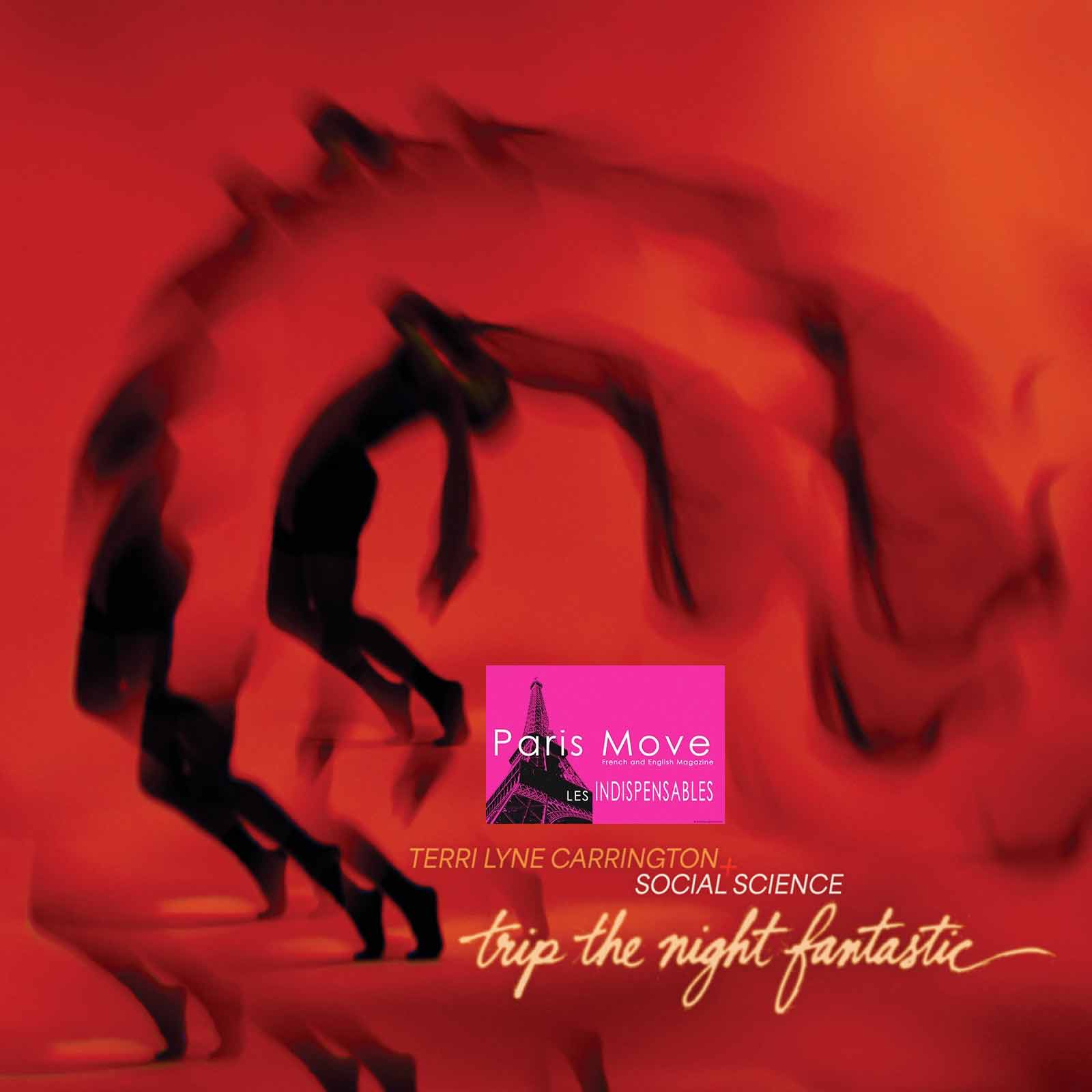
Terri Lyne Carrington’s “Trip the Night Fantastic”: A Jazz Visionary Creates a Soundtrack for Our Uncertain Times
There are albums that simply arrive, and there are albums that announce themselves as cultural statements. “Trip the Night Fantastic,” the extraordinary new project from Terri Lyne Carrington + Social Science, belongs firmly to the second category. It is not merely a new chapter in the career of one of jazz’s most respected musicians. It is a reflection on where we stand as a society, where music has been, and where it might still take us.
On a quiet Sunday afternoon, listening to this newly released record, I found myself revisiting the remarkable journey of Terri Lyne Carrington, an artist whose influence extends far beyond the boundaries of jazz. For decades, she has represented something rare in contemporary music: a musician capable of honoring tradition while constantly challenging its limits.
Carrington is widely recognized as one of the most important drummers and composers of her generation, but limiting her contribution to one instrument would miss the true scale of her achievement. She has been an architect of sound, a producer of ideas, an educator, and a force committed to expanding the possibilities of jazz. Her career has been built not only on extraordinary musicianship but also on a deep belief that music can be a vehicle for dialogue, awareness, and social transformation.
Many listeners still remember the elegance and emotional intelligence of her celebrated album “Jazz Is A Spirit,” the brilliance of “Structure,” and the remarkable historical perspective offered through “Terri Lyne Carrington: The Act Years.” These works revealed an artist who understood that jazz was never simply a musical language. It was a living conversation between generations, cultures, and personal experiences.
Four decades after the beginning of her professional journey, Carrington continues to create with the curiosity of an emerging artist. Instead of looking backward, she continues to move forward. Her work as a performer and composer has been complemented by her commitment to sharing jazz with wider audiences, including through her respected radio program on Real Jazz, where she continues to celebrate the diversity and richness of the music she loves.
With “Trip the Night Fantastic,” created under the name Terri Lyne Carrington + Social Science, she presents one of her most ambitious projects to date. The album brings together a remarkable collection of voices and musicians, creating a musical community rather than a simple recording session.
Among the vocalists are Ledisi, Arooj Aftab, Michael Mayo, Miki Howard, Fatoumata Diawara, Debo Ray, Christie Dashiell, Lizz Wright, Vuyo Sotashe, Safa, Imani Rousselle, and Ian Michael. The instrumental contributions include extraordinary artists such as Brandee Younger, Marc Ribot, Larry Goldings, Rashaan Carter, Simon Moullier, Riley G, and Brenda Navarrete. The project also expands into hip hop and spoken word through the participation of Nappy Nina, Kokayi, Kassa Overall, Khemist, J. Ivy, Aja Monet, Tarriona “Tank” Ball, and Moor Mother.
This impressive gathering of artists reflects Carrington’s broader philosophy: music does not exist in isolation. Jazz has always been a meeting point, a place where different voices and experiences come together. In “Trip the Night Fantastic,” that idea becomes the foundation of the entire work.
The album’s ambition is immediately clear. Carrington is not interested in creating a record that simply celebrates her own legacy. Instead, she uses her experience and artistic authority to create a space where multiple generations and perspectives can speak.
The themes explored throughout the project are among the most urgent issues of our time: women’s emancipation, climate change, immigration, gender justice, bodily autonomy, the importance of community, and the protection of animal rights. These subjects could easily have resulted in a work dominated by messages rather than music. Carrington avoids that trap completely.
Her approach is more sophisticated. She understands that the most powerful art does not tell audiences what to think. It creates an emotional experience that encourages people to think for themselves. That quality may be one of the album’s greatest achievements. “Trip the Night Fantastic” is deeply engaged with the world, but it never loses its musical identity. The message and the music are inseparable.
The album’s opening atmosphere immediately suggests a global conversation. Influences from African jazz traditions blend with contemporary jazz, funk, electronic textures, and world music. Carrington creates a sound that recognizes the history of Black music while refusing to treat that history as something frozen in the past. The result is an album that feels both timeless and completely connected to the present.
What happens here is not limited to one country or one community. The issues explored throughout the record are universal because they reflect shared human experiences. The struggle for dignity, equality, belonging, and justice exists everywhere. Carrington understands that music has the ability to cross borders in ways that political debates often cannot.
And this is where her extraordinary experience becomes essential. Her decades of collaboration with some of the greatest figures in jazz, including artists such as Wayne Shorter and Herbie Hancock, have given her a unique understanding of musical conversation. She knows that great improvisation is built on listening, responding, and creating space for others.
That same philosophy defines “Trip the Night Fantastic.” The album is not a solo statement from a legendary artist. It is a collective expression, a musical ecosystem where every voice contributes to a larger vision. The true strength of “Trip the Night Fantastic” becomes even clearer as the album unfolds. This is a record that rewards patience, attention, and repeated listening. It does not reveal all of its meanings immediately. Instead, it invites the listener into a larger conversation, one where music, history, social awareness, and human emotion exist together.
From the powerful “Autonomy Song” to “Children Song” and “Solidarity Song,” Carrington and her collaborators move through different emotional landscapes. Each composition carries its own identity, yet the entire project feels connected by a common purpose. The songs are not isolated statements; they are chapters in a larger narrative about freedom, responsibility, compassion, and the possibilities of collective action.
The voices throughout the album serve as more than vocal performances. They become storytellers. Every singer brings a different perspective, a different cultural background, and a different emotional color. The spoken word contributions deepen this approach, creating moments where poetry and music merge into a single form of expression.
This combination of jazz, spoken word, electronic elements, hip hop, and global influences represents one of Carrington’s greatest artistic achievements. She understands that contemporary jazz cannot exist by looking only backward. Jazz is a tradition built on evolution. From its earliest beginnings, the music has survived because artists have continuously transformed it.
Carrington’s vision honors that history while refusing nostalgia. She does not attempt to recreate a previous era. Instead, she asks what jazz can become in the 21st century. That question is central to her entire career. As a woman who reached the highest levels of jazz at a time when the industry often placed limitations on female musicians, Carrington’s artistic journey itself represents a story of determination and transformation. Her success is not simply a personal achievement. It has helped open doors for generations of musicians who followed. Yet “Trip the Night Fantastic” is not defined only by its social themes. It succeeds first and foremost because it is a beautiful musical experience.
The production is exceptional, allowing every detail to breathe. The arrangements are sophisticated without becoming inaccessible. The electronic textures, acoustic instruments, rhythms, and voices are carefully balanced, creating an atmosphere where complexity becomes natural. This is an album that respects the intelligence of its audience.
Carrington understands that listeners do not need to choose between meaningful ideas and musical pleasure. A record can address serious issues while still offering moments of joy, surprise, and beauty. In fact, the emotional impact of the album comes precisely because the music itself remains so compelling.
At the center of everything is Carrington’s extraordinary musicianship. Her drumming is not simply rhythmic support; it is a form of conversation. She creates movement, tension, and emotion. Her playing carries decades of experience while maintaining a sense of discovery.
The album also represents a celebration of the entire history of Black music. Jazz is the foundation, but the musical journey extends far beyond one genre. The blues, funk, African traditions, contemporary rhythms, and experimental approaches all become part of a larger story.
In this sense, “Trip the Night Fantastic” feels almost like a musical map. It traces connections between past and present, between personal experience and collective memory, between artistic expression and social responsibility.
This is why the album feels particularly relevant today. We live in a moment when many people feel divided, overwhelmed, and disconnected. Carrington’s response is not anger or despair. Her response is collaboration. She brings artists together. She creates dialogue. She reminds us that music can still be a place where differences are not erased but celebrated.
There is also a lesson here for the future of jazz. The genre’s survival has always depended on artists willing to take risks. Carrington represents that spirit completely. She respects the masters who came before her, but she also understands that every generation must create its own language. “Trip the Night Fantastic” is therefore both a tribute and a declaration. It honors the history of jazz while announcing a new possibility for where the music can go.
The album’s accessibility may ultimately become one of its most important qualities. While deeply sophisticated, it never closes itself off. Jazz enthusiasts will find countless details to explore, but listeners unfamiliar with the genre can also connect with its melodies, voices, emotions, and messages.
That balance is difficult to achieve. Many ambitious projects risk becoming too intellectual or too focused on their concepts. Carrington avoids that danger because she always returns to the essential element: the human connection created through music. After four decades of artistic excellence, she has created a work that feels not like a conclusion, but like a continuation.
“Trip the Night Fantastic” has the potential to become one of the defining albums of Terri Lyne Carrington’s career because it captures so many aspects of who she is as an artist. It contains her technical brilliance, her curiosity, her social awareness, and her belief that music can contribute something meaningful to the world. This is not simply an album about the problems of our time. It is an album about the possibility of imagining something better.
For those fortunate enough to encounter this record, the experience is both a celebration and a responsibility. It asks us to listen carefully, not only to the musicians but also to the ideas and emotions behind the music. Terri Lyne Carrington has spent a lifetime proving that jazz is more than sound. It is memory. It is conversation. It is resistance. It is hope. With “Trip the Night Fantastic,” she once again reminds us why great artists do not merely reflect the world around them. They help us understand it.
Every generation eventually produces artists who do more than master their craft. They become witnesses to their era. Their work captures the questions, tensions, hopes, and contradictions of the moment in which they live. Terri Lyne Carrington belongs to that rare category of musicians whose careers cannot be measured only by recordings, awards, or collaborations. Her importance lies in the way she has continuously expanded the meaning of jazz itself.
“Trip the Night Fantastic” arrives as the work of an artist who understands both history and responsibility. Carrington knows where jazz comes from, but she also understands that tradition is not a museum piece. A living tradition must continue to question, evolve, and embrace new voices.
This is perhaps the most remarkable aspect of the album. It does not present jazz as a closed world reserved for specialists. Instead, it opens the doors wide. It invites singers, poets, rappers, instrumentalists, and storytellers into the conversation. It recognizes that the future of music depends on collaboration rather than separation.
In many ways, the album reflects the original spirit of jazz itself. From its beginnings, jazz was created through exchange. It was shaped by African American history, migration, cultural encounters, struggle, celebration, and imagination. Carrington understands that the genre’s greatest strength has always been its ability to transform experience into expression.
The album’s social themes are therefore not an addition placed on top of the music. They are part of its foundation. Questions of equality, identity, climate, freedom, and community are not outside jazz. They have always been present within it.
From the spiritual dimensions of early jazz to the political consciousness of artists such as Nina Simone, Max Roach, Abbey Lincoln, Charles Mingus, and many others, jazz has often been a place where musicians confronted the realities of their time. Carrington continues that tradition while creating her own language.
What makes “Trip the Night Fantastic” especially powerful is the absence of simplicity. Carrington does not offer easy answers. The world she describes is complicated, and the music reflects that complexity. There are moments of celebration and moments of reflection, moments of intensity and moments of quiet beauty. The listener is encouraged to participate rather than simply consume.
That approach feels particularly important in an era when music is often reduced to short moments, quick impressions, and immediate reactions. Carrington creates the opposite experience. This is an album that asks for time. It asks to be heard from beginning to end. It asks listeners to slow down and reconnect with the deeper possibilities of artistic expression.
For younger musicians, the project also offers an important lesson. Innovation does not require abandoning history. The most powerful forms of creativity often come from understanding the past while refusing to be trapped by it. Carrington’s career represents this balance perfectly. She has worked with legendary figures, absorbed decades of musical knowledge, and transformed those experiences into something completely personal.
Her success also carries symbolic importance. Jazz history has too often overlooked or underestimated the contributions of women musicians. Carrington’s career challenges that narrow perspective. She stands as proof that leadership, innovation, and artistic authority have never belonged to one gender. Her achievements remind the music world that talent has always existed in many forms and that recognition must continue to expand.
Looking ahead, “Trip the Night Fantastic” deserves to be considered not only as another remarkable entry in Carrington’s discography but as a significant cultural document. It captures a moment when many societies are questioning how we live together, how we treat one another, and how we imagine the future.
The album does not pretend that music alone can solve the world’s problems. Carrington understands something more realistic and perhaps more powerful: music can change the way people feel, and changing the way people feel can influence the way they see the world. That is the quiet power of this project.
The record also offers a reminder that artistic excellence and social awareness do not have to compete. The musicianship is extraordinary. The compositions are ambitious. The performances are unforgettable. Yet the album also carries ideas that extend beyond entertainment. It is rare to find a project that succeeds simultaneously as a musical achievement and as a human statement.
For listeners discovering Terri Lyne Carrington for the first time, “Trip the Night Fantastic” provides an ideal entry point into the mind of an artist who has spent her life exploring possibility. For longtime admirers, it represents another confirmation that her creativity remains limitless.
A recommended listening path would be to experience this album alongside key moments from her career, including “Jazz Is A Spirit,” “Structure,” and “The Act Years,” to understand the remarkable artistic journey that led to this new work. But the greatest recommendation is simple: listen without expectation. Allow the voices, rhythms, arrangements, and messages to unfold naturally. Let the music reveal its layers. Discover the conversations taking place between generations, cultures, and artistic traditions. “Trip the Night Fantastic” is not only an album to hear. It is an album to experience.
At a time when the world often feels fragmented, Terri Lyne Carrington offers a different vision. A vision where collaboration replaces isolation, where creativity becomes a form of connection, and where music reminds us of something essential. Before anything else, we are human beings sharing the same fragile planet. And sometimes, the most powerful reminder of that truth comes through music.
Thierry De Clemensat
Member at Jazz Journalists Association
USA correspondent for Paris-Move and ABS magazine
Editor in chief – Bayou Blue Radio, Bayou Blue News

PARIS-MOVE, August 3rd, 2026
Follow PARIS-MOVE on X
::::::::::::::::::::::::
Musicians :
Terri Line Carrington, drums
Matthew Stevens, guitar
Aaron Parks & Morgan Guerin, saxophone
Additional voices :
Ledisi, Arooj Aftab, Michael Mayo, Miki Howard, Fatoumata Diawara, Debo Ray, Christie Dashiell, Lizz Wright, Vuyo Sotashe, Safa, Imani Rousselle, and Ian Michael; instrumentalists Brandee Younger, Marc Ribot, Larry Goldings, Rashaan Carter, Simon Moullier, Riley G, and Brenda Navarrete; rappers Nappy Nina, Kokayi, Kassa Overall, and Khemist; as well as spoken-word artists J. Ivy, Aja Monet, Tarriona “Tank” Ball, and Moor Mother.
Track Listing :
1. Riddim Song
2.Identity Song
3.Autonomy Song
4.Climate Song
5.Children’s Song
6.Step Song
7.Forest Song
8.Solidarity Song
9.Prayer Song
10.Abolition Song
11.Pet Song
12.Blues Song (These Poems)
13.Reckoning Song