| Jazz |
Passionata: The Quiet Jazz Album That Deserves to Be Heard
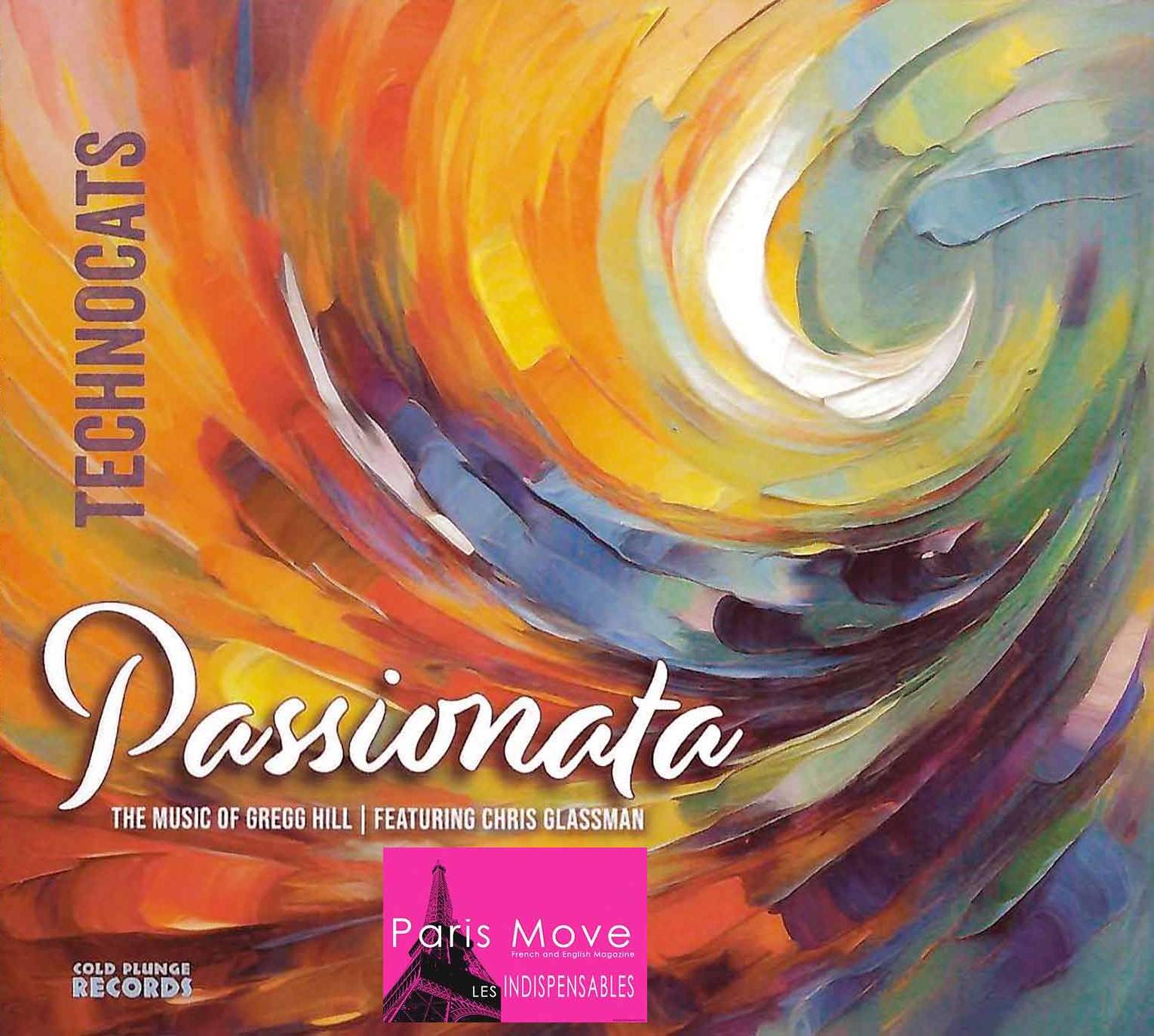
A new album by the Technocats is set to be released on August 31, and if Passionata has so far arrived with remarkably little fanfare, that may simply be because the attention of jazz critics has not yet caught up with it. Whatever the reason, it would be unfortunate for this record to slip quietly into the world, because beneath its occasional Latin influences, or at least beneath the suggestion of Latin music in its intentions, lies a sophisticated form of symphonic jazz through which composer Gregg Hill demonstrates once again his ability to create music that is both immediately engaging and considerably more complex than it first appears.
Hill seems to have found in the Technocats something that every composer hopes to discover, a group of musicians capable not only of performing the notes written on the page but also of understanding the larger emotional and intellectual world behind them. With each new album, it becomes increasingly apparent how deeply these musicians are invested in Hill’s work, and that commitment matters because his compositions are not simply vehicles for instrumental display. They require musicians who are willing to listen to one another, to understand the architecture of a piece and, above all, to recognize when an individual instrument should speak and when it should step aside so that another voice can carry the narrative forward.
One of Gregg Hill’s most distinctive qualities as a composer is the ease with which he moves between wind instruments and strings, allowing the different timbres to become part of the dramatic structure rather than merely adding color to an arrangement. His approach frequently gives the music a symphonic dimension, yet he never loses the flexibility and sense of movement associated with jazz, creating compositions in which the listener can concentrate on the writing itself while still enjoying the spontaneity and expressive freedom of the musicians.
This is particularly important with Passionata, because the album gradually reveals itself as something more ambitious than a sequence of individual pieces. Listening carefully, one begins to sense a narrative thread connecting the movements, and the impression grows that Hill is inviting the listener into a story without ever explaining exactly what that story is supposed to mean. The music leaves enough space for interpretation, which is perhaps one of its greatest strengths, because the listener is encouraged to make connections rather than simply being given them.
One possible connection comes from the themes suggested by the title and from the darker literary territory associated with passion, desire, hysteria, Eros and Thanatos. David Noxx’s work Passionata, Hysteria, Eros and Thanatos, with its exploration of the writings of Charles Baudelaire and Victor Hugo, offers an interesting point of comparison, particularly because those authors repeatedly confronted the relationship between beauty and darkness, desire and mortality. Yet the comparison should not be taken too literally, because there is far too much joy and vitality in Gregg Hill’s compositions for Passionata to be reduced to an exploration of despair, and the music continually finds ways of allowing light to enter even when the subject matter appears to be moving toward darker territory.
That movement between light and shadow may actually provide one of the most useful ways of approaching the album, because Hill rarely allows either side to dominate completely. A passage can suggest tension or uncertainty before opening into something warmer, more energetic or even playful, and the effect is that the listener is never allowed to settle permanently into a single emotional state. The music keeps moving, not only rhythmically but psychologically, and this constant movement is one of the reasons the album feels more like a journey than a conventional collection of jazz compositions.
It is in this context that Dante’s Divine Comedy, and particularly the first part known as Inferno, becomes an intriguing reference point, although there is no reason to claim that Hill deliberately set out to follow Dante’s path. Whether the connection is conscious or entirely accidental, Passionata repeatedly evokes the idea of moving through contrasting emotional and intellectual landscapes, and there is something distinctly Dantean in the way darkness, beauty, suffering, irony and even humor can exist within the same larger journey. Dante understood that a work dealing with the most serious questions of existence did not have to become humorless, and Hill seems to understand something similar, allowing moments of joy and playfulness to coexist with the album’s more intense and shadowed passages.
Looking more closely at the compositions, one discovers a considerable intellectual depth beneath their accessible musical surface, and even the name Technocats seems strangely appropriate to a project that is constantly balancing opposites. There is something playful in the name, but there is also something mysterious, and that tension between the familiar and the unexpected can be felt throughout the album. The title Passionata works in much the same way, because it immediately suggests emotional intensity while refusing to tell us precisely what kind of passion we are about to encounter, leaving the music itself to provide the answer.
The Technocats play an essential role in making that ambiguity work, because their arrangements transform Hill’s compositions into something resembling a musical conversation in which the instruments are not simply accompanying one another but assuming different dramatic functions. At certain moments, the trombone seems almost to become a narrator, carrying an emotional or thematic idea that is subsequently taken up by another instrument, while elsewhere the balance shifts again and a different voice appears to take control of the story. These choices give the album a theatrical quality without ever turning it into conventional program music, and the impression is that every instrumental decision has been made with a larger purpose in mind.
It is difficult to listen to those arrangements and believe that they are the product of chance, because there is too much consistency in the way the music develops and too much attention to the relationship between individual voices and the larger composition. What emerges is the sense of a long intellectual gestation in which Hill’s ideas have been allowed to mature before being handed over to musicians capable of understanding their subtleties. The Technocats do not simply decorate the compositions, because they reveal dimensions that might otherwise remain hidden, and their cohesion allows the listener to hear the architecture of the music without ever making that architecture feel rigid.
The progression of the album’s titles adds another layer to this experience, as the music appears to move from moments of relative joy toward increasingly questioning and profound territory, creating a gradual transformation in atmosphere that becomes more apparent with each successive listening. The bonus track Double Play, which can effectively be regarded as the album’s final movement, is particularly interesting in this respect because it once again brings to mind The Divine Comedy, where even the darkest reflections on human existence are accompanied by an awareness of irony and the strange absurdity of the human condition.
This mixture of seriousness and humor is important because it prevents Passionata from becoming overly solemn, and it also reinforces the impression that Gregg Hill is interested in more than simply producing beautiful sounds. His compositions encourage the listener to make connections, to question what might be happening beneath the surface and to consider whether the emotional progression of the album is telling a specific story or simply creating the conditions for the listener to construct one. The answer may ultimately be different for every listener, and that openness is one of the qualities that makes the record worth returning to.
The Technocats, meanwhile, provide Hill with precisely the kind of ensemble that such an approach requires, because their playing demonstrates an understanding that virtuosity is most effective when it serves the composition rather than competing with it. There are plenty of jazz recordings in which individual musicians appear determined to demonstrate everything they can do, sometimes at the expense of the larger musical idea, whereas here the individual voices remain part of a carefully balanced whole. The result is an ensemble sound that feels remarkably cohesive, even when the arrangements become intricate, and that cohesion allows Hill’s compositions to retain their emotional identity throughout the album.
There are therefore several ways in which a listener can approach Passionata, depending on how much attention he or she is prepared to give it. It is certainly possible to listen simply for the pleasure of the performances and the richness of the arrangements, but the music makes passive listening surprisingly difficult because there is almost always some change taking place beneath the surface. A more concentrated listener can follow the instrumental conversations, the changing moods and the development of the compositions, while someone willing to go further can allow the album to become an intellectual and emotional experience in which literary associations, personal memories and purely musical impressions begin to overlap.
That final form of listening is the one I experienced with this album, because at a certain point the desire to analyze the possible references became less important than the sensation of simply being carried along by the music. The questions surrounding Dante, Baudelaire, Hugo, Eros and Thanatos remained interesting, but they gradually became secondary to the emotional experience created by Hill and the Technocats, which is perhaps exactly what should happen when an intellectually ambitious piece of music succeeds. Ideas can attract a listener to an album, but they cannot ultimately replace the emotional response that makes the music live, and Passionata manages to create that response without sacrificing its intellectual dimension.
For listeners who appreciate carefully constructed compositions, sophisticated arrangements and musicians who clearly believe in the music they are performing, Passionata deserves to be more than an intriguing curiosity quietly added to a CD collection. My suggestion would be to listen to the album from beginning to end when it is released on August 31, rather than approaching it as a collection of individual tracks, because the progression between the movements is an important part of its character, and the relationships between the different pieces become much clearer when the record is allowed to unfold without interruption.
The album may not have received much attention yet, but there is nothing particularly quiet about the ideas contained within it, and when Passionata arrives on August 31, it deserves to be heard with the patience and curiosity that Gregg Hill’s compositions and the Technocats’ interpretation demand. The music moves between light and darkness, between symphonic writing and jazz expression, between intellectual curiosity and emotional instinct, and perhaps most importantly, between what the composer intends to say and what the listener ultimately discovers for himself.
For that reason, Passionata deserves to be approached with patience and an open mind, particularly by anyone who believes that jazz can still function as more than entertainment and can instead become a space in which music, literature, emotion and ideas meet. The record does not insist on a single interpretation, nor does it need to explain every connection it seems to suggest, because its greatest achievement may be the simple fact that it leaves the listener thinking while still giving him something deeply musical to feel, and that combination is increasingly rare.
When Passionata is released on August 31, it may initially appear to be an intriguing discovery for listeners encountering Gregg Hill and the Technocats for the first time, but repeated listening should reveal a work with considerably more depth than its quiet prerelease arrival might suggest. If you enjoy strong compositions, musicians who are genuinely passionate about the work they perform and jazz that offers more than one possible way of listening, this is a record worth discovering, because behind its understated arrival lies a thoughtful, ambitious and deeply human piece of music that deserves considerably more noise around it.
Thierry De Clemensat
Member at Jazz Journalists Association
USA correspondent for Paris-Move and ABS magazine
Editor in chief – Bayou Blue Radio, Bayou Blue News

PARIS-MOVE, August 13th, 2026
Follow PARIS-MOVE on X
::::::::::::::::::::::::
Musicians :
CHRIS GLASSMAN: bass trombone
NATHAN BORTON: guitar
MICHAEL J. REED: drums
XAVIER DAVIS: piano
JAVIER ENRIQUE: bass
Track Listing :
Normality
Traffic Jam
Not Van Morrisson
Horse Feathers
Dancing Light
Technocats
The Race Is On
Passionata
Nostalgia
Double Play (Bonus Track)