| Jazz |
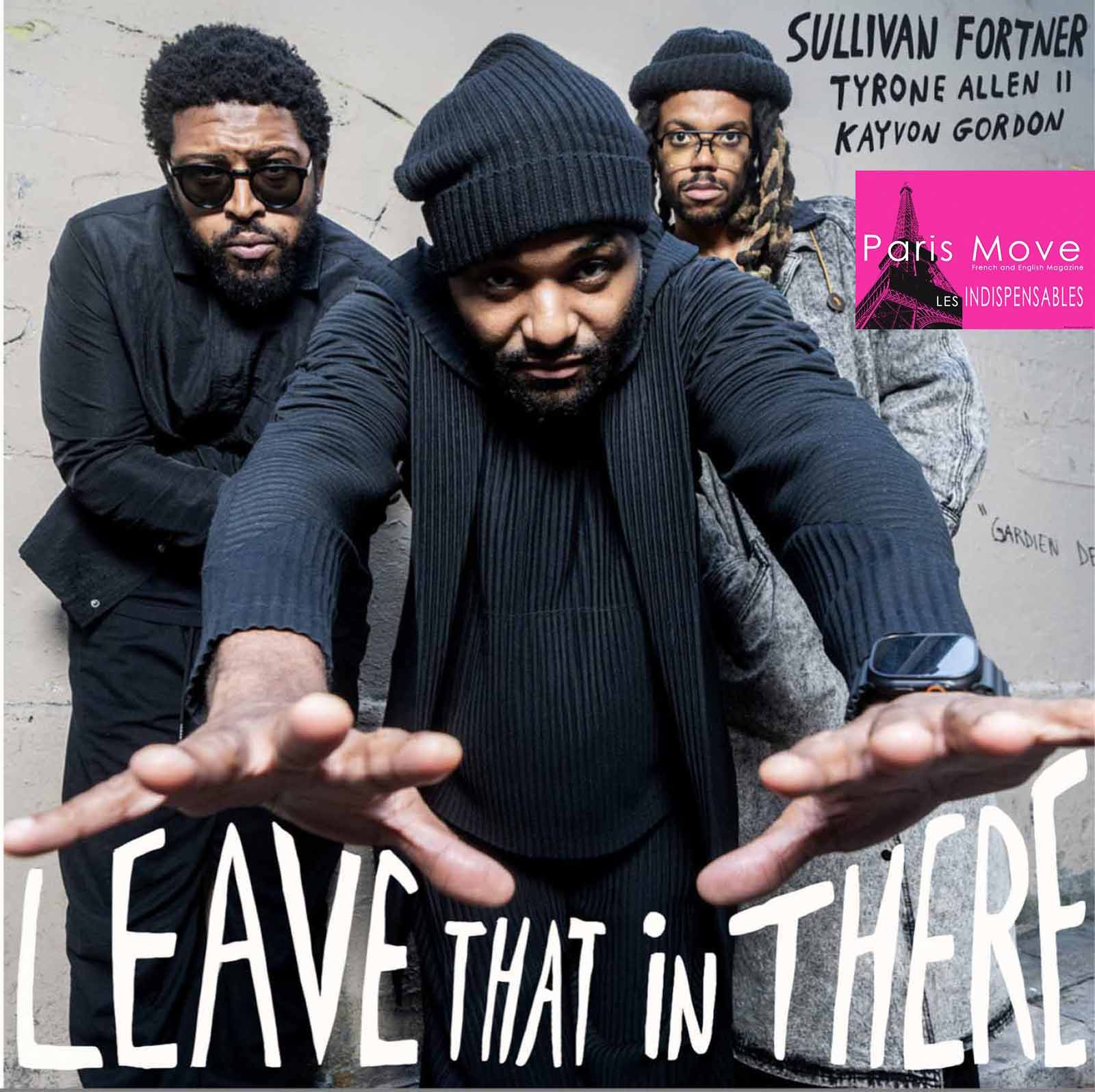
Summary: Sullivan Fortner’s Leave That In There is a deeply personal jazz album rooted in New Orleans, memory, history and Black musical traditions, blending acoustic piano, Hammond B3, synthesizers, marimba and Bàtá percussion.
Sullivan Fortner Turns the Memory of New Orleans Into Music
An album that begins in the sugarcane fields of Louisiana does not arrive innocently. On Leave That In There, due August 28 via Artwork Records, Sullivan Fortner takes something as ordinary as a childhood memory of sugarcane and gradually opens it onto a much larger landscape of New Orleans, family, slavery, migration, spirituality, Hurricane Katrina, Black diasporic traditions and the complicated business of remembering where you come from. What initially sounds like a beautifully controlled contemporary jazz record slowly reveals itself as something more demanding and more personal, an album that wants to be heard for its music but also invites the listener to understand what lies beneath it.
Fortner, the New Orleans pianist, keyboardist, composer and bandleader, has spent more than a decade establishing himself as one of the most versatile musicians in contemporary jazz. His résumé alone could make a convincing case, with collaborations involving Wynton Marsalis, Paul Simon, Dianne Reeves and John Scofield, as well as long standing musical relationships with artists including Ambrose Akinmusire, Dee Dee Bridgewater, Stefon Harris, Kassa Overall, Tivon Pennicott, Peter Bernstein, Nicholas Payton, Billy Hart, Gary Bartz, Chief Adjuah, Fred Hersch and the late Roy Hargrove. He has earned major critical recognition and Grammy Awards, and by now there is little reason for Fortner to prove that he can play. What matters on Leave That In There is what he chooses to do with everything he has learned.
The album opens with “Sugarcane,” and the title initially seems almost too simple for what follows. Fortner grew up in LaPlace, Louisiana, a community whose history is inseparable from the sugarcane industry, and his relationship with the crop is rooted in a childhood memory. His grandmother would bring sugarcane stalks to the family home, where he would cut them, eat them and spit the pieces onto the ground. It is an ordinary recollection, the sort of detail that might otherwise disappear into family history, but in Fortner’s music it acquires a much larger significance because the landscape in which he grew up carries the memory of forced labor, migration, violence and resistance.
Near LaPlace, in 1811, enslaved Africans launched what is widely regarded as the largest uprising of enslaved people in American history. The revolt took place along the German Coast of Louisiana, in a region that Fortner knew not as a historical site but as home. “Sugarcane” therefore carries two histories at once, one belonging to childhood, family and everyday life, and another belonging to a much darker American past. Fortner does not turn that contradiction into a lecture, however, because he allows the music itself to carry the tension.
Kayvon Gordon’s Bàtá drumming gives “Sugarcane” a rhythmic foundation that immediately pushes the composition beyond the conventions of a traditional piano trio. Fortner moves between acoustic piano, marimba and electronic textures while Gordon builds layers of percussion around him, and the resulting sound reaches toward the musical traditions of the Black diaspora without becoming a simple exercise in quotation. The history is present in the rhythm, in the movement of the trio and in the way, Fortner allows different musical languages to occupy the same space.
That approach becomes one of the defining characteristics of Leave That In There. Fortner does not appear interested in separating his influences into neat categories, and jazz, funk, African diasporic traditions, spiritual music, contemporary keyboard culture and improvisation are treated less like separate rooms than different parts of the same house. The album’s thirteen tracks, twelve original compositions and one cover, are connected by recurring musical ideas, with material introduced in “Sugarcane” returning later in altered forms. “Aria II” reaches back to Fortner’s 2015 debut Aria, while “Swirl” draws inspiration from Thelonious Monk and “A Hymn for Linda” becomes a meditative tribute to the late Mama Payne. The only cover, “Number 3,” a fast waltz by Detroit drummer and composer Lawrence Williams, also reaches into Fortner’s past through Marcus Belgrave, whom he encountered while studying at Oberlin.
These references are not simply there for jazz historians to identify. They function as pieces of a personal archive, allowing Fortner to bring earlier musical experiences into a new context and to suggest that an artist’s past is never really finished. A composition written years ago can change meaning when the person who wrote it changes, and Leave That In There repeatedly plays with that idea by treating memory as something active rather than fixed.
The album can therefore be understood as a conceptual work, although the description should be used carefully because Fortner never allows the concept to overwhelm the music. There are moments when the record approaches musical abstraction, particularly when the trio abandons conventional structures and moves into improvisation, yet he rarely allows the music to become emotionally cold. A melody appears when it is needed, a groove settles into place, the Hammond B3 changes the atmosphere or the rhythm section suddenly locks together, giving the listener something familiar to hold onto after a more challenging passage.
That balance is one of Fortner’s greatest strengths. Ambitious jazz can sometimes confuse complexity with importance, but Leave That In There generally avoids that trap. The album asks the listener to pay attention without treating accessibility as a weakness, and even when the ideas become dense, Fortner keeps returning to melody, rhythm and physical sound. The result is music that can be examined intellectually while remaining rooted in the basic pleasure of listening.
The title provides another important clue to the record’s emotional center. Leave That In There comes from Spike Lee’s 2006 documentary When the Levees Broke: A Requiem in Four Acts, which chronicles the devastation caused by Hurricane Katrina and the failures surrounding the disaster. For Fortner, Katrina was not an abstract historical event that happened somewhere else. He was eighteen years old when the storm struck New Orleans, and his family, like many others, was displaced. The disaster therefore belongs to the same personal landscape as the sugarcane fields and the family memories that surround the album.
The connection between sugarcane and Katrina may initially seem distant, but Fortner’s music makes the relationship increasingly clear because both subjects raise questions about what survives. What remains after a natural disaster destroys a city, what remains after a violent history has been pushed out of public memory, and what remains when families are forced to leave home are ultimately variations of the same question. Fortner does not attempt to answer them directly. Instead, he turns to repetition, rhythm, memory and transformation, allowing the music to suggest that survival itself can become a form of artistic inheritance.
This is where the current trio becomes particularly important. Bassist Tyrone Allen II and drummer Kayvon Gordon are not functioning as conventional accompanists, and their playing suggests musicians who understand that the composition is only part of the conversation. Fortner may establish the direction, but Allen and Gordon continually reshape the route, altering the emotional weight and rhythmic architecture of the music without breaking the larger structure. The trio often sounds less like a pianist leading a rhythm section than three leaders attempting to solve the same musical problem together.
That quality is especially striking because this is the first studio recording of Fortner’s current working trio. The familiarity between the three musicians can be heard in the way they leave space for one another, push one another forward and occasionally allow an idea to remain unresolved. Their precision is considerable, but their willingness to accept uncertainty is perhaps even more important, particularly in passages where the music moves from written composition into improvisation.
The instrumentation reinforces that sense of freedom. Acoustic piano, Hammond B3 organ, synthesizers, marimba and Bàtá percussion might easily have produced a record that sounded like a catalogue of Fortner’s influences, but the instruments instead become part of a single vocabulary. The point is not to demonstrate how many musical worlds Fortner can enter, but to show how naturally those worlds can coexist inside one artistic identity.
There is something distinctly New Orleans about that philosophy, although Fortner never attempts to reproduce the city as a postcard. New Orleans has always been a place where musical traditions collide, overlap and reinvent themselves, and Fortner seems to understand that its identity cannot be reduced to one sound. African traditions, jazz, gospel, popular music, Caribbean influences, funk and improvisation have all contributed to the city’s musical history, and Leave That In There reflects that sense of movement without turning it into a tourist brochure.
The album is not without its challenges. Some passages ask more from the listener than they immediately give back, and certain historical or musical connections may become apparent only after repeated listening. There are moments when Fortner’s ambition comes close to overtaking the immediacy of the music, particularly for listeners who prefer jazz to communicate its intentions more directly. That is a legitimate reservation, but it is also part of what makes the album interesting because Fortner has clearly chosen depth and ambiguity over easy resolution.
The more revealing question is what happens after several listens. The music begins to form connections that are less obvious at first, with the opening sugarcane imagery, New Orleans, family history, Katrina, African diasporic traditions, earlier compositions and the sounds of the trio gradually occupying the same emotional landscape. The album starts to feel less like a collection of tracks and more like a memory being reconstructed in real time.
Fortner’s decision to revisit his own earlier work becomes especially meaningful in that context. He is not looking backward simply because he is nostalgic, but because the past changes as a person changes. “Aria II” is not merely a return to material from his first album; it is an encounter between the musician he was and the musician he has become. The same principle appears throughout the record, where older influences and memories are repeatedly placed inside new musical circumstances.
That may be why Leave That In There feels like Fortner’s most personal album. It is not personal because he has turned the record into a conventional autobiography, but because he allows more of his history to remain inside the music. Family memories, New Orleans, Katrina, African diasporic traditions, earlier compositions, musicians he has admired and places he has known all become part of the same conversation, with the piano serving less as a vehicle for virtuosity than as a way of organizing those memories.
The title becomes increasingly appropriate as the album unfolds. “Leave That In There” sounds almost like an instruction to an editor, a reminder not to remove the uncomfortable detail, the joke, the grief, the contradiction or the memory simply because it complicates the story. Fortner seems to embrace precisely that philosophy, leaving humor beside grief, spirituality beside popular culture, childhood beside historical trauma and improvisation beside carefully composed material.
For that reason, Leave That In There is unlikely to be an album for everyone, and that may be one of its virtues. It is too interested in its questions to provide the kind of immediate certainty that some listeners expect from a contemporary jazz release. For listeners who want music to carry ideas as well as technical brilliance, however, the record offers considerably more with each return.
Fortner has reached a point in his career where he no longer seems compelled to explain his identity to the audience. Instead, he allows the music to reveal the connections for him, trusting listeners to recognize that the history of a person, like the history of a city, is rarely a straight line. It is a collection of sounds, places, people, losses, influences and memories that continue to speak to one another long after the original moment has disappeared.
What began with a stalk of sugarcane brought home by a grandmother becomes something much larger in Fortner’s hands, a way of carrying history without allowing history to carry him. That is perhaps the deepest achievement of Leave That In There, an album that looks backward without becoming nostalgic, confronts painful history without turning solemnity into a musical requirement, and demonstrates that personal memory can become something much larger when an artist is willing to leave all of its contradictions in the room.
Thierry De Clemensat
Member at Jazz Journalists Association
USA correspondent for Paris-Move and ABS magazine
Editor in chief – Bayou Blue Radio, Bayou Blue News

PARIS-MOVE, August 13th, 2026
Follow PARIS-MOVE on X
::::::::::::::::::::::::
Musicians :
Sullivan Fortner: piano, Hammond B3, organ, synthesizer, marimba
Tyron Allen II: bass, Moog Sub 97
Kayvon Gordon: drums, bata drums
Track Listing :
Sugarcane
Que Diablos
A Poignant Time
Aerobatics Pt. 1
Aerobatics Pt. 2
Sorcerer’s Stick
Swirl
T295
Number 3
12 Gallons
Aria II
A Hymn for Linda
Another Poignant Time