| Folk, Jazz |
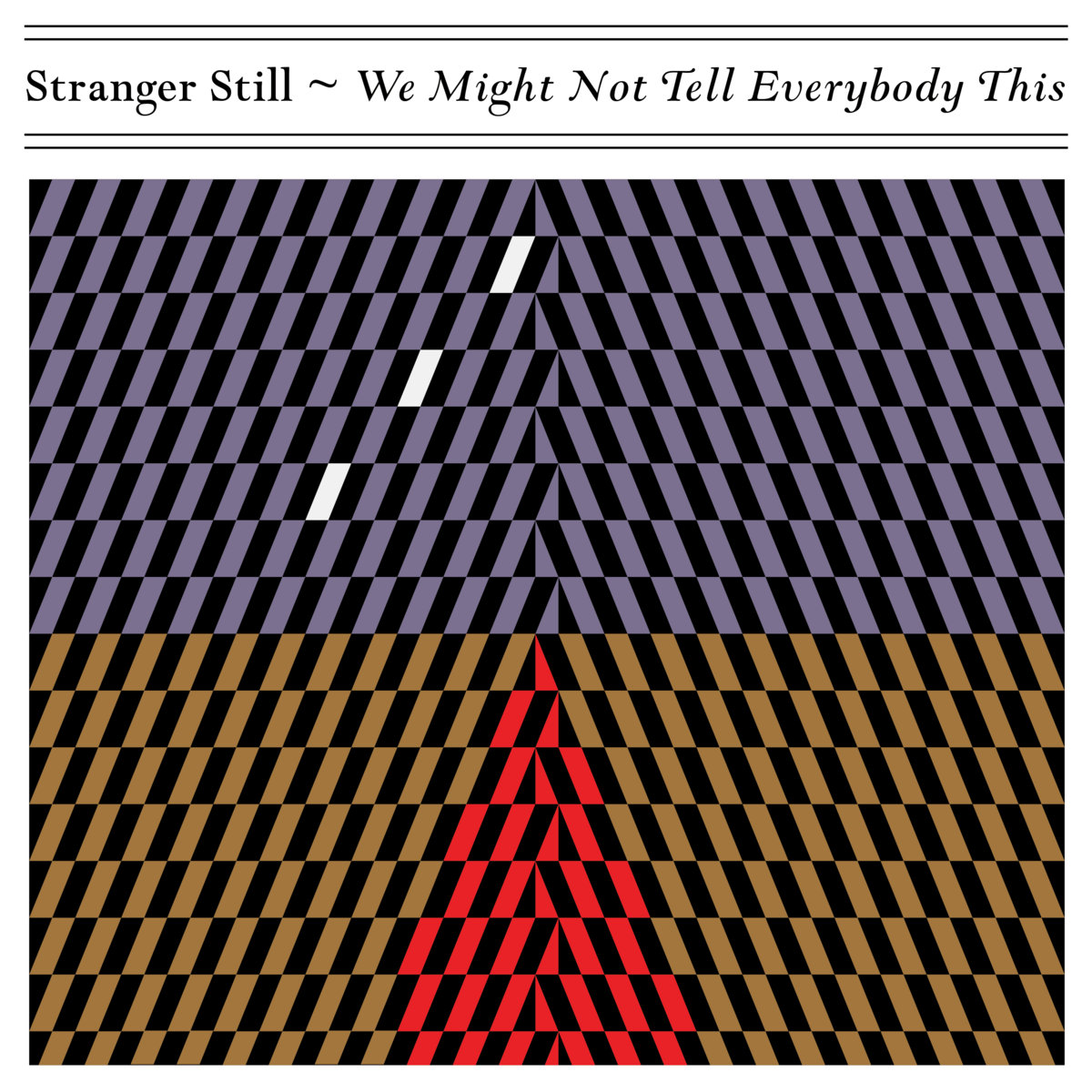
There are albums that entertain, albums that impress, and albums that quietly remain with us long after the final note has faded. We Might Not Tell Everybody This, the third release by Stranger Still, belongs unquestionably to the latter category.
With this beautiful and deeply human recording, bassist, composer Pete Johnston continues his remarkable musical dialogue with the poetry of Alden Nowlan (1933–1983), one of Canada’s most beloved literary voices. The result is an album of rare sensitivity, where poetry and music become inseparable companions, illuminating one another with grace, intelligence, and emotional depth.
What makes this project particularly meaningful is the personal connection between Johnston and Nowlan. Both men share roots in Hants County, Nova Scotia, a region whose landscapes, seasons, communities, and traditions permeate Nowlan’s poetry. Listening to this album, one senses that Johnston is not merely setting poems to music, he is engaging in a conversation across generations with a fellow observer of Atlantic Canadian life.
Nowlan’s poems are filled with ordinary people, rural memories, fleeting moments of beauty, loneliness, faith, doubt, and wonder. They possess a beauty and sensitivity that transcend words. Johnston’s settings honour these qualities perfectly, allowing the poems to breathe naturally while enriching them through carefully crafted musical frameworks.
The musicians of Stranger Still deserve enormous praise for their collective achievement. Rather than overwhelming the texts with elaborate arrangements, they create spaces in which the words can resonate fully. The ensemble demonstrates remarkable restraint and musical maturity throughout the album.
At the centre stands Pete Johnston, whose compositional vision shape every aspect of the recording. Johnston has long been respected as an educator, performer, and composer, but this project reveals another dimension of his artistry: his ability to translate literary imagery into sound. His writing never feels imposed upon the poems, instead it seems to emerge organically from them.
The Stranger Still ensemble performs with exceptional sensitivity, balancing lyricism and improvisation, folk simplicity and the lightness of jazz. Every instrumental contribution serves the larger narrative. The musicians create an atmosphere of intimacy that draws the listener deeply into the album’s world.
The three guest musicians on violin, harp and harmonium, add further richness and variety to the project. Rather than appearing as featured attractions, they integrate seamlessly into the ensemble, expanding the album’s sonic palette while remaining faithful to its reflective character. Their contributions help reinforce the sense of community that lies at the heart of the recording.
One of the album’s great strengths is its pacing. The songs unfold like chapters in a book, each poem revealing a different aspect of Nowlan’s vision. Some pieces are tender and nostalgic while others confront larger existential questions. Throughout, Johnston’s musical settings demonstrate a profound understanding of rhythm, language, and emotional nuance.
Several tracks vividly evoke the landscapes of Atlantic Canada. One can almost feel the changing seasons, hear the distant wind across fields and shorelines, and encounter the memorable characters who populate Nowlan’s poetic universe. The music never resorts to cliché or sentimentality. Instead, it achieves authenticity through careful observation and emotional honesty.
Yet among all the album’s many highlights, one track towers above the others as its emotional and philosophical centrepiece: “If I Could Be Certain, God”. This extraordinary track represents everything that makes We Might Not Tell Everybody This such a rewarding listening experience. The poem itself addresses questions of faith, uncertainty, doubt, and human longing with remarkable openness. Johnston’s setting captures these themes beautifully, allowing the words to retain their full emotional impact while surrounding them with music of profound depth and elegance. Particularly memorable is Rob Clutton’s bass solo. Far from serving as a display of technical virtuosity, it becomes a moment of genuine reflection. The instrument seems to speak directly to the listener, exploring the same questions posed by the text. The solo unfolds with patience, warmth, and wisdom, inviting contemplation not only of the poem’s meaning but also of our own place in the world. It is a rare example of a bass solo that feels simultaneously intimate and universal. The result is simply magnificent.
As the album progresses toward its conclusion, the listener becomes increasingly aware of the coherence of Johnston’s artistic vision. Every composition, every arrangement, every instrumental gesture serves the larger goal of bringing Alden Nowlan’s words into renewed dialogue with contemporary audiences.
In an era often dominated by speed and distraction, We Might Not Tell Everybody This offers something far more valuable: the opportunity to slow down, listen carefully, reflect, and read Nolwan’s poems. It reminds us that poetry still matters, that nature still matter, and that music can deepen our understanding of both.
Few albums manage to be simultaneously literary, musical, intellectually engaging, and emotionally accessible. Stranger Still has accomplished precisely that.
With We Might Not Tell Everybody This, Pete Johnston and his collaborators have created a work of rare beauty, an album rooted in the landscapes and people of Atlantic Canada, yet speaking to universal human experiences. It is a recording filled with wisdom, compassion, and quiet revelation.
One of the most admirable aspects of this album is that Johnston never treats Nowlan’s poetry as material to be illustrated. Instead, he treats it as a living partner in the creative process. The music and the poems walk side by side, enriching one another at every step, which is why the album succeeds so completely as both a literary and a musical achievement.
Like the finest poems of Alden Nowlan himself, it rewards every return visit. Highly recommended.
Frankie Pfeiffer
Editor in chief – PARIS-MOVE
PARIS-MOVE, June 26th, 2026
Follow PARIS-MOVE on X
::::::::::::::::::::::::
Tracklisting:
Warren Pryor 05:20
The Mosherville Road 04:52
If I Could Be Certain, God 04:27
Day’s End 04:46
Dry Spell 05:33
A Pinch Or Two Of Dust 04:04
The Dog Returns From The Woods 03:12
It’s Good To Be Here 04:37
Land and Sea 04:47
Stars 02:28
Walking Toward The Bus Station 04:01
Musicians:
Mim Adams – vocals
Randi Helmers – vocals
Rob Clutton – string bass
Pete Johnston – acoustic guitar, lap steel, vocals
with special guests:
Sarah Frank – violin
Màiri Chaimbeul – harp
Andrew Killawee – harmonium
All music: Pete Johnston (SOCAN), words by Alden Nowlan (1933-83)
All poems reproduced from the book Collected Poems of Alden Nowlan (ed. Brian Bartlett, Goose Lane Editions/ icehouse poetry, 2017) and used with permission from the Nowlan Family
“Land and Sea” is dedicated to the memory of Barre Phillips
Recorded at Union Sound Company in Toronto, Ontario in April 2025. Engineered by Fedge. Mixed by Lisa Conway, mastered by Fedge
Produced by Andrew Killawee and Lisa Conway
Artwork by Mike Smith, band photo by Fedge
Nowlan sketch by Jake Oelrichs, notes by Allan Cooper
Stranger Still acknowledges the support of the Ontario Arts Council (an agency of the Government of Ontario)