| Jazz manouche |
Rediscovering Charlie Chaplin Through the Soul of Gypsy Jazz
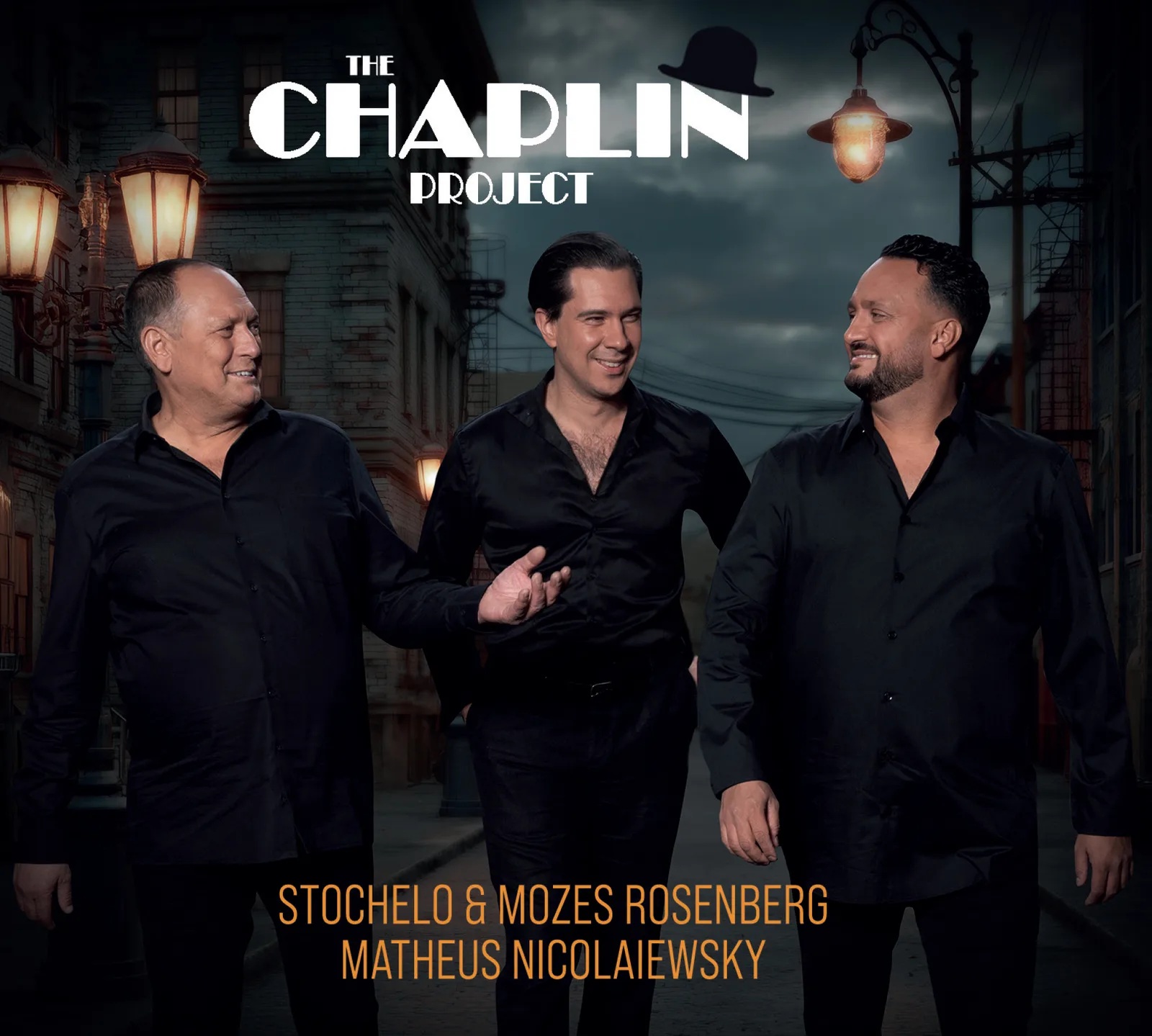
Some projects feel so natural that one wonders why they had never been attempted before. The Chaplin Project is one of those rare recordings where everything falls perfectly into place. It brings together two extraordinary musical worlds: the timeless melodies of Charlie Chaplin and the incomparable artistry of the Stochelo & Mozes Rosenberg Trio. The result is much more than a tribute album, it is a heartfelt conversation between generations, cultures and artistic traditions.
Developed in close collaboration with Michael Chaplin, the son of Charlie Chaplin, the project carries an authenticity that immediately sets it apart. Michael Chaplin’s participation is far more than symbolic. It reflects a genuine desire to restore public attention to one of the least appreciated aspects of his father’s extraordinary genius: his music. While millions know Charlie Chaplin as the creator of The Tramp, few realise that he was also a gifted and remarkably original composer whose melodies possess the same humanity, tenderness and universality as his films.
Indeed, Chaplin’s musical legacy remains surprisingly underrated. Although he never received formal conservatory training, music occupied a central place throughout his entire life. As a young man he practised the violin and cello for hours every day, eventually composing the scores for nearly all of his later films. His philosophy of film music was strikingly modern. He believed that music should never compete with the image but should deepen its emotional impact. As he once explained, elegant, lyrical music created a moving counterpoint to the comedy of the Little Tramp, adding emotional depth without distracting from the story.
Listening to The Chaplin Project, one quickly understands how right he was. Removed from their cinematic context, his melodies reveal an astonishing melodic richness. They possess the rare quality shared by the greatest popular themes: they appear simple on the surface, yet offer endless possibilities for reinterpretation.
Albert Einstein captured Chaplin’s universal appeal in a famous remark: “What I most admire about your art is your universality. You don’t say a word, yet the world understands you.” Those words could just as easily describe the music presented on this album. Whether composed by Chaplin or improvised by the Rosenberg brothers, every melody speaks directly to the listener without the need for explanation.
It is a stroke of luck to be reunited with the Rosenberg brothers for this project. For decades, Stochelo Rosenberg has stood among the undisputed masters of gypsy jazz. Like Django Reinhardt before him, he possesses that extraordinary ability to combine breathtaking virtuosity with remarkable lyricism. His phrasing flows naturally, his improvisations never feel forced, and every solo tells a story.
His younger brother Mozes is an equally remarkable guitarist whose musical personality perfectly complements Stochelo’s. Rather than competing, the two brothers engage in an effortless musical dialogue, constantly exchanging ideas with generosity, elegance and infectious joy.
Their musical heritage makes them uniquely qualified to reinterpret Chaplin. Django Reinhardt transformed jazz guitar by combining Romani musical traditions with American swing, creating one of the most distinctive sounds in jazz history. The Rosenbergs have inherited that tradition while enriching it with their own personalities.
In many ways, The Chaplin Project feels like a meeting between two artistic universes that have always shared common values: lyricism, freedom, melancholy, humour and an unwavering belief that melody remains at the heart of great music.
This connection becomes even more meaningful in light of recent research into Charlie Chaplin’s own Roma ancestry, explored in Carmen Chaplin’s documentary The Spirit of the Tramp. The Rosenbergs do not impose gypsy jazz upon Chaplin’s compositions, instead they reveal a musical affinity that seems to have been quietly present all along.
Completing the trio is double bassist Matheus Nicolaiewsky, whose contribution deserves particular recognition. It would be easy to focus exclusively on the dazzling guitar work, yet the album’s remarkable cohesion depends just as much on Nicolaiewsky’s artistry. His bass lines do far more than keep time. They provide warmth, harmonic depth and rhythmic momentum while giving both guitars complete freedom to explore.
One of the album’s greatest achievements is its superb balance. The programme alternates five Chaplin compositions with five original works by the Rosenberg brothers, creating a dialogue rather than a simple homage. The original compositions never interrupt the narrative; instead, they extend it naturally, demonstrating how deeply Chaplin’s musical language has inspired the brothers’ own creativity.
The album opens with Stochelo’s sparkling “Michael Swing”, a joyful tribute whose infectious swing immediately captures the listener’s attention. Full of dazzling interplay and effortless virtuosity, it establishes the atmosphere for everything that follows.
“This Is My Song”, originally composed for A Countess from Hong Kong, receives one of the album’s most elegant reinterpretations. Chaplin originally hoped that Al Jolson would sing the song before eventually seeing it become a worldwide success through Petula Clark. Here, freed from lyrics, the melody shines with remarkable freshness. The Rosenbergs treat it with great affection, allowing its lyrical beauty to blossom naturally through their refined improvisations.
Mozes contributes the wonderfully melodic “Mencho”, whose warmth and elegance fit seamlessly alongside Chaplin’s own writing. Stochelo answers later with the equally charming “Mi Amor Pepito”, another demonstration of his gift for memorable melodies.
Perhaps the most revealing transformation comes with “Gypsy”. One almost has the impression that Chaplin unknowingly composed it with gypsy jazz in mind. The rhythmic vitality and expressive freedom of the Rosenbergs seem to uncover dimensions that had always existed beneath the surface of the piece.
“Limelight”, one of Chaplin’s most emotionally powerful themes, becomes an intimate conversation between the guitars. The brothers’ jointly written “Funky Chaplin” introduces a playful rhythmic twist while remaining entirely faithful to the album’s spirit. It demonstrates that reverence for tradition need never prevent creativity. Mozes’ energetic “Flame Toast” injects fresh momentum before the album reaches its emotional conclusion.
That conclusion comes with “Smile.” Few melodies have travelled as widely or touched as many hearts. Originally written as the instrumental theme for Modern Times, it later acquired lyrics before being immortalised by artists including Nat King Cole, Judy Garland, Barbra Streisand, Diana Ross, Seal, Dalida (under the French title “Femme”) and Michael Jackson. Here, reduced to the intimate dialogue of two acoustic guitars and double bass, Smile regains an almost fragile humanity.
Throughout the album, what impresses most is not simply the astonishing technical brilliance, although that is never in doubt, but the humility with which the three musicians approach Chaplin’s music. Nothing feels added merely for display. Virtuosity always serves emotion, never the reverse.
Above all, The Chaplin Project reminds us that Charlie Chaplin deserves recognition not only among cinema’s immortals but also among the great melodic composers of the twentieth century. His themes possess the timeless qualities found in the finest standards: elegance, emotional directness and an ability to inspire endless reinterpretation.
Few albums succeed in appealing simultaneously to jazz enthusiasts, guitar lovers, admirers of Django Reinhardt, film music collectors and devoted followers of Charlie Chaplin. The Chaplin Project achieves exactly that. Whether one approaches it through jazz, cinema or simply a love of beautiful melodies, the result is equally rewarding.
Beautifully recorded, exquisitely performed and filled with warmth, swing and humanity, this album is much more than a successful tribute. It is a rediscovery of Charlie Chaplin’s overlooked genius as a composer, illuminated by three exceptional musicians who understand that the finest interpretations are those that preserve the soul of the original while allowing it to speak anew.
Like Chaplin himself, this music speaks every language. And like the Little Tramp, it leaves us smiling long after the journey has ended.
Frankie Pfeiffer
Editor in chief – PARIS-MOVE
PARIS-MOVE, July 20th, 2026
Follow PARIS-MOVE on X
::::::::::::::::::::::::
C’est à l’occasion de la célébration du centenaire de la naissance de Django Reinhardt lors d’un concert Salle Pleyel que Michael Chaplin (fils aîné de Charlie), en venant féliciter Stochelo Rosenberg dans les loges, a évoqué les racines tsiganes de son père… S’ensuivra une amitié au long cours entre les familles Chaplin et Rosenberg. Relation qui aboutira finalement au fameux projet. Pour illustrer les racines tsiganes de Chaplin, la famille se lance dans un projet de film documentaire. Parmi la liste des artistes invités on repère Johnny Depp, Tony Gatlif, Farruquito et Stochelo Rosenberg. Michael Chaplin, accompagné de ses deux sœurs, Carmen et Dolores, rend visite aux Pays Bas à la famille Rosenberg. On tourne une interview de Stochelo et on parle d’un thème peu connu de Chaplin intitulé Gypsy, tiré du Dictateur et interprété à l’origine pour mandoline et guitare. Stochelo et son frère Mozes en livrent un si bel arrangement qu’on l’intègre finalement au film réalisé par Carmen. Concoctés par Stochelo et Mozes, les arrangements pour deux guitares acoustiques et contrebasse de cet album, qu’il s’agisse de musiques de Chaplin (This Is My Song, Gypsy, Limelight, Jazz, Smile) ou de compositions originales inspirées par lui, donnent au projet son côté incomparable! 10 titres dont 5 signés Charlie Chaplin et 5 signés Stochelo Rosenberg. L’occasion d’apprécier un versant musical de Charlie Chaplin particulièrement bien interprété par les frères Rosenberg.
Dominique Boulay
Paris-Move & Blues Magazine (Fr)
PARIS-MOVE, September 10th, 2026
Follow PARIS-MOVE on X
::::::::::::::::::::::::
Musicians:
Stochelo Rosenberg – Guitar
Mozes Rosenberg – Guitar
Matheus Nicolaiewsky – Double Bass
Tracklisting:
- Michael Swing (S. Rosenberg)
- This is my song (C. Chaplin)
- Mencho (M. Rosenberg)
- Gypsy (C. Chaplin)
- Limelight (C. Chaplin)
- Jazz (C. Chaplin)
- Funky Chaplin (S. & M. Rosenberg)
- Mi amor Pepito (S. Rosenberg)
- Flame Toast (M. Rosenberg)
- Smile (C. Chaplin)
All compositions by Charles Chaplin arranged by Stochelo and Mozes Rosenberg.
Stochelo Rosenberg’s Facebook page
Mozes Rosenberg’s Facebook page
Matheus Nicolaiewsky’s Facebook page