| Jazz |
For once, a word to those who cherish the straight-ahead tradition: this record is for you.
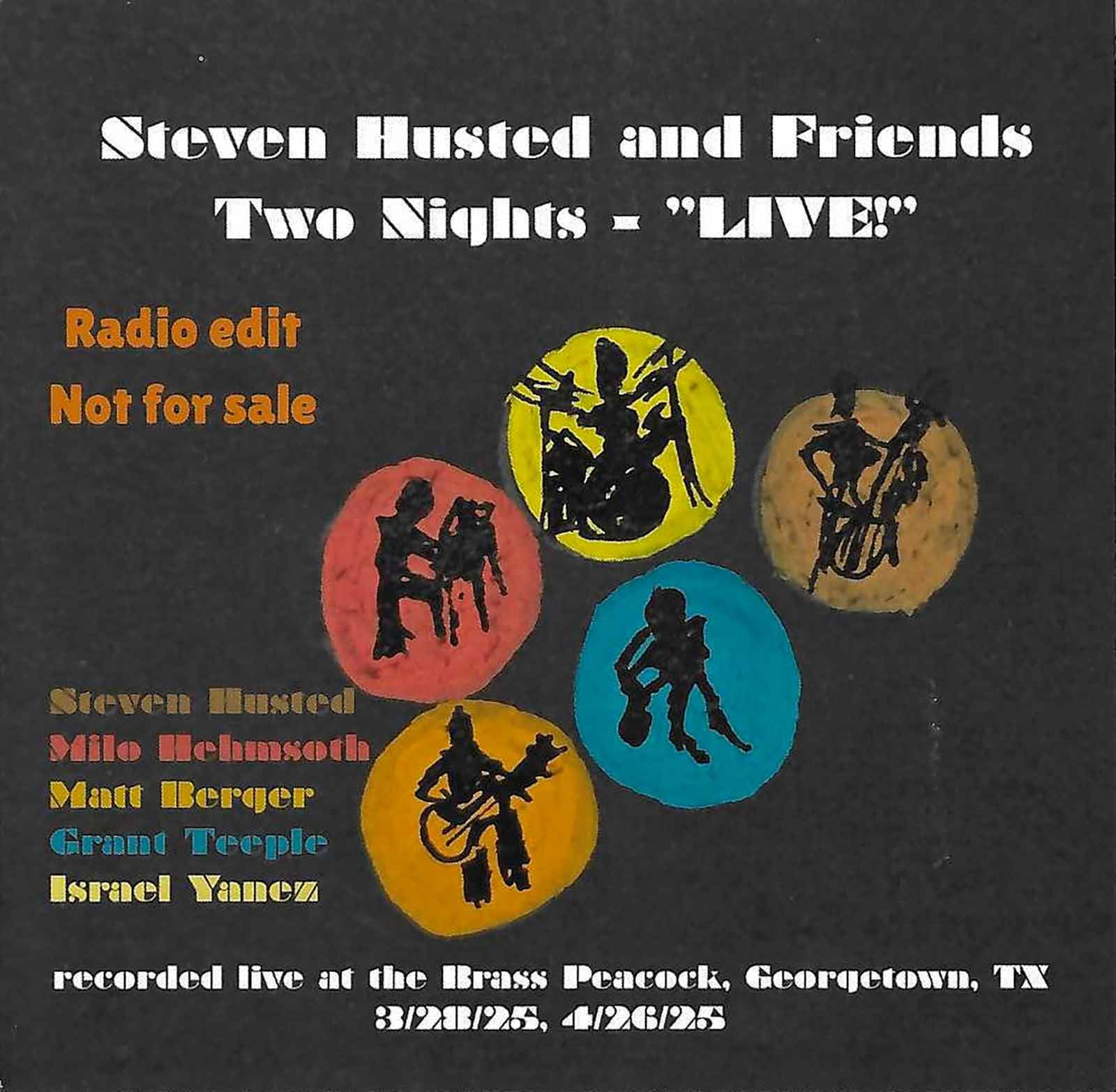
Two Nights, a program that blends original compositions with carefully chosen standards, does not dazzle with pristine production. By contemporary metrics, the recording quality falls short of the polished sheen that typically lands on our desks. The mix favors the midrange, with limited dynamic depth and a faint compression that occasionally blurs the outer edges of cymbals and bass resonance. Listeners accustomed to audiophile clarity may find the sound constricted, even dated. And yet, that shortfall becomes, over time, part of the album’s grammar rather than a flaw to be corrected. What lingers is the strength of the writing and the conviction of the performances.
After a few tracks, the ear adjusts. The sound begins to evoke the tactile intimacy of a well-worn LP, the kind that once spun in living rooms and small apartments, where jazz was less spectacle than companion. For this listener, it summoned vivid memories of adolescence: evenings spent lowering a needle onto records that carried precisely this tonal grain, when music arrived not as digital perfection but as atmosphere.
The challenge here was clear: to produce a live album without sanding down its rough edges. The bassist and composer Steven Husted appears less concerned with delivering a meticulously groomed studio artifact than with capturing something closer to truth. Authenticity, not gloss, is the governing principle.
Husted’s résumé includes collaborations with notable figures such as Kenny Burrell, Billy Higgins and Vince Wallace. A native of Connecticut, he spent formative years in San Francisco immersing himself in the jazz tradition before settling in Austin, where he is now part of the city’s working musical fabric.
The recording captures two evenings at an intimate Austin club, a room small enough that the audience becomes part of the instrumentation. Glassware clinks softly; low murmurs drift between phrases. Though the venue is not foregrounded in the liner notes, its presence is unmistakable. The spatial limitations of the room shape the sound, compressing it but also intensifying it. One occasionally wishes for more audible audience reactions at the close of a tune, the communal burst of applause that seals a performance, yet the restraint also preserves the illusion of proximity, as though the listener were seated a few feet from the bandstand.
As the album unfolds, the cohesion of Husted’s ensemble becomes unmistakable. On the original compositions, he resists the temptation to modernize tradition with conspicuous harmonic detours. Instead, he works within established forms, blues structures, familiar turnarounds, and allows nuance to carry the interest. A mid-tempo swinger early in the program (one of Husted’s own) stands out for its supple bass introduction, the instrument speaking in warm, rounded tones before the horns enter in tight unison. Later, a standard ballad is rendered with admirable restraint: the melody stated plainly, almost conversationally, before opening into solos that never lose sight of the theme. The drummer’s brushwork is especially attentive, propelling without intruding.
This is not a record that seeks reinvention. It runs counter to much of what is commonly promoted today under the banner of contemporary jazz, where hybrid forms and elaborate arrangements dominate. Here, the structures are classic, the phrasing grounded, the improvisations lyrical rather than declarative. The effect is bracing. Stripped of studio artifice, the listener is invited to focus on interplay, to savor the subtle propulsion of the rhythm section, the measured patience of the solos, the trust among musicians who listen as intently as they play.
In my youth, in the Paris region, I frequented clubs where musicians pursued precisely this strain of classicism. It was music that brought smiles to crowded rooms. It remains one of the most welcoming entry points into jazz: intricate in execution, yet immediately accessible to the ear. For newcomers, this accessibility is significant. Though the harmonic language may be sophisticated, its emotional cues are clear. One does not need technical knowledge to follow the conversation unfolding on stage.
At times, as here, this style also carries a gentle poetry, a strain of nostalgia that steadies rather than sentimentalizes. It reminds us that before jazz became a laboratory for reinvention, it was, and still is, a language of melody, swing and shared space.
Two Nights suggests exactly what its title implies: two evenings of controlled abandon in a jazz club that could exist almost anywhere in the world. That universality is part of its reassurance. This is not a record designed to dominate a high-end sound system; it is one to be lived with. It rewards attentive listening in a quiet room, perhaps on vinyl if one is inclined toward symmetry. It may not convert devotees of avant-garde experimentation, but for listeners seeking a faithful, well-played homage to the core vocabulary of jazz, it offers something increasingly rare: continuity.
In an era that prizes innovation, Two Nights argues gently for preservation, not as nostalgia, but as living practice.
Thierry De Clemensat
Member at Jazz Journalists Association
USA correspondent for Paris-Move and ABS magazine
Editor in chief – Bayou Blue Radio, Bayou Blue News
PARIS-MOVE, February 24th 2026
Follow PARIS-MOVE on X

::::::::::::::::::::::::
Musicians :
Steven Husted, double bass
Israel Yanez, drums,
Milo Hemsoth, keys
Grant Temple, saxophone
Matt Berger, guitar
Track Listing :
This I Dig Of You
Sandu
Existential Changes
Bop Top
Against The Grain
How Deep Is The Ocean
When We Were Young
Mooncake
Will I Ever See You Again
Angel In The Flowers
Nonagon Funkola