| Jazz |
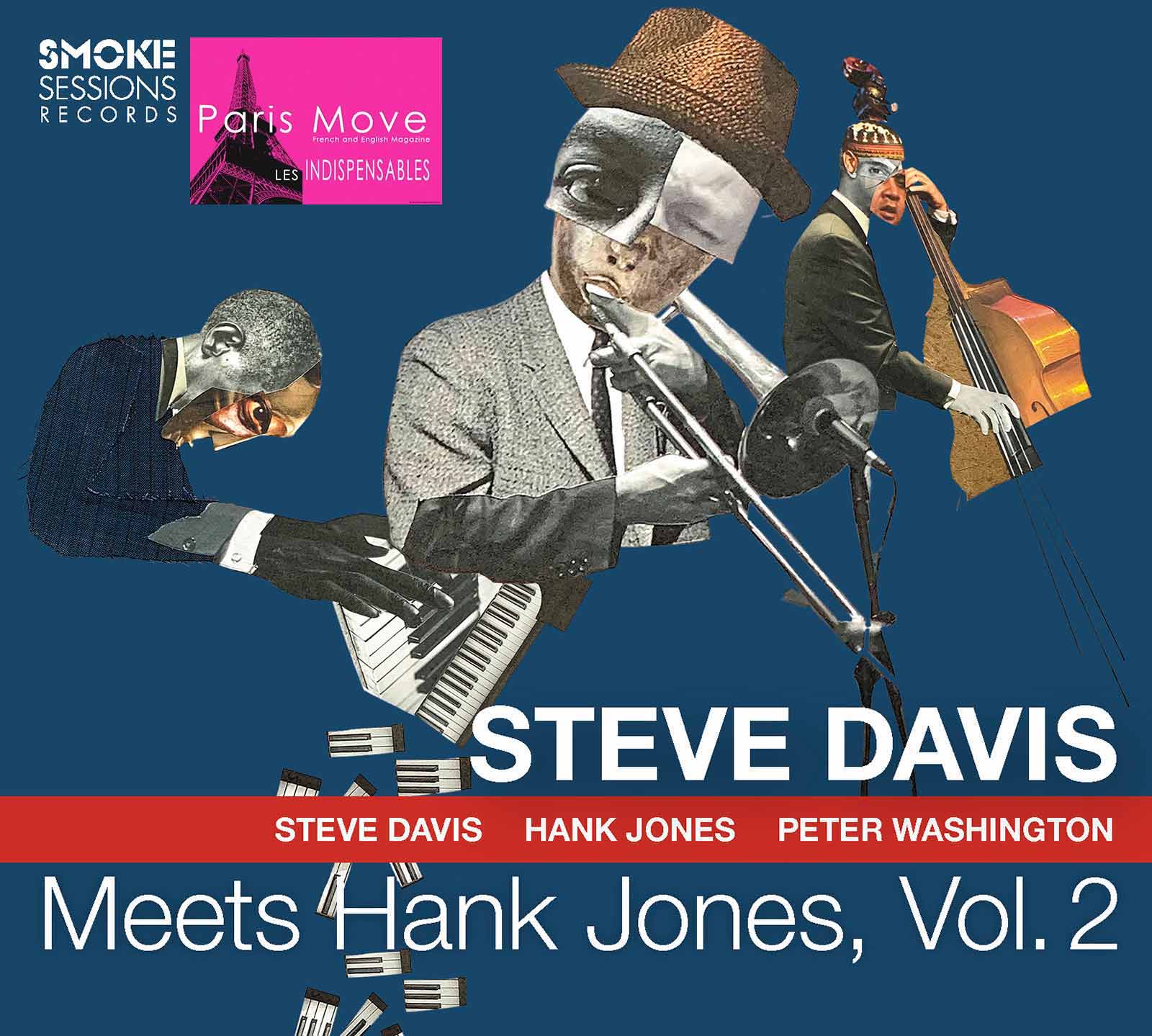
Summary: A historic 2008 session with Hank Jones, Steve Davis and Peter Washington finally emerges, revealing remarkable chemistry, swing and late career brilliance.
Steve Davis Meets Hank Jones, Volume 2: A Lost Jazz Session Finally Released
Some albums arrive with a story so extraordinary that the music seems to carry that story with it. Steve Davis Meets Hank Jones; Volume 2 is one of those rare recordings. When trombonist Steve Davis, bassist Peter Washington and the legendary pianist Hank Jones walked into a studio in June 2008, they could hardly have known that the music they were about to make would spend the next 15 years waiting for an audience. Nor could they have imagined that the session would eventually become a poignant document of one of the final chapters in Jones’s extraordinary life.
The circumstances alone make the recording remarkable. Jones was just a month away from his 90th birthday and only about a year and a half removed from quadruple bypass surgery. Less than two years after the session, he would be dead. Yet there is remarkably little sense of fragility in his playing. Quite the opposite. Jones sounds fully engaged, curious and completely at home, producing the kind of elegant, airborne lines that had defined his playing for decades. His touch remains extraordinarily light, but beneath that delicacy is an immense rhythmic authority. Notes seem to float into the room, perfectly placed, as if Jones had all the time in the world to decide where they belonged.
It is impossible to hear this recording without thinking about the extraordinary career behind it. Jones had already established himself as one of the great pianists of his generation long before this session, and his résumé reads like a condensed history of American jazz. Between 1947 and 1952, he worked with Ella Fitzgerald, one of the most important singers of the 20th century, who recognized early on the exceptional musicianship of the young pianist. Over the course of his career, Jones would go on to work with an astonishing range of artists while developing a musical personality that was unmistakably his own. His playing was never about showing how much he knew. It was about knowing exactly what the music needed.
That quality is everywhere on Volume 2, but the album is by no means a vehicle for Hank Jones alone. Steve Davis and Peter Washington are formidable musicians in their own right, and the remarkable thing about the session is how naturally the three voices fit together. There is a sense of mutual respect throughout the recording, but also something more spontaneous and joyful. They listen to one another constantly, anticipate one another and seem genuinely interested in discovering where the music might lead.
The absence of a drummer is particularly striking. In a trio built around piano, trombone and bass, the lack of percussion might easily have created a hole in the rhythm section. Instead, Peter Washington fills that space with extraordinary confidence. His bass does far more than provide a foundation. He supplies propulsion, punctuation and rhythmic direction, often making the music feel as though it is moving on several levels at once. The result is not a trio missing a drummer but a deliberately different musical configuration, one that gives the performances an unusual openness and intimacy.
That sense of conversation is established almost immediately. The vigorous unison opening of Charlie Parker’s “Au Privave” announces an album that is considerably more animated than its predecessor. Where Steve Davis Meets Hank Jones, Volume 1, released in 2023, leaned heavily toward ballads, Volume 2 is brighter, more energetic and more openly celebratory. These three musicians sound as though they are having fun, and that enjoyment is contagious. The playing is sophisticated without ever becoming academic, virtuosic without becoming self-conscious.
The release of the first volume finally gave listeners an opportunity to hear what had been sitting unheard for years, and the response was enthusiastic. The Times of London called it an unexpected treat and described it as one of the finest recordings within an exceptional career. Now, nearly two decades after the original session, Smoke Sessions Records is preparing to release the second installment on Oct. 16, 2026. The wait has been extraordinarily long, but listening to this music makes the delay feel almost secondary. What matters is that the recording survived and that it has finally found its way into the world.
Among the album’s many pleasures is the way the three musicians continually push and encourage one another. On the Rodgers and Hart standard “I Could Write a Book,” particularly in the lively alternate take, the performance has the relaxed confidence of musicians who have nothing left to prove. They are not competing for space. They are creating it for one another. That distinction is important, because it gives the album its warmth. Even at its most technically impressive, the music never loses its human quality.
“Nardis,” the Miles Davis composition, provides another revealing moment. Hank Jones approaches the piece with a sharpness that can be almost ferocious, demonstrating that even at this late stage of his life there was nothing diminished about his musical imagination. Yet Steve Davis may deliver the album’s most unexpected surprise here. His trombone solo takes the familiar composition somewhere distinctly personal. Rather than simply following the established vocabulary associated with the tune, Davis finds his own route through it, giving “Nardis” a fresh identity and demonstrating just how much expressive range the trombone can bring to this repertoire.
What makes the album particularly compelling, however, is the presence of Hank Jones himself. There are musicians whose personalities dominate a recording, and there are musicians whose presence changes the way everyone else plays. Jones belonged firmly to the second category. He seems to pull the other musicians into his rhythmic world, not through force but through an almost effortless authority. Davis and Washington respond to him instinctively, and the resulting music has the feeling of three musicians operating within a single conversation.
There is also something deeply affecting about knowing what happened after the session. For years, Steve Davis had no guarantee that anyone would ever hear this music. For a variety of reasons, he feared that the remarkable recording might remain locked away indefinitely. He kept a copy of the session on CD in his car for more than a decade, carrying it with him on drives between Hartford and New York. The recording became a private reminder of a collaboration he clearly regarded as something special, even when there was no reason to believe it would ever become a commercial release.
Davis has recalled taking the disc out of his glove compartment during those drives and listening to the music, sometimes wondering whether he might eventually be the only person who ever heard it. There is something almost cinematic about the image: an extraordinary recording by a legendary pianist sitting quietly in the glove compartment of a car, travelling up and down the Connecticut and New York roads while the rest of the world remained unaware of what was on the disc.
That is why the eventual release feels like more than an archival exercise. It is a small act of musical preservation. Davis did not simply hold on to a recording. He held on to a moment, and Smoke Sessions Records has now given that moment a second life. The music that might have disappeared into private memory can finally be heard by anyone willing to spend time with it.
And what music it is. Volume 2 reveals three musicians who, despite their very different backgrounds and generations, seem to find an immediate common language. Davis brings a warm, expressive and highly individual voice to the trombone. Washington provides a bass line that can be both muscular and remarkably subtle. Jones, meanwhile, moves through the music with the authority of someone who had spent a lifetime learning how to make every note count.
There is no sense here of a musician simply looking back on a glorious career. Hank Jones sounds present. He listens, responds and takes risks. That is perhaps the most remarkable aspect of the recording. Knowing that these were among his final years does not make the music sound nostalgic. It makes it sound alive.
Ultimately, Steve Davis Meets Hank Jones, Volume 2 is both a superb jazz album and an extraordinary piece of musical history. Its importance comes not only from Hank Jones’s presence, but from the chemistry among all three musicians and from the improbable journey the recording took before reaching the public. A session recorded in 2008, a CD forgotten in a car for more than a decade, a first volume released in 2023 and now, finally, a second chapter arriving in October 2026. It is the kind of story that reminds us how much music can survive against the odds.
For listeners, the happy ending is wonderfully simple. The music is no longer hidden. The wait is over. In October, everyone will finally have the opportunity to hear what Steve Davis, Peter Washington and Hank Jones created together on that remarkable day in 2008. And hearing Hank Jones plays with such freedom, elegance and vitality so close to the end of his life makes the album feel like something more than a rediscovered recording. It feels like a final conversation from one of jazz’s great musicians, preserved just long enough for the rest of us to join in.
Thierry De Clemensat
Member at Jazz Journalists Association
USA correspondent for Paris-Move and ABS magazine
Editor in chief – Bayou Blue Radio, Bayou Blue News
PARIS-MOVE, August 28th, 2026
Follow PARIS-MOVE on X
::::::::::::::::::::::::
To buy this album (october 16)
Hank Jones on Concord’s website
Musicians :
Steve Davis, trombone
Hank Jones, piano
Peter Washington, double bass
Track Listing :
- Au Privave (Charlie Parker) 3:44
- My Heart Stood Still (Richard Rodgers / Lorenz Hart) 5:10
- I Could Write a Book (Richard Rodgers / Lorenz Hart) 4:34
- Nardis (Miles Davis) 5:27
- Invitation (Bronisław Kaper / Paul Francis Webster) 5:50
- The Nearness of You (Carl T. Fischer / Frankie Laine) 5:50
- Nardis (alternate take) (Miles Davis) 5:19
- I Could Write a Book (alternate take) (Richard Rodgers / Lorenz Hart) 4:38