| Jazz |
Stan Getz and João Gilberto: The Enduring Beauty of a Musical Encounter
«At San Francisco’s Keystone Korner in 1976, two musicians who had helped change the course of modern music found their way back into one another’s orbit. Nearly half a century later, these recordings bring us close to an encounter whose quiet intensity has lost none of its power.»
There are musicians I never quite leave behind. I may go for months without playing one of their records, sometimes even longer, but when I return to them, the connection is still there. It is not simply nostalgia, and it has very little to do with the comfort of familiar music. Their playing continues to reveal something. A phrase I thought I knew suddenly takes on a different meaning; a note, a pause, the way a melody is allowed to breathe can stop me in my tracks. These musicians become part of our inner landscape. We carry them with us, and we keep discovering them. Stan Getz has always been one of those musicians for me. His tenor saxophone has a sound I would recognize almost anywhere: warm, supple, unmistakably lyrical, yet never merely decorative. What has always drawn me to his playing is the apparent effortlessness with which he could make a melody speak. He never seemed to need to force a phrase into significance. He could let it unfold, give it room, and somehow make the simplest line feel inevitable. That ease, of course, was the product of extraordinary control. Beneath the beauty was a musician who knew exactly what he was doing.
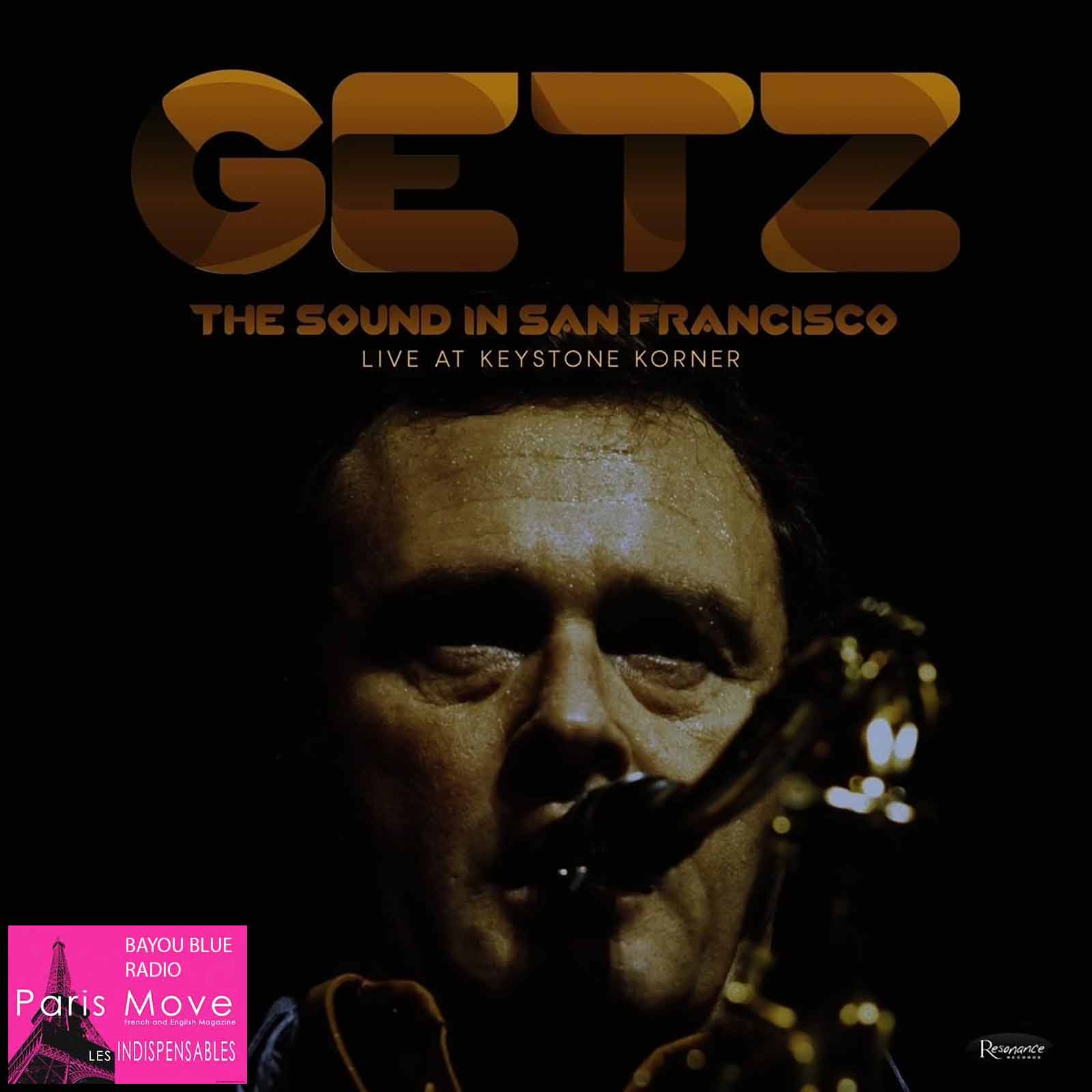
The December 4, 2026, release by Resonance Records of *The Sound in San Francisco: Live at Keystone Korner* gives us a particularly welcome reason to return to Getz. Recorded in May 1976 at the celebrated San Francisco club, these performances feature the saxophonist and his quartet, joined for part of the engagement by Brazilian guitarist and singer João Gilberto. I find the release especially compelling because it offers more than another glimpse of Getz at work. It brings us back to a musical relationship that helped shape the international history of jazz and bossa nova, but that was never documented as extensively as its importance might suggest.
The recordings that brought Getz and Gilberto together are, of course, part of the history of modern music. Their collaboration helped carry bossa nova far beyond Brazil and introduced an international audience to a new way of thinking about rhythm, melody and the voice. Yet the recorded history of their encounters is relatively limited. That makes these performances more than a welcome addition to a celebrated discography. They allow us to hear the two musicians together again, not as figures frozen in the mythology of an earlier success, but as artists still exploring a language they had helped create. João Gilberto has always fascinated me for almost the opposite reason that Getz does. Where Getz can seem to open a melody outward, Gilberto draws us inward. His guitar, his phrasing and that extraordinary, almost whispered voice establish a relationship with time that is entirely his own. Nothing is pushed. Nothing is wasted. He seems to understand that a song does not become more expressive by being made louder or more elaborate. Sometimes the smallest adjustment is enough to change everything. It is tempting to describe Gilberto’s music as understated, but that word can be misleading. His restraint is not a lack of expression; it is the expression itself. Every rhythmic displacement, every delicate shift in emphasis, every space between vocal phrases has been considered. The apparent simplicity is deceptive. Listen closely to the guitar and you hear an intricate rhythmic architecture, one that can make the music feel at once relaxed and astonishingly precise. His voice and instrument do not behave like singer and accompanist. They move together, as if they were two aspects of a single musical thought.
That is what made Gilberto such a revolutionary figure in Brazilian music. He did not need to reinvent the song itself. He changed the way it could be inhabited. He altered the relationship between melody and rhythm, between voice and guitar, between what is played and what is left unsaid. In his hands, silence is not an absence. It is part of the music’s grammar. When Getz enters that world, the pleasure is immediate, but the deeper interest lies in the dialogue. I hear no attempt on his part to impose his own musical identity on Gilberto’s. Getz had a strong personality, a distinctive sound and an enormous artistic presence, yet he understood the value of listening. His saxophone does not crowd the guitar or compete with the voice. It finds a place alongside them, sometimes answering, sometimes extending a melodic idea, sometimes simply allowing the music to settle. The two musicians seem to understand instinctively how much space the other needs.
That mutual understanding is one of the reasons I find these recordings so moving. There are moments when the delicacy of the playing is almost disarming. The music can send a shiver through me, not because it reaches for some grand emotional climax, but because it avoids doing so. The feeling is in the details: a phrase held just a little longer, a melodic turn that seems to arrive naturally, the quiet confidence of musicians who do not need to announce their mastery. Their communication is subtle, but never vague. It is a conversation between artists who know how to listen. I have always believed that the greatest musicians are not necessarily the ones who give us the most notes, the most spectacular solos or the most obvious displays of virtuosity. Sometimes the real measure of a musician is the ability to make us hear something in a melody that we had overlooked for years. Getz and Gilberto share that rare quality. They make musical intelligence feel effortless and emotion feel entirely unforced. That combination is difficult to achieve, and even more difficult to sustain over the course of a live performance.
The quartet around Getz is an essential part of the story. Pianist Joanne Brackeen, bassist Clint Houston and drummer Billy Hart provide an exceptionally responsive musical setting. Their playing gives Getz room to move while maintaining the rhythmic and harmonic coherence that makes the performances so engaging. This is not a group simply accompanying a star. It is an ensemble listening and responding in real time. Brackeen’s piano, Houston’s bass and Hart’s drums give the music its movement and balance without weighing it down. The result is a kind of openness in which every musician can contribute without disturbing the larger conversation.
The historical background adds another layer to the experience. Twelve years earlier, the partnership between Getz and Gilberto had helped bring bossa nova to an international audience. Gilberto had already transformed Brazilian popular music, but the recordings he made with Getz gave that musical language a reach it might otherwise have taken much longer to achieve. Their collaboration became one of those rare moments when two distinct traditions meet and produce something that feels entirely natural, even inevitable.The success of bossa nova abroad, however, came with a price. Over time, its international image was often reduced to a familiar collection of associations: beaches, sunshine, cocktails, languorous afternoons and an idealized version of Brazilian sophistication. There is nothing wrong with pleasure, of course, and bossa nova has always possessed an extraordinary gift for making pleasure sound intelligent. But that familiar image can obscure the musical invention at its heart. Bossa nova is not simply a pleasant atmosphere. It is a highly developed musical language, built on subtle rhythmic relationships, harmonic sophistication and a radically different understanding of phrasing.
Gilberto knew how to make rhythm felt without making it heavy. He understood that a voice could communicate intimacy without raising its volume, and that a melody could become more expressive when it was stripped of unnecessary ornament. Getz, whose saxophone already had an unusual vocal quality, recognized the possibilities of this approach. He did not treat bossa nova as an exotic addition to his repertoire. He engaged with it as a musician, finding common ground while preserving his own identity. That distinction matters. The best musical collaborations do not erase differences; they make those differences productive. The historical essays by James Gavin accompanying this release place the Keystone Korner performances within the context of Getz and Gilberto’s work together. The May 1976 engagement took place as the two musicians were promoting *The Best of Two Worlds*, their reunion album. For Todd Barkan, owner of the Keystone Korner, bringing them to the club represented a considerable financial commitment. According to information cited by Gavin, Barkan paid roughly three times his usual weekly payroll, which ranged from $2,500 to $3,000. It is a striking figure, and one that helps convey just how much he wanted these musicians on his stage. I find that detail revealing. We sometimes talk about great performances as if they simply happen, as if the music exists independently of the circumstances that make it possible. But behind a memorable concert there is often someone willing to take a risk: a club owner, a promoter, a producer, an independent label or a musician prepared to make a commitment without knowing what the future will bring. Barkan’s decision was not simply a business calculation. It was also a statement about the importance of giving serious musicians a place to play and an audience the chance to hear them at close range.
The Keystone Korner was one of those clubs that mattered because of the experience it offered. The intimacy of the room placed musicians and listeners in close proximity. Music could unfold without the distance and formalities of a large concert hall. In an era increasingly shaped by large venues and elaborate productions, clubs like the Keystone Korner preserved something essential about jazz: the sense that a performance is an event shared by the people in the room, and that the music may take a direction no one could have predicted in advance.
Drummer Billy Hart’s recollections bring that atmosphere into sharper focus. He remembers the engagement as a particularly enjoyable week, almost festive in spirit. His account suggests a room filled with excitement and respect, where the musicians were aware of the stature of the people sharing the stage. There was pleasure in the occasion, but also an understanding that something special was happening. That combination is part of what I find so appealing about the story. The concerts were not presented as solemn monuments to musical greatness. They were live performances in a club, with all the spontaneity and human warmth that implies.
One can imagine the musicians gathering before a set, the audience settling in, the room becoming quiet as the first notes began. One can picture the successive performances, the exchanges between the players and the conversations that may have continued after the music ended. But the value of these recordings is that we do not have to rely entirely on imagination. We can listen. We can hear the music as it happened, with its natural fluctuations, its moments of concentration and its unexpected turns. The tapes bring us closer to those evenings than any written recollection ever could. It is remarkable that the recordings survived at all. Todd Barkan preserved the original tapes in the Keystone Korner archives, where they remained for decades before being restored and released. An initial restoration and mastering project undertaken in 2016 by George Klabin and Fran Gala brought the performances to listeners. The new edition gives the material a more complete context by bringing together two collections that had previously appeared separately. This is where the work of Resonance Records deserves particular recognition. The label has made a significant contribution to jazz history by locating, documenting and releasing recordings that might otherwise have remained inaccessible. Its work is not simply a matter of finding forgotten tapes and putting them on the market. At its best, archival production restores the context around the music: who played, where they played, what was happening in their careers and why the performance deserves to be heard. It gives listeners a chance to reconsider an artist’s work beyond the familiar albums and established milestones.
Produced by Todd Barkan in collaboration with Zev Feldman, a co-producer and one of the leading figures in the rediscovery of jazz archives, the project brings together two releases originally issued in 2016: *Getz/Gilberto ’76*, featuring the performances with João Gilberto, and *Moments in Time*, devoted to performances by the Stan Getz Quartet. Bringing them together now seems entirely appropriate. The two collections belong to the same musical story, documenting different sides of the engagement and allowing us to hear the continuity between the quartet performances and the moments shared with Gilberto. What once appeared as separate archival projects can now be appreciated as parts of a larger whole. The set includes two CDs and an extensively illustrated booklet featuring rare photographs by Tom Copi, taken during the Keystone Korner engagement, along with essays by James Gavin and Ted Panken. Interviews with Joanne Brackeen and Billy Hart, as well as contributions from the producers and members of the Getz family, complete the documentation. This material matters because it gives the listener more than a collection of performances. It helps restore the people, the place and the circumstances surrounding the music. The photographs, recollections and historical notes are not accessories to the recordings; they are part of the effort to bring an almost forgotten moment back into view.
Zev Feldman has recalled that when he and George Klabin first listened to the tapes, they quickly understood that they had found exceptional material that deserved to be released. The two 2016 albums had already brought some of these performances to light. Their reunion in the new edition allows the engagement to be heard with greater continuity and gives the listener a fuller sense of what happened at the club.
The fact that *Moments in Time* has never previously appeared on vinyl makes the new edition particularly appealing. Vinyl copies of *Getz/Gilberto ’76*, meanwhile, have become highly sought-after among collectors. The attention paid to sound quality is equally important. The tapes were transferred from the original sources, then restored and mastered. Bernie Grundman’s work on the vinyl edition adds another stage of care to a project in which the sound itself is central.
For me, the question of restoration is not a minor technical matter. A good archival release should not try to make the past sound artificially modern, or polish away the very qualities that give an old recording its character. The aim should be to preserve the balance between the instruments, the texture of the performance and the atmosphere of the room. The music should come forward, not the technology used to restore it. When that balance is respected, the listener can forget the age of the tapes and concentrate on what matters: the musicians and the music.
There is something deeply moving about the survival of these recordings. Nearly half a century has passed since the concerts took place. The musicians have gone their separate ways, the club belongs to another chapter of San Francisco’s cultural history, and the world in which these performances were made has changed beyond recognition. Yet the tapes remained. Their survival reminds us that jazz history is not made only by the albums that became classics or the concerts that were immediately recognized as important. It is also made by performances recorded almost incidentally, by people who had the foresight to keep the tapes, and by the patient work of those who later understand what they have preserved. Still, I would not want the historical importance of this release to overshadow the most immediate reason to hear it. These recordings should first be experienced as music. We can write about Getz’s career, his collaborations and his influence on generations of saxophonists. We can discuss Gilberto’s place in Brazilian culture and the international impact of bossa nova. All of that helps explain why the concerts matter. But eventually the words have to stop. The music has to take over.
When I listen to Getz, I am always struck by the way his sound seems to carry a voice within it. His saxophone can be lyrical without becoming sentimental, expressive without becoming demonstrative. He has a remarkable ability to move away from a melody, explore its possibilities and return to it without making the journey feel calculated. The line seems to discover itself as it goes along. That is one of the qualities I value most in his playing: the sense that technique has become so deeply absorbed that it no longer calls attention to itself. Gilberto offers a different kind of revelation. His presence can seem almost elusive, but the longer I listen, the more I hear the extraordinary authority behind his apparent modesty. His guitar is never simply keeping time. It shapes the music from within, giving it its pulse and direction. His voice does not seek to dominate the room. It invites us to move closer. There is a lesson in that approach, though I would hesitate to turn it into a formula. Gilberto’s restraint is not something that can be imitated simply by playing quietly. It comes from an understanding of the music so complete that nothing unnecessary needs to be added.
This is where the two musicians meet most convincingly. Getz’s openness and Gilberto’s concentration might seem like contrasting temperaments, but they complement one another beautifully. One gives the melody room to travel; the other gives it a place to rest. Their musical identities remain distinct, yet neither one gets in the way of the other. The result is not a compromise. It is a genuine meeting. How, then, should we measure their legacy? By the number of musicians who acknowledge their influence, by the albums that remain in circulation, by the compositions that have become standards? Those are useful measures, but they do not tell the whole story. Their influence can also be heard in a way of approaching music: in the refusal to overstate, in the attention given to phrasing and breathing, in the belief that emotion does not need to announce itself with grand gestures. They changed not only what musicians played, but how they listened.Some records teach us something. Others help us understand a particular period. Some bring back a memory we thought we had lost. A few manage to do all three. *The Sound in San Francisco* belongs to that last category. It allows us to hear two major musicians in a specific historical setting, but it also makes the encounter feel immediate. The performances do not sit behind glass as museum pieces. They invite us in. They remind us that jazz is a music of transmission, of dialogue and of individual freedom made possible by the ability to listen to someone else.
What touches me most about this release is that it does not simply transport us back to an era that might be easy to idealize. It gives us the chance to hear Getz and Gilberto as working musicians, still curious, still responsive, still capable of surprising one another. Their shared history is not reduced to a repetition of past successes. What we hear is a living relationship, renewed in the moment of performance. That, to me, is far more compelling than nostalgia.
Perhaps this is where the enduring strength of bossa nova lies. More than half a century after it first reached a worldwide audience, it retains a freshness that has little to do with fashion. Its language remains compelling because it is built on precision, subtlety and a particular relationship between melancholy and lightness. It does not attempt to hide the fragility of life behind displays of virtuosity. It acknowledges that fragility and gives it a form. There is something profoundly human in that balance.
But bossa nova should not be protected from the present by turning it into a museum piece. Its vitality depends on musicians who understand its language well enough to make it speak again. Without that understanding, it can become a collection of familiar gestures, a pleasant background sound remembered for its softness rather than its invention. Gilberto’s playing reminds us of the depth and rigor beneath the surface. Getz’s contribution shows how that language can enter into dialogue with another musical tradition without losing its identity. Their encounter is not simply a successful crossover. It is an example of what can happen when musicians approach one another with curiosity and respect. These recordings also make me think about the way we listen today. Music is everywhere, available almost instantly, but availability is not the same as attention. Albums are often broken into individual tracks, and listening can become another activity carried out in the background while something else occupies our minds. There is nothing inherently wrong with that, but performances like these remind me of the pleasure of giving music time. To settle into a set, follow the movement of a theme, notice how one musician responds to another, and allow a performance to unfold at its own pace. The music of Getz and Gilberto does not demand attention through force or spectacle. It rewards attention through detail. That is a different kind of invitation, and one I find increasingly valuable.
‘The Sound in San Francisco’ is therefore much more than a long-awaited archival release. It is a testament to the endurance of a musical dialogue and to the ability of two artists to cross aesthetic and geographical boundaries without surrendering their identities. It also gives proper recognition to the musicians of Getz’s quartet, whose playing provides the performances with their remarkable coherence and freedom. Above all, it offers a rare opportunity to hear João Gilberto onstage with Stan Getz in a relationship that, despite its relatively brief recorded history, remains one of the great encounters between jazz and Brazilian music. Some artists stay with us because their work reaches beyond the period in which it was created. They change the way we listen. They teach us to recognize the importance of silence, the expressive power of a single note and the extraordinary possibilities contained in a simple melody. Stan Getz and João Gilberto belong to that family. Their music continues to speak without asking to be explained or defended. We return to it because it still has something to give us. That is ultimately what I take away from these recordings. They do not merely preserve the sound of a week in San Francisco in May 1976. They bring back a way of making music founded on listening, trust and the freedom to leave space for another musician. They remind us that great music does not grow old simply because time passes. It travels with us, changes as we change, and can still surprise us even when we think we know it by heart.
Perhaps that is why bossa nova continues to move me so deeply. At its best, it does not chase the spirit of the moment. It finds a form of expression honest and precise enough to outlive it. In these recordings from the Keystone Korner, Stan Getz and João Gilberto offer a beautiful reminder of that truth. Their music is intimate without being fragile, sophisticated without being distant, and profoundly human without ever needing to raise its voice. I cannot think of a better reason to listen again.
Thierry De Clemensat
Member at Jazz Journalists Association
USA correspondent for Paris-Move and ABS magazine
Editor in chief – Bayou Blue Radio, Bayou Blue News
PARIS-MOVE, November 23rd, 2026
Follow PARIS-MOVE on X
::::::::::::::::::::::::
Musicians :
Stan Getz – tenor saxophone
João Gilberto – guitar and vocals (Tracks 1-13/Disc One)
Joanne Brackeen – piano
Clint Houston – bass
Billy Hart – drums
CD:
DISC ONE
1 Spoken Intro By Stan Getz 1:07
2 É Preciso Perdoar 5:50
3 Aguas De Março 5:46
4 Retrato Em Branco E Preto 4:47
5 Samba Da Minha Terra 3:20
6 Chega De Saudade 3:42
7 Rosa Morena 4:25
8 Eu Vim Da Bahia 4:11
9 João Marcelo 3:20
10 Doralice 3:47
11 Morena Boca De Ouro 3:34
12 Um Abraço No Bonfá 4:38
13 É Preciso Perdoar (Encore) 6:29
DISC TWO
1 Summer Night 9:18
2 O Grande Amore 6:50
3 Infant Eyes 7:50
4 The Cry of the Wild Goose 8:31
5 Peace 5:09
6 Prelude To A Kiss 5:38
7 Morning Star 8:58
8 Con Alma 12:22
LP :
SIDE A (20:50)
1. Spoken Intro By Stan Getz (1:07)
2. É Preciso Perdoar (5:50)
3. Aguas De Março (5:46)
4. Retrato Em Branco E Preto (4:47)
5. Samba Da Minha Terra (3:20)
SIDE B (19:25)
1. Chega De Saudade (3:42)
2. Rosa Morena (4:25)
3. Eu Vim Da Bahia (4:11)
4. João Marcelo (3:20)
5. Doralice (3:47)
SIDE C (14:41)
1. Morena Boca De Ouro (3:34)
2. Um Abraço No Bonfá (4:38)
3. É Preciso Perdoar (Encore) (6:29)
SIDE D (16:08)
1. Summer Night (9:18)
2. O Grande Amore (6:50)
SIDE E (21:30)
1. Infant Eyes (7:50)
2. The Cry of the Wild Goose (8:31)
3. Peace (5:09)
SIDE F (26:58)
1. Prelude To A Kiss (5:38)
2. Morning Star (8:58)
3. Con Alma (12:22)