
| Jazz |
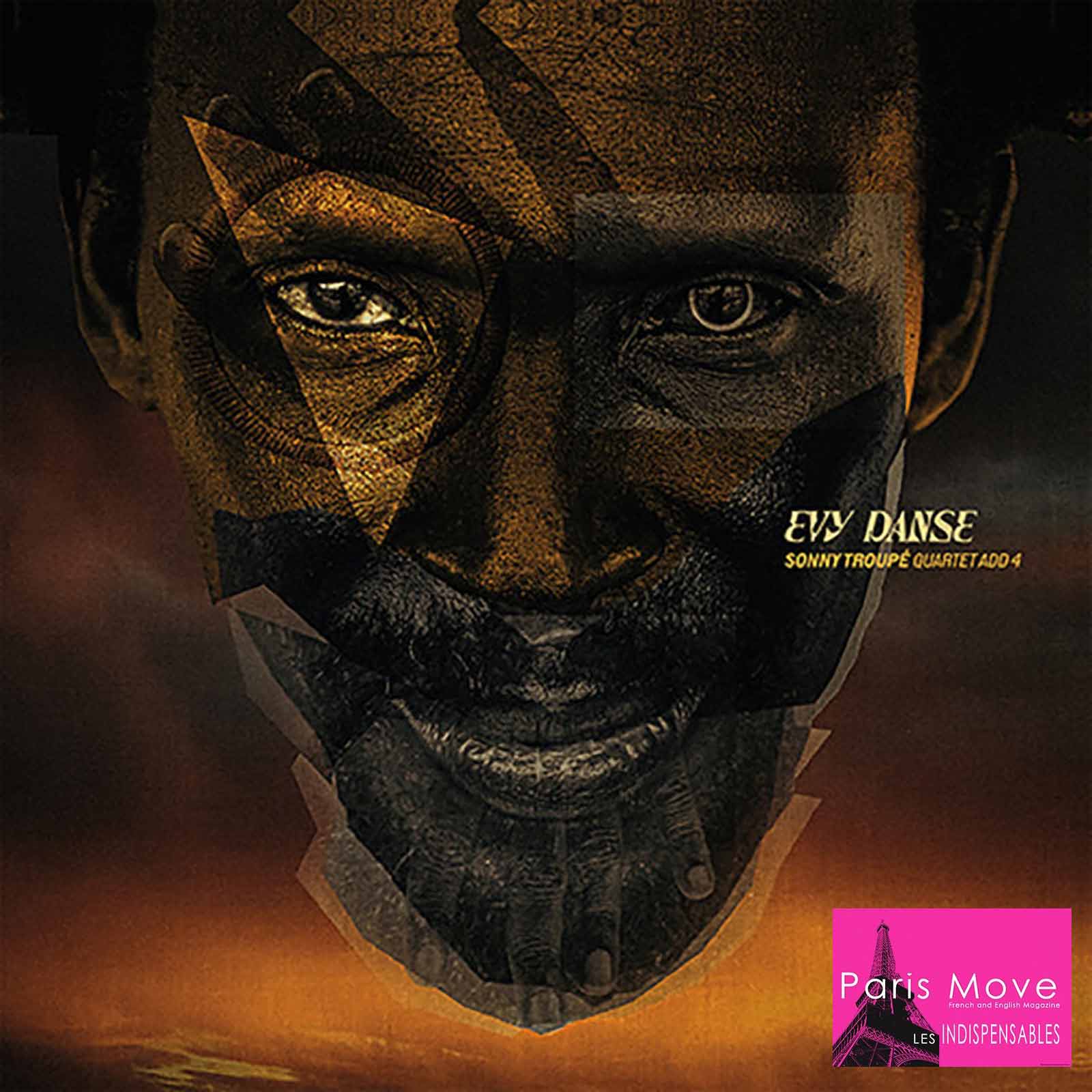
Summary: Sonny Troupé, Guadeloupe-born percussionist and son of jazz legend Georges Troupé, blends Caribbean gwo ka rhythms with European classical training in his most personal album yet, an expressive, politically resonant jazz journey that celebrates tradition, culture, and human connection.
Sonny Troupé: The Heartbeat of a Modern Caribbean Jazz
In a quiet Parisian studio, the pulse begins. Not with a piano or a horn, but with hands on a drum, a heartbeat, steady and insistent, like the rhythm of an island far across the Atlantic. Sonny Troupé, a percussionist from Guadeloupe, sits poised, eyes closed, summoning centuries of music into a single measure. “It’s about people who love each other,” he says, voice low but full of conviction. “The Quartet is first and foremost a story of moun ki enmé yo, people bound by love, respect, and a shared history.”
Guadeloupe, one of France’s so-called “Overseas Territories,” exists in a liminal space, geographically Caribbean, politically French, economically somewhere in between. To call it modestly “overseas” is to veil a colonial past that still shapes lives and culture. Yet from this liminality comes a wellspring of creativity. Sonny Troupé’s music, like that of countless musicians from these islands, carries both the weight of history and the exuberance of survival.
The percussionist’s latest album, his most personal to date, vibrates with this duality. It carries a political resonance that is deliberate yet unshowy, a subtle insistence that culture and resistance are inseparable. Born into a family of musicians, his father, Georges Troupé, is a saxophonist revered as a Guadeloupean national hero, Sonny was steeped in the rhythms and stories of gwo ka modèn, a modern evolution of traditional gwo ka drumming. “I grew up with the drums in my hands,” he recalls. “They spoke before I could speak. They asked questions: How do you honor the old ways while exploring new voices? How do you remain true to your ancestors while living in today’s world?”
On the opening track, “SAN MÉLÉ,” rhythm functions almost as breathing itself. Hands strike the drums with precision and abandon, drums that seem to contain both a heartbeat and a pulse of the island itself. The music conjures Aimé Césaire’s vision of Negritude: a proud acknowledgment of black identity, a recognition of history, culture, and destiny in the face of colonial oppression. It is music as resurrection, as revolt, as dignity in sound.
In Paris, Troupé collaborates with a constellation of musicians who share his vision. Pianist Grégory Privat, drummers Arnaud Dolmen and Olivier Juste, bassist Mike Armoogum, and later additions Jonathan Jurion and Andy Berald, all contribute to a conversation that stretches across oceans and generations. “Music is a dialogue,” Troupé says. “It carries the voices of my ancestors but also the questions of today. I want people to feel that heartbeat, to be part of this dialogue.”
Trained at the conservatory in Toulouse, Troupé inhabits both the European classical tradition and the Caribbean’s improvisational spirit. This duality manifests on the album in sections of rich harmonic complexity, subtly infused with tropical flourishes, the aroma of the islands distilled into notes, rhythms, and pauses. The result is a jazz both cerebral and deeply human, an intelligent, layered music that invites reflection while moving the body.
Critics and listeners may find echoes of Maria Schneider in Troupé’s compositions, not in origin, but in expressive depth, intellectual rigor, and the openness they offer each listener. For those who know his work, this album is a revelation: here, he digs to the very core of his musical and personal self, exposing beauty and vulnerability alike. It demands to be experienced differently, with patience and attention, revealing new layers with every listen.
Live, Troupé is equally magnetic. His drumsticks strike with precision, his body moving like a pendulum, guiding the quartet through passages of sheer technical brilliance and moments of fragile intimacy. Audiences do not need prior knowledge; the music speaks plainly, directly, like the heartbeat of an island that has known both oppression and joy.
Sonny Troupé’s work is more than music. It is culture, politics, history, and poetry, all wrapped into a form that is modern, intelligent, and deeply rooted. It reminds us that the rhythm of a people can be heard across oceans, and that love, love for tradition, for fellow musicians, for one’s own story, can be the most radical form of expression.
Thierry De Clemensat
Member at Jazz Journalists Association
USA correspondent for Paris-Move and ABS magazine
Editor in chief – Bayou Blue Radio, Bayou Blue News
PARIS-MOVE, March 21st 2026
Follow PARIS-MOVE on X

::::::::::::::::::::::::
Musicians :
Sonny Troupé Quartet
Jonathan Jurion – piano, rhodes, chœurs
Sonny Troupé – batterie, percussions, sampler, création samples, choeurs
Mike Armoogum – basse, chœurs
Andy Bérald – tambour ka, choeurs
Add 4
Violon 1 – Verena Ruiling Chen,
Violon 2 – Pauline Denize
Violon alto – Valentine Garilli
Violoncelle – Guillaume Latil
Artistes invités
Lucien Troupé – chant sur 5/ voix sur 2
Lou Tavano – chant sur 8
Laurent Lalsingué – steel pan sur 3
Christian Laviso – guitare sur 10
Raphaël Philibert – sax alto sur 2, 10
Track Listing :
LIMYÈ
Une Etoile Toujours Sera la bienvenue
AN BWA MATOUBA
DANS É VI
LÉÒNO
SANTIMAN DÉMÉLÉ
KA SANKA
SAN MÉLÉ
EVY DANSE
LEWÒZ N°3