| Jazz |
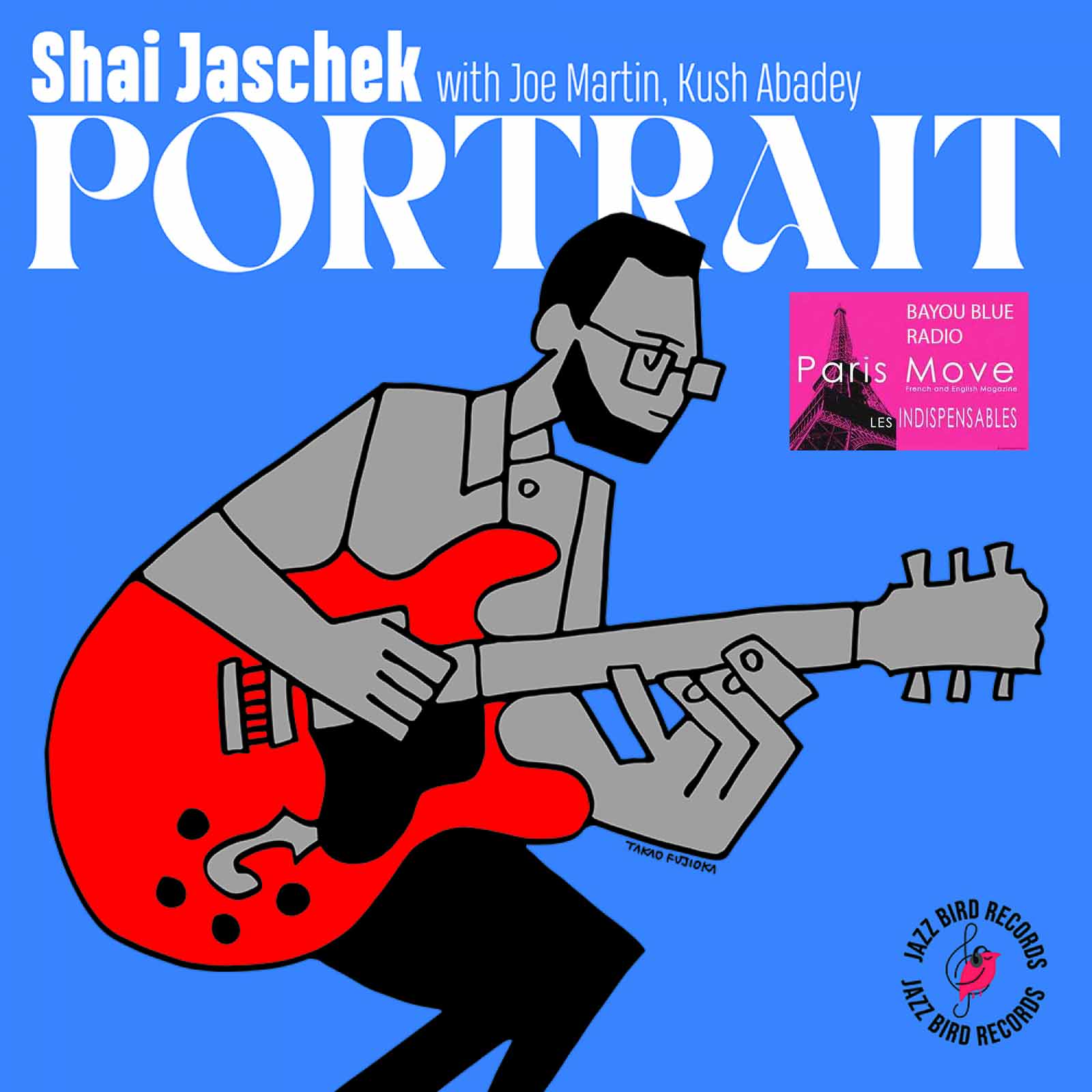
Shai Jaschek, Portrait: Nine Originals, One Trio, and a Genuine Must-Hear.
Portrait, the new record from New York-based guitarist Shai Jaschek, offers nine original compositions, zero safety nets, and a trio confident enough in the material to let it carry the whole album on its own. That bet pays off completely. This is a warm, melodically generous, quietly gripping record, and an easy must-hear for anyone who loves modern jazz guitar.
Shai Jaschek is a brilliant guitarist who writes to be remembered. Born and raised in Hod HaSharon, Israel, Jaschek trained at the Jazz Institute at the Rimon School of Music and the Jerusalem Academy of Music and Dance, where he found mentors in trumpeter Avishai Cohen, saxophonist Eli Degibri and composer Yoni Rechter, and played with both the Haifa Big Band and the Jerusalem Symphony Orchestra before forming his own band to tour clubs and festivals at home and abroad. A move to New York followed, along with a master’s degree from Queens College, where he studied under faculty including Antonio Hart, Mike Moreno, David Berkman and Michael Mossman, and a steady rise through rooms like Smalls and Mezzrow that eventually made him a fixture of the city’s jazz scene. His 2023 debut, First Fall, introduced his voice as a composer, and Portrait, his first release for the new Jazz Bird Records, is where that voice fully comes into focus.
What makes Jaschek’s approach distinctive isn’t technical flash, though there’s plenty of command on display, but a clear, almost stubborn commitment to melody. He’s said outright that jazz can sometimes feel like music built only for people who already know how to decode it, and that his own writing aims for something more direct: tunes people can actually sing back, remember, carry around with them. That’s exactly why Portrait contains zero standards. Every note on this record is his own, and the album is all the more personal for it.
But the record wouldn’t work nearly as well without bassist Joe Martin and drummer Kush Abadey, two musicians Jaschek had admired from afar for years before ever sharing a stage with them, first through records by Gilad Hekselman, Kurt Rosenwinkel and Aaron Goldberg, later in person around the New York scene. Martin and Abadey, already a well-oiled rhythm team after more than a decade of playing together, bring credentials that speak for themselves: Martin’s résumé includes Mark Turner, Chris Potter, Kurt Rosenwinkel and Gilad Hekselman; Abadey’s includes Wallace Roney, Melissa Aldana and Hekselman as well. Both clearly heard something in Jaschek’s writing worth signing up for, Martin has described it as warm and inviting for listener and player alike, rooted in real jazz-guitar tradition without ever feeling like pastiche, while Abadey picked up on echoes of Grant Green and Wes Montgomery filtered through more contemporary voices like Hekselman and Peter Bernstein.
That chemistry shows in the recording process itself: the trio cut all nine tunes at EastSide Sound in five or six hours, with barely a take needing a third try. Engineer Alon Benjamini has talked about simply trying to capture what the room actually sounded like and stay out of the musicians’ way, and that philosophy gives the album a wonderfully close, immediate feel, like you’re sitting a few feet from the bandstand rather than listening to a studio construction.
Portrait moves through a genuinely wide emotional range without ever losing its sense of cohesion. “Birmingham After Dark” opens things with a funky, shadow-draped groove that Jaschek has traced back to the mood of Peaky Blinders, a terrific curtain-raiser, full of slow-building tension and atmosphere. “When the Sun Came Out” turns toward release and calm, its title suggesting not a clean sunrise so much as that first crack of light breaking through cloud cover, with Jaschek easing his hollow-body tone from warm and clean toward a touch of overdrive and back again before the music ever risks overstatement.
“Two Chords Song” is a small masterclass in less-is-more: built from just B minor, C minor and four notes, it’s about as stripped-down as a tune can get, and yet it never once feels thin. “Stomping with Pitzi”, written at his wife’s request as a tribute to the couple’s dog and loosely nodding to “Stompin’ at the Savoy”, is pure, infectious joy, one of the record’s most purely fun moments. “May Flowers” takes its title from the old “April showers bring May flowers” saying and plays out that light-and-dark contrast beautifully, opening with a gorgeous bowed-bass introduction from Joe Martin that functions almost like its own miniature prelude before the tune proper even begins, and Martin gets a terrific, fully-formed bass solo later in the track that’s one of the album’s real highlights.
The album’s emotional core arrives in its closing pair. “How Much Longer,” anchored by a fantastic drum solo from Kush Abadey, and “Hymn for Peace” bring Portrait closest to the world outside the studio doors, two angles on violence, despair and hope that Jaschek has said connect directly, for him, to the ongoing situation between Gaza and Israel. “How Much Longer” asks exactly what its title suggests, “Hymn for Peace” reaches for something more hopeful, though Jaschek is careful to frame that hope as active rather than passive, a question about what people can actually do to resist violence and help build something better, not a retreat into easy comfort. It’s a bold, clearly personal way to close a record, and it gives Portrait real weight beyond its considerable musical pleasures.
Portrait arrived at Jazz Bird Records unsolicited, landing in founder Geoffrey Hoefer’s inbox from an artist he’d never heard of. Jazz Bird rarely picks up music that way, but Hoefer says he kept returning to the record in the weeks that followed, including putting it on again during an after-dinner walk from Jazz at Lincoln Center to Birdland, not because he was still deciding, but because he simply wanted to hear it again. He’s described the album’s rhythms and melodies as subtle yet absolutely thrilling, and singled out the trio’s decision to skip standards entirely as part of what makes the record work so well. There’s a real purity, he’s said, in nine originals that hang together this naturally as a complete album, with Martin and Abadey bringing the same passion and familiarity to Jaschek’s tunes that they might bring to a beloved standard.
Portrait succeeds because it never tries to be more than exactly what it is: a guitarist’s clearest, most personal statement yet, played by a trio with the chemistry and pedigree to serve that material perfectly. Jaschek has called the album a snapshot of who he is as both an artist and a person right now, and on the evidence here, that’s someone well worth paying close attention to. Warm, melodically generous, emotionally honest and beautifully played from first note to last, Portrait is an easy, enthusiastic must-hear.
Frankie Pfeiffer
Editor in chief – PARIS-MOVE
PARIS-MOVE, October 3rd, 2026
Follow PARIS-MOVE on X
:::::::::::::::::::::
To Buy this album (October 9, 2026)
Musicians :
Shai Jaschek – guitar
Joe Martin – bass
Kush Abadey – drums
Track Listing :
1. Birmingham After Dark
2. When the Sun Came Out
3. June 27th
4. How Much Longer
5. Two Chords Song
6. May Flowers
7. Stomping with Pitzi
8. Hymn for Peace
9. Poem
Recorded at EastSide Sound, New York
Engineered by Alon Benjamini