| World Jazz |
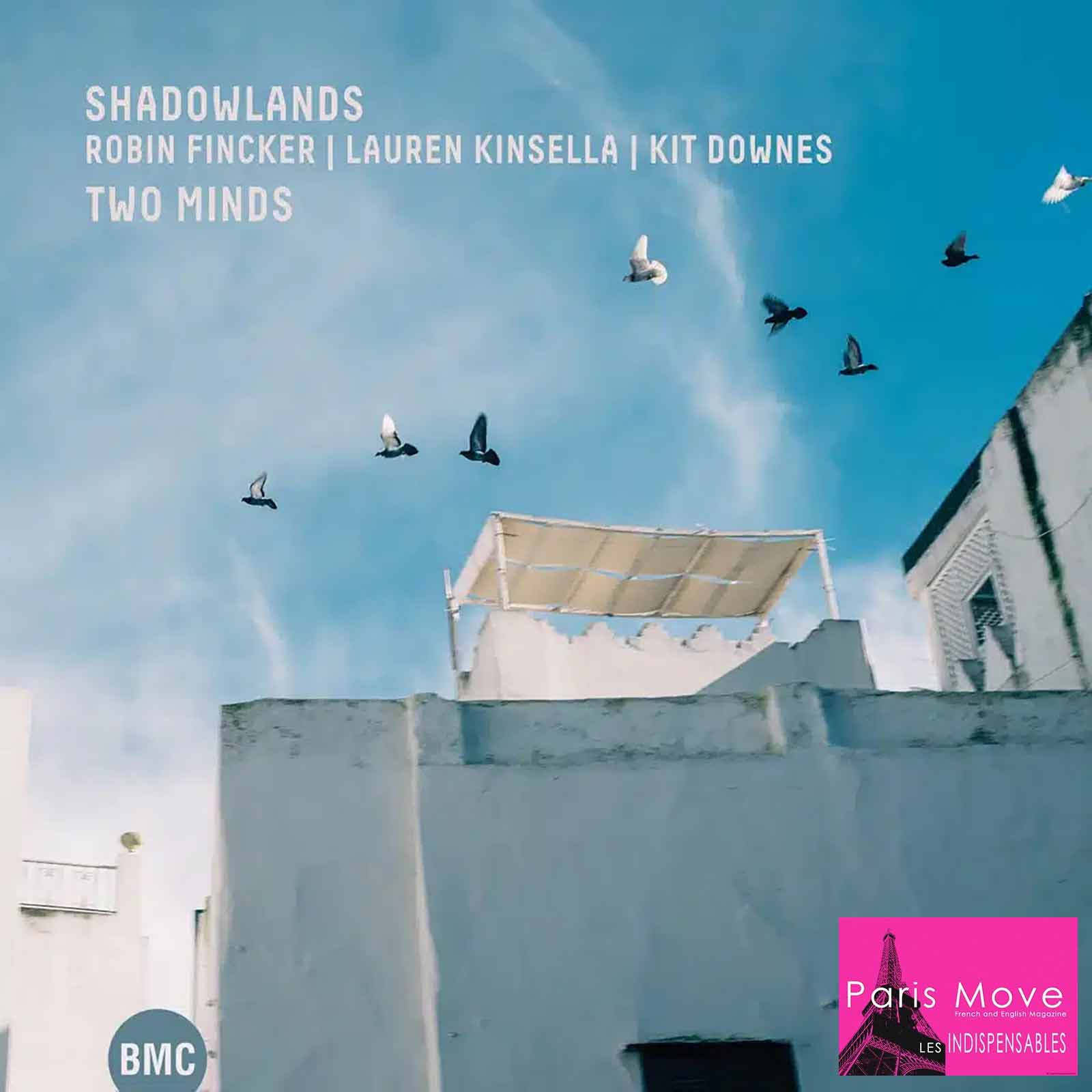
Summary : Two Minds by Shadowlands seamlessly blends Irish folk traditions, contemporary jazz and poetic storytelling. Led by Lauren Kinsella, Robin Fincker and Kit Downes, the album creates an immersive and emotionally rich musical landscape that celebrates cultural memory and artistic freedom.
Shadowlands’ Two Minds: Where Irish Tradition and Contemporary Jazz Meet in Remarkable Harmony
Outside the studio, a beautiful bird has built its nest at eye level, close enough to remind us that nature still insists on making itself heard. The summer sun is shining with such intensity that it seems determined to leave its mark on bare skin. Near the mixing desk, a fan hums steadily, like an aging cat too content, or perhaps too tired, to sharpen its claws anymore. I press the Play button on the CD player.
What emerges is a sound world deeply rooted in Irish culture. At times it feels unmistakably folk, at others unmistakably jazz. The lyrics unfold in a language that perhaps only an Irish listener can fully grasp, yet comprehension quickly becomes secondary. What stands before us is a work of rare significance, one in which meaning certainly matters, but where emotional experience ultimately takes precedence. This is music that touches the listener the way a gentle sea breeze brushes against the face at dawn, when only the distant cries of seagulls disturb the stillness of a daydream along the shore.
French saxophonist Robin Fincker and British pianist Kit Downes first collaborated more than two decades ago before their artistic paths carried them across different corners of Europe. Reunited in 2023 alongside Irish vocalist Lauren Kinsella, the trio gradually forged a shared musical language born from the intersection of traditional song, contemporary poetry and improvisation.
The central ambition here is not innovation for its own sake. Rather, it is the pursuit of beauty through language, landscape and cultural memory. The group’s first album, Ombre, introduced Shadowlands’ exploration of the conversation between past and present, illuminating forgotten corners of history and tradition. Two Minds feels less like a departure and more like a refinement of that vision. The trio’s shared vocabulary has evolved into something remarkably fluid, balancing freedom with striking clarity as it moves effortlessly between traditional Irish sean-nós singing, contemporary improvisation and original composition.
Within this space, an Emily Dickinson poem, a setting inspired by Maurice Ravel’s Sainte, and newly written material coexist naturally alongside centuries-old folk traditions. Dickinson’s presence is hardly surprising. Although celebrated primarily as a poet, her musical education shaped the rhythm and phrasing of her work, and traces of music seem to pulse beneath the surface of her verses.
Listeners are quickly drawn into Robin Fincker’s understated yet captivating approach. His saxophone rarely seeks the spotlight. Instead, it appears almost like an extension of the voice itself, punctuating words, creating textures, introducing reed effects, breaths and fragments of sound that blur the line between speech and melody. Alongside him, Kit Downes’ piano often feels dreamlike, suspended somewhere between memory and imagination. Jazz emerges gradually, often in places where one least expects to find it.
The sonic architecture of the album deserves particular attention. Downes frequently favors spacious harmonic landscapes over dense accompaniment, allowing silence to become as expressive as sound itself. Chords linger and dissolve before the listener can fully grasp them, creating a sense of perpetual motion beneath the music’s apparent calm. Fincker’s contributions often function less as solos than as subtle interventions, shaping the emotional direction of a piece through timbre and texture rather than virtuosity. The recording itself captures these nuances with remarkable clarity, preserving every breath, resonance and fleeting interaction. The result is an intimacy that places the listener inside the unfolding conversation rather than at a distance from it.
At the center of everything stands Lauren Kinsella’s voice, both powerful and delicate, serving as the gravitational force around which the trio’s constantly shifting textures revolve. Fincker’s saxophone and clarinet move through the pathways of light carved out by her singing, while at other moments they linger in the shadows, illuminating subtler emotional landscapes hidden beneath the surface.
There is something especially rewarding when substance eclipses form, when culture itself becomes the driving force of a work of art. It is even more compelling when different traditions meet and enrich one another. Only the most accomplished artists manage to transform what might appear obvious into something revelatory.
The achievement becomes even more impressive when one considers the breadth of experience each musician brings to the project. Robin Fincker’s discography stretches from London’s vibrant improvised music scene of the early 2000s to collaborations with artists such as Vincent Courtois and Daniel Erdmann. Kit Downes has built an international reputation through his acclaimed solo recordings for ECM and through ensemble projects including ENEMY and Deadeye. Lauren Kinsella’s own artistic journey moves seamlessly between folk, jazz and experimental music, notably through her work with the duo Snowpoet.
Among the album’s highlights, “Máire Ní Eidhin” perhaps offers the clearest demonstration of this extraordinary fusion of influences. Here, ancient melodic traditions intertwine with contemporary improvisational instincts so naturally that distinctions between genre, period and authorship begin to dissolve. Creating a recording of such sophistication requires not only technical mastery but also an acute awareness of the relationships between music, storytelling and perhaps even movement itself. There are moments when one could easily imagine elements of theater or dance emerging from these performances. The album continuously opens doors onto new imaginative spaces, inviting listeners to wander freely through them.
What makes Two Minds particularly resonant today is the way it quietly challenges the assumptions of contemporary cultural consumption. At a time when streaming platforms increasingly encourage speed, immediacy and endless novelty, Shadowlands asks listeners to slow down. The music rewards patience, attention and repeated listening. Rather than chasing trends, it embraces ambiguity and depth. Rather than reducing tradition to a marketable aesthetic, it treats cultural inheritance as a living conversation.
There is also a subtle political dimension at work throughout the album. Not political in the conventional sense of slogans or declarations, but in its commitment to preserving and reimagining cultural memory. Traditional Irish songs are not presented here as museum artifacts preserved behind glass. Instead, they are living forms capable of absorbing new influences and generating new meanings. In an era when cultural identities are often framed as rigid or oppositional, Two Minds suggests another possibility: that traditions remain strongest when they are allowed to evolve, interact and breathe.
This perspective gives the album a significance that extends beyond its immediate musical achievements. The project becomes an argument for curiosity, exchange and artistic openness. It demonstrates that cultural preservation and innovation are not opposing forces but complementary ones. The past is not abandoned, nor is it worshipped. It is engaged with, questioned and transformed.
In an era when culture is increasingly treated as a commodity and artistic depth often struggles for attention, Two Minds offers something quietly radical. It reminds us that tradition is not a museum piece, that cultural identities are not fixed monuments, and that genuine creativity often emerges from dialogue rather than division. Most importantly, it reminds us of the enduring power of art to expand our inner worlds, a gift that feels more valuable than ever.
Few contemporary jazz recordings achieve such a seamless balance between scholarship, emotional depth and artistic freedom. Two Minds stands among the most compelling intercultural releases of the year, a work of rare elegance that never sacrifices feeling for intellect nor sophistication for accessibility. Long after the final notes fade, what remains is not merely admiration for the musicians’ craft, but gratitude for having briefly inhabited the world they have created.
Thierry De Clemensat
Member at Jazz Journalists Association
USA correspondent for Paris-Move and ABS magazine
Editor in chief – Bayou Blue Radio, Bayou Blue News
PARIS-MOVE, June 4th, 2026
Follow PARIS-MOVE on X
::::::::::::::::::::::::
Musicians :
Robin Fincker | tenor saxophone / clarinet
Lauren Kinsella | voice
Kit Downes | piano / hammond organ
Track Listing:
My Life Had Stood
Buds and Babies
Cornered
Róisín Dubh
Sainte
Màire Ní Eidhin
Two Minds
Rencontre
Rushes
Plumage Instrumental
Bourdon