| Folk-Blues |
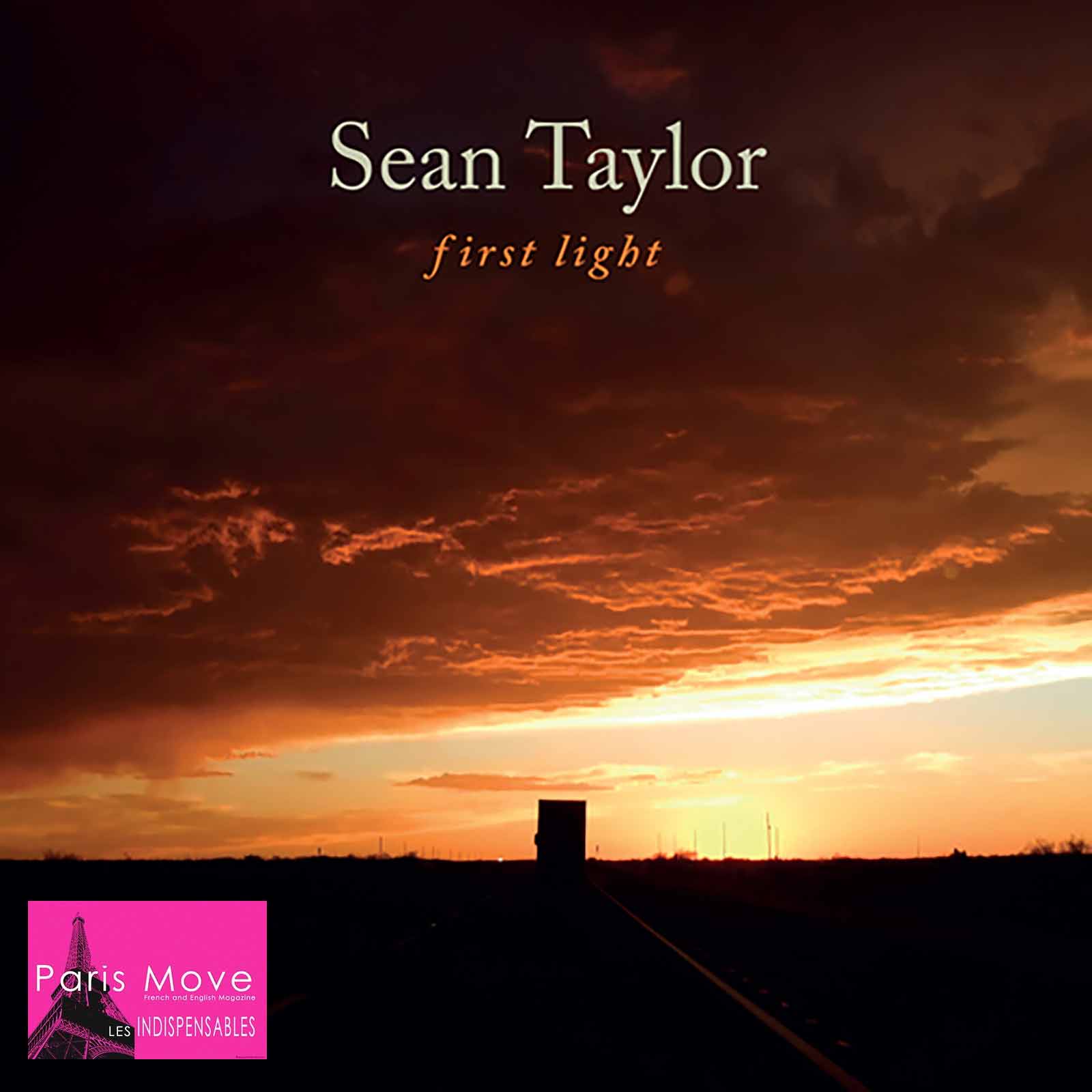
Sean Taylor’s “First Light”: Folk Music in an Age of Political and Moral Uncertainty
At a moment when Europe appears increasingly unsure of its future, British folk-blues songwriter Sean Taylor has chosen not to look away. His new album, First Light, offers a sober and deeply personal meditation on climate collapse, political extremism, and the fragile dignity of working-class life, placing him among the most compelling voices in contemporary European roots music.
The record reads like a portrait etched in disillusion. Europe finds itself in a period of pronounced political, economic, and environmental strain: the rise of extremist movements, the failure of coherent economic policies at the continental level, and a country-by-country retreat from ecological commitments have created an atmosphere of uncertainty and quiet despair. In such a context, it is hardly surprising that many artists struggle to imagine the future in optimistic terms.
Taylor does not shy away from this bleak assessment. “In my music,” he says, “I bear witness to the ongoing apocalypse of climate change, the escalation of wars, and the dominance of the far right. These are dangerous times. My new album, First Light, is made up of eleven songs that reflect my view of the world in 2025.” It is a statement that places the album firmly within a long tradition of British protest folk, yet without nostalgia or rhetorical excess.
England’s social fabric has long been shaped by a broad working class defined by persistent poverty, and Taylor grounds his global concerns in this lived reality. In “Artificial Intelligence,” he paints a stark, unforgiving portrait of a fractured society where technological progress fails to mask human precarity. “Britain’s Got Talent,” he explains, is his vision of the small island he calls home, an ironic title for a song that questions spectacle, inequality, and national self-image. Meanwhile, “Poverty” is dedicated explicitly to the working class, written by a troubadour who comes from that very world and speaks without condescension or abstraction.
Yet First Light is not an album of despair alone. Taylor is, by temperament, an optimist. “I believe in the hope of love and in the fundamental kindness of people,” he insists. That belief shapes the architecture of the record itself. The title track, “First Light,” opens the album, while “Murmurations” closes it, both functioning as quiet celebrations of the natural world and its resilience. Between them, “Everything” stands out as a tender, understated love song, offering intimacy as a form of resistance to the surrounding chaos.
This balance between severity and hope is no accident. Constantly on the road, Taylor draws inspiration as much from travel as from introspection. His worldview is shaped by movement, across borders, languages, and musical traditions. That openness is reflected in his rendition of a revolutionary Spanish text, “Manifesto,” and in the album’s wide-ranging influences. Folk, blues, jazz, and elements of world music coexist without feeling forced, reinforcing Taylor’s reputation as a songwriter whose intellectual depth never rings hollow.
In an era when political songwriting often leans toward slogans, Taylor belongs to a rarer category of artist: one for whom thoughtfulness and emotional honesty are inseparable. Album after album, he has pursued a consistent creative vision, describing the world as he sees it, without embellishment or false moral certainty. In that sense, he deserves a distinct place among contemporary songwriters, not for novelty, but for the integrity and coherence of his work.
Musically, First Light favors an almost entirely acoustic approach, a choice that makes the songs feel immediate and human, and easy to imagine on stage. As his career advances, Taylor increasingly resembles a storyteller in the lineage of Paul Simon, carrying narratives from venue to venue, allowing songs to evolve through performance. With projects that are increasingly well-crafted, intimate, and socially conscious, he is equally at ease in small rooms or on larger stages. In either setting, he tends to find attentive listeners, and audiences willing to join in on certain choruses.
On reflection, the closeness one may feel to Sean Taylor’s universe stems not only from his lyrics, but also from a musical language that resists confinement. Oscillating between folk, blues, jazz, and global influences, his work speaks to listeners who seek meaning rather than escapism. For those drawn to artists whose outlook is more humanist than overtly political, and for whom music remains an adventure rather than a commodity, First Light offers lasting rewards.
In an era saturated with instant reactions and cultural noise, First Light stands out for its patience. Sean Taylor does not offer solutions, nor does he pretend to. What he insists upon is attention, to injustice, to beauty, and to the quiet persistence of hope. In today’s musical and political landscape, that insistence may be one of the most responsible gestures an artist can make.
Thierry De Clemensat
Member at Jazz Journalists Association
USA correspondent for Paris-Move and ABS magazine
Editor in chief – Bayou Blue Radio, Bayou Blue News
PARIS-MOVE, January 12th 2026
Follow PARIS-MOVE on X

::::::::::::::::::::::::
To buy this album (February 6)
Musicians :
Sean Taylor – Vocals, Piano and Electric Guitar
Mike Seal – Double Bass
Paulina Szczepaniak – Drums and Percussion
Justin Carroll – Hammond Organ
Michael Buckley adding Saxophones
Richard Moore – Violin
Track Listing :
First Light
Artificial Intelligence
Britain’s Got Talent
Manifiesto
Little Donny Returns
Seeds
Everything
The Shield
Poverty
All Along The Watchtower
Murmurations