
| Jazz |
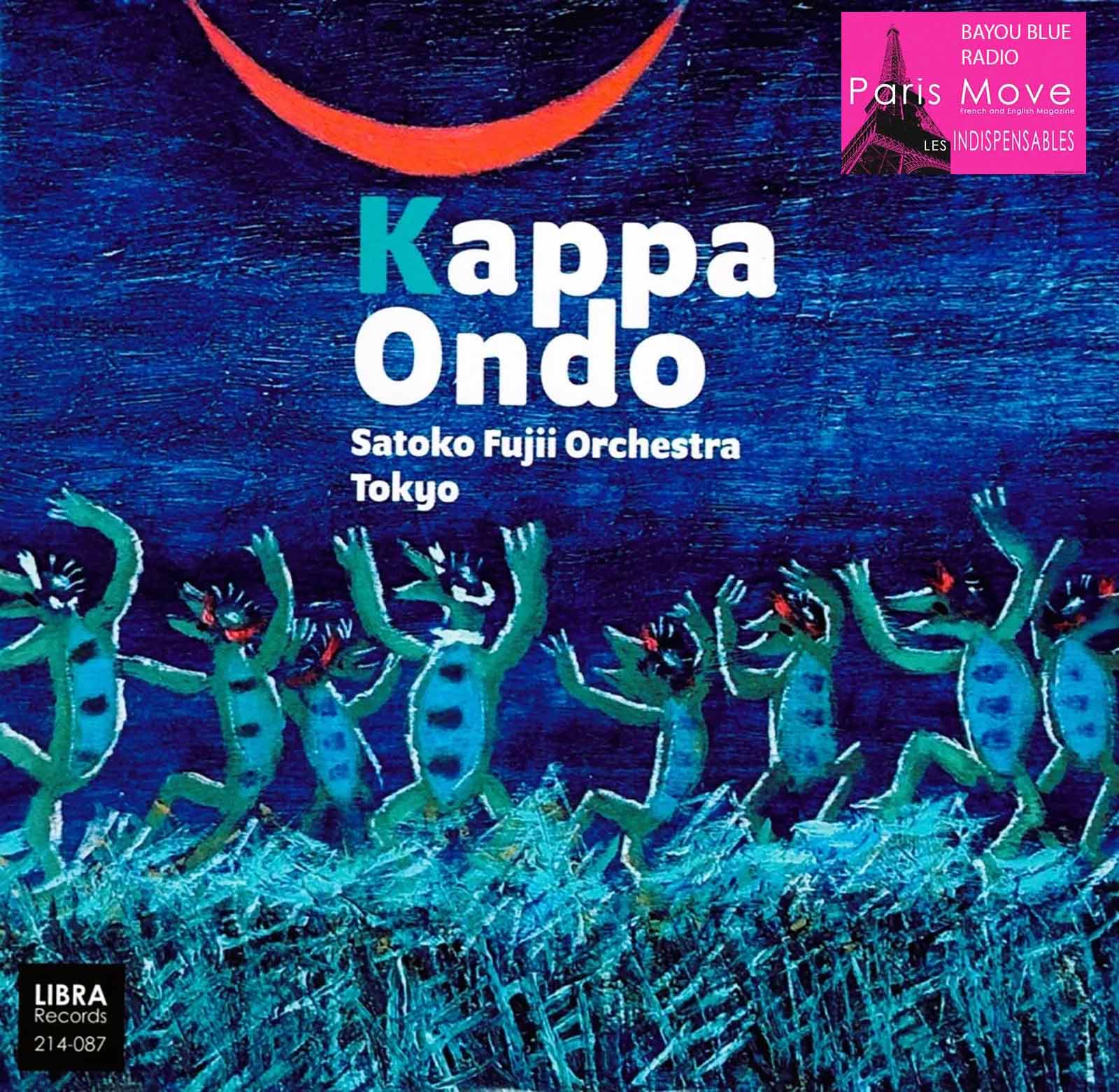
Summary: Pianist Satoko Fujii and trumpeter Natsuki Tamura explore the connections between jazz, outsider art and the artistic legacy of painter Ichiji Tamura.
Satoko Fujii and Natsuki Tamura: Jazz, Outsider Art and a Family Legacy
Some artistic endeavors draw their deepest significance from the meeting of personal history, family memory and an aesthetic vision that gradually outgrows its origins. The work of composer and pianist Satoko Fujii and her husband, trumpeter Natsuki Tamura, offers a compelling example of how such a process unfolds. For these two musicians, creation is never simply a matter of exploring the possibilities of musical language. It is an ongoing conversation between disciplines, generations and sensibilities, a means of transforming private experience into a larger artistic inquiry. Fujii’s prolific recording activity in 2026 takes on an added dimension when viewed in the context of this long-running exploration, which leads, in part, to the work of Ichiji Tamura, a painter, educator and influential advocate of an approach to art rooted in spontaneity, individual expression and freedom from established conventions. He was also Natsuki Tamura’s father. His influence offers a revealing perspective on the trumpeter’s artistic development and on the creative partnership he has forged with Fujii. What emerges is more than a story of family inheritance or an affectionate tribute to a departed parent. It is an inquiry into how an artistic vision can survive its creator, migrate across disciplines and acquire new meaning in the hands of another generation.
Ichiji Tamura devoted much of his life to painting, teaching and exploring forms of expression that resisted the prescriptions of academic culture. The tradition of outsider art, with which his thinking was associated, cannot be understood simply as an aesthetic of the unusual or as a collection of works produced beyond the boundaries of established artistic institutions. At its most compelling, it challenges the very assumptions by which art is defined, judged and taught. It invites us to consider creation as a process of discovery, one in which the artist does not necessarily begin with a predetermined destination but develops a language through the act of making itself. The objective is not to dispense with rules altogether, but to discover which rules, if any, a particular work requires in order to come into being. This emphasis on creative freedom and the integrity of the artistic process provides an illuminating context for Natsuki Tamura’s music. The trumpeter does not attempt to reproduce his father’s paintings in sound, nor does he offer a literal musical interpretation of their visual language. Rather, he seems to draw on the underlying impulses that animate them: their tensions, irregularities, shifts of direction and sense of movement. What passes from father to son is less a recognizable style than an approach to creation, a willingness to remain open to the unforeseen and to allow a work to reveal its own logic.
This is also where the artistic relationship between Natsuki Tamura and Satoko Fujii assumes its full significance. Their collaboration rests on more than a shared life and years of performing together. It reflects an intellectual and creative affinity that allows each musician to challenge the limits of an individual language. Fujii has built a substantial body of work in which jazz functions not as a tradition to be guarded but as an open field of experimentation, receptive to cultural encounters, formal disruptions and the unpredictable possibilities of improvisation. Her compositions repeatedly test the balance between structure and spontaneity, between the demands of written music and the discoveries that emerge in performance. Her engagement with Ichiji Tamura’s artistic universe therefore feels less like an external reference than an extension of questions already central to her own practice. How can freedom be given form without being confined? How can the unexpected be incorporated into a composition without losing its capacity to surprise? And how can individual voices coexist within a collective structure without being reduced to predetermined roles? Painting and music meet here not through superficial similarities of appearance, but through a shared determination to question the conditions under which an artwork comes into existence.
My own engagement with contemporary art has taught me to approach such endeavors through an experience that precedes analysis and cannot be entirely contained by it. Looking, feeling, allowing an impression to take hold, searching for connections between seemingly unrelated forms: This is often where the encounter with an artwork begins. Its poetry does not necessarily reside in the finished object, in the immediate beauty of its execution or in the artist’s command of technique. Sometimes it lies further back, in the initial gesture, in the impulse that makes creation necessary, in that uncertain moment when a form begins to emerge without yet knowing what it will become. The completed work is only the visible trace of a much larger process, one that retains the pressure of its uncertainties, its tensions and the possibilities it ultimately leaves behind. Fujii and Tamura’s music invites a similar kind of attention. I listen, close my eyes and immerse myself in their sound world as I might enter a museum, allowing the experience to unfold without searching for a literal correspondence between a painting and a musical phrase. Gradually, the sounds acquire a visual dimension. Tones become lines, instrumental attacks establish points of tension, silences open up spaces, and changes in intensity alter the perspective. Listening becomes a way of seeing, not because music turns into painting, but because both art forms engage our capacity to perceive relationships, movements and disruptions before we can fully explain them.
Movement may be the essential link between these two worlds. In painting, it can arise from a curve, a collision of colors or a shape that seems to press against the limits of the canvas. In music, it emerges through changes in intensity, the appearance of a motif, its disappearance and its return in altered form. What occupies a fixed space in painting unfolds through time in music; what seems motionless reveals itself to be charged with latent energy. As the listening deepens, sounds take on a visual density, while the images summoned by a painting begin to move in the imagination, subject to the accelerations, suspensions and sudden shifts of the musical performance. One can readily imagine what a choreographer might discover in this exchange: not an invitation to illustrate music through dance, but an opportunity to explore how the body might embody a tension, extend a curve or make a rupture physically perceptible. The meaningful convergence of the arts does not require their differences to disappear. On the contrary, it depends on those differences, on the possibility that each discipline can preserve its identity while revealing dimensions that might otherwise remain inaccessible.
This understanding of artistic creation also helps illuminate the intellectual legacy of Ichiji Tamura. An artwork cannot be judged solely by its final appearance, as though the finished object could be separated from the circumstances, intuitions and discoveries that brought it into being. The gesture, the process and the successive transformations have a significance of their own. Creation becomes an act of exploration in which the artist discovers as much as invents. The affinity between this approach and musical improvisation is unmistakable. Both the painter and the improviser must enter territory whose outcome cannot be entirely controlled. Both must remain receptive to accidents, recognize the possibilities hidden in an unexpected turn and accept that the most fruitful direction may be the one they had not anticipated. In jazz, such openness is anything but casual. It requires technical command, a disciplined ear and the ability to respond instantaneously to the ideas of other musicians. Freedom, in this sense, is not the absence of rigor but one of its most demanding expressions. Ichiji Tamura’s legacy is transmitted less through a fixed set of principles than through an ethic of creation that values the integrity of individual expression and the willingness to begin again.
The live recording at the center of this project acquires particular resonance against this background. Captured at a concert in 2016, marking the 30th anniversary of Ichiji Tamura’s death, it brings together the immediacy of musical performance and the enduring presence of a visual work created in another medium and another time. The album cover, which reproduces one of the painter’s works, is more than a graphic emblem. It establishes a dialogue between what is seen and what is heard, between an image held in place on a surface and music that exists only as it unfolds. For listeners unfamiliar with Ichiji Tamura, the painting offers an initial point of entry into his world. For those who already know his work, it encourages a renewed act of looking, suggesting that pictorial forms may contain rhythms, tensions and movements capable of finding another life in sound. The concert becomes something more than a commemorative gesture. It reactivates an artistic legacy, allowing the painter’s memory to function not as a monument to the past but as a source of new creative possibilities.
Natsuki Tamura’s recollections provide an important clue to the breadth of that inheritance. “Ichiji Tamura was a Renaissance man,” the trumpeter has said, describing a father whose life was devoted in large part to education and whose talents extended across an extraordinary range of disciplines. He was a multi-instrumentalist, lyricist, composer, choreographer, painter and novelist. This versatility is not merely an interesting biographical detail. It helps explain why his legacy cannot be confined to painting or transmitted through a single artistic language. Ichiji Tamura embodied a conception of creativity in which music, dance, literature and the visual arts could inform one another without losing their distinctive identities. Each offered a different means of investigating human experience, and none could claim to exhaust its meaning. Family memory thus becomes a meeting ground for artistic disciplines, a reservoir of gestures, intuitions and possibilities from which the next generation can draw without obligation to imitate. What is inherited is not a style to be preserved intact, but an openness to the idea that artistic boundaries are provisional and that creation begins, in part, by questioning them.
From “Kitsune,” the opening track, Natsuki Tamura establishes a musical language marked by its density of reference and its refusal to settle into a single stylistic identity. The piece brings together elements from different cultural and sonic traditions, suggesting jazz as the product of a long history of encounters, borrowings and transformations rather than a self-contained musical inheritance. Yet the effect is not simply one of juxtaposition. These materials collide, intersect and mutate within a structure whose coherence emerges from the very instability of its parts. The music seems to search for its own equilibrium while resisting the temptation to resolve every tension. Tamura’s trumpet asserts itself, but never entirely dominates the sonic landscape. Each gesture seems to invite a deviation, a rupture or a change of direction. Musical forms appear to emerge in real time rather than arrive fully formed, giving the listener the impression of witnessing a language in the process of discovering itself. The painting reproduced on the album cover consequently becomes more than a visual point of reference. It shapes the act of listening, encouraging an awareness of the relationships among sounds, silences and tensions that might otherwise escape notice.
It would nevertheless be a mistake to describe this music as a straightforward translation of outsider art into jazz. Such an interpretation would be appealing in its simplicity, but it would also reduce both disciplines to a convenient analogy. The real interest of this encounter lies in the way it reveals shared concerns without erasing fundamental differences. Painting works through surface, material, color and spatial relationships; music unfolds through time, timbre, resonance and silence. Their dialogue becomes meaningful only when each retains its own means of expression, its resistance to the other and its capacity to generate meaning on its own terms. For Natsuki Tamura, his father’s work is not an aesthetic program to be followed but a point of departure from which invention can move toward independence. For Fujii, composition establishes the conditions for a living exchange between structure and spontaneity. The resulting form is neither wholly predetermined nor entirely improvised. It emerges through a continuous negotiation between what has been conceived in advance and what can happen only in the act of performance.
This approach belongs to a broader conception of jazz that rejects both orthodoxy and provocation for its own sake. Over several decades, Fujii has developed a musical universe in which composition, collective energy, Japanese musical traditions and improvisation remain in constant dialogue. Her work for large ensembles is particularly revealing. The orchestra is not treated as a mechanism for reproducing a score with mechanical precision, but as a living environment in which individual musicians must learn to coexist, respond to one another and occasionally unsettle the collective balance. Composition provides a framework for listening without dictating every outcome. It allows individual voices to emerge while drawing them into a shared movement. This approach intersects with Ichiji Tamura’s attention to the creative process and the integrity of individual expression. Both artists, working in different media, are concerned with how a collective or structured work can preserve the richness of its constituent parts without dissolving into a mere accumulation of individual gestures. The challenge is not to celebrate freedom as an abstraction, but to discover the conditions under which it can become a practical, shared experience.
The relationship between Fujii and Tamura consequently extends beyond the collaboration of two artists who happen to share a life. It embodies a conception of creativity in which intimacy becomes a source of sustained dialogue rather than a retreat into the familiar. Fujii does not simply accompany her husband’s artistic journey, any more than Tamura merely extends his wife’s musical universe. Their sensibilities meet, challenge and transform one another, while the family history surrounding them becomes artistic material in its own right. Ichiji Tamura’s presence lends this relationship an additional dimension, reminding us that even the most individual works are shaped by earlier encounters, inherited gestures and experiences that precede their creators. Art emerges into a world already inhabited by other forms, then gradually moves beyond its origins to establish an identity of its own. True fidelity to an artistic legacy does not mean preserving it unchanged. It means allowing it to remain alive by putting it to work in new contexts and permitting it to become something its originator could never have fully anticipated.
It is worth returning, finally, to the act of listening itself, to that moment when analysis gives way to experience. I close my eyes again and allow the sounds to unfold without insisting on a definitive interpretation. What interests me is not the search for a painting’s contours within a musical composition, but the possibility that a work of art might change the way we see, even when there is nothing before our eyes. Colors seem to linger in the timbres, curves in melodic movements, contrasts in sudden shifts of intensity. The image is never entirely present, yet neither has it disappeared. It persists in the uncertain territory where visual memory meets sonic imagination, where perception loosens the boundaries between what we see and what we hear. Perhaps this is where Fujii and Tamura’s artistic endeavor finds its deepest meaning: not in a spectacular fusion of disciplines, but in their capacity to expand one another and, in doing so, enlarge our experience of the world.
Ichiji Tamura’s work ultimately reminds us that artistic achievement cannot be measured solely by technical mastery, adherence to established rules or institutional recognition. It also resides in the ability to bring a singular form into existence, preserve the uncertainty inherent in every act of creation and recognize the value of the process itself. The resonance of this philosophy in the jazz of Satoko Fujii and Natsuki Tamura is no incidental matter. It illuminates an understanding of art as an ongoing inquiry, alert to accidents, differences and the possibilities of transformation. In a cultural environment increasingly shaped by accelerated production, the demand for constant visibility and the tendency to measure creative work by its immediate market value, such a commitment to process carries implications well beyond music. It asks us to suspend judgment, resist premature classification and accept that some works disclose their richness only when we give them the time and attention they demand. Family inheritance becomes something more than a memory to be preserved. It becomes a living energy, capable of circulating across generations, changing form and continuing to act. Fujii and Tamura’s music does more than honor Ichiji Tamura’s memory. In a different language and on its own terms, it extends his inquiry into the freedom to create, the nature of artistic transmission and the power of art to renew our perception of the world. In that freedom, at once exacting and profoundly human, their work finds its deepest connection to the spirit of the painter’s vision.
Thierry De Clemensat
Member at Jazz Journalists Association
USA correspondent for Paris-Move and ABS magazine
Editor in chief – Bayou Blue Radio, Bayou Blue News

PARIS-MOVE, October 14th, 2026
Follow PARIS-MOVE on X
::::::::::::::::::::::::
Musicians :
Satoko Fujii: piano (arranger, composer, conductor)
Natsuki Tamura: trumpet (arranger, composer, conductor)
Sachi Hayasaka: alto and soprano saxophone
Kunihiro Izumi: alto saxophone
Kenichi Matsumoto: tenor saxophone
Daisuke Fujiwara: tenor saxophone
Ryuichi Yoshida: baritone saxophone
Yoshihito Fukumoto: trumpet
Takao Watanabe: trumpet
Yusaku Shirotani (or Shirotane): trumpet
Yasuyuki Takahashi: trombone
Toshihiro Koike (or Toshiro Koike): trombone
Haguregumo Nagamatsu: trombone
Kelly Chrko: guitar
Toshiki Nagata: double bass / bass
Akira Horikoshi: drums
Track Listing:
CD 1
Kitsune
Karasu
Jizo
CD 2
Oni
Noraneko
Kappa Ondo