| Jazz |
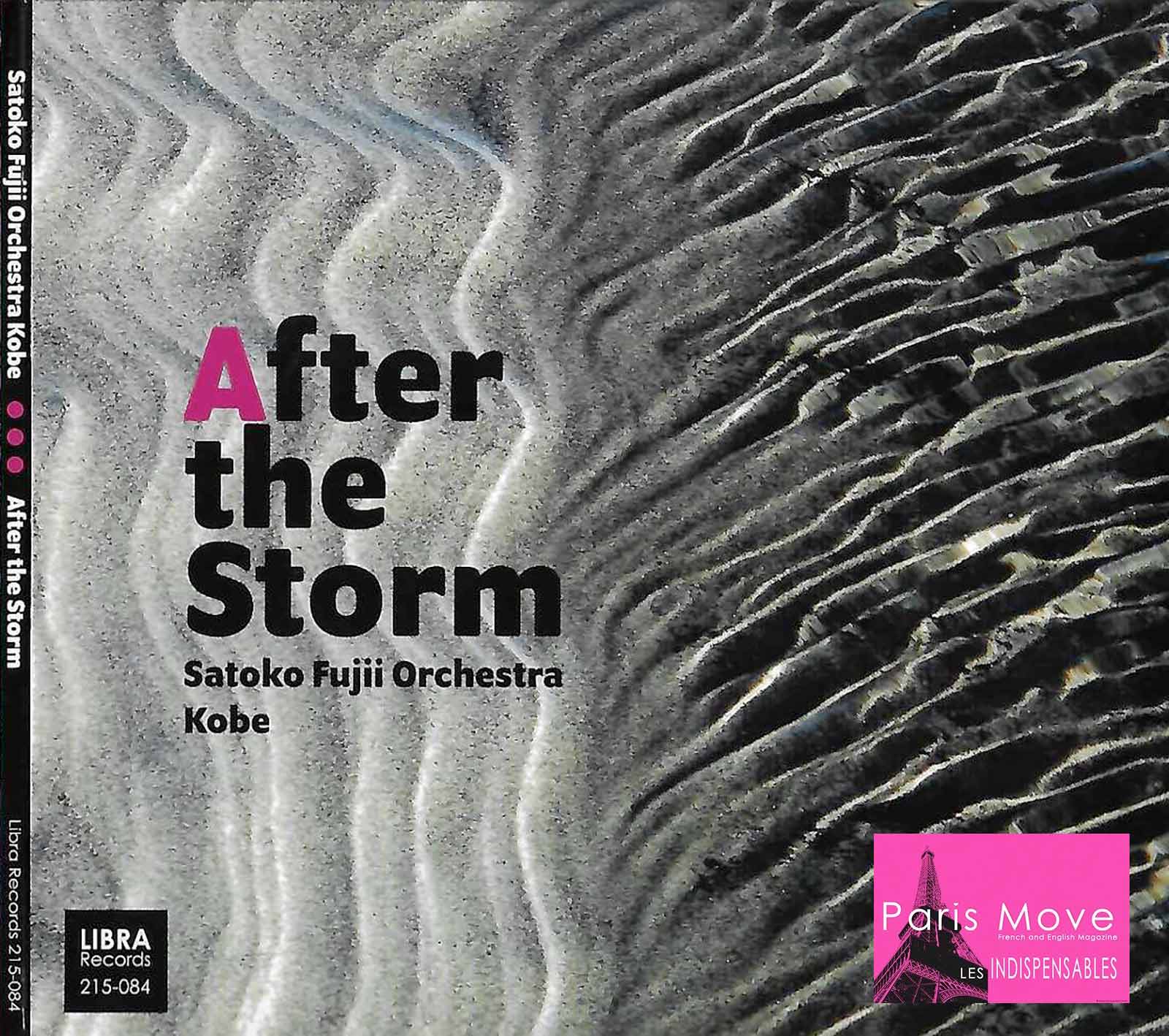
Summary: An in depth review of Satoko Fujii’s After the Storm, an extraordinary contemporary jazz album that transforms improvisation into profound artistic expression.
Satoko Fujii’s After the Storm: A Masterpiece of Contemporary Jazz and Abstract Sound
There is something almost ritualistic about listening to Satoko Fujii. One closes one’s eyes and imagines her quietly penciling notes onto a score, each mark eventually becoming part of After the Storm. If the imagination gallops freely, it is because this music was conceived during the long months of the pandemic, when silence, uncertainty, and introspection reshaped the creative lives of artists across the world. The result is an album that feels less like a response to crisis than a meditation on what remains once the turbulence has passed.
As prolific as she is endlessly fascinating, Fujii has never been a composer whose work invites straightforward analysis. After the Storm is not an album to decode. It is an album to inhabit. It asks to be experienced the way one watches rain through a window, noticing the reflections dancing across wet cobblestones, hearing the city breathe again after the clouds have passed, sensing that peculiar stillness that follows a storm when time itself seems suspended and our senses momentarily replace certainty.
Because I was unfamiliar with many of the musicians assembled for this recording, I found myself listening with unusual concentration. Years of reviewing albums teach you that every artist possesses a distinct musical language, a personal vocabulary of phrasing, texture, and interpretation. Here, Fujii surrounds herself with an exceptional ensemble led, as so often, by the remarkable trumpeter Natsuki Tamura. He is joined by fellow trumpeters James Barrett and Ryo Arimoto, while saxophones, guitar, bass, and drums complete a group capable of navigating both explosive improvisation and moments of remarkable restraint.
As with every Satoko Fujii recording, what immediately stands out is her commitment to developing ideas far beyond their expected destination. Themes unfold patiently before revealing unexpected emotional and harmonic landscapes. Beneath the apparent complexity lies a poetic sensibility that rewards attentive listeners, one that longtime followers of her work will instantly recognize. Every Fujii composition challenge convention, not for the sake of provocation alone, but because she refuses easy resolutions. Her music questions assumptions, unsettles expectations, and deliberately blurs the line between structure and spontaneity. Where many composers seek clarity, Fujii embraces ambiguity, trusting the listener to discover meaning rather than prescribing it.
Listening to this album, one gradually realizes that describing it simply as jazz feels almost inadequate. These are not merely compositions. They are works of art in the fullest sense, closer perhaps to contemplating one of Pierre Soulages’ monumental black canvases than consuming a conventional recording. Like Soulages, Fujii is fascinated by texture, depth, and the emotional possibilities that emerge from contrast rather than obvious beauty. The listener surrenders to sounds that can be raw, abrasive, luminous, or unexpectedly lyrical. Throughout, Fujii never seems interested in pleasing her audience. Instead, she offers something infinitely more compelling, an uncompromising expression of her imagination.
Albums like this resist ratings. Assigning stars or numbers feels almost meaningless because After the Storm exists beyond the framework by which most contemporary releases are judged. What remains astonishing is that despite a discography of extraordinary scale, Satoko Fujii continues to produce work of remarkable consistency and artistic integrity. Many musicians venture into abstract improvisation, yet few possess her gift for eventually guiding the listener back toward a melodic horizon. Even at her most adventurous, she leaves a thread that allows the audience to find its own place within the music. That rare balance between freedom and accessibility is one of the defining qualities of her artistry.
By the time the third movement, After the Storm 3, arrives, the ear has already adjusted to Fujii’s universe. Questions about form quietly disappear, replaced by complete immersion in the emotional landscape she has created. It feels as though an invisible hand is leading us across shifting waters where every sound carries the pulse of lived experience. What initially appeared abstract gradually reveals its own internal logic, and the listener stops searching for familiar landmarks, accepting instead the journey itself.
Abstract art has never sought to imitate nature. As André Malraux once suggested, the great achievement of modern art was its willingness to abandon the illusion of reality in pursuit of something deeper and more essential. That idea seems central to Satoko Fujii’s artistic vision. Achieving such freedom requires extraordinary intellectual clarity, complete artistic independence, and an unwavering commitment to sincerity. She belongs to that rare category of artists admired not simply for technical brilliance, but for the honesty that underpins every creative decision. Nothing here feels calculated. Every phrase, every silence, every eruption seems to arise from genuine artistic necessity.
The title After the Storm carries unmistakable literary resonance. It inevitably recalls the poetry of G. D. Wright and may also evoke Hirokazu Kore-eda’s 2016 film for some listeners. More broadly, however, the image has haunted artists, writers, and philosophers for centuries because there is something profoundly mysterious about the moment after a storm. The landscape is transformed, familiar places appear unfamiliar, the air feels cleansed, and the world briefly seems to exist in a state of quiet revelation. It is a moment suspended between memory and renewal, when destruction and hope coexist. Fujii captures precisely that fragile emotional space, translating it into sound with remarkable sensitivity.
This is not an album designed for everyone, nor does it aspire to be. It demands patience, openness, and a willingness to embrace uncertainty. Those looking for immediate gratification may find themselves challenged. Those willing to surrender to its language, however, will discover an experience that grows richer with every listen. Like the finest works of contemporary art, After the Storm refuses to reveal everything at once. It invites reflection rather than consumption, contemplation rather than certainty.
Long after the final note has faded, the music continues to resonate, not because it provides answers, but because it leaves us with questions worth carrying. That is the hallmark of truly significant art, and it is why Satoko Fujii remains one of the most original and uncompromising voices in contemporary music.
After the Storm is not simply another remarkable entry in an extraordinary catalog. It is yet another reminder that genuine artistic vision has the power to transform uncertainty into beauty, and silence into something profoundly human.
Thierry De Clemensat
Member at Jazz Journalists Association
USA correspondent for Paris-Move and ABS magazine
Editor in chief – Bayou Blue Radio, Bayou Blue News

PARIS-MOVE, July 28th, 2026
Follow PARIS-MOVE on X
::::::::::::::::::::::::
Satoko Fujii Orchestra Kobe
Yasuhisa Mizutani, Motoki Suino – alt sax
Eiichiro Arasaki, Tsutomu Takei – tenor sax
Keizo Nobori – baritone sax
James Barrett, Rabio Arimoto, Natsuki Tamura – trumpet
Yasuko Kaneko, Yuichiro Tamagaki – trombone
Takumi Seino – guitar
Keishiro Saito – bass
Track Listing:
After The Storm 1
After The Storm 2
After The Storm 3
After The Storm 4