| Jazz |
In the Shadow of Miles: Sam Morrison’s Cosmic Trip and the Long Echo of an Electric Revolution
Some musicians appear to move toward recognition as if carried by a current stronger than circumstance. Their beginnings often hinge on moments that, in hindsight, acquire the quality of legend. For saxophonist Sam Morrison, one such moment came in the mid-1970s, during a residency at Paul’s Mall in Boston, when Miles Davis heard the young Long Island player performing informally during a break in the band’s schedule.
What Davis heard was enough to prompt immediate action. Morrison was invited to join the group for the final nights of the engagement, and the decision quickly reshaped the ensemble. In recollections shared years later, musicians who were present describe Davis speaking with unusual directness. “I hadn’t heard that kind of talent on saxophone since Coltrane,” he reportedly told associates backstage, a remark that circulated widely among players on the scene. Sonny Fortune resigned the following day, and with Morrison’s arrival, the configuration that would define the late electric period of Miles Davis was effectively set.
For Morrison, the experience was formative. In an interview many years later, he recalled the disorienting speed of that transition: “One day you’re practicing, trying to find your sound. The next day you’re standing next to Miles, and you realize the music is bigger than anything you imagined.”
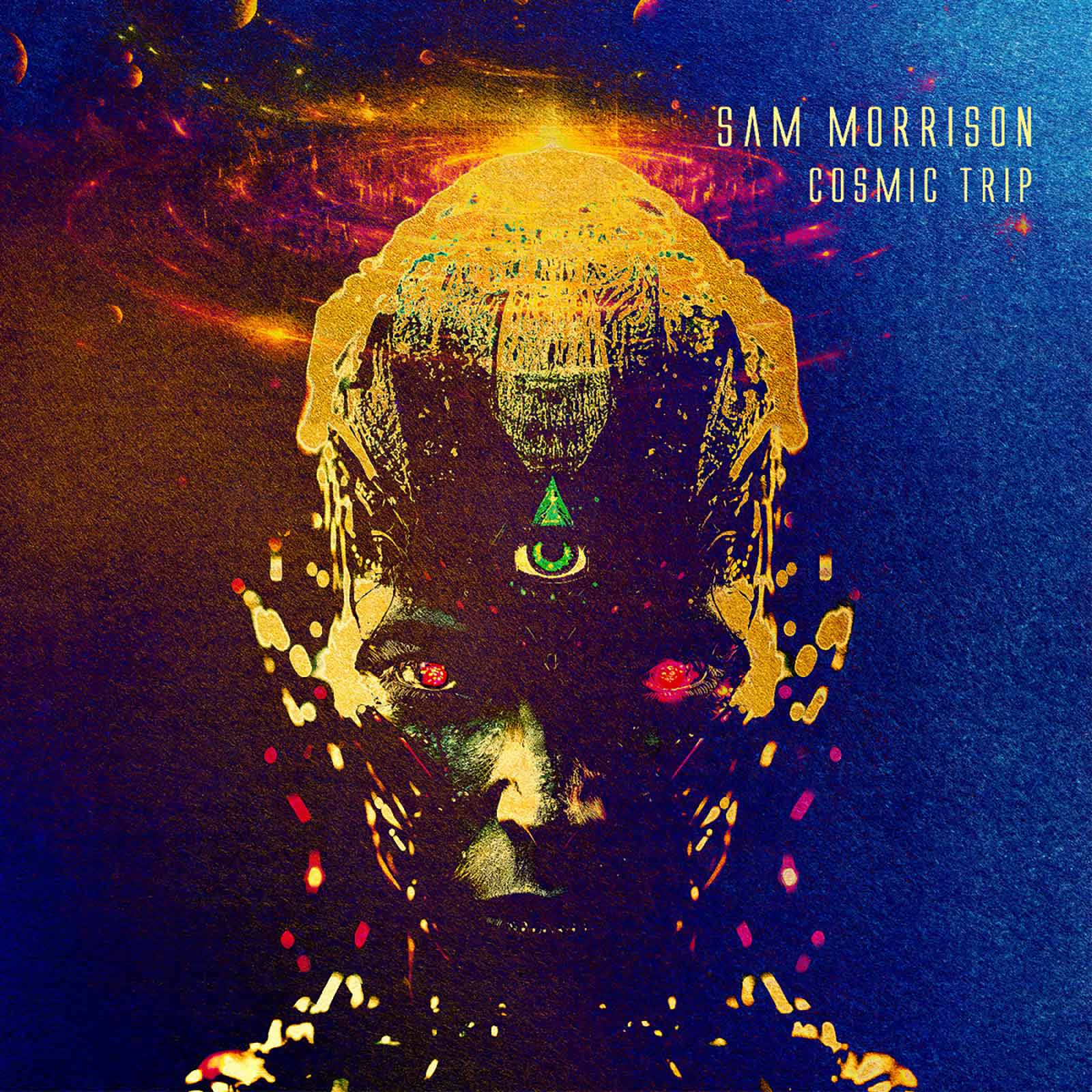
That sense of history, of music as a continuum rather than a series of isolated moments, permeates Morrison’s recent album, Cosmic Trip. The record inevitably invites comparison to Davis’s later work, particularly the atmosphere of Amandla and the final studio recordings that closed the trumpeter’s career. The resemblance is not merely stylistic. Both musicians share a conviction that contemporary sound must absorb the textures of its time.
Near the end of his life, Davis often spoke about hearing the future in the sounds of expanding suburbs, in car stereos and late-night radio drifting through open windows. He was only partly right, perhaps, but Morrison has continued to explore that intuition, shaping music that hovers between memory and immediacy.
Recorded in sessions spread over recent years, Cosmic Trip unfolds as a meditation on that threshold. The rhythms, often driven by drum machines, recall the vocabulary of late-20th-century fusion, while the synthesizers evoke an earlier technological imagination, tones that feel at once retro and strangely current. Morrison’s phrasing carries a dramatic quality, a sense that melodies are not merely played but staged, as if each track were a small narrative.
Listeners familiar with Davis’s late work may sense a spectral presence throughout the album. The resemblance appears deliberate, almost programmatic. Yet Morrison departs from his mentor in temperament. Where Davis cultivated space and understatement, Morrison tends toward density and elaboration. Much of Cosmic Trip has the character of a near-solo project, with producer and bassist Bill Laswell appearing in a supporting role on one track, lending a deeper textural foundation without altering the album’s essentially personal voice.
The broader musical landscape in which Cosmic Trip arrives makes its perspective especially intriguing. Over the past decade, younger jazz and electronic musicians have increasingly revisited the aesthetics of 1980s and early-1990s fusion, blending them with hip-hop production, ambient textures, and experimental beat culture. Artists in London, Los Angeles, and Chicago have mined that era for its rhythmic language and tonal palette, sometimes treating it less as nostalgia than as unfinished business.
In that context, Morrison’s work occupies a distinctive position. Unlike many contemporary players who approach the style as an archival resource, Morrison lived inside the sound world he now revisits. The difference is audible. What might seem like revivalism in another artist’s hands becomes, here, something closer to memoir.
Still, the album also raises questions about influence and inheritance. Davis’s impact on successive generations has been so profound that only a handful of figures, Joe Zawinul and Marcus Miller among them, have managed to absorb it fully and then move decisively in new directions. Morrison’s path appears different. Rather than breaking away, he seems intent on sustaining a conversation with the past, examining its possibilities from within.
In the final tracks of Cosmic Trip, that dialogue begins to take on a tone of resolution. The pieces grow more spacious, the textures less crowded, as if Morrison were gradually stepping back from the intensity of recollection. It is not a closing statement so much as a gesture toward closure, the suggestion that a chapter may be ending even as its themes persist.
Looking ahead, the question is not whether Morrison will escape the shadow of Miles Davis, but whether he intends to. There are signs that future projects may move further into hybrid territory, incorporating contemporary electronic production and collaborations with younger musicians who approach jazz from outside its traditional lineage. Morrison himself has hinted, in recent conversations, that he is interested in exploring “what happens when the language of fusion meets the sound design of today.”
If that direction materializes, Cosmic Trip may come to be heard as a bridge, an album that gathers the echoes of a formative era before pointing, quietly but unmistakably, toward whatever comes next.
In the end, the record stands as both homage and testimony: a reminder that music is often the product of encounters, of glances exchanged across bandstands, of ideas passed from one generation to another. Listening to Morrison’s playing, one sometimes has the uncanny sensation that the past is not past at all, but still unfolding, note by note, in the present tense.
Thierry De Clemensat
Member at Jazz Journalists Association
USA correspondent for Paris-Move and ABS magazine
Editor in chief – Bayou Blue Radio, Bayou Blue News
PARIS-MOVE, February 6th 2026
Follow PARIS-MOVE on X

::::::::::::::::::::::::
Musicians :
Sam Morrison: soprano sax (except 9), alto flute synthesizer, logicdrums, electronics
Bill Laswell: EFX
Track Listing :
High Blood Pressure
Jailbreak
Home Alone
Escape From Paradise
Cosmic Trip
Big Rumble
Funkaduck
Lab Disaster
Subliminal
Trippin’
Recorded by Sam Morrison at Livingston Manor, NY & Truth or Consequences, NM
Mixed by Bill Laswell
Engineering: James Delatacoma
Mixed at Orange Music, West Orange, NJ
Created and produced by Sam Morrison
Mastered by Michael Fossenkemper at Turtletone Studio
Artwork by Yoko Yamabe @Randesign
M.O.D.Reloaded: Dave Brunelle & Yoko Yamabe