
| Jazz moderne |
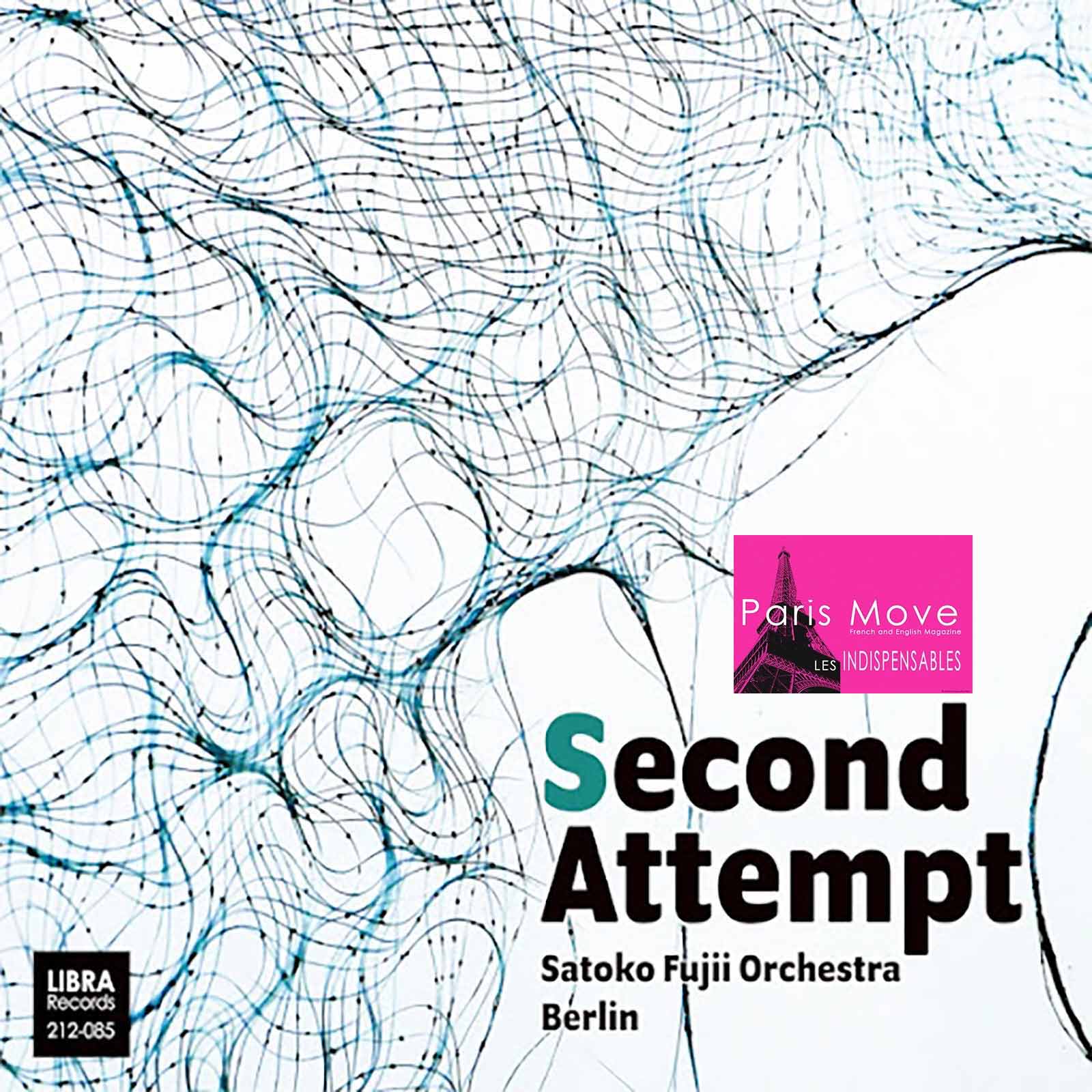
Summary: Satoko Fujii’s Second Attempt transforms improvisation into a powerful form of artistic freedom, blending jazz, electronics, sound art and collaboration while giving each musician space to shape the final work.
Satoko Fujii’s Second Attempt: Jazz, Improvisation and Artistic Freedom
There are few artists who can sustain an extraordinary level of productivity without allowing productivity itself to become a substitute for inspiration. Satoko Fujii has spent decades demonstrating that abundance and artistic rigor do not have to be opposing forces. With more than 25 albums to her name and a continuing stream of new projects, compositions and collaborations, the Japanese composer and bandleader has built a body of work remarkable not simply for its size, but for the consistency with which it continues to challenge the boundaries of improvisation, composition and performance. On September 4, she adds another work to that remarkable catalogue with Second Attempt, again joined by the extraordinary trumpeter Natsuki Tamura.
What makes the project particularly interesting is that Fujii does not approach composition as a system designed to control every musical decision. Her method is almost the opposite. She establishes a structure and then creates enough space within that structure for the musicians to become active participants in determining what the composition ultimately becomes. The distinction is important because Second Attempt is not simply an exercise in improvisation. It is an exploration of how a composer can design a musical environment in which improvisation becomes an essential part of the composition itself.
“The musicians in my large ensembles are brilliant improvisers,” Fujii explains. “I want everything to flow freely in my compositions. I am constantly thinking about the freedom I have as a composer and how I can give my collaborators the freedom to bring their own voices to the music.”
That idea provides perhaps the clearest way into Second Attempt. Fujii is not abandoning composition in favor of spontaneity. She is asking a more complicated question: how much structure is necessary before structure begins to interfere with creativity, and how little structure is necessary before an ensemble can still function as a coherent musical organism?
Her answer is surprisingly economical. “It only takes a few simple rules to allow everyone to work together,” she says.
For years, Fujii has developed short and relatively simple musical sections that she gives to her orchestras, allowing the ensemble to function almost as a background soloist. There is no predetermined order in which these sections must be performed. During a performance, Fujii uses gestures to indicate which element the orchestra should play, creating a constantly changing relationship between the written material and the musicians responding to it. At some point, this approach led her to a deceptively simple question: what if composition itself could be reduced to these short fragments?
The answer is one of the central ideas behind Second Attempt. Fujii realized that an orchestra could build something substantial from small musical units, much as a child might construct an elaborate structure from a collection of small Lego bricks. The analogy is useful because the individual pieces remain simple while the resulting structure can become unexpectedly complex. More importantly, however, the final structure is not entirely predictable from the pieces with which it began. This is where Fujii’s method becomes more than an unusual compositional technique. She is effectively composing the conditions under which other musicians can create.
The distinction matters. In a conventional large ensemble, the composer establishes the musical material and the performers interpret it. In Fujii’s work, interpretation is not necessarily the final stage of the process. It becomes part of the process itself. The musicians do not simply reproduce a composition. Their decisions, reactions and interactions help determine the shape of the composition at the moment it exists.
There is something almost sculptural about this idea. A sculptor may construct a model from clay before using it to create a mold from which a bronze sculpture will eventually emerge. The model establishes the fundamental form, but the material process determines the final object. Fujii’s compositions operate in a comparable way. The written or predetermined elements provide the framework, while the improvisations of the musicians become the material through which the work takes its final form.
That approach also explains why the unconventional sounds appearing throughout Second Attempt should not necessarily be described as an attempt to make the music more complicated. Complexity is almost beside the point. What Fujii is doing is giving her musicians additional ways to participate. For one section, she asked the orchestra to create music without relying on traditional instruments. Paper cups, drumsticks and adhesive tape became part of the sonic vocabulary. The musicians also incorporated newspapers into the performance, with each performer free to tear them, crumple them, throw them or read them according to the circumstances of the performance.
At first glance, such gestures might seem deliberately eccentric. In the context of Fujii’s approach, however, they make perfect sense. Once the conventional hierarchy of instruments has been removed, musicians are encouraged to reconsider what it means to produce a sound and, more importantly, what it means to listen to one another.
The newspaper sequence creates an additional problem when the performance moves from the concert stage into the recording studio. Onstage, the action has an obvious visual impact. The sound of paper being torn or crumpled is only one part of the experience. The movement of the musicians, the objects themselves and the collective physical response of the ensemble all contribute to the moment. Fujii therefore had to find a way to translate that visual experience into sound. Rather than attempting to reproduce the performance literally, she sought to capture its essence through sound effects and the character of the resulting improvisation.
The recording consequently becomes a different kind of document. It is not simply a recording of a performance that happened somewhere else. It becomes an interpretation of the performance, shaped by the limitations and possibilities of the recording medium.
This is also where the electronic contribution of Liz Kozak becomes particularly significant. Her work adds another layer to the sonic environment, helping create a landscape in which acoustic instruments, electronic textures, found sounds and composed fragments can coexist without being forced into a conventional hierarchy. The effect is particularly striking because the electronic material does not simply function as decoration. It becomes part of the environment in which the musicians operate. The distinction between instrument, sound effect and electronic texture begins to disappear, leaving the listener with something closer to an evolving sound installation than a conventional jazz recording. That may be the best way to approach Second Attempt. It is certainly music, but it also has characteristics of sound art, performance art and choreography. The physical actions of the musician’s matter. The objects they manipulate matter. The spaces between sounds matter. Even the decision about when not to play becomes part of the musical vocabulary.
The album unfolds across five movements, identified simply as Second Attempt 1, 2, 3, 4 and 5. Throughout the work, the environment often seems to arrive before the music itself. Percussive impressions help establish the opening of Second Attempt 2, for example, creating an atmosphere before the musical material fully takes shape. That sequence reveals something fundamental about Fujii’s approach. She does not always treat music as something that begins with a melody, a rhythm or a harmonic progression. Sometimes the soundscape comes first. The music emerges from that environment, gradually transforming the surrounding space into the living material of the composition. It is almost as if Fujii has drawn the outline of the work while deliberately leaving portions of the canvas unfinished. Those empty spaces are not gaps that need to be filled. They are invitations to the musicians.
This is where Natsuki Tamura’s presence becomes so important. His trumpet is not simply another voice within an ensemble of voices. In Fujii’s musical world, individual personalities are allowed to become structural elements. The strength of the ensemble comes from the interaction between those personalities rather than from their suppression in favor of uniformity.
The same principle extends to the cultural diversity of the musicians involved. Different musical traditions, experiences and personal approaches enter the same framework without being required to become indistinguishable. Instead of treating difference as something that must be resolved, Fujii makes difference part of the creative material.
This may be one of the most remarkable things about music itself. Few art forms can bring people from radically different backgrounds into the same creative space and allow them to communicate without requiring them to abandon their individual identities. Music can establish a common language without insisting that everyone speak it in exactly the same way. Second Attempt takes that possibility seriously.
It also makes the usual categories of genre increasingly difficult to apply. There are elements that can be associated with jazz, certainly, but jazz alone does not adequately describe what is happening here. Experimental music is another possible description, although it too seems insufficient. Electronic music, contemporary composition and performance art all provide useful points of reference, yet none completely contains the work. Perhaps that is because Fujii is less interested in defining a style than in constructing a process.
By the fifth movement, the album moves back toward a more recognizable sense of musical expression. The experimentation remains, but the sound itself becomes increasingly important. A vibrating saxophone can function almost like a narrator, carrying a story without determining exactly how that story should be understood.
That openness gives the listener an unusual degree of responsibility. The same passage can suggest something entirely different depending on when it is heard, what has happened during the listener’s day or what emotional state the listener brings to it. The music does not insist on a single interpretation. That is consistent with Fujii’s broader philosophy. If musicians are to be given room to contribute their own voices, then listeners must also be given room to create their own relationship with the work.
In that sense, Second Attempt is ultimately concerned with artistic freedom, but not freedom understood as the absence of rules. Fujii’s work suggests something more interesting: freedom can emerge precisely because a carefully considered structure makes room for it. That idea deserves particular attention at a moment when so much creative production is increasingly shaped by formulas, categories and expectations. Fujii’s approach offers another possibility; one based less on control than on trust. She trusts her musicians to respond to limited instructions. She trusts the ensemble to transform simple elements into something larger. She trusts the recording process to preserve something of the unpredictable character of the performance. And ultimately, she trusts the listener to complete the experience.
This is why the unconventional objects in Second Attempt should not be regarded as gimmicks and why the improvisational passages should not be mistaken for a rejection of composition. They are part of a larger artistic philosophy in which the composer creates a framework and then allows other people to inhabit it. The result is an album that asks a surprisingly contemporary question: what happens when an artist deliberately gives up a degree of control in order to discover what other people can contribute? For Fujii, the answer appears to be that the loss of control does not diminish the composition. It expands it.
Second Attempt is therefore less a demonstration of how many sounds can be placed inside a composition than an investigation into how much creative possibility can exist within a carefully designed structure. Its fragments, electronic textures, acoustic instruments, physical gestures and improvised passages all contribute to that investigation.
The most rewarding way to hear the album may consequently be to resist the temptation to classify it too quickly. Rather than asking whether it is jazz, experimental music, contemporary composition or sound art, it may be more useful to listen to the relationships taking place inside it. Listen to the way one sound changes the meaning of another. Listen to the moments when the musicians seem to anticipate one another and to those in which they appear to discover something together in real time. Listen to the spaces in which almost nothing happens, because those spaces are often as deliberately constructed as the most active passages.
Fujii’s achievement is not that she has found a way to make improvisation unpredictable. Improvisation is unpredictable by definition. Her achievement is that she has found ways to make unpredictability compositional, giving it a place inside a larger structure without neutralizing the qualities that make it valuable.
That is what makes Second Attempt more than another entry in an already remarkable catalogue. It is an invitation to reconsider the relationship between the person who writes the music and the people who bring it to life. Fujii remains unmistakably present throughout the work, but her presence is not measured by how completely she controls the outcome. It is measured by how effectively she creates the conditions in which something she could not have completely predicted can nevertheless become part of the work.
The album ultimately returns the listener to the simplest element of all, sound itself, and to the possibility that sound can remain open long after the composer has stopped telling us exactly what it should mean. In that sense, Second Attempt feels less like a finished statement than an ongoing conversation between composition, improvisation, movement, technology and human instinct. It is a work built from small pieces, but its ambition is considerably larger: to show how much an artist can create when she leaves enough space for everyone else to become part of the creation.
Thierry De Clemensat
Member at Jazz Journalists Association
USA correspondent for Paris-Move and ABS magazine
Editor in chief – Bayou Blue Radio, Bayou Blue News

PARIS-MOVE, August 15th, 2026
Follow PARIS-MOVE on X
::::::::::::::::::::::::
To buy this album (September 4, 2026)
Musicians :
Sakoto Fujii Orchestra berlin
Gebhard UllMann – Mathias Shubert, tenor sax
Paulina Owczarek, baritone sax
Niklaus Neuser – Lina Allemano – Natsuki Tamura, Trumpet
Mathias Muller, trombone
Liz Kosak, synthetiser
Michael Griener – Peter Drins, drums
Track Listing :
Second Attempt Part 1
Second Attempt Part 2
Second Attempt Part 3
Second Attempt Part 4
Second Attempt Part 5