
| Jazz moderne |
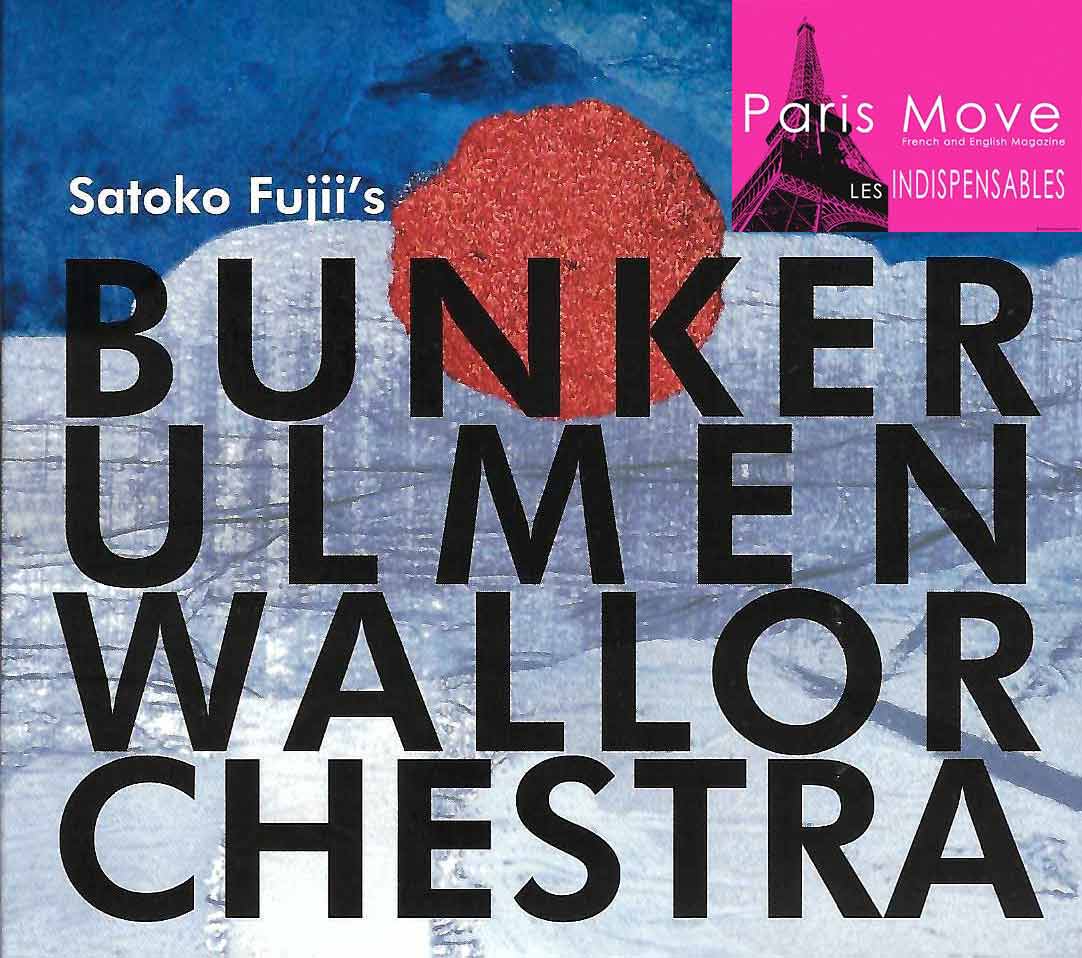
Summary : More than a decade after it was recorded, Bunker Ulmenwall Orchestra reveals Satoko Fujii at the height of her creative powers. This extraordinary double album blends jazz, improvisation and contemporary composition into a powerful and deeply human musical experience.
Satoko Fujii’s Bunker Ulmenwall Orchestra: A Stunning Rediscovery of Improvisation, Freedom and Orchestral Brilliance
Few artists working today can rival the creative force of Satoko Fujii. Over the course of a career spanning more than three decades, the Japanese composer, pianist and bandleader has established herself as one of the most important and uncompromising voices in contemporary music. Her influence extends far beyond the boundaries of jazz. Drawing equally from avant garde improvisation, modern classical composition and experimental music traditions, Fujii has created a body of work that stands among the most ambitious artistic achievements of the twenty first century. At a time when many musicians spend years refining a single project, Fujii continues to produce music with extraordinary consistency, each release revealing new perspectives, new forms and new possibilities.
Her remarkable productivity is not simply the result of discipline or routine. It appears to emerge from a profound artistic necessity. New works arrive when ideas reach a point where they can no longer remain private, when they demand expression. As a result, every album feels less like another entry in an extensive catalogue and more like the documentation of a creative impulse that could not be ignored.
Bunker Ulmenwall Orchestra marks the first of five large ensemble recordings Fujii is scheduled to release in 2026 and the twenty fourth orchestral project of her career. Yet despite the impressive scale of her discography, this album occupies a special place. For more than a decade, the recording remained hidden in the archives of producer Wolfgang Gross. Captured during a 2014 performance in Bielefeld, Germany, the concert might easily have remained forgotten had Gross not rediscovered the tapes and shared them with Fujii years later.
Their reaction was immediate. “He sent me the recording,” Fujii recalls, “and I was astonished by the beauty of our playing and by the energy that radiated from it.”
Listening to the album today, it is difficult to disagree. What unfolds across these two discs is far more than a historical document. It is the preservation of a rare artistic moment, one in which an exceptional ensemble, a visionary composer and an unusually receptive audience came together under circumstances that now seem almost impossible to recreate.
The opening moments establish the atmosphere with remarkable restraint. A guitar introduces a handful of carefully placed notes. Distant sounds emerge from the background like shapes gradually materializing from darkness. The scene is set with cinematic precision. As is often the case with Fujii’s music, originality is never pursued for its own sake. Every gesture serves a larger emotional and structural purpose. The result is music that feels simultaneously intimate and expansive, grounded and unpredictable.
Attempting to categorize Fujii’s work has always been a challenge. Elements of improvised music coexist with contemporary classical composition. Jazz traditions are present, yet constantly transformed. At times the music feels architectural, carefully designed and meticulously balanced. At others, it seems to exist entirely in the moment, propelled by instinct and collective intuition. It is the kind of music that stimulates the imagination and invites reflection, music capable of inspiring images, stories and emotional landscapes far beyond the sounds themselves.
One is reminded of broader artistic reflections on improvisation as an act of liberation. The French writer André Malraux once described the power of spontaneous creation as the emergence of the unexpected, a moment when something entirely new enters the world. Whether consciously or not, Fujii’s music often embodies that principle. Her compositions provide a framework, but they never imprison the musicians. Instead, they create conditions in which surprise becomes an essential part of the artistic experience.
In Bunker Ulmenwall Orchestra, rhythm, motion and momentum function as fundamental forces. They shape the environment through which every instrumental voice travels. A trumpet may suddenly emerge from the ensemble with commanding authority. A saxophone line may cut through a dense orchestral texture before disappearing again into the larger sound mass. Yet these moments never feel arbitrary. They arise naturally from the music’s internal logic.
The story behind the recording reveals why the performance possesses such a remarkable sense of cohesion. While chance ultimately played a role in its rediscovery, the concert itself was the product of years of friendship and artistic collaboration. As artistic director of the Bunker Ulmenwall, a celebrated jazz venue located inside a former Second World War air raid shelter, Wolfgang Gross had invited Fujii and her longtime musical partner Natsuki Tamura to perform on numerous occasions.
Over time, professional relationships evolved into genuine friendships.
“Satoko and Natsuki often performed at the Bunker Ulmenwall with various groups,” Gross recalls. “We also became friends outside of the professional context. They stayed with us, and we discussed my idea for the Bunker Ulmenwall Orchestra. Satoko and Natsuki immediately loved the concept, and we decided that we simply had to make it happen.”
The mention of Tamura is particularly important. Although Fujii is unquestionably the central creative force behind the project, her artistic partnership with the trumpeter has been one of the most productive and enduring collaborations in contemporary music. For decades, the two have developed a shared musical language built upon trust, risk taking and mutual curiosity. Tamura’s presence can be felt throughout this recording, not only through his playing but through the spirit of adventure that has long defined their work together. The partnership remains one of the most fascinating creative relationships in modern jazz, comparable in its depth and longevity to some of the genre’s most celebrated artistic alliances.
Perhaps it is this combination of friendship, trust and shared purpose that explains the extraordinary sense of freedom permeating the performance. This is music liberated from convention and expectation. It is intellectually rigorous without becoming academic. It is ambitious without losing its emotional immediacy. Above all, it remains deeply human.
The venue itself appears to leave an imprint on the music. One occasionally senses a certain gravity within the sound, as though the history embedded in the walls of the former bunker has become part of the performance’s emotional texture. Yet beneath that weight lies immense beauty. Fujii’s writing reveals layers of poetry, tenderness and even romanticism. Musical scenes unfold with novelistic richness. Characters emerge, interact and vanish. Atmospheres transform with startling fluidity.
From the very beginning, the orchestra sounds entirely comfortable within Fujii’s singular sonic world. Her approach to conducting deserves particular attention. Rather than imposing authority from above, she guides the ensemble through a series of carefully orchestrated interactions, inviting soloists and sections into an ongoing conversation. The musicians become active participants in the act of creation. Composition and improvisation cease to function as separate categories and instead merge into a single expressive language.
The ensemble itself contributes significantly to the album’s unique identity. The presence of two drummers creates unusual rhythmic depth. Live electronics expand the music’s textural possibilities. The bass saxophone introduces a powerful and often unexpected tonal dimension. Together, these elements allow Fujii to explore sonic territories unavailable to a conventional orchestra.
The first disc is devoted entirely to Shiki, the monumental composition that originally gave its title to Fujii’s 2014 Orchestra New York release. Conceived as a reflection on life itself, with its many stages, transformations and dramas, Shiki remains among the most ambitious works in her catalogue. It is a vast musical structure filled with unexpected detours, emotional contrasts and shifting perspectives. The orchestra navigates its complexities with remarkable confidence, never losing sight of the larger narrative that binds the composition together.
As the performance unfolds, one becomes increasingly aware of Fujii’s mastery of scale. She understands how to construct tension over extended periods. She knows when to allow density to accumulate and when to create space. She recognizes the emotional power of contrast. These qualities place her among a small group of contemporary composers capable of balancing intellectual sophistication with genuine emotional impact.
By the time the album reaches its conclusion, admiration seems unavoidable. The scale of the achievement is undeniable. So too is its emotional resonance. Once again, Satoko Fujii demonstrates why she occupies such a singular position in contemporary music. Like the finest novelists or filmmakers, she leaves very little to chance. Even passages that appear entirely spontaneous reveal themselves as part of a larger artistic vision. Improvisation is present throughout, but it exists within an environment shaped by profound compositional intelligence.
The closing piece, Gen Himmel, functions as a subtle mirror to the album’s opening moments. Themes reappear in altered forms. Musical ideas overlap and interact. Sounds drift between foreground and background, creating a sense of movement that feels almost cinematic. The work’s kinetic qualities become especially apparent here. The orchestra does not merely occupy a space. It transforms it.
What makes Bunker Ulmenwall Orchestra particularly remarkable is not simply the quality of the music but the fact that it remained unheard for so long. Recordings that spend more than a decade hidden in an archive often feel like historical curiosities when they finally emerge. This album feels exactly the opposite. It sounds vibrant, urgent and astonishingly contemporary. Nothing about it suggests a forgotten artifact. Instead, it arrives as a powerful reminder of the enduring relevance of Fujii’s artistic vision.
More than a rediscovered concert recording, Bunker Ulmenwall Orchestra stands as a testament to everything that has made Satoko Fujii one of the defining musical figures of her generation. It captures her ability to unite composition and improvisation, intellect and emotion, structure and freedom into a single coherent language. Most importantly, it reminds us that great music transcends the moment of its creation. Even after twelve years in silence, this performance speaks with extraordinary clarity, vitality and purpose. In an era saturated with new releases, few archival discoveries arrive with such force. Fewer still feel this necessary.
Thierry De Clemensat
Member at Jazz Journalists Association
USA correspondent for Paris-Move and ABS magazine
Editor in chief – Bayou Blue Radio, Bayou Blue News
PARIS-MOVE, June 22nd, 2026
Follow PARIS-MOVE on X
::::::::::::::::::::::::
To buy this album (July 10, 2026)
Musicians :
Satoko Fujii – Piano, Conductor, Composer
Natsuki Tamura – Trumpet
Benny Meinert – Trumpet
Robin Stüwe – Trumpet
Mathias Muche – Trombone
Stephan Schulze – Trombone, Tuba
Woodwind section includes:
alto saxophonists Luise Volkmann and Paul Jumaa-Dohna
tenor/soprano saxophonists Sebastian Büscher and Volker Winck
bass saxophonist Andreas Kaling.
Track Listing:
Shiki
Yamantaka
Jasper
Antishwarm
Gen Himmel