| Contemporary music |

S.A.D.O. – Johann Fritz Tannhäuser: Die wiedergefundenen Meisterwerke – The Rediscovered Masterpieces
Presented by S.A.D.O., Società Anonima Decostruzionismi Organici (Anonymous Society of Organic Deconstructionisms), the album occupies an unusually fluid space in contemporary composition. The album documents a concert performed on 7 November 2005 at the Church of S. Pietro Martire in Vercelli, Italy, as part of the Suoni Diversi cultural series. Released by Banksville Classics in July 2026, the recording has been issued in an appropriately tactile range of formats: LP, cassette, quarter-inch reel-to-reel tape and streaming. Recorded on analogue multitrack at the church and subsequently mixed at Pkmp Castle Studios in Italy, the album retains the sense of a performance unfolding in a physical space rather than a collection of pieces assembled according to conventional studio logic.
At the centre of the project is Johann Fritz Tannhäuser, an extraordinarily enigmatic figure whose supposedly almost entirely lost musical legacy forms the album’s conceptual foundation. According to the biography accompanying the project, Tannhäuser was born in 1898 to German Catholic missionary doctors from Regensburg and died in Asmara in 1965. He is presented by S.A.D.O. as one of the great forgotten figures of the 20th-century avant-garde, a composer fascinated by technological experimentation and the possibilities of applying new sounds to classical music.
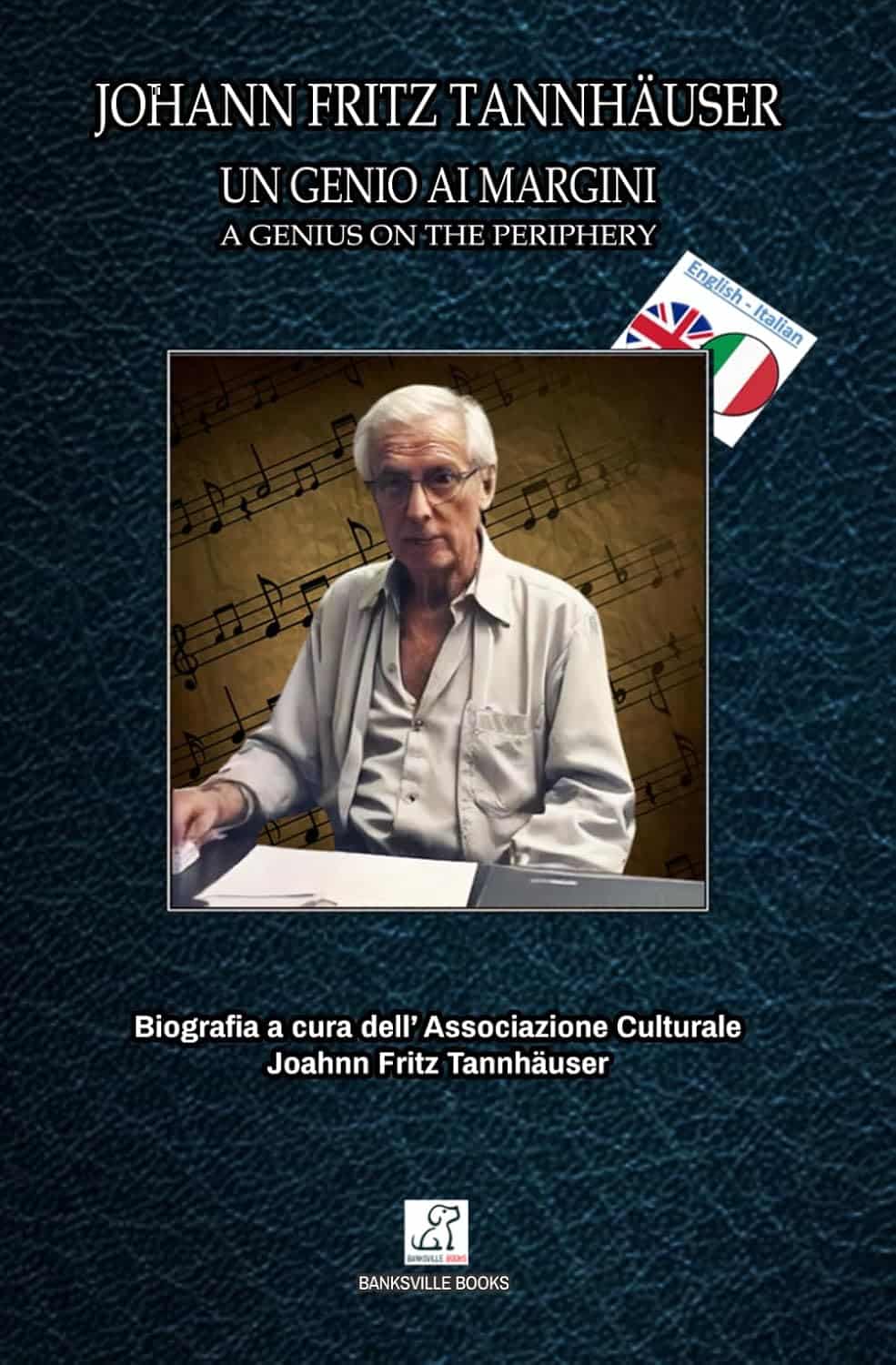
Much of his work was supposedly destroyed by Tannhäuser himself during the severe depression that marked his final years. Only fragments remained, until manuscripts associated with him were reportedly discovered during renovations of the historical archives of the Archeparchy of Asmara. The accompanying biography, Johann Fritz Tannhäuser – A Genius on the Margins, expands this extraordinary story, drawing on documents said to have been discovered in 2024 in the archive of the Apostolic Nunciature of Asmara.
Whether approached as musical archaeology, historical reconstruction, elaborate artistic fiction, or some combination of all three, the Tannhäuser mythology is an inspired framework for S.A.D.O.’s music. It gives the musicians something wonderfully paradoxical to work with: compositions that are supposedly fragments of a lost past, yet which sound remarkably alive in the present. And that vitality is perhaps the most important thing about the album. Beneath the complexity of the arrangements, S.A.D.O. assumes the persona and genius of a mystical composer, one we are led to believe is legendary, yet who is truly brilliant thanks to S.A.D.O., a composer who seems to understand melody instinctively, not merely as a sequence of notes, but as something capable of generating movement, tension and emotional direction. Musical ideas connect with one another through rhythm and texture, and apparently complicated structures can retain an unexpected immediacy.
This is one of the album’s greatest strengths. S.A.D.O.’s Tannhäuser music can be immediately engaging without becoming simplistic. At certain moments, it suggests a much larger symphonic conception; elsewhere, that grand architecture suddenly contracts into intimate exchanges between individual musicians. A melody may emerge clearly, only to be surrounded by percussion, electronic colour, or an unusual instrumental texture. Rather than destroying the melodic impulse, these interventions give it another exciting dimension.
The six musicians are crucial to that effect. Giuseppe Garavana’s piano and Kielflügel provide both harmonic substance and an important sense of dramatic architecture. Diego Marzi’s drums and percussion introduce a physical, often unpredictable rhythmic dimension. Thi Ly Procacci’s soprano and bansuri move between the lyrical and the otherworldly, while Paolo Baltaro’s Ondes Martenot, sampler and cello, supply some of the album’s most distinctive timbral colours. Giovanni Battista Franco’s spoken voice introduces the theatrical dimension directly, and Daniele Mignone’s five-string bass guitar gives the music a grounding that can be felt even when everything else seems to be in motion.
The unusual instrumentation is significant. The Ondes Martenot, cello, piano, Kielflügel, percussion, spoken voice, soprano, bansuri and five-string bass do not resolve into a conventional ensemble sound. Instead, they create a deliberately unstable palette in which acoustic and electronic, composed and improvised, intimate and monumental can exist side by side. That sense of coexistence is central to S.A.D.O.’s identity. The group does not attempt to merge different musical languages into one convenient formula. Contemporary music, avant-garde jazz, electronics, theatrical speech and improvisation retain their individual identities while sharing the same listening space.
Consequently, the eight tracks unfold almost like a sequence of theatrical tableaux:
The opening “Ouvertüre zu DER PRINZ AUF DEM GRANATAPFEL” immediately establishes the album’s fascination with musical drama and large-scale form. “TRAUM” and “EIN TANZ DER ÄNGSTE”, both associated with Der Bibelschreiber, move deeper into an atmosphere where music and theatre become inseparable. “NICHT NACHHALTIGE ZENTRALHEIZUNG” introduces an almost surrealist humour through its title alone, while “DER VORHANG FÄLLT”, the main theme from a supposed film score Die Nacht der Puppen, evokes the cinematic and theatrical imagination that runs through the project.
The remaining pieces continue to expand the fictional Tannhäuser catalogue: “PRÄLUDIUM ZU EINEM LÜGNERABEND” from Palingenese des Niedergangs von Baron Hoffmann, “PANTHERA PARDUS” from Spielerische Kinderstücke, and finally “RUND”.
The titles themselves encourage the listener to imagine the missing works surrounding these fragments, as though we have been handed pages from an enormous catalogue and asked to reconstruct the absent performances.
There is something genuinely moving about the idea of a composer destroying much of his own work. It would be easy for that tragedy to dominate the entire project, turning the album into an exercise in melancholy or nostalgia. S.A.D.O. wisely avoids that trap. The music refuses to remain imprisoned by it. It continues to move, experiment, change direction and leave questions unresolved. In that sense, the album’s relationship with Tannhäuser’s supposed depression is more interesting than a straightforward attempt to explain his music through biography. Are some of these musical tensions reflections of his psychological state? Were the compositions somehow supporting or resisting that state? Or are we simply tempted, as listeners, to impose a biographical narrative upon music whose meaning is ultimately more elusive?
The answers are not supplied. They are felt through repeated listening. And repeated listening is rewarded. Beneath the accessible surface of the compositions lies considerable intellectual depth. Structures reveal themselves gradually. Apparently incidental sounds acquire significance, relationships between melody, rhythm and timbre become clearer. What initially sounds like a collection of eccentric fragments gradually begins to feel like a coherent musical language. And that is where S.A.D.O.’s achievement becomes most convincing. They do not treat Tannhäuser’s legacy as something finished, sealed away in an archive and presented to us as a museum piece. They treat it as something capable of generating new musical thought. The supposed rediscovery therefore becomes an act of continuation rather than restoration. The past is not simply being reconstructed, it is being allowed to influence the present.
This is also why the album’s analogue origins matter. There is an appealing physicality to a project concerned with recovering lost music being documented through analogue multitrack recording and subsequently made available on LP, cassette and quarter-inch reel-to-reel tape. The formats reinforce the sense that Die wiedergefundenen Meisterwerke is an object from another musical history, one in which recordings, manuscripts, theatrical scores and forgotten composers might still contain unexplored possibilities.
Ultimately, the success of The Rediscovered Masterpieces does not depend upon the listener accepting every element of the Tannhäuser story literally. What matters is that S.A.D.O. make the musical world of Johann Fritz Tannhäuser feel plausible. More importantly, they make it worth listening to.
In the end, perhaps the greatest “rediscovery” here is not Johann Fritz Tannhäuser himself, but the possibility that music can still exist outside our increasingly rigid categories. S.A.D.O. remind us that composition does not have to choose between structure and freedom, melody and experimentation, intellectual depth and immediate engagement, between the past, the present, and the future. It can inhabit all of these spaces simultaneously.
Johann Fritz Tannhäuser: Die wiedergefundenen Meisterwerke is therefore best experienced not as a historical curiosity, but as a living piece of contemporary experimental music wearing the mask of a recovered masterpiece. And perhaps that is exactly what a lost masterpiece should sound like.
Frankie Pfeiffer
Editor in chief – PARIS-MOVE
PARIS-MOVE, August 14th, 2026
Follow PARIS-MOVE on X
::::::::::::::::::::::::
S.A.D.O. Personnel:
Giuseppe Garavana – Piano and Kielflügel
Diego Marzi – Drums, Percussion
Thi Ly Procacci – Soprano, Bansuri
Paolo Baltaro – Ondes Martenot, Sampler, Cello
Giovanni Battista Franco – Spoken voice
Daniele Mignone – 5-string bass guitar
Tracks:
01 Ouvertüre zu DER PRINZ AUF DEM GRANATAPFEL
02 TRAUM – Taken from Der Bibelschreiber
03 EIN TANZ DER ÄNGSTE – Taken from Der Bibelschreiber
04 NICHT NACHHALTIGE ZENTRALHEIZUNG
05 DER VORHANG FÄLLT – Main theme from the film score for Die Nacht der Puppen
06 PRÄLUDIUM ZU EINEM LÜGNERABEND – From Palingenese des Niedergangs von Baron Hoffmann
07 PANTHERA PARDUS – Taken from Spielerische Kinderstücke
08 RUND
Label: Banksville Records
Artistic production: Paolo Baltaro
Executive production: Banksville Records/ Pkmp Communication Ltd (London)
Recorded on analogue multitrack at the Church of S. Pietro Martire in Vercelli, Italy
Mixed at Pkmp Castle Studios, Italy
Tannhäuser biography:
Johann Fritz Tannhäuser – A Genius on the Margins, published by the Johann Fritz Tannhäuser Cultural Association, with a foreword by Roberto Manfredi.
Available on Amazon in English and Italian
The biography is also available free of charge online in the following languages:
Italian: https://www.banksvillerecords.com/tan-trans/bio/bio-it.pdf
English: https://www.banksvillerecords.com/tan-trans/bio/bio-en.pdf
French: https://www.banksvillerecords.com/tan-trans/bio/bio-fr.pdf
German: https://www.banksvillerecords.com/tan-trans/bio/bio-de.pdf
Spanish: https://www.banksvillerecords.com/tan-trans/bio/bio-es.pdf
Chinese: https://www.banksvillerecords.com/tan-trans/bio/bio-cn.pdf
Japanese: https://www.banksvillerecords.com/tan-trans/bio/bio-giap.pdf
Russian: https://www.banksvillerecords.com/tan-trans/bio/bio-ru.pdf