
| Latin Jazz |
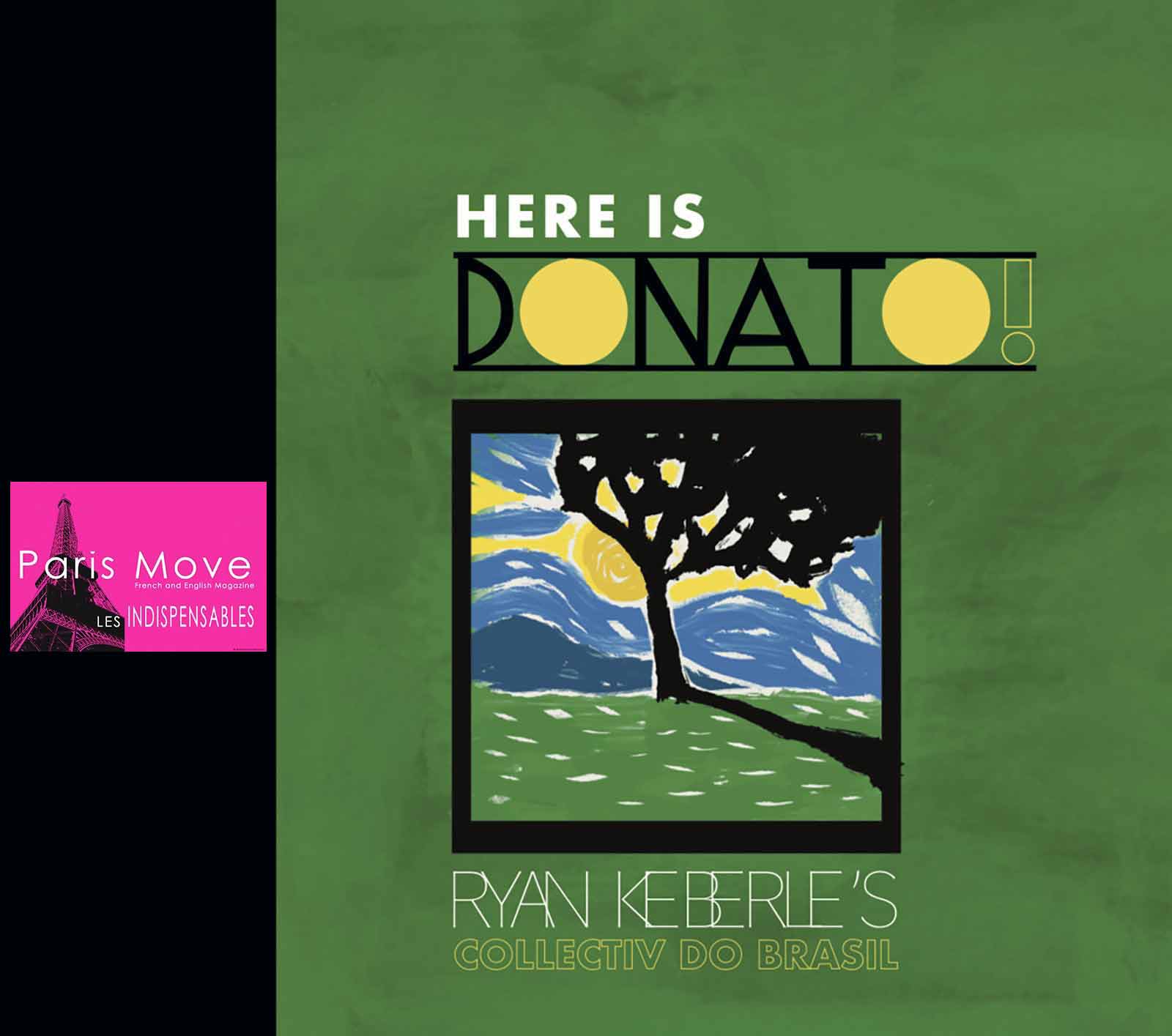
Here Is Donato!: Ryan Keberle Enters the World of João Donato.
There is a particular difficulty in recording the music of a musician who seemed to make everything sound effortless. João Donato possessed that rare quality. His melodies could appear deceptively simple, his grooves seemed to move without ever forcing themselves forward, and his harmonic language could be sophisticated without ever sounding academic. There was an economy in his writing, a remarkable sense that every note had been placed exactly where it belonged and that adding anything unnecessary might actually weaken the music. That apparent simplicity is one of the reasons Donato’s music remains so compelling, and it is precisely what makes it such an intriguing challenge for another composer and musician.
Here Is Donato! does not attempt to turn João Donato’s compositions into something more contemporary simply for the sake of modernization. Nor is it an exercise in demonstrating how an American jazz musician can impose his own identity on Brazilian music. Ryan Keberle takes a more measured approach, allowing Donato’s compositions to determine the character of the arrangements while bringing his own experience as a composer, bandleader and improviser to the project. The result is not a conventional tribute record but a contemporary encounter with a body of work that remains remarkably open to reinterpretation.
Keberle is joined by São Paulo musicians Felipe Silveira, Felipe Brisola, Paulinho Vicente and Guegué Medeiros. Their contribution is fundamental to the character of the recording. This is not an American jazz group using Brazilian musicians simply to provide rhythmic color or local atmosphere. The Brazilian members of Collectiv do Brasil bring their own understanding of rhythm, phrasing, harmony and ensemble playing, while Keberle introduces a different musical perspective shaped by the traditions of American jazz. The chemistry between those approaches gives the album much of its personality.
The relationship between American jazz and Brazilian music has, of course, a long history. Brazilian rhythms and harmonies have fascinated American jazz musicians for generations, while Brazilian artists have absorbed and transformed ideas from jazz for just as long. Yet there is a difference between borrowing the recognizable elements of another tradition and understanding how those elements function within a larger musical language. Here Is Donato! succeeds because it does not reduce Brazilian music to a collection of familiar rhythmic patterns or harmonic colors. Its focus remains firmly on the compositions and on the musicians’ ability to make those compositions work in the present.
João Donato was particularly well suited to such an approach because his own career resisted rigid musical categories. His work moved naturally between samba, bossa nova, jazz, Afro Cuban influences, bolero, funk and other forms, yet his music never sounded like a collection of borrowed styles. Those influences became part of a personal language. Donato demonstrated that sophisticated harmony could coexist with an instinctive sense of rhythm and that popular music could provide fertile territory for improvisation without losing its melodic clarity.
That combination is at the heart of Here Is Donato!. Keberle approaches the compositions as structures that still contain possibilities rather than as finished artifacts that need to be radically reconstructed. The melodies remain important, but the arrangements give the musicians room to explore the rhythmic and harmonic implications of the material. Written passages establish a framework without eliminating spontaneity, allowing the performances to develop naturally while retaining a strong connection to Donato’s original ideas.
Tema Teimoso immediately establishes that philosophy. The rhythmic character is unmistakable, but the ensemble does not simply reproduce a Brazilian groove and place a series of jazz solos over it. The composition becomes a framework for interaction between the instruments, with rhythm, harmony and melody constantly influencing one another. The performance feels relaxed without becoming passive, and energetic without becoming overstated.
That balance is one of the defining qualities of the album. Brazilian music has often been approached by outside musicians through its most immediately recognizable characteristics, particularly rhythm. But Donato’s music cannot be reduced to rhythm alone. Its appeal comes from the relationship between movement and restraint, between sophisticated harmonic structures and melodies that remain remarkably direct.
Nana das Águas reveals another dimension of that relationship. The piece creates atmosphere without requiring theatrical gestures. There is no attempt to manufacture an exotic image of Brazil for an audience unfamiliar with the tradition. The composition is allowed to establish its own environment, while the ensemble develops its textures with considerable sensitivity. The musicians are not trying to explain where the music comes from. They are concerned with making the music itself convincing.
Keberle’s trombone plays an important role in that process. The instrument can easily dominate a small ensemble, particularly in the hands of a technically accomplished improviser, but Keberle generally avoids that temptation. His sound is warm and vocal, and his phrasing often favors clarity over sheer power. Rather than treating every passage as an opportunity for virtuosity, he uses the trombone as one voice within a larger musical structure.
That sense of proportion is especially important when dealing with Donato. His compositions already contain considerable rhythmic and harmonic information, so an arranger does not necessarily improve them by adding layers of complexity. The challenge is to determine which elements should be expanded and which should remain relatively untouched. Keberle appears more interested in that question than in demonstrating how far he can push the material.
This gives the album a welcome sense of restraint. Not every composition becomes an extended improvisational showcase, and not every melodic idea is subjected to radical transformation. Some passages are allowed to retain their original directness. Others become launching points for more adventurous ensemble work. The contrast prevents the album from settling into a single formula and allows each composition to establish its own character.
Ê Menina demonstrates how effective that approach can be. The melody remains accessible, but the ensemble reveals the harmonic and rhythmic detail beneath its apparent simplicity. The musicians do not treat accessibility as a limitation. Instead, they recognize that one of Donato’s great strengths was his ability to make sophisticated musical ideas feel natural.
Mentiras and Não Tem Nada Não continue that exploration. The compositions provide strong melodic identities, but they are flexible enough to support different instrumental relationships. Piano, bass, trombone and percussion do not simply occupy separate roles. They continually reshape the space around the melody, giving the performances a sense of movement that feels organic rather than mechanically arranged.
Celestial Showers moves further into Donato’s harmonic world. What initially sounds straightforward becomes increasingly intricate as the relationship between the instruments comes into focus. The music never advertises its complexity. Instead, its sophistication is embedded in the way the musicians negotiate the changes, maintain the groove and preserve the melodic character of the composition.
This is one of the reasons Donato’s music has remained so adaptable. His compositions do not depend upon one definitive arrangement. They possess enough structural strength to accommodate different ensembles, different generations and different approaches while retaining their essential identity. That quality gives Keberle considerable freedom, but it also places a responsibility on the arranger not to confuse freedom with excess.
Até Quem Sabe illustrates that balance particularly well. The composition can function simultaneously as a melody, a harmonic framework and a platform for improvisation. These elements do not need to compete. They coexist because Donato’s writing was never built around rigid divisions between composition and improvisation.
That quality connects Donato directly to the jazz tradition while keeping his music unmistakably Brazilian. His work demonstrated that the boundaries separating genres were often less meaningful than the musical ideas moving between them. He could absorb outside influences without losing his own identity, and that ability became one of the defining characteristics of his career.
Cadê Jodel brings the collective character of the ensemble into sharper focus. The musicians sound less like individual players waiting for their turn in the foreground and more like a group whose members continuously influence the direction of the performance. The rhythmic foundation is not simply accompaniment. It actively shapes the melodic and harmonic conversation, while the piano and trombone respond to changes in the rhythmic environment.
This is where Collectiv do Brasil becomes more than a backing ensemble. The group has developed its own chemistry, and that chemistry allows the arrangements to remain open without sounding loose. The musicians know how to create space without losing momentum and how to introduce individual ideas without disturbing the overall balance.
Lugar Comum provides a fitting conclusion to the album because it returns to one of Donato’s central qualities: his ability to make sophisticated music sound completely natural. There is no need for dramatic gestures when the underlying material is this strong. The melody, harmony and rhythm carry enough information to sustain the performance, and the ensemble understands that subtlety can be more effective than constant invention.
The album rewards repeated listening for precisely that reason. Its details become more apparent over time, not because the music becomes more complicated but because its internal relationships become easier to recognize. A bass line can change the character of a melody. A percussion figure can redirect the groove. A piano voicing can alter the emotional weight of a phrase. Keberle’s trombone can move from foreground to background without disrupting the structure.
These are ensemble decisions rather than displays of individual virtuosity, and they reveal the maturity of the musicians involved. The strongest moments are often those in which the group behaves as a single organism while still allowing individual personalities to remain audible.
Keberle’s own composition, Nowhere to Go, Nothing to See, adds another dimension to the album. Positioned among Donato’s compositions, the piece offers a glimpse of what the experience of working with this repertoire has brought into Keberle’s own musical vocabulary. It does not need to imitate Donato to belong to the project. Its presence instead creates a useful contrast between the music that inspired the album and the music being created by the musician interpreting it.
That distinction is important. A strong artistic influence does not necessarily produce imitation. Sometimes it produces a clearer sense of one’s own priorities. Donato’s economy, rhythmic flexibility and melodic directness offer Keberle a set of principles that can be absorbed without being copied. The result is a project in which the influence is evident without overwhelming the identity of the musicians performing it.
The Brazilian musicians are equally central to that process. Felipe Silveira, Felipe Brisola, Paulinho Vicente and Guegué Medeiros bring an understanding of the repertoire that cannot simply be supplied by an arrangement or a production decision. Their rhythmic instincts and phrasing affect the performances at a fundamental level, helping the music remain grounded while the jazz elements create additional freedom.
That balance gives Here Is Donato! much of its credibility. The album does not attempt to manufacture Brazilian authenticity, because authenticity is not treated as a stylistic costume. Instead, the musicians approach the material with familiarity, respect and enough confidence to allow their individual identities to remain present.
The recording also avoids another common problem with tribute projects: excessive reverence. Donato’s reputation is secure. His music does not need to be protected from interpretation, and Keberle does not treat it as untouchable. At the same time, he understands that radical transformation is not automatically a sign of creativity. The best arrangements are often those that reveal something new without destroying what was already effective.
Here Is Donato! occupies that difficult middle ground. The compositions remain recognizable, but their surroundings change. The melodies retain their identities while the ensemble introduces new textures, rhythmic relationships and improvisational possibilities. The result is neither historical reconstruction nor wholesale reinvention.
It is a continuation.
That may be the most appropriate way to approach João Donato’s legacy. His own music was built on movement between traditions, and his influence has never depended upon strict boundaries. The most convincing way to honor that legacy is therefore not to freeze his compositions in a definitive form but to allow musicians to continue finding new ways into them.
Keberle does exactly that. His American jazz background remains part of the project, but it never becomes a competing identity. Brazilian musical traditions remain at the center, but they are not treated as something that must be artificially preserved. The two perspectives meet inside the arrangements, creating music that feels contemporary without needing to announce itself as such.
There is a quiet confidence throughout the recording. The musicians do not appear concerned with proving their technical abilities, establishing cultural credentials or making grand statements about musical fusion. They simply allow strong compositions, capable players and carefully considered arrangements to do the work.
That confidence is particularly valuable in contemporary jazz, where complexity can sometimes become a substitute for personality. Here Is Donato! suggests another possibility. Sophistication can come from economy. Virtuosity can reveal itself through control. A strong arrangement can create freedom precisely because it knows what not to add.
In that sense, the album offers a useful reminder about what makes great musical interpretation possible. The goal is not necessarily to change the original material as dramatically as possible. It is to understand its character well enough to know where change will reveal something and where it will simply obscure what was already there.
Ryan Keberle and Collectiv do Brasil understand that distinction. They approach Donato’s compositions with enough respect to preserve their identity and enough imagination to give them new lives. The musicians bring their own experiences into the repertoire without attempting to replace the personality of the composer who created it.
The result is an album that feels remarkably natural. It does not sound like a collection of musicians standing outside João Donato’s music and commenting on it. It sounds like musicians who have entered the repertoire, found its internal logic and then allowed their own musical personalities to become part of the picture.
That is ultimately what makes Here Is Donato! more than a tribute. It is an active conversation with a composer whose music was never confined by genre in the first place. The album respects the past without becoming nostalgic and embraces improvisation without confusing freedom with excess.
João Donato’s music remains powerful because its apparent simplicity conceals extraordinary depth. Ryan Keberle recognizes that the answer is not to make the music louder, denser or more complicated. It is to understand the architecture already present and give the musicians enough freedom to reveal it from another perspective.
Here Is Donato! succeeds because it does not try to make Donato’s music sound like something else. It allows the compositions to remain themselves while placing them in the hands of musicians with their own histories, instincts and ideas. The result is a record in which Brazilian music and American jazz do not compete for space. They interact naturally, each enriching the other.
And perhaps that is the most fitting tribute to João Donato: not to reproduce his music exactly as it was, but to allow it to continue moving, changing and finding new voices without losing the essential character that made it distinctive in the first place.
CD Release Show at SMALLS New York City, Nov 11, 2026
Thierry De Clemensat
Member at Jazz Journalists Association
USA correspondent for Paris-Move and ABS magazine
Editor in chief – Bayou Blue Radio, Bayou Blue News
PARIS-MOVE, September 1st, 2026
Follow PARIS-MOVE on X
::::::::::::::::::::::::
Musicians :
Ryan Keberle (trombone/vocals)
Felipe Silveira (piano/synths)
Felipe Brisola (acoustic and electric bass)
Paulinho Vicente (drums)
Guegué Medeiros (percussion)
TRACK LIST:
1. Tema Teimoso (João Donato)
2. Nana das Águas (João Donato)
3. Nowhere to Go, Nothing to See (Ryan Keberle)
4. Ê Menina (João Donato)
5. Mentiras (João Donato)
6. Não Tem Nada Não (João Donato)
7. Celestial Showers (João Donato)
8. Até Quem Sabe (João Donato)
9. Cadê Jodel (João Donato)
10. Lugar Comum (João Donato)
Conceived & produced by Ryan Keberle
Engineered by Pedro Miranda
Edited & mixed by Alex Venguer
Mastered by Tyler McDiarmid
Recorded at Gargolândia Recording Studios on September 17-19, 2024, Alambari, São Paulo, Brazil