
| Jazz |
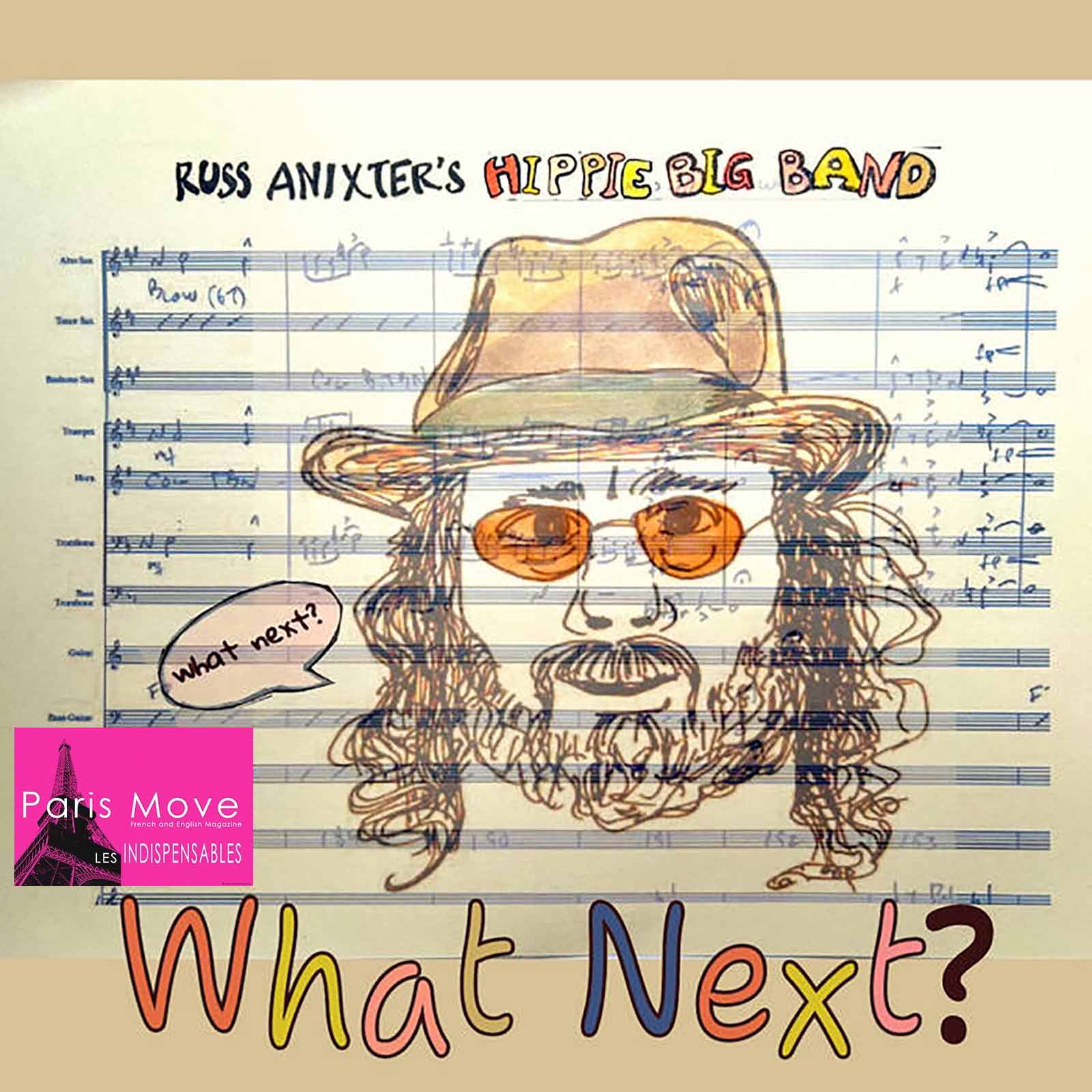
Russ Anixter’s Small Big Band Reimagines Rock Classics with Brilliant Jazz Arrangements
Some ensembles exist to preserve tradition. Others are created to challenge it. Russ Anixter’s Small Big Band comfortably occupies the space between those two worlds. Smaller than a traditional big band yet considerably richer in texture than a conventional jazz combo, this ensemble embraces an idea that is both simple and surprisingly ambitious. It is a jazz orchestra playing rock music, and above all, it is a band determined to enjoy itself.
That sense of joy is unmistakable from the opening notes of I Saw Her Standing There. The musicians sound liberated, playful and completely at ease. On that level alone, the album succeeds. Yet stopping there would overlook what truly makes this project remarkable. The pleasure is immediate, but the real fascination lies beneath the surface, where the painstaking craftsmanship of the arrangements reveals itself. They account for at least half of the album’s success, transforming familiar material into something fresh without ever sacrificing its original spirit.
Russ Anixter’s background undoubtedly explains much of that achievement. His career was largely forged in the commercial music world, a field that is too often underestimated by those who mistake accessibility for artistic compromise. In reality, musicians working in that environment develop extraordinary discipline. They learn precision, adaptability and the subtle art of serving music within demanding creative constraints. Those skills are everywhere on this recording.
Listeners who discovered last year’s outstanding What Is? by the Hippie Big Band will immediately recognize Anixter’s unmistakable signature, although this new release also invites a deeper appreciation of the remarkable professional journey that shaped him. He began his career as a music copyist when every page of a score was still produced painstakingly by hand with pen and ink. He then navigated the transition to digital notation at a time when early Macintosh computers offered tiny monochrome displays and memory measured in kilobytes rather than gigabytes. For more than three decades, he has practiced that craft in New York, witnessing firsthand one of the most profound technological revolutions in music publishing.
Anyone who has ever prepared orchestral scores understands the extraordinary patience and meticulous attention required of a professional copyist. It is work that rarely receives public recognition, yet it forms the invisible foundation upon which performances depend. Thinking back to those pioneering days of personal computing inevitably brings a smile. While Anixter was embracing the earliest generations of Macintosh technology, I vividly remember the excitement of working on a Macintosh IIfx, marveling at the arrival of color after years of black and white screens. There may be a touch of nostalgia in that memory, but it feels oddly appropriate. The music performed by this Small Big Band possesses the same sense of brightness and vitality that those first color displays once represented: a familiar world suddenly illuminated in entirely new ways.
One of the album’s unexpected pleasures is the prominent role given to the baritone saxophone. It is an instrument that deserves far more attention than it typically receives, and hearing it occupy such a central place within these arrangements is immensely satisfying. My admiration for the instrument has long been shaped by Céline Bonacina, whose artistry has demonstrated just how expressive and agile the baritone saxophone can be. Anixter approaches the instrument from a very different musical perspective, yet he grants it the same dignity and expressive freedom, allowing its rich voice to become one of the defining colors of the ensemble. In an era when many jazz recordings naturally gravitate toward the brilliance of the trumpet or the versatility of the tenor saxophone, placing the baritone at the heart of the conversation feels both refreshing and quietly courageous.
The repertoire itself reveals the remarkable breadth of Anixter’s musical imagination. The program stretches effortlessly from Paul McCartney and John Lennon to Joe Zawinul before arriving at the music of John Paul Jones and Robert Plant. Such diversity might appear eclectic on paper, but in Anixter’s hands it becomes entirely coherent. Rather than simply collecting iconic songs, he identifies compositions whose harmonic structures invite reinterpretation. Each selection becomes an opportunity to demonstrate how intelligent orchestration can reveal details that even longtime listeners may never have noticed.
Among these selections, A Remark You Made naturally drew my greatest curiosity. Having spent years immersed in Joe Zawinul’s extraordinary body of work, I wondered how anyone could approach one of his most delicate compositions without diminishing its emotional depth. The answer is both respectful and inspired. It becomes immediately apparent that Anixter shares a profound affection for Zawinul’s sophisticated harmonic language and his extraordinary sensitivity to orchestral color. Rather than attempting to reinvent the composition for its own sake, he uncovers new emotional dimensions while preserving the elegance and restraint that made the original so unforgettable. The result stands as one of the finest reinterpretations of this masterpiece that I have encountered. It is the rare arrangement that reminds listeners not only why the original became a classic, but also why great compositions continue to reward fresh perspectives.
Anixter’s accomplishments as a composer reinforce the impression left by these arrangements. His music has been performed by the Queens Symphony Orchestra, the Broadway Chamber Players and at the Alfred Loeffler New Music Symposium. His brass and chamber music arrangements are published by Art of Sound Music in Princeton, New Jersey. Those credentials are more than biographical details. They illuminate the artistic philosophy that runs throughout this album. Every arrangement is conceived as a work of composition in its own right, carefully balancing structural sophistication with the effortless flow that listeners experience. Writing for an ensemble of this size is among the most demanding disciplines in contemporary music. Every instrumental entrance, every harmonic voice and every rhythmic accent must contribute to an intricate musical architecture that sounds completely natural once performed. That effortless quality is, paradoxically, the clearest sign of exceptional craftsmanship.
Perhaps that is why this album feels so distinctive within today’s jazz landscape. Contemporary jazz often finds itself divided between faithful interpretations of the Great American Songbook, original compositions rooted in modern improvisation or crossover projects aimed at broader audiences. Few artists successfully bridge those worlds without compromising one in favor of another. Reimagining rock repertoire for a compact big band demands more than technical proficiency. It requires imagination, historical awareness and the confidence to leave well known melodies recognizable while simultaneously allowing them to evolve. Russ Anixter accomplishes exactly that. His arrangements never seek to overshadow the songs themselves. Instead, they reveal possibilities that seem to have been waiting patiently inside the music all along.
That is perhaps the album’s greatest accomplishment. It welcomes casual listeners with infectious energy and irresistible grooves while simultaneously offering aspiring composers, orchestrators and arrangers a genuine masterclass in musical architecture. The Hippie Big Band is composed of eleven exceptional musicians whose collective chemistry is impossible to ignore. Their sound feels both expansive and intimate, driven by a groove that is entirely their own. Even the size of the ensemble seems carefully considered. With Russ Anixter, nothing appears accidental. Every instrumental choice, every harmonic detail and every carefully sculpted texture contributes to a musical vision that is as intelligent as it is deeply enjoyable.
More importantly, this is one of those increasingly rare recordings that rewards repeated listening. The first encounter is driven by sheer enjoyment, the infectious swing, the familiar melodies and the obvious pleasure shared by the musicians. A second listen begins to uncover the astonishing precision of the writing. By the third or fourth, entirely new details emerge, subtle counter melodies, discreet harmonic shifts and beautifully judged instrumental conversations that had quietly escaped notice. It is an album that grows richer with familiarity, revealing layers of invention that never call attention to themselves.
For general audiences, it is simply an immensely entertaining record, full of warmth, humor and impeccable musicianship. For young composers, arrangers and orchestration students, however, it offers something even more valuable. It demonstrates that sophisticated writing does not have to sacrifice accessibility, and that intellectual rigor can coexist with genuine fun. Every chart becomes a lesson in balance, proving that complexity is most effective when it serves emotion rather than ego.
Ultimately, the Small Big Band succeeds because it reminds us that great arranging is itself a creative act. These performances are not covers in the conventional sense. They are thoughtful conversations between remarkable songs and remarkable musicians, conversations conducted with respect, imagination and an unmistakable sense of joy. Long after the final notes fade, what lingers is not simply the memory of familiar melodies, but the feeling of having heard them with fresh ears. That is the hallmark of an exceptional arranger, and it is precisely what Russ Anixter achieves throughout this outstanding album.
Thierry De Clemensat
Member at Jazz Journalists Association
USA correspondent for Paris-Move and ABS magazine
Editor in chief – Bayou Blue Radio, Bayou Blue News
PARIS-MOVE, July 29th, 2026
Follow PARIS-MOVE on X
::::::::::::::::::::::::
Russ Anixter’s Hippie Big Band – “What Next?”
Russ Anixter: Arrangements & Orchestrations
Matt Hong: Alto Sax, Flute, Bass Clarinet
Stan Harrison: Tenor Sax, Clarinet
Frank Vacin: Bari & Soprano Saxes, Alto Flute, Bassoon
Matt Owens: Trumpet and Flugelhorn
Audrey Flores: French Horn
Dan Levine: Trombone
Jack Schatz: Bass Trombone
Bill Hayes: Vibraphone, Xylophone, Congas, Toys
Michael Aarons: Guitar
Steve Count: Bass
Scott Neumann: Drums
Special guests:
Danny Louis: Organ on Freddie’s Dead
Erica von Kleist: Piccolo on Birdsong
Track Listing :
I Saw Here Standing There – 4:55 – Paul McCartney and John Lennon (Sony/ATV Tunes, LLC)
Solos: Michael Aarons – Guitar, Bill Hayes – Vibes
Freddie’s Dead with Danny Louis – 5:41 – Curtis Mayfield (Warner-Tamerlane Publishing Corp.)
Solos: Frank Vacin – Baritone Sax, Danny Louis – Organ
I Walk on Guilded Splinters – 5:24 – Dr John Creaux (Mac Rebennack)(Marzique Music Co,Inc.) Solo: Dan Levine – Trombone
Freeway Jam – 5:48 – Max Middleton (Essex Music International )
Solo: Michael Aarons – Guitar
Shakedown Street – 6:42 – Robert Hunder and Jerry Garcia (Ice Nine Pub Co, Inc.)
Solos: Matt Hong – Alto Sax, Matt Owens – Electrified Trumpet, Stan Harrison – Tenor Sax
Bird Song with Erica von Kleist – 6:46 – Robert Hunter and Jerry Garcia (Ice Nine Pub Co, Inc.)
Solos: Erica von Kleist – Piccolo, Stan Harrison – Tenor Sax, Michael Aarons – Guitar
A Remark You Made – 6:09 – Joe Zawinul (Songs of Universal, Inc., Mulatto Music)
Solos: Dan Levine – Trombone, Matt Hong – Alto Sax
Compared to What – 7:42 – Gene McDaniels (Wixen Music Pub.)
Solos: Michael Aarons – Guitar, Bill Hayes – Vibes, Frank Vacin – Bari, Matt Hong – Alto, Matt Owens, Trumpet, Stan Harrison – Tenor
No Quarter/Bitches Brew – 10:32 – John Paul Jones, Jimmy Page and Robert Plant (Wc Music Corp.) Miles Davis (Downtown DMP Songs)
Solos: Bill Hayes – Vibes, Matt Owens – Trumpet, Frank Vacin – Soprano Sax
Produced by Dan Levine, Russ Anixter and John Kilgore
Recorded on February 16 and 17, 2026 at The Bunker Studios, Brooklyn, NY.
Engineered by Alex Conroy with remote buttinski/Covid patient John Kilgore.
Mixed by John Kilgore. Mastered by Alan Silverman. Assistant Engineer Jasper Leach.
Cover Art by Allison Mackey. Album Graphics by Erica von Kleist